
The aerospace giant Boeing (NYSE: BA) frequently finds itself under the microscope of investors, analysts, and the global media. As one of the world’s leading manufacturers of commercial jetliners, defense systems, and space solutions, its stock performance is a bellwether for the industrial sector and the broader economy. When Boeing’s stock experiences a decline, it often signals underlying complexities within the company, the industry, or even macro-economic forces at play. Understanding “why is Boeing stock down today” requires a deep dive into financial reporting, market sentiment, operational challenges, and strategic shifts, all viewed through the lens of robust financial analysis.
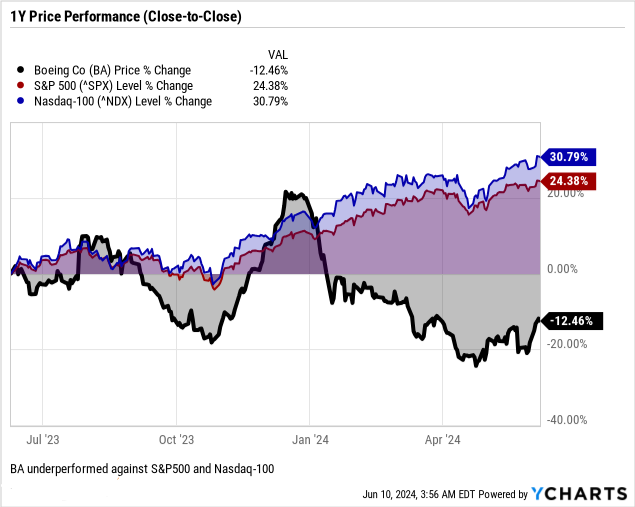
Navigating the Turbulence: A Snapshot of Boeing’s Recent Performance
Boeing’s stock price is a dynamic reflection of investor confidence, current events, and future expectations. A dip on any given day is rarely an isolated incident; it’s often a symptom of accumulating pressures or a reaction to significant breaking news. To truly grasp the reasons behind a decline, one must first look at the immediate catalysts alongside the company’s recent trajectory.
Market Sentiment and Investor Concerns
Investor sentiment plays an outsized role in daily stock fluctuations. Negative news – whether it’s related to production delays, safety incidents, regulatory scrutiny, or even a bearish analyst report – can trigger immediate sell-offs. For a company like Boeing, which operates in a high-stakes, capital-intensive industry, market sentiment is particularly sensitive. A single report detailing a new defect or a missed delivery target can send ripples of concern through the market, prompting investors to reassess their positions. This collective action, driven by fear or uncertainty, can rapidly depress share prices, even if the long-term fundamentals remain sound. Furthermore, any indication of slowing global economic growth or reduced air travel forecasts can directly impact future orders for Boeing’s commercial aircraft, leading to pessimistic outlooks among investors.
Key Financial Indicators
Beyond sentiment, daily stock movements are underpinned by a continuous evaluation of key financial indicators. While a single day’s dip might not reflect a quarterly earnings report, it can be a pre-emptive reaction to anticipated poor performance or a post-facto adjustment after an announcement. Investors constantly monitor metrics such as revenue growth, profit margins, free cash flow, and debt levels. Any sign of weakening performance in these areas, or even a downward revision of future guidance, can lead to a devaluation of the stock. For Boeing, specifically, indicators like quarterly aircraft deliveries, order backlogs, and progress on new aircraft programs (like the 777X) are critical. Delays in production or unexpected cost overruns on these high-profile projects can significantly impact projected earnings and cash flow, directly contributing to a stock price decline as analysts adjust their models and investors react.
The Core Challenges Impacting Boeing’s Valuation
Boeing’s journey in recent years has been marred by a series of persistent challenges that have consistently weighed on its financial performance and, consequently, its stock valuation. These issues are complex, often interconnected, and require extensive strategic and operational remediation.
Production Glitches and Supply Chain Disruptions
One of the most significant headwinds for Boeing has been its struggle with production quality and efficiency. Following a period of aggressive cost-cutting and outsourcing, the company has faced a litany of issues, from fasteners being improperly installed to fuselage sections being misdrilled. These defects necessitate extensive rework, cause costly production halts, and delay aircraft deliveries, directly impacting revenue recognition and customer satisfaction. The ripple effect extends throughout the global supply chain, which itself has been fragile post-pandemic. Shortages of critical components, labor scarcity, and logistics bottlenecks further exacerbate Boeing’s ability to ramp up production and meet delivery schedules. Each reported glitch or missed delivery target signals ongoing operational inefficiencies to the market, leading to investor apprehension and downward pressure on the stock.
Regulatory Scrutiny and Safety Concerns
The tragic 737 MAX crashes in 2018 and 2019 initiated an unprecedented era of regulatory scrutiny for Boeing, primarily from the Federal Aviation Administration (FAA) in the U.S. and other international aviation authorities. This intensified oversight has not only led to costly software fixes and design changes but has also significantly slowed the certification process for new aircraft models and variants. Every subsequent safety-related incident, no matter how minor, tends to reignite these concerns, leading to further investigations, production audits, and potential new compliance requirements. The financial implications are substantial: increased engineering costs, legal fees, compensation to airlines, and the opportunity cost of delayed revenue from new aircraft. More importantly, the erosion of trust among regulators and the flying public creates a long-term brand challenge that impacts future sales and market perception, reflecting negatively on the stock price.
Geopolitical Headwinds and Global Economic Pressures
As a global enterprise, Boeing is inherently exposed to geopolitical tensions and broader economic shifts. Trade disputes, such as those between the U.S. and China, can directly impact Boeing’s ability to sell aircraft into crucial markets. China, for instance, is a massive market for commercial aircraft, and protracted geopolitical disagreements can lead to airlines delaying orders or favoring competitors like Airbus. Sanctions, tariffs, or even diplomatic spats can create uncertainty and disrupt established sales channels. Furthermore, the health of the global economy directly influences the demand for air travel and, by extension, new aircraft orders. High inflation, rising interest rates, or a looming recession can cause airlines to defer or cancel orders as they tighten their capital expenditure budgets. These macro-economic pressures, largely beyond Boeing’s direct control, can significantly dampen investor enthusiasm and contribute to stock price volatility.
Competitive Landscape and Future Outlook for Aerospace
The aerospace industry is a duopoly dominated by Boeing and Airbus, but emerging players and evolving market dynamics continually shape the competitive landscape. Understanding these forces is crucial for assessing Boeing’s long-term financial health and its stock’s trajectory.
Rivalry with Airbus and Emerging Competitors

The commercial aircraft market is fiercely competitive, primarily a two-horse race between Boeing and its European rival, Airbus. While both companies have robust backlogs, Airbus has generally outpaced Boeing in recent years regarding new orders and deliveries, particularly in the single-aisle market. Airbus’s A320neo family has been a formidable competitor to Boeing’s 737 MAX, and ongoing production issues at Boeing have only allowed Airbus to further solidify its market share. This competitive pressure means that Boeing cannot afford further missteps, as airlines have viable alternatives. Moreover, new competitors, particularly from China (e.g., COMAC with its C919), are slowly emerging and, while not immediate threats to the duopoly, represent a long-term challenge to market dominance, especially in their domestic markets. Each lost order or delayed program gives Airbus an advantage and signals to investors that Boeing’s market position could be eroding.
Defense Contracts and Diversification Strategies
While commercial aircraft often grab headlines, Boeing’s defense, space, and security division is a critical component of its business, providing diversification and a more stable revenue stream, especially during downturns in the commercial sector. Contracts with the U.S. Department of Defense and international allies for fighter jets, bombers, helicopters, satellites, and missile systems are long-term and often less susceptible to market fluctuations than commercial orders. Performance in this division, including contract wins, program milestones, and cost management, significantly impacts the company’s overall financial health. Any news of cost overruns on defense projects, delays in critical programs (like the KC-46 tanker), or the loss of major defense contracts can temper investor enthusiasm for Boeing’s diversified strategy, leading to a stock correction. Conversely, securing new, lucrative defense contracts can provide a much-needed boost.
Long-Term Demand for Air Travel
Despite the short-term headwinds, the long-term outlook for air travel demand remains robust, driven by global population growth, rising middle-class incomes in emerging economies, and the inherent need for global connectivity. Industry forecasts consistently predict significant growth in passenger traffic over the next two decades, which translates into a need for tens of thousands of new aircraft. This underlying demand is a fundamental bullish factor for Boeing. However, how Boeing positions itself to capture this growth – by resolving its production issues, restoring trust, and developing competitive new aircraft – will determine its long-term financial success. Any data suggesting a slowdown in this long-term demand, or that competitors are better positioned to capitalize on it, can create immediate negative pressure on the stock.
Investor Considerations and Strategies Amidst Volatility
For investors holding or considering Boeing stock, the current environment demands careful consideration of both immediate market reactions and long-term value propositions. Volatility presents both risks and opportunities.
Fundamental Analysis vs. Market Hype
A daily stock dip, while alarming, should be evaluated within the context of Boeing’s fundamental business strength. Experienced investors often distinguish between temporary market “hype” or panic and genuine deterioration of a company’s underlying value. Fundamental analysis involves scrutinizing Boeing’s balance sheet, income statement, cash flow, and management’s strategic plans. Is the company generating sufficient cash? Is its debt manageable? Are its new aircraft programs progressing towards profitability? A daily decline stemming from a temporary production snag might represent a buying opportunity for a long-term investor if the fundamentals remain sound and the company is actively addressing its issues. Conversely, a decline driven by persistent, unaddressed operational failures or a significant shift in market dynamics could signal deeper troubles.
Risk Management and Diversification
Investing in a single stock, especially one subject to the specific industry and operational risks of Boeing, inherently carries significant risk. A core principle of sound financial planning is diversification. Investors should ensure that their portfolio is not overly concentrated in Boeing or any single sector. Spreading investments across different industries, asset classes, and geographies helps mitigate the impact of a downturn in any single holding. For those committed to aerospace, considering a diversified aerospace and defense ETF or a basket of related stocks (including suppliers, airlines, or competitors) can offer exposure while reducing company-specific risk. A daily drop in BA stock underscores the importance of a well-diversified portfolio to cushion the impact of adverse events.
Long-Term vs. Short-Term Investment Horizons
The motivation behind an investment significantly influences how a daily stock dip is perceived. Short-term traders might react immediately to negative news, buying or selling based on intra-day fluctuations, aiming to profit from volatility. For these investors, a stock decline presents opportunities for short-selling or quick speculative buys. Long-term investors, however, often view Boeing through a different lens. They are typically less concerned with daily swings and more focused on the company’s ability to generate value over years or even decades. For a long-term investor, a temporary dip could be seen as an opportunity to average down their cost basis or initiate a position at a more attractive price, provided they believe in the company’s eventual recovery and growth potential. Boeing’s history suggests that while it faces periods of intense challenge, its critical role in global aviation provides a compelling argument for its long-term viability.
Beyond Today’s Dip: What Lies Ahead for BA?
Understanding why Boeing stock is down today is crucial, but equally important is looking forward. The company’s trajectory will depend on its ability to execute on strategic initiatives and adapt to a rapidly evolving global landscape.
Recovery Pathways and Strategic Initiatives
Boeing’s management is actively engaged in a multi-pronged effort to restore its operational excellence, financial stability, and market confidence. Key recovery pathways include prioritizing quality over quantity in aircraft production, investing heavily in employee training and engineering expertise, and rebuilding trust with regulators and customers. The successful ramp-up of the 737 MAX production, achieving certification for the 777X, and efficiently managing the transition to new manufacturing processes are critical milestones. The company is also focused on improving its supply chain resilience and renegotiating terms with suppliers to ensure a smoother flow of components. Each step forward in these areas signals to the market that Boeing is on a path to recovery, potentially leading to a reversal of downward trends in its stock price.

The Role of Innovation in Future Growth
Innovation remains at the heart of Boeing’s long-term growth strategy. While current focus is on resolving past issues, future financial health will heavily depend on developing next-generation aircraft that are more fuel-efficient, environmentally friendly, and technologically advanced. Investments in sustainable aviation technologies, electric propulsion, advanced materials, and digital manufacturing will be crucial. Furthermore, the defense and space divisions continue to push boundaries with new platforms and capabilities, from advanced fighter jets to orbital vehicles. The successful development and market acceptance of these innovative products and services will be key drivers of future revenue, profitability, and ultimately, a sustained recovery and growth in Boeing’s stock valuation. The ability to innovate effectively will not only address evolving market demands but also strengthen Boeing’s competitive edge against formidable rivals.
In conclusion, a decline in Boeing’s stock on any given day is a complex interplay of immediate market reactions, persistent operational challenges, broader economic forces, and the ever-present competitive landscape. For investors, a thorough financial analysis, an understanding of fundamental drivers, and a clear investment horizon are paramount to navigating the inherent volatility of a major industrial player like Boeing. While today’s dip might reflect current anxieties, the company’s future stock performance will ultimately hinge on its ability to overcome its current hurdles and successfully execute its long-term strategic vision.
aViewFromTheCave is a participant in the Amazon Services LLC Associates Program, an affiliate advertising program designed to provide a means for sites to earn advertising fees by advertising and linking to Amazon.com. Amazon, the Amazon logo, AmazonSupply, and the AmazonSupply logo are trademarks of Amazon.com, Inc. or its affiliates. As an Amazon Associate we earn affiliate commissions from qualifying purchases.