
In the intricate landscape of personal finance, your credit score stands as a pivotal indicator of your financial health and trustworthiness. It’s a three-digit number that influences everything from securing a mortgage to renting an apartment, and even the rates you pay on insurance. Understanding and regularly monitoring this score is not just a good practice; it’s an essential discipline for effective financial management. For customers of Wells Fargo, one of the nation’s largest financial institutions, accessing this crucial information is often a straightforward process, built into their existing banking services.
This guide will demystify the process of checking your credit score through Wells Fargo, providing a comprehensive overview of why your credit score matters, how it’s calculated, and how to leverage Wells Fargo’s platforms to stay on top of your financial standing. By the end, you’ll not only know how to find your score but also understand the deeper implications and actionable steps you can take to foster a healthier credit profile.
Understanding Your Credit Score: The Foundation of Financial Health
Before diving into the specifics of checking your score with Wells Fargo, it’s crucial to grasp the fundamental concept of a credit score and its overarching importance in your financial life. This numerical representation distills years of financial behavior into a single, easily digestible figure that creditors use to assess risk.
What is a Credit Score and Why Does it Matter?
At its core, a credit score is a numerical summary of your creditworthiness. The most widely used credit scoring models are FICO (Fair Isaac Corporation) scores and VantageScore. While there are slight differences in their methodologies, both aim to predict the likelihood of you repaying borrowed money. Scores typically range from 300 to 850, with higher numbers indicating lower risk to lenders.
Why is this number so significant?
-
Access to Credit: A good credit score is often the gatekeeper for loans, credit cards, and mortgages. Lenders are more willing to extend credit to individuals with a proven track record of responsible borrowing.
-
Favorable Terms: Beyond just access, a higher credit score typically translates to better interest rates on loans and credit cards. This can save you thousands of dollars over the lifetime of a large loan, like a mortgage or an auto loan.
-
Renting and Utilities: Landlords frequently check credit scores to gauge a prospective tenant’s reliability. Utility companies may also use scores to determine if a security deposit is required.
-
Insurance Premiums: In many states, insurance companies use credit-based insurance scores (which are related to your credit score) to help determine premiums for auto and home insurance.
-
Employment Opportunities: While less common, some employers, particularly those in financial roles or positions requiring significant trust, may check an applicant’s credit report (though typically not the score itself) as part of their background check.
In essence, your credit score is a financial GPA, a reflection of your past financial decisions that profoundly impacts your future opportunities and costs.
Key Factors Influencing Your Credit Score
Credit scores are not arbitrary numbers; they are derived from information contained in your credit reports, which are maintained by the three major credit bureaus: Experian, Equifax, and TransUnion. While the exact weighting can vary between FICO and VantageScore models, the primary factors influencing your score remain consistent:
-
Payment History (Approx. 35% of FICO Score): This is the most critical factor. Paying bills on time, every time, is paramount. Late payments, bankruptcies, foreclosures, and collections accounts can severely damage your score.
-
Credit Utilization (Approx. 30% of FICO Score): This refers to the amount of credit you’re using compared to your total available credit. Keeping your utilization ratio low (ideally below 30%) signals that you are not over-reliant on credit. For example, if you have a credit card with a $10,000 limit and a $1,000 balance, your utilization is 10%.
-
Length of Credit History (Approx. 15% of FICO Score): Lenders prefer to see a long history of responsible credit use. The older your accounts, the better, as it provides more data points for assessment.
-
New Credit (Approx. 10% of FICO Score): Opening multiple new credit accounts in a short period can be viewed as risky behavior, potentially indicating financial distress. Each time you apply for new credit, a “hard inquiry” is typically placed on your report, which can temporarily ding your score.
-
Credit Mix (Approx. 10% of FICO Score): Having a healthy mix of different types of credit (e.g., installment loans like mortgages or auto loans, and revolving credit like credit cards) can positively impact your score, demonstrating your ability to manage various forms of debt.
Understanding these factors empowers you to make informed financial decisions that will steadily improve and maintain a strong credit profile.
Wells Fargo’s Approach to Credit Score Access
Recognizing the critical role credit scores play in their customers’ lives, many financial institutions, including Wells Fargo, have integrated credit score access directly into their banking platforms. This move provides customers with convenient, free, and regular insights into their credit health.
Availability of Credit Score Services for Wells Fargo Customers
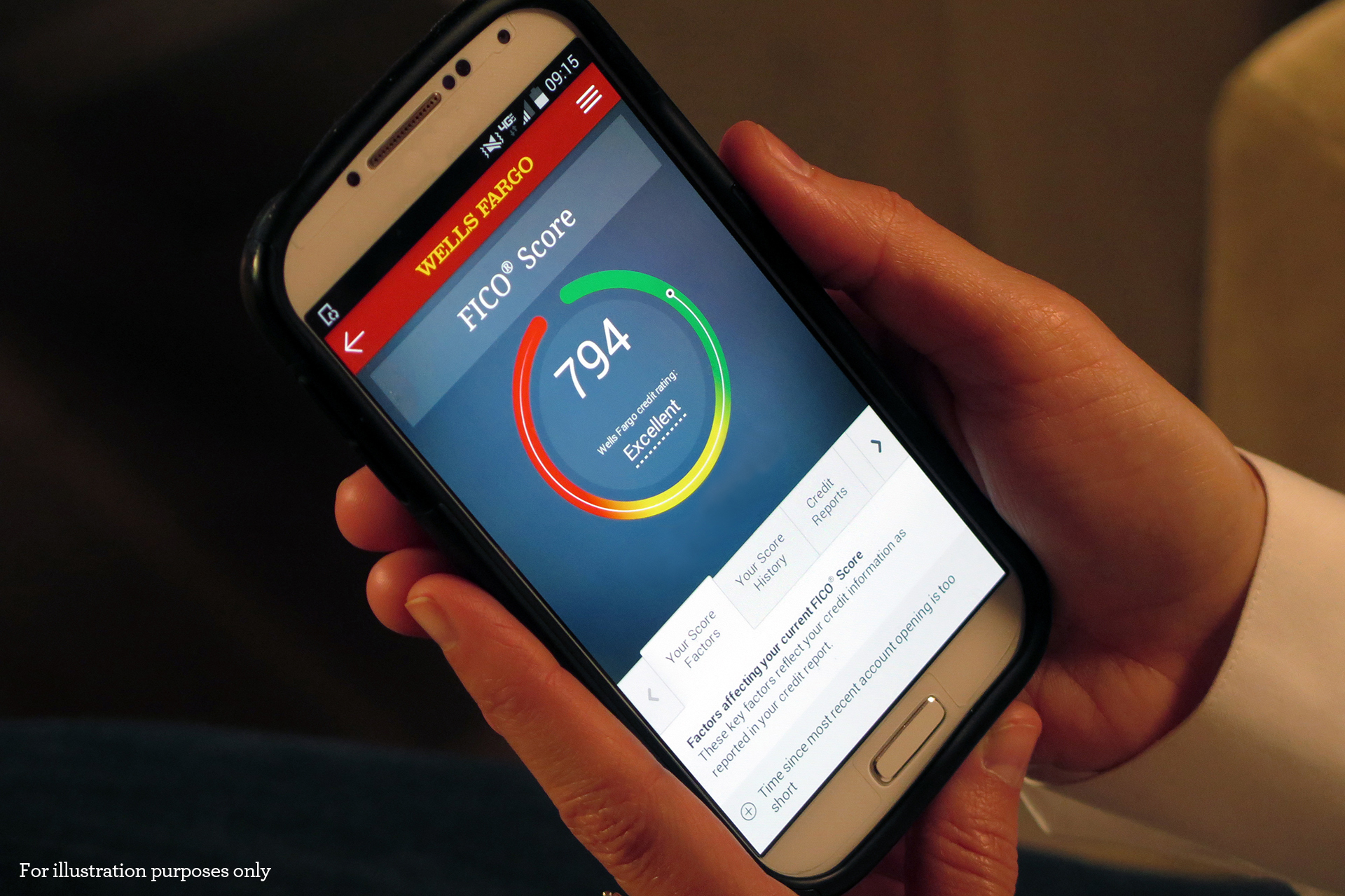
Wells Fargo offers its eligible customers free access to their FICO Score. This is a significant benefit, as FICO scores are the most commonly used scores by lenders when making credit decisions. The service is typically available to customers who have an eligible Wells Fargo consumer credit card, auto loan, personal loan, or mortgage. If you only have a checking or savings account with Wells Fargo, you might not automatically have access through their platform, though it’s always worth checking your online banking portal.
This direct access eliminates the need to pay for credit monitoring services or to constantly request copies of your credit report from the bureaus, which only provide your report and not necessarily your score for free. By offering this service, Wells Fargo helps its customers stay informed without incurring additional costs or navigating complex external websites.
The Wells Fargo Online Banking Portal: Your Primary Hub
For most Wells Fargo customers, the online banking portal serves as the primary gateway to a wealth of financial tools, including your FICO Score. It’s designed for intuitive navigation and provides a comprehensive view of your accounts and relevant financial information.
To access your credit score via the Wells Fargo online banking portal:
-
Log In: Visit the official Wells Fargo website (wellsfargo.com) and log in to your account using your username and password. Always ensure you are on the legitimate Wells Fargo domain to protect your sensitive information.
-
Navigate to Credit Section: Once logged in, look for a section or tab related to “Credit,” “FICO Score,” “Account Services,” or “Planning & Tools.” The exact placement might vary slightly based on updates to their website design, but it’s usually clearly labeled. You might find it under a “My Accounts” or “Credit” menu item.
-
View Your Score: Click on the designated link to view your FICO Score. Wells Fargo typically displays your current score along with key factors that are influencing it, such as your payment history or credit utilization. They may also show a historical trend, allowing you to track changes over time.
The online portal also often provides educational resources related to credit, helping you understand what your score means and how you can work to improve it.
Wells Fargo Mobile App: Convenience at Your Fingertips
For those who manage their finances on the go, the Wells Fargo Mobile App offers a convenient way to check your credit score from virtually anywhere. The app mirrors much of the functionality of the online banking portal, optimized for mobile devices.

To check your credit score using the Wells Fargo Mobile App:
-
Download and Log In: If you haven’t already, download the official Wells Fargo Mobile App from your device’s app store (Apple App Store for iOS or Google Play Store for Android). Log in using your same online banking username and password.
-
Locate the Credit Score Feature: After logging in, navigate through the app. Similar to the online portal, there will likely be a dedicated section for “Credit Score,” “FICO Score,” or something similar, perhaps under a “More” or “Menu” option.
-
Access Your Score: Tap on the relevant option to view your FICO Score. The app will present your score, often with a breakdown of influencing factors and a visual history.
Using the mobile app provides quick access and allows for regular monitoring without needing to be at a computer. Some apps even offer push notifications for score changes, adding an extra layer of engagement.
Step-by-Step Guide: Checking Your Credit Score with Wells Fargo
Let’s consolidate the information into a clear, actionable step-by-step guide to ensure you can confidently access your FICO Score through Wells Fargo’s platforms.
Prerequisites for Accessing Your Score
Before attempting to check your score, ensure you meet the following basic requirements:
-
Eligible Wells Fargo Account: You must have an active Wells Fargo consumer credit card, auto loan, personal loan, or mortgage. The service is typically linked to these types of accounts.
-
Enrollment in Online Banking: You need to be enrolled in Wells Fargo’s online banking service and have a valid username and password. If you’re not enrolled, you’ll need to do so first on their website.
-
Active Account Status: Your eligible account should be in good standing.
Online Banking Walkthrough
-
Open Your Web Browser: Go to the official Wells Fargo website:
www.wellsfargo.com. -
Log In: Enter your username and password in the login fields provided on the homepage and click “Sign On.”
-
Navigate to the FICO Score Section: Once logged in, look for a menu item or link. Common locations include:
-
Under a “Planning & Tools” or “Account Services” tab.
-
Directly on your account summary page, labeled “Check Your FICO Score” or similar.
-
Using the search bar within the online banking portal to search for “FICO Score” or “Credit Score.”
-
-
Click to View: Select the link or button that says “View your FICO Score.”
-
Review Your Score and Details: Your current FICO Score will be displayed, often accompanied by key factors that are impacting it (e.g., credit utilization, payment history). You may also see a graph showing your score’s trend over time.
-
Explore Resources: Take some time to explore any accompanying educational content or tools provided by Wells Fargo to help you understand your score better.
Mobile App Walkthrough
-
Launch the Wells Fargo Mobile App: Tap the Wells Fargo icon on your smartphone or tablet.
-
Log In: Enter your username and password and tap “Sign On.” If you have biometric login (fingerprint or facial recognition) enabled, you might use that.
-
Find the Credit Score Feature: Navigate through the app’s menu. This feature is often found:
-
On the main dashboard or home screen.
-
Under a “Menu” or “More” icon (usually three horizontal lines or dots).
-
Within an “Accounts” or “Planning & Tools” section.
-
-
Tap to Access: Select the option that references “FICO Score” or “Credit Score.”
-
View Your Information: Your FICO Score will be displayed, along with relevant details and a historical view if available.
By following these simple steps, you can consistently monitor your credit health directly through your Wells Fargo accounts.
Beyond the Score: Interpreting and Improving Your Credit Health
While knowing your credit score is vital, the number itself is just one piece of the puzzle. True financial empowerment comes from understanding what influences that score and how you can proactively manage it for long-term financial success. Wells Fargo often provides additional context alongside your score, but a deeper dive into credit reports and improvement strategies is always beneficial.
Understanding Your Credit Report and Factors
Your credit score is derived from your credit report, which is a detailed history of your credit accounts and payment behavior. While Wells Fargo provides your FICO Score and influencing factors, it doesn’t typically provide a full credit report. You are entitled to a free copy of your credit report from each of the three major credit bureaus once every 12 months through AnnualCreditReport.com.
When reviewing your credit score information from Wells Fargo or your full credit report, pay attention to:
-
The Specific Factors Listed: Wells Fargo will usually highlight 2-4 key reasons why your score is what it is (e.g., “length of time accounts have been established,” “number of accounts with a balance”). These are direct pointers to areas you might need to address.
-
Accuracy: Always cross-reference the information. Errors on your credit report, even minor ones, can negatively impact your score. If you spot discrepancies, dispute them immediately with the relevant credit bureau.
-
Account Status: Ensure all accounts listed are accurate and up-to-date. Are there any accounts you don’t recognize? This could be a sign of identity theft.
Strategies for Boosting Your Credit Score
Improving your credit score is a marathon, not a sprint. It requires consistent, disciplined financial habits. Here are the most effective strategies:
-
Pay Your Bills On Time, Every Time: This is the golden rule. Set up automatic payments or reminders to ensure you never miss a due date on any credit account.
-
Keep Credit Utilization Low: Aim to keep the balances on your credit cards below 30% of your total credit limit. If you have a $5,000 limit, try to keep your balance under $1,500. Paying down revolving credit balances significantly can quickly improve your score.
-
Avoid Opening Too Many New Accounts: While a diverse credit mix is good, opening several new credit cards or loans in a short period can lower your average account age and result in multiple hard inquiries, both of which can ding your score.
-
Don’t Close Old, Paid-Off Accounts: An older credit account, even if it’s no longer used, contributes positively to your length of credit history and overall available credit. Closing it can shorten your history and increase your utilization ratio.
-
Review Your Credit Report Regularly: As mentioned, check your free credit reports annually for accuracy and to identify any potential issues or signs of fraud.
-
Diversify Your Credit Mix Responsibly: Over time, having a mix of installment loans (like a car loan or mortgage) and revolving credit (like credit cards) can demonstrate your ability to manage different types of debt, but only take on new credit when you genuinely need it and can afford it.
When and How Often to Check Your Credit Score
The FICO Score provided by Wells Fargo is typically updated monthly. This means you can check it as often as you like through their platforms without negatively impacting your score. This is because Wells Fargo performs a “soft inquiry” to retrieve your score, which is visible only to you and does not affect your creditworthiness. “Hard inquiries,” which occur when you apply for new credit, do temporarily lower your score.
Regular monitoring is highly recommended. Checking your score monthly allows you to:
-
Track Progress: See the results of your credit-building efforts.
-
Catch Errors Early: Identify and dispute any inaccuracies on your report that could lead to score drops.
-
Detect Fraud: Notice sudden, unexplained drops in your score which could signal identity theft or fraudulent activity.
-
Be Prepared: Know your financial standing before applying for a major loan, giving you time to improve it if necessary.

Conclusion
Your credit score is an indispensable tool in navigating your financial life, opening doors to better opportunities and more favorable terms. Wells Fargo empowers its customers by providing free, convenient access to their FICO Score directly through their online banking portal and mobile app. By understanding how to access this score, what it represents, and the factors that influence it, you take a significant step towards proactive and effective financial management.
Remember that a credit score is not static; it’s a dynamic reflection of your financial habits. Make it a routine to check your score through Wells Fargo’s platforms, interpret the insights provided, and consistently apply the strategies for improvement. In doing so, you’re not just tracking a number – you’re building a stronger, more secure financial future.
aViewFromTheCave is a participant in the Amazon Services LLC Associates Program, an affiliate advertising program designed to provide a means for sites to earn advertising fees by advertising and linking to Amazon.com. Amazon, the Amazon logo, AmazonSupply, and the AmazonSupply logo are trademarks of Amazon.com, Inc. or its affiliates. As an Amazon Associate we earn affiliate commissions from qualifying purchases.