
The story of Amazon is often told as a tale of technological prowess or a feat of logistical engineering. However, at its core, the creation of Amazon is one of the most sophisticated examples of brand strategy and corporate identity building in modern history. Jeff Bezos did not simply build a website; he constructed a brand ecosystem that fundamentally redefined the relationship between the consumer and the marketplace. To understand how Amazon was created is to understand the strategic evolution of a brand that transformed from a niche online bookseller into the “Everything Store,” underpinned by a philosophy of customer obsession and long-term value creation.

The Genesis of a Brand: The Regret Minimization Framework
In 1994, Jeff Bezos was a senior vice president at the hedge fund D.E. Shaw & Co. on Wall Street. While the internet was in its infancy, its growth rate—reported at 2,300% per year—signaled a paradigm shift. Bezos’s decision to leave a lucrative career to start an online business was guided by what he called the “Regret Minimization Framework.” This internal logic would eventually become a foundational element of the Amazon brand: the idea of looking past short-term obstacles to focus on long-term historical impact.
Choosing the Beachhead: Why Books?
The first major branding decision was the selection of the product category. Bezos famously curated a list of twenty potential products, including software, office supplies, and music. He ultimately landed on books. From a brand strategy perspective, books were the perfect “Trojan Horse.” They were a commodity; a book purchased from one store was identical to the same title purchased elsewhere. Furthermore, there were more individual SKUs in the book industry than in any other category, meaning no physical bookstore could ever hope to stock them all.
By launching as “Earth’s Biggest Bookstore,” Amazon established a clear, authoritative brand identity. This niche focus allowed the company to build trust and perfect its fulfillment systems before attempting to scale. The name itself was a strategic pivot; originally incorporated as “Cadabra,” the name was changed after a lawyer misheard it as “cadaver.” Bezos chose “Amazon” not only because it started with the letter ‘A’—ensuring it appeared at the top of alphabetized lists—but because the Amazon River was the largest in the world, mirroring his ambition for the brand’s scale.
The Shift from Niche to Ecosystem
The transition from a bookstore to a general retailer was not accidental; it was a pre-calculated move to leverage brand equity. Once Amazon had proven it could deliver books reliably, it had earned the “permission” from its customers to sell other items. This is a classic brand expansion strategy: building a core competency and then migrating the customer’s trust into adjacent categories. By the late 1990s, Amazon had expanded into music, electronics, and toys, signaling the birth of the “Everything Store” identity.
The Flywheel Effect: Branding Through Customer Obsession
The most enduring element of Amazon’s brand strategy is its “customer obsession.” While most companies focus on their competitors, Amazon built its corporate identity on the principle of starting with the customer and working backward. This philosophy is visualized through the “Amazon Flywheel,” a strategic virtuous cycle that has powered the company’s growth for decades.
The Virtuous Cycle
The flywheel, famously sketched on a napkin by Bezos, suggests that a better customer experience leads to more traffic. More traffic attracts more third-party sellers, which leads to a wider selection of goods. A wider selection improves the customer experience further. Simultaneously, the increased scale allows Amazon to lower its cost structure, leading to lower prices, which again feeds back into the customer experience.
From a brand perspective, this flywheel created a perception of inevitability. Customers did not just go to Amazon for a specific product; they went to Amazon because the brand promised the lowest price, the widest selection, and the most convenience. This triple threat became the brand’s unique selling proposition (USP), making it nearly impossible for traditional retailers to compete on the same terms.
The “Empty Chair” and Data-Driven Culture
To maintain this brand promise, Bezos famously kept an empty chair in high-level meetings, informing participants that it represented the most important person in the room: the customer. This was more than just a symbolic gesture; it was a mandate that shaped the brand’s internal culture. Amazon’s brand identity is inextricably linked to its use of data to solve customer pain points. Whether it was inventing “1-Click” ordering (and patenting it) or developing sophisticated recommendation algorithms, every technological innovation was marketed as a way to make the customer’s life easier.

Identity Through Innovation: The Prime Revolution
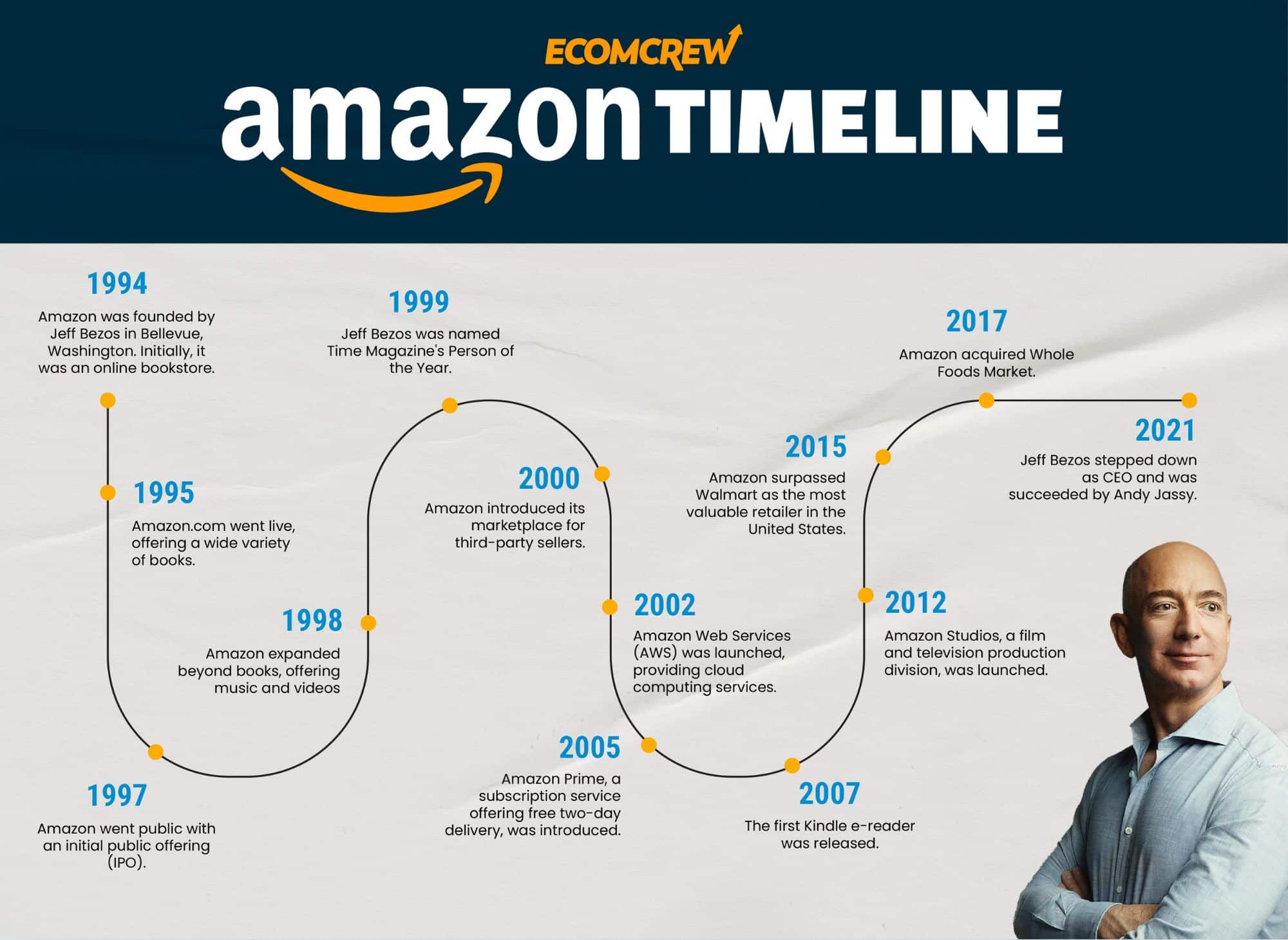
Perhaps the most significant milestone in Amazon’s brand evolution was the launch of Amazon Prime in 2005. At the time, charging customers an annual fee of $79 for “free” two-day shipping was seen as a massive risk. Critics argued it would bankrupt the company. However, Prime was a masterstroke of brand loyalty and behavioral economics.
Transforming Logistics into a Brand Asset
Before Prime, shipping was a friction point in the e-commerce experience. By removing that friction, Amazon fundamentally changed consumer behavior. Prime members began to view the annual fee as a “sunk cost,” incentivizing them to shop on Amazon first to “get their money’s worth.” This transformed Amazon from a mere shopping site into a utility—an essential part of a household’s infrastructure.
Prime also allowed Amazon to expand its brand identity into digital media. By bundling Prime Video, Music, and Kindle lending libraries into the subscription, Amazon moved beyond a retail brand into a lifestyle brand. The identity of the brand shifted from “the place where I buy things” to “the service that provides my entertainment and essentials.”
The Visual Identity: The A to Z Smile
Amazon’s visual branding reflects this strategic shift. The current logo, introduced in 2000, features an arrow that starts at the letter ‘a’ and ends at the letter ‘z,’ forming a smile. This is a literal representation of the “Everything Store” promise—they have everything from A to Z—while the smile represents the customer satisfaction that sits at the heart of their brand mission. This subtle but effective piece of design work solidified the brand’s corporate identity in the minds of global consumers.
Institutionalizing Innovation: The Day 1 Philosophy
A critical part of how Amazon was created—and how it maintains its brand dominance—is the “Day 1” philosophy. Jeff Bezos frequently stated in his annual letters to shareholders that “it is always Day 1” at Amazon. This mantra is a core component of the brand’s corporate identity, signaling a rejection of complacency and a commitment to constant experimentation.
Two-Pizza Teams and Decentralization
To support this brand of constant innovation, Amazon developed a unique organizational structure. The “Two-Pizza Team” rule—the idea that no internal team should be large enough that it requires more than two pizzas to feed—promotes agility and ownership. This decentralized approach allows the brand to move quickly, launching new initiatives like Amazon Web Services (AWS) or the Kindle without the bureaucratic weight that often stifles legacy brands.
AWS: The Brand as Infrastructure
The creation of AWS is a testament to Amazon’s brand flexibility. What began as an internal solution to manage the company’s own sprawling computing needs eventually became a global leader in cloud computing. Strategically, this moved the Amazon brand into the B2B space, positioning it as the backbone of the modern internet. Today, a significant portion of the world’s digital economy runs on Amazon’s infrastructure, proving that the brand’s identity is not limited to retail, but is instead defined by its ability to provide scalable, reliable systems.
Lessons from the Amazon Brand Journey
The creation of Amazon offers a definitive blueprint for brand strategy in the digital age. It demonstrates that a brand is not merely a logo or a catchy slogan, but a consistent set of promises kept over time. By focusing on the “controllables”—price, selection, and convenience—Amazon built a brand that is remarkably resilient to market fluctuations.
Amazon’s journey from a garage in Bellevue to a trillion-dollar entity was paved with strategic risks that prioritized long-term brand equity over short-term profits. By obsessively focusing on the customer experience, leveraging data to drive loyalty, and maintaining a “Day 1” culture of innovation, Amazon created a brand identity that is both ubiquitous and indispensable. For modern brand builders, the lesson is clear: find your “books,” build your flywheel, and never stop acting as if it is the first day of your journey.
aViewFromTheCave is a participant in the Amazon Services LLC Associates Program, an affiliate advertising program designed to provide a means for sites to earn advertising fees by advertising and linking to Amazon.com. Amazon, the Amazon logo, AmazonSupply, and the AmazonSupply logo are trademarks of Amazon.com, Inc. or its affiliates. As an Amazon Associate we earn affiliate commissions from qualifying purchases.