
The question “how much is 1 share of Apple stock?” is far more than a simple query about a numerical value; it’s an entry point into the dynamic world of personal finance, market analysis, and strategic investing. Apple Inc. (AAPL) stands as a titan in the global economy, not just as a technology innovator, but as one of the most widely held and closely watched stocks on earth. For new investors, understanding the price of a single share is the crucial first step, but for seasoned market participants, it represents a fleeting snapshot within a complex ecosystem of financial data, market sentiment, and long-term economic trends. This article will delve into what determines Apple’s stock price, how to access this information, and what implications it holds for your investment journey.
Understanding Apple Stock (AAPL) in the Investment Landscape
Apple’s stock, trading under the ticker symbol AAPL on the NASDAQ exchange, is a bellwether for the technology sector and often an indicator of broader market health. Its performance is scrutinized by millions, reflecting not only the company’s product cycles but also global economic conditions, consumer confidence, and geopolitical stability.
The Basics of Stock Valuation
At its core, the price of one share of Apple stock is determined by supply and demand in the open market. When more investors want to buy than sell, the price tends to rise; conversely, when selling pressure outweighs buying interest, the price falls. However, this fundamental mechanism is influenced by a myriad of factors, both intrinsic to Apple and external to it.
Intrinsic factors include Apple’s financial performance: its revenue growth, profit margins, earnings per share (EPS), and future guidance. Investors evaluate these metrics to assess the company’s profitability and potential for future growth. A company consistently delivering strong financial results often sees its stock price appreciate over time. Market expectations also play a significant role. If Apple announces a groundbreaking new product or reports earnings that exceed analysts’ expectations, its stock price can see a considerable uplift. Conversely, a missed earnings target or a production slowdown can trigger a decline.
External factors encompass everything from interest rate changes by central banks, which affect the cost of borrowing and investment returns, to broader economic recessions or expansions, which influence consumer spending on Apple’s premium products. Geopolitical events, trade tensions, and regulatory changes can also sway investor sentiment and, consequently, Apple’s stock price.
Why Apple Stock Matters to Investors
Apple’s significance to investors extends beyond its market capitalization. For many, it represents a core holding due to its strong brand loyalty, consistent innovation, and robust balance sheet. The company has a history of returning value to shareholders through dividends and share buybacks, making it attractive to both growth-oriented and value-oriented investors. Its inclusion in major indices like the S&P 500 and NASDAQ 100 means that many passively managed funds and ETFs hold AAPL, further contributing to its broad ownership and liquidity.
Moreover, Apple’s ability to navigate economic headwinds and continue growing its services revenue stream (Apple Music, iCloud, App Store, Apple TV+, etc.) provides a level of resilience that many other companies lack. This diversified revenue model, alongside its iconic hardware, makes it a compelling consideration for a well-rounded investment portfolio.
Key Factors Influencing AAPL’s Price
Several critical factors are constantly at play in shaping Apple’s stock price:
-
Earnings Reports: Quarterly earnings calls are perhaps the most anticipated events for AAPL investors. These reports provide a detailed look at revenue, profit, product sales, and service growth, along with management’s outlook for the future.
-
Product Launches: New iPhone models, Mac computers, Apple Watches, or new service offerings often generate immense buzz and can impact sales forecasts, directly influencing investor expectations and stock price.
-
Analyst Ratings and Price Targets: Wall Street analysts constantly issue reports, ratings (buy, sell, hold), and price targets for Apple. These can sway market sentiment, particularly among institutional investors.
-
Competitor Performance: While Apple often leads, the success or struggle of competitors in the smartphone, PC, or streaming markets can indirectly affect Apple’s perceived market dominance and future growth prospects.
-
Economic Indicators: Broader economic data such as GDP growth, inflation rates, consumer spending, and employment figures can influence overall market sentiment and, by extension, AAPL.
-
Company News: Any significant news – an acquisition, a major legal challenge, a change in executive leadership, or a supply chain disruption – can have an immediate effect on the stock.
Navigating the Real-Time Price of AAPL
The price of one share of Apple stock is not static. It fluctuates throughout the trading day, driven by the continuous interplay of buying and selling orders on exchanges.
Where to Find Live Stock Prices
For immediate and up-to-date pricing information, investors have several reliable resources:
-
Financial News Websites: Reputable financial news outlets like Bloomberg, Reuters, The Wall Street Journal, Yahoo Finance, and Google Finance offer real-time or slightly delayed stock quotes. Simply type “AAPL” into their search bar.
-
Brokerage Platforms: If you have an investment account with a brokerage firm (e.g., Fidelity, Charles Schwab, Robinhood, E*TRADE), their platforms typically provide direct, real-time access to stock prices, often with advanced charting tools and news feeds.
-
Stock Market Apps: Many mobile applications are dedicated to stock tracking, providing quotes, watchlists, and alerts.
When checking the price, you’ll typically see a “bid” price (the highest price a buyer is willing to pay) and an “ask” price (the lowest price a seller is willing to accept). The “last trade” price is what’s most commonly reported as the current price. It’s crucial to note that prices are quoted per share.
The Impact of Market Volatility
Market volatility refers to the degree of variation of a trading price series over time. High volatility means the price of Apple stock can swing significantly in a short period, while low volatility suggests more stable price movements. Factors like major economic announcements, unexpected company news, or geopolitical events can cause sudden spikes or drops in volatility.
For investors, understanding volatility is key. High volatility can present opportunities for short-term traders but also carries increased risk. Long-term investors, while less concerned with daily fluctuations, should still be aware of overall market trends and how they might impact their portfolio’s value in the short run. It’s also worth noting that after-hours trading can sometimes show different prices due to less liquidity and news that breaks outside of standard trading hours.
Beyond the Sticker Price: Transaction Costs
While the quoted price tells you what one share of Apple stock costs, it’s not the total outlay for an investor. When you buy or sell shares, you typically incur transaction costs. These can include:
-
Commissions: While many brokerage firms now offer commission-free trading for stocks and ETFs, some may still charge a small fee per trade, particularly for certain account types or premium services.
-
Spreads: The “spread” is the difference between the bid and ask price. For highly liquid stocks like Apple, this spread is usually minimal, but it’s a hidden cost that buyers pay and sellers receive less than the mid-point price.
-
Regulatory Fees: Small fees imposed by regulatory bodies (like the SEC in the U.S.) are often passed on to investors, though these are typically negligible for individual trades.
These costs, while small per share, can add up, especially for frequent traders. It’s important to factor them into your investment calculations, as they can slightly reduce your effective return.
Beyond a Single Share: Exploring Investment Options

The concept of buying “one share” of Apple stock has evolved significantly. Modern investment platforms offer flexibility that democratizes access to even high-priced individual stocks.
Fractional Shares: Democratizing Investment
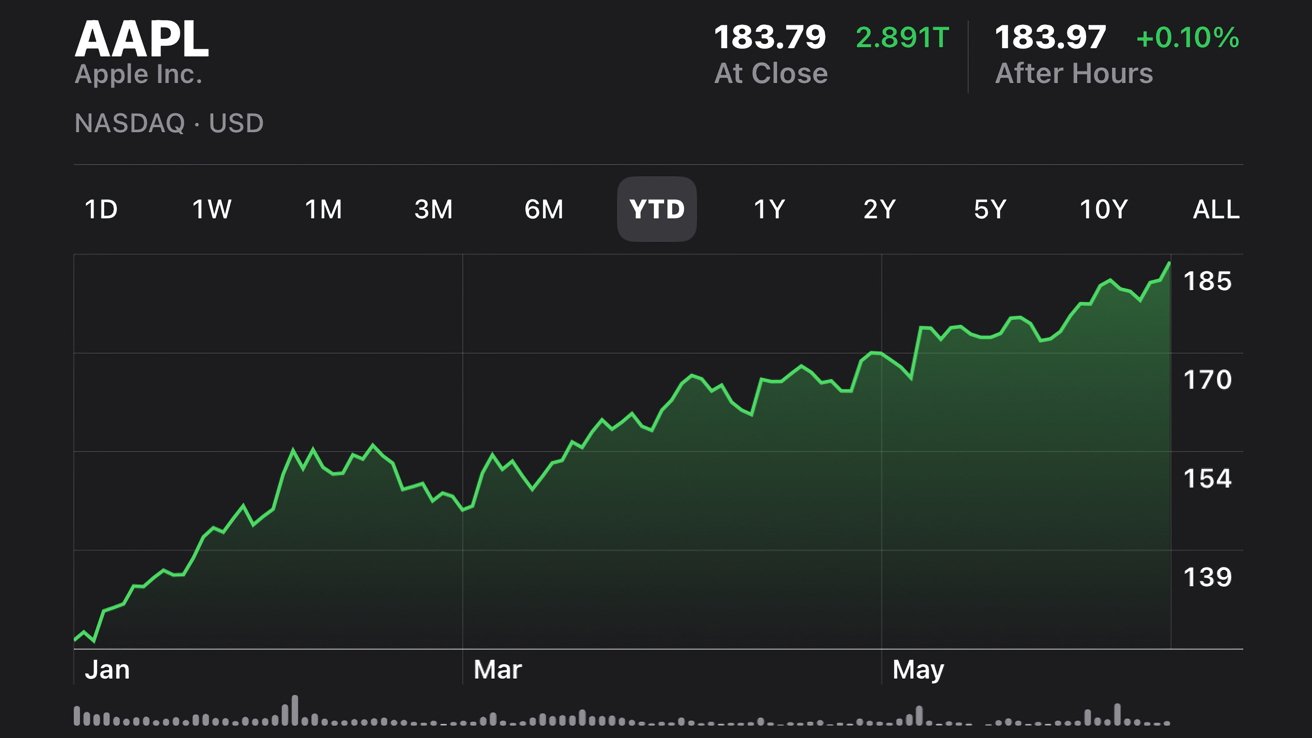
In the past, if Apple stock was trading at, say, $180 per share, you needed at least $180 to buy a single share. This could be a barrier for new investors with limited capital. Fractional shares have revolutionized this. Many brokerage firms now allow investors to buy a fraction of a share, meaning you can invest a specific dollar amount (e.g., $5, $25, $100) into Apple stock, regardless of its per-share price.
This means if Apple is trading at $180, and you invest $90, you would own 0.5 shares. Fractional shares are a powerful tool for:
-
Budgeting: Investors can allocate a fixed dollar amount regularly, making consistent investing (dollar-cost averaging) easier.
-
Diversification: It allows investors to spread smaller amounts of capital across more companies, even those with high per-share prices, without needing to buy full shares of each.
-
Accessibility: It removes the barrier of high individual share prices, making premium stocks like Apple accessible to virtually any investor.
ETFs and Mutual Funds: Diversification Through Apple
For investors who want exposure to Apple but prefer a diversified approach or wish to avoid the direct volatility of individual stock picking, Exchange Traded Funds (ETFs) and Mutual Funds are excellent options. Many technology-focused ETFs or broader market index funds (like those tracking the S&P 500) will have Apple as one of their top holdings due to its market capitalization.
Investing in such a fund means you own a small slice of many companies, including Apple, within a single investment. This strategy offers:
-
Diversification: Reduces company-specific risk, as your investment isn’t solely dependent on Apple’s performance.
-
Professional Management: Mutual funds are actively managed by professionals, while ETFs are typically passively managed to track an index.
-
Lower Barrier to Entry: You can often invest in an ETF or mutual fund for a lower initial investment than buying individual shares of all its underlying components.
Long-Term vs. Short-Term Investment Strategies
Whether buying a single share or integrating Apple into a broader portfolio, an investment strategy is crucial.
-
Long-Term Investing: Many investors purchase Apple stock with a long-term horizon, aiming to benefit from the company’s consistent growth, innovation, and dividend payouts over years or even decades. This strategy often involves “buying and holding,” and perhaps reinvesting dividends. It tends to be less reactive to daily market fluctuations.
-
Short-Term Trading: Some investors engage in short-term trading, attempting to profit from price swings over days or weeks. This strategy is much riskier, requires constant monitoring, and involves a deeper understanding of technical analysis and market sentiment. It’s generally not recommended for novice investors.
Is Apple Stock a Good Investment for You?
Determining if Apple stock is a suitable investment depends entirely on your personal financial situation, goals, and risk tolerance. There’s no one-size-fits-all answer in investing.
Assessing Your Financial Goals and Risk Tolerance
Before investing in any stock, including Apple, consider:
-
Your Investment Horizon: Are you saving for retirement decades away, or for a down payment in a few years? Longer horizons often allow for greater risk.
-
Your Financial Goals: What do you hope to achieve? Growth, income, or a blend? Apple offers both growth potential and a modest dividend.
-
Your Risk Tolerance: How comfortable are you with the possibility of your investment losing value? While Apple is a relatively stable blue-chip stock, all stock investments carry risk. A diversified portfolio often aligns with moderate risk tolerances.
-
Your Current Portfolio: Does Apple fit into your existing asset allocation? Adding it might over-concentrate your tech exposure, or it could be a welcome addition to a more diversified portfolio.
Analyzing Apple’s Financial Health and Future Prospects
Beyond the current share price, a thorough analysis of Apple’s fundamentals is key:
-
Balance Sheet: Look at its cash reserves, debt levels, and overall financial strength. Apple consistently boasts a formidable cash position.
-
Income Statement: Examine revenue growth (especially from services), profit margins, and earnings per share.
-
Cash Flow Statement: Understand how much cash the company generates from its operations.
-
Competitive Landscape: How does Apple stack up against rivals? What are its competitive advantages (brand loyalty, ecosystem lock-in)?
-
Innovation Pipeline: What new products or services are on the horizon? Continued innovation is crucial for long-term growth.
-
Market Share: How is Apple’s market share evolving in key product categories globally?
Analysts often use metrics like the Price-to-Earnings (P/E) ratio to evaluate if a stock is overvalued or undervalued relative to its earnings. Comparing Apple’s P/E to its historical average and to industry peers can offer insights.
The Role of Dividends and Stock Splits
-
Dividends: Apple pays a quarterly dividend to its shareholders. While not exceptionally high, it provides a consistent income stream and signifies a mature, profitable company. Reinvesting these dividends can significantly boost your long-term returns through compounding.
-
Stock Splits: Apple has historically performed stock splits (e.g., a 4-for-1 split in 2020). A stock split does not change the total value of your investment; it simply increases the number of shares you own while proportionally decreasing the price per share. For instance, if you owned 1 share at $400 before a 4-for-1 split, you would own 4 shares at $100 each afterward. Splits make shares more accessible to a broader range of investors and can increase liquidity, often seen as a positive sign by the market.
Practical Steps to Investing in Apple Stock
If you’ve decided that investing in Apple stock aligns with your financial strategy, here are the practical steps to take.
Choosing a Brokerage Account
The first step is to open an investment account with a reputable brokerage firm. Consider factors such as:
-
Fees and Commissions: Look for firms offering commission-free stock trading.
-
Investment Options: Does the broker offer fractional shares, ETFs, and other assets you might be interested in?
-
Platform Usability: Is the website and app user-friendly, especially for beginners?
-
Research Tools and Education: Does the broker provide helpful resources for market analysis and financial literacy?
-
Customer Service: How accessible and responsive is their support?
Popular brokerage firms include Fidelity, Charles Schwab, Vanguard, E*TRADE, and newer platforms like Robinhood or Webull.
Placing Your First Order
Once your account is open and funded:
-
Search for AAPL: Use the ticker symbol “AAPL” to find Apple Inc. stock.
-
Decide on Order Type:
-
Market Order: Buys or sells shares immediately at the best available current market price. This is simple but doesn’t guarantee a precise price.
-
Limit Order: Allows you to set a specific price at which you’re willing to buy or sell. Your order will only execute if the stock reaches that price or better. This offers more control.
-
-
Specify Quantity: Enter the number of shares you wish to buy or the dollar amount if you’re buying fractional shares.
-
Review and Confirm: Double-check all the details of your order before submitting it.
Continuous Monitoring and Portfolio Management
Investing is not a one-time event; it’s an ongoing process.
-
Monitor Your Holdings: Keep an eye on Apple’s performance and any relevant news. However, for long-term investors, avoid checking prices obsessively.
-
Rebalance Your Portfolio: Periodically review your entire investment portfolio to ensure it still aligns with your financial goals and risk tolerance. You might need to buy more Apple, sell some, or adjust other holdings.
-
Stay Informed: Continue educating yourself about market trends, economic indicators, and investment strategies.
-
Consider Dollar-Cost Averaging: This strategy involves investing a fixed amount of money at regular intervals (e.g., $100 every month), regardless of the stock price. This averages out your purchase price over time and reduces the risk of buying all your shares at a market peak.
In conclusion, understanding “how much is 1 share of Apple stock” is merely the tip of the iceberg in your investment journey. It opens the door to exploring market dynamics, evaluating company fundamentals, and aligning investment choices with personal financial goals. Whether through direct share ownership, fractional investing, or diversified funds, Apple stock remains a prominent feature in the investment landscape, offering both opportunities and considerations for every type of investor.
aViewFromTheCave is a participant in the Amazon Services LLC Associates Program, an affiliate advertising program designed to provide a means for sites to earn advertising fees by advertising and linking to Amazon.com. Amazon, the Amazon logo, AmazonSupply, and the AmazonSupply logo are trademarks of Amazon.com, Inc. or its affiliates. As an Amazon Associate we earn affiliate commissions from qualifying purchases.