
American Express Membership Rewards points are often cited by financial experts as the “gold standard” of flexible loyalty currencies. Unlike fixed-value cashback or airline-specific miles, Membership Rewards (MR) points provide a versatile financial asset that can be deployed across a wide spectrum of travel, retail, and financial products. For the savvy cardholder, understanding the nuances of these redemption paths is the difference between getting a mediocre return and extracting thousands of dollars in outsized value.
The true power of the Amex ecosystem lies in its flexibility. Because these points are not tied to a single brand, they act as a hedge against inflation and devaluation within any one specific loyalty program. If an airline raises its award prices, you can simply pivot your points to another partner. This guide explores the diverse landscape of redemption options, categorized by their financial efficiency and strategic utility.
Maximizing High-Value Travel Redemptions
For those seeking the highest mathematical return on their points, travel remains the undisputed champion. While other redemption methods often provide a fixed value of 0.5 to 1.0 cents per point, strategic travel redemptions can frequently yield between 2.0 and 10.0 cents per point, particularly when booking premium cabin international flights.
The Power of Direct Transfer Partners
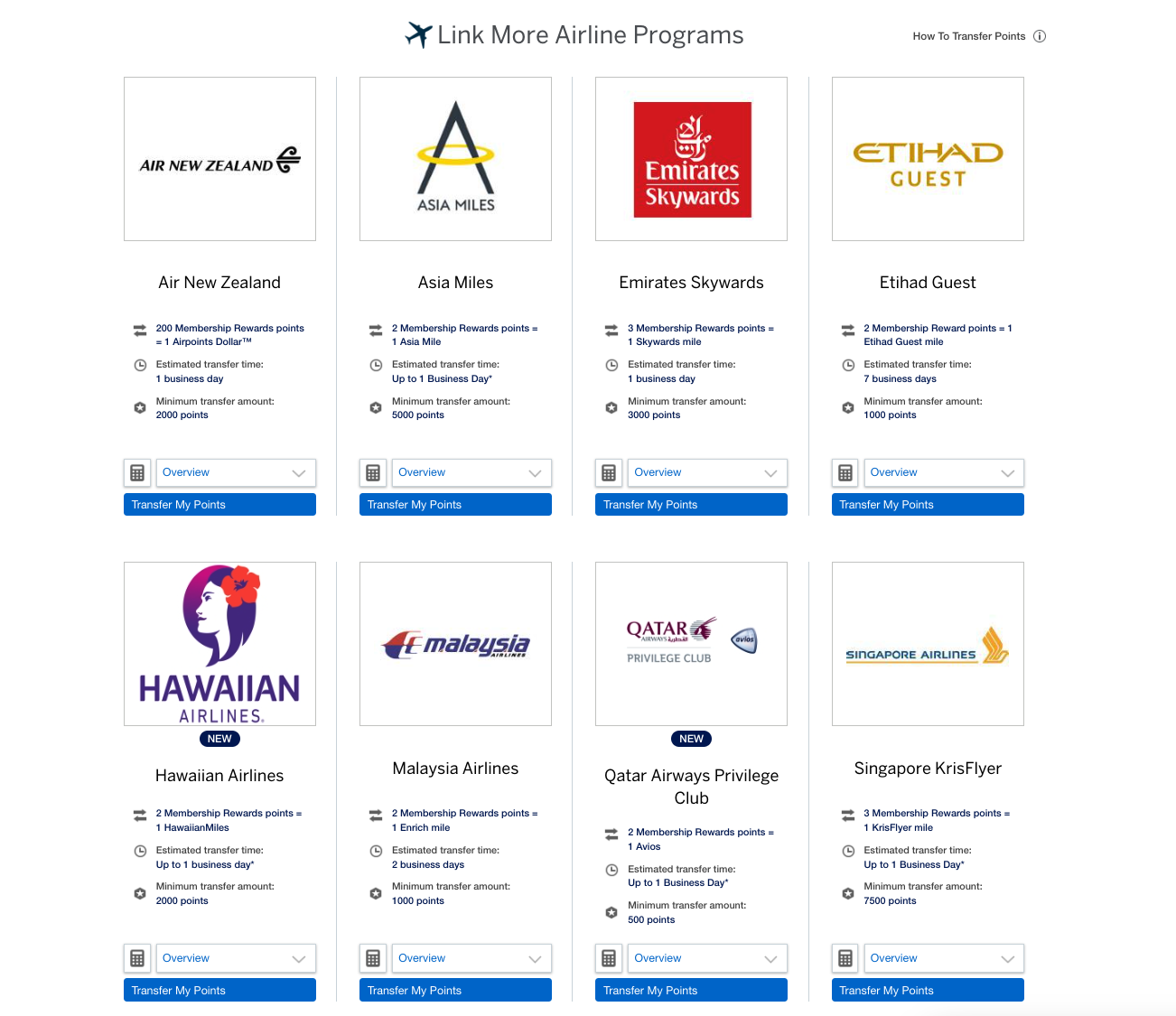
The primary engine behind the high valuation of Amex points is the ability to transfer them to over 20 airline and hotel partners. Most transfers occur at a 1:1 ratio, and they are often instantaneous. By moving points to programs like British Airways Executive Club, Air France-KLM Flying Blue, or Virgin Atlantic Flying Club, cardholders gain access to global airline alliances: Oneworld, SkyTeam, and Star Alliance.
Strategic use of these transfers allows for “sweet spot” bookings. For example, transferring points to Iberia Plus can facilitate business class flights to Europe for a fraction of the points required by domestic carriers. Similarly, transferring to Avianca LifeMiles or Air Canada Aeroplan can unlock high-value seats on Lufthansa or United Airlines. The key to success in this category is flexibility and a basic understanding of partner award charts.
Hotel Transfers and Strategic Stays
While airline transfers usually offer the best “cents per point” (CPP) ratio, Amex also partners with Marriott Bonvoy, Hilton Honors, and Choice Privileges. Generally, transferring to hotels is considered a secondary strategy because hotel points are often valued lower than airline miles. However, during promotional periods where American Express offers a 30% or 40% transfer bonus, these redemptions can become highly lucrative.
Using points for hotel stays is particularly effective for high-demand dates or luxury properties where the cash price is prohibitively high. For instance, redeeming points for a stay at a Waldorf Astoria or a St. Regis during peak season can protect your liquid cash while still providing a five-star experience.
Booking Through Amex Travel
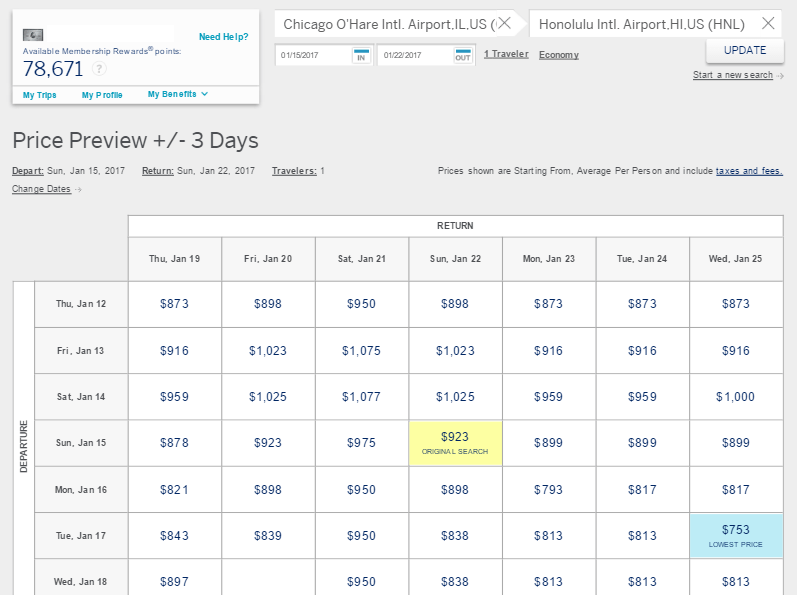
For those who prefer simplicity over the complexity of transfer partners, the Amex Travel portal offers a “Pay with Points” feature. This allows you to book flights, hotels, cruises, and car rentals directly through American Express. Generally, points are worth 1 cent each when used for flights through the portal.
However, certain premium cards, such as the Business Platinum Card®, offer a “35% Airline Bonus.” When you use points to book a first or business-class flight (or any flight on your selected qualifying airline) through Amex Travel, you get 35% of those points back. This effectively raises the value of each point to approximately 1.54 cents, providing a solid, predictable return without the need to hunt for award seat availability.
Retail, Shopping, and Lifestyle Integrations
Beyond the world of travel, American Express has integrated its rewards program into the daily commerce habits of millions. While these options often yield a lower cent-per-point value than travel, they provide a level of liquidity and convenience that can be useful for managing monthly expenses or holiday budgets.
Point Redemption at Checkout: Amazon and PayPal
One of the most visible ways to use Amex points is at the digital point of sale. Through partnerships with Amazon and PayPal, cardholders can link their Membership Rewards accounts and use points to cover all or part of their purchases.
While convenient, it is important to note the opportunity cost. Typically, points used at Amazon or via PayPal are valued at roughly 0.7 cents per point. From a financial optimization standpoint, this is lower than the 1.0 cent value achievable through travel or gift cards. However, during targeted promotion periods, Amazon often offers significant discounts (e.g., 40% or 50% off an order) if you use at least one Amex point. In these specific scenarios, using a single point to unlock a massive cash discount is one of the smartest ways to utilize the program.
Gift Cards and Retail Partnerships
Amex offers a robust catalog of gift cards for major retailers, including Apple, Home Depot, Sephora, and Starbucks. The value of your points here varies by brand. Many “top-tier” gift cards provide a value of 1 cent per point, making a $100 gift card cost 10,000 points.
This can be a strategic move during the holiday season or when you need to make a specific purchase at a store where you don’t have a high-earning credit card category. By converting points to gift cards, you are essentially “cashing out” your rewards at a respectable rate to cover tangible goods.
The Amex Daily Boutique and Statement Credits
Cardholders can also use points to shop directly via the American Express website for merchandise ranging from high-end electronics to kitchen appliances. Furthermore, the “Cover Your Charges” feature allows you to apply points directly toward your billing statement to erase specific transactions.
It is vital to distinguish between these two: statement credits for general charges usually offer the lowest value in the ecosystem, often around 0.6 cents per point. Unless you are in a situation where you need to minimize a balance and have no other cash reserves, this is generally the least efficient use of your hard-earned points.
Strategic Financial Management and Business Utility
For business owners and investors, Amex points represent more than just a travel fund; they are a tool for capital management and business reinvestment. The way points are utilized in a professional context can have a direct impact on a company’s bottom line and tax strategy.
Reinvesting in Business Growth
Owners of American Express business cards can use points to offset significant operational expenses. This includes using points to pay for office supplies, shipping, or even advertising costs through the Amex Travel portal or partner merchants. By using points to cover overhead, a business can preserve its cash flow for payroll, scaling operations, or emergency reserves.
Furthermore, for businesses that require heavy international travel for client meetings or sourcing, the ability to book premium cabins using points instead of cash can save a company tens of thousands of dollars annually. This allows the business to maintain a high standard of professional travel while keeping the “Cost of Goods Sold” or “Travel and Entertainment” budgets lean.
“Invest with Rewards” for Schwab Cardholders
A unique and highly sophisticated redemption path exists for those who hold the American Express Platinum Card® for Charles Schwab. This specific version of the card allows for a redemption known as “Invest with Rewards.”
Through this feature, cardholders can deposit their Membership Rewards points directly into a linked Schwab brokerage account, individual IRA, or Roth IRA. Currently, this redemption is at a rate of 1.1 cents per point. From a long-term wealth-building perspective, this is a powerful option. Instead of spending points on a depreciating asset or a one-time experience, you are converting “loyalty” into “capital.” Over 20 or 30 years, 100,000 points converted into a diversified index fund could grow significantly, far outstripping the value of a single flight.
Navigating the Rules of Point Valuation
To truly master the American Express Membership Rewards program, one must understand that not all points are created equal. The “value” of a point is subjective and depends entirely on the redemption method chosen.
Avoiding the “Point Traps”
The most common mistake cardholders make is choosing convenience over value. Retailers and even Amex itself will often nudge users toward low-value redemptions like statement credits or point-of-sale “Pay with Points” options because these are more profitable for the institution.
A disciplined approach to personal finance suggests that you should establish a “floor” for your point value. If a redemption offers less than 1.0 cent per point, it is generally better to pay with cash and save the points for a higher-value opportunity later. By maintaining this discipline, you ensure that your “points-to-dollars” ratio stays in your favor.
Leveraging Transfer Bonuses
Periodically, American Express will offer limited-time transfer bonuses to specific partners. For example, you might see a 30% bonus when transferring to Virgin Atlantic or a 25% bonus for Air France. These promotions are the most effective way to “inflate” the value of your points.
If you have a large balance of MR points, waiting for these bonuses can turn a 50,000-point flight into a 38,000-point flight. This type of strategic patience is what separates casual users from points enthusiasts who travel the world in luxury for nearly zero out-of-pocket cost.
The Role of Point Versatility in Financial Planning
In the broader context of a financial portfolio, Amex points should be viewed as a liquid asset. They offer a unique form of “travel insurance” or “lifestyle insurance.” If you suddenly need to travel for a family emergency or a last-minute business deal, and cash prices for flights are astronomical, your points act as a buffer.
In conclusion, American Express Membership Rewards points are a multi-faceted financial tool. Whether they are being used to fly across the globe in a first-class suite, erased from a statement to help with a tight month, or invested into a retirement account for future growth, the utility of these points is limited only by the cardholder’s knowledge. By understanding the transfer partners, the portal mechanics, and the strategic financial integrations, you can transform your everyday spending into a significant engine for wealth and experience.
aViewFromTheCave is a participant in the Amazon Services LLC Associates Program, an affiliate advertising program designed to provide a means for sites to earn advertising fees by advertising and linking to Amazon.com. Amazon, the Amazon logo, AmazonSupply, and the AmazonSupply logo are trademarks of Amazon.com, Inc. or its affiliates. As an Amazon Associate we earn affiliate commissions from qualifying purchases.