
For investors tracking the volatile yet lucrative semiconductor industry, the earnings reports of key players like Advanced Micro Devices (AMD) are watershed moments. These quarterly disclosures are far more than just dry financial statements; they are critical indicators of a company’s health, strategic direction, and future potential. Understanding when AMD will report its earnings, and more importantly, what to look for within those reports, is fundamental to making informed investment decisions. In a landscape increasingly driven by Artificial Intelligence, data centers, and advanced computing, AMD’s financial performance offers a crucial barometer for both the company’s trajectory and the broader tech economy.

Understanding the Significance of Earnings Reports
An earnings report is a quarterly or annual financial statement released by a public company, detailing its profitability, revenue, and other financial metrics over a specific period. For a company like AMD, which operates at the cutting edge of technology, these reports carry immense weight, influencing everything from stock prices to market sentiment and analyst ratings.
More Than Just Numbers: A Window into Company Health
At its core, an earnings report provides a transparent look into a company’s operational and financial performance. It typically includes an income statement, balance sheet, and cash flow statement, alongside a narrative discussion from management. For AMD, these numbers reveal the demand for its Ryzen CPUs, Radeon GPUs, EPYC server processors, and embedded solutions. Beyond the raw figures, the report offers qualitative insights into strategic initiatives, market share gains or losses, supply chain dynamics, and research and development progress. Investors scrutinize these details to assess AMD’s ability to innovate, execute, and compete effectively against rivals like Intel and Nvidia. A strong report can signal robust demand for its products, efficient cost management, and successful market penetration, while a weak report might raise concerns about competition, product cycles, or macroeconomic headwinds.
Key Dates and Why They’re Crucial for Investors
Earnings dates are among the most highly anticipated events in the financial calendar. While the exact date can fluctuate slightly, most companies, including AMD, tend to follow a predictable quarterly rhythm. Typically, reports are released a few weeks after the close of each fiscal quarter. For investors, knowing these dates is paramount for several reasons:
-
Anticipation and Volatility: The period leading up to an earnings report is often marked by heightened anticipation and increased stock volatility. Speculation about performance can drive prices up or down.
-
Trading Strategy: Traders often position themselves before an earnings release, either betting on a strong report or hedging against a weak one. Long-term investors may use these dates to re-evaluate their positions.
-
Information Edge: The report itself provides new, material information that can significantly impact a company’s valuation. Accessing this information promptly is crucial for making timely decisions.
-
Market-Wide Impact: For a major player like AMD, its earnings can also provide insights into the health of the broader semiconductor industry and even the global economy, given the ubiquitous nature of its technology.
Missing an earnings date means missing a critical opportunity to react to new information, which could lead to suboptimal investment outcomes.
Decoding AMD’s Earnings Calendar and Expectations
While precise dates vary year-to-year and quarter-to-quarter, AMD, like most public companies, adheres to a structured reporting schedule. Understanding this pattern, along with the factors that influence investor expectations, is key to navigating the earnings cycle effectively.
Typical Reporting Schedule for AMD
AMD’s fiscal year aligns with the calendar year, meaning its quarters end on March 31st (Q1), June 30th (Q2), September 30th (Q3), and December 31st (Q4). Earnings reports are typically released approximately four to six weeks after the close of each quarter.
-
Q1 Earnings: Usually reported in late April or early May.
-
Q2 Earnings: Typically reported in late July or early August.
-
Q3 Earnings: Often reported in late October or early November.
-
Q4 (Full Year) Earnings: Generally reported in late January or early February of the following year.
Investors can usually find the confirmed earnings date on AMD’s investor relations website, financial news outlets, or through financial data providers several weeks in advance. It’s always advisable to consult official sources for the most accurate and up-to-date information. These reports often occur after market close on the designated day, followed by an investor conference call and webcast where management discusses results and provides forward-looking guidance.
Factors Influencing Report Dates and Investor Anticipation
While the general timeframe is consistent, exact dates can shift due to various factors, including internal reporting timelines, holidays, or strategic considerations. More importantly, investor anticipation leading up to these reports is shaped by a confluence of elements:
-
Analyst Estimates: A consensus of expectations compiled by financial analysts who cover AMD. The company’s actual performance relative to these estimates (beating or missing) often drives significant stock movement.
-
Competitor Performance: The earnings reports of rivals like Intel (CPUs/GPUs), Nvidia (GPUs/Data Center AI), and even foundries like TSMC, can set the tone for AMD’s report, offering clues about market demand or competitive pressures.
-
Macroeconomic Conditions: Broader economic trends, such as inflation, interest rates, consumer spending, and corporate IT budgets, directly impact demand for semiconductors. A slowing economy might temper expectations, while robust growth could heighten them.
-
Industry Trends: Major shifts like the explosion of AI, the expansion of cloud computing, or new gaming console cycles directly affect AMD’s target markets and product demand. Investors will look for commentary on how AMD is capitalizing on or adapting to these trends.
-
Company-Specific News: Any significant product launches, partnerships, acquisitions, or executive changes announced prior to the earnings call can significantly influence sentiment and expectations.
Managing these expectations is crucial, as even strong results can disappoint if they fall short of an overly optimistic consensus. Conversely, slightly weaker results might be forgiven if accompanied by positive forward guidance or strategic updates.
What to Look For in AMD’s Earnings Report
Beyond the headline numbers of revenue and earnings per share (EPS), a comprehensive analysis of AMD’s earnings report requires delving into several key areas that provide deeper insights into its operational health and future prospects.
Revenue and Profitability: The Core Metrics
These are the most fundamental indicators.
-
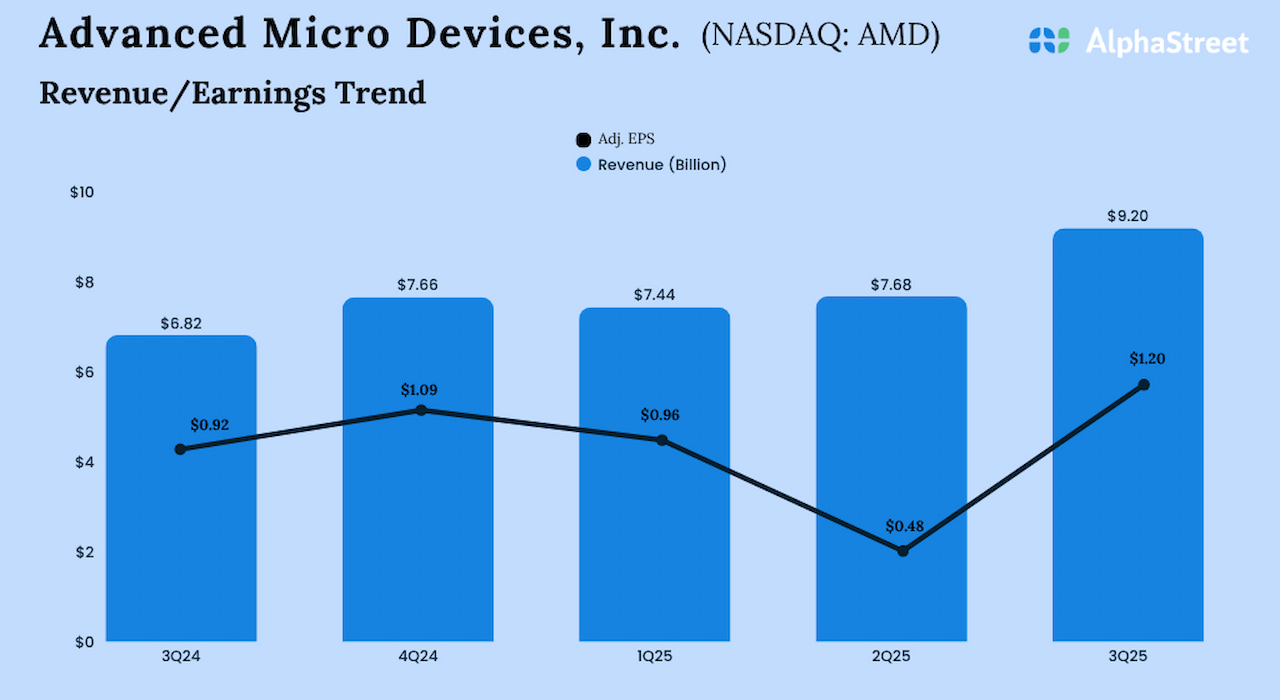
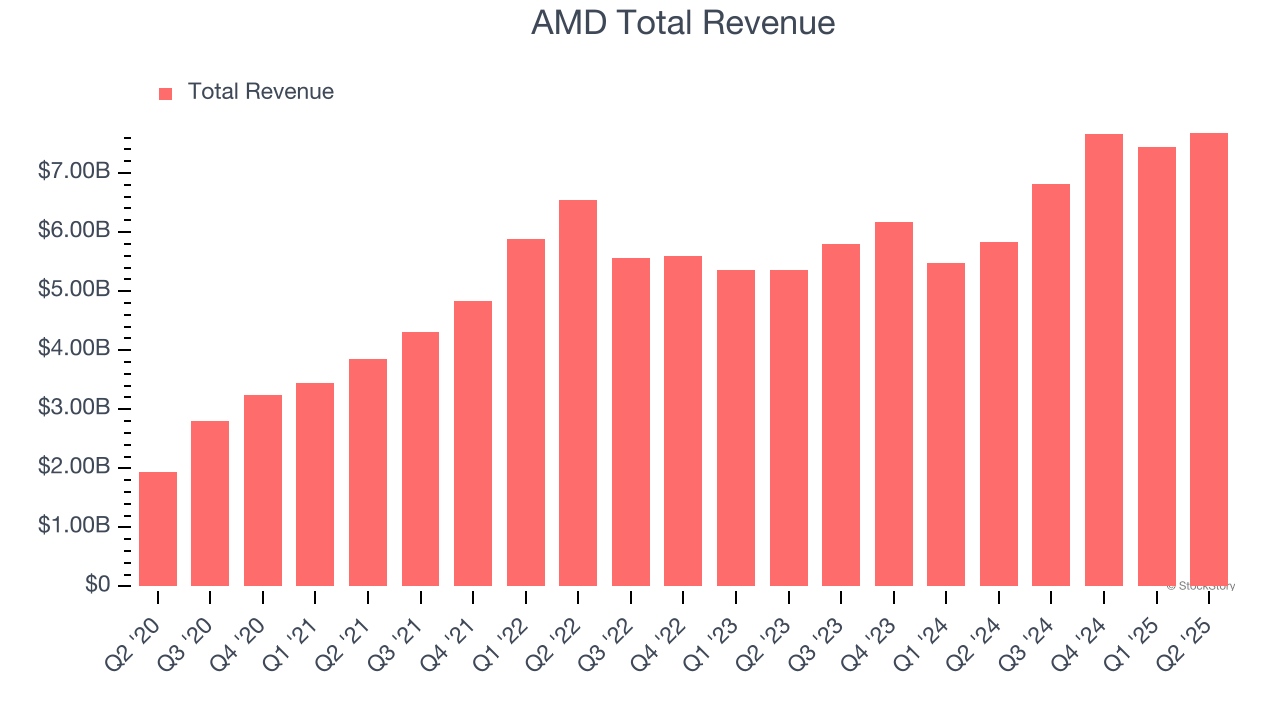
Total Revenue: Represents the top line, showing how much money AMD generated from sales. Investors will look for year-over-year and sequential growth, comparing it against analyst estimates.
-
Gross Margin: The percentage of revenue left after deducting the cost of goods sold. A higher gross margin indicates better pricing power and efficient production.
-
Operating Income/Margin: Revenue minus operating expenses (R&D, sales, general & administrative). This metric reflects the profitability of AMD’s core operations.
-
Net Income (Profit) and Earnings Per Share (EPS): The bottom line, indicating the company’s overall profitability. EPS is particularly important as it directly relates to shareholder value. Investors look for growth in EPS and compare it to analyst consensus.
-
Free Cash Flow (FCF): The cash generated after accounting for capital expenditures. FCF indicates a company’s ability to fund operations, pay down debt, or return value to shareholders.
Guidance and Future Outlook: Predicting Performance
Perhaps even more impactful than past performance is management’s outlook for the next quarter and the full fiscal year. This “guidance” provides critical insights into the company’s anticipated revenue, gross margin, and sometimes EPS, based on current market conditions, product pipelines, and strategic plans. Analysts and investors heavily weigh this guidance, as it often dictates immediate stock price reactions. Positive guidance can send shares soaring, even if the past quarter’s results were just “in line,” while a cautious outlook can lead to a sell-off, regardless of strong prior performance. Commentary on market demand, inventory levels, supply chain stability, and competitive landscape during the investor call further clarifies this outlook.
Product Segment Performance: CPUs, GPUs, and Data Centers
AMD’s business is segmented, and understanding the performance of each segment is vital:
-
Client (PC) Segment: This includes Ryzen CPUs and Radeon GPUs for consumer and commercial PCs. Demand here is often influenced by PC market cycles, competition with Intel, and new product launches.
-
Data Center Segment: EPYC server CPUs and Instinct data center GPUs are critical drivers of AMD’s growth. Performance in this segment reflects demand from cloud providers, enterprises, and increasingly, AI deployments. This is a high-growth, high-margin area.
-
Gaming Segment: Primarily Radeon GPUs for discrete graphics cards and semi-custom chips for game consoles (e.g., PlayStation, Xbox). This segment’s performance is tied to console cycles and the broader gaming market.
-
Embedded Segment: Custom solutions for industrial, automotive, communications, and networking markets. The acquisition of Xilinx significantly bolstered this segment.
Investors will look for which segments are driving growth, which are underperforming, and management’s strategy for each. For example, sustained growth in the Data Center segment is often viewed very positively due to its strategic importance and profitability.
Competitor Landscape and Market Share Implications
AMD operates in intensely competitive markets. Its earnings call will often feature commentary (direct or indirect) on its standing relative to competitors:
-
Intel: The primary rival in client CPUs and server CPUs. Market share gains against Intel are closely watched.
-
Nvidia: The dominant player in discrete GPUs and AI accelerators. AMD’s ability to challenge Nvidia, especially in the burgeoning AI data center market, is a key long-term thesis for many investors.
-
Other Players: While less direct, companies like Qualcomm (mobile CPUs, potentially PC), Arm (server chips), and even specific ASIC developers, contribute to the competitive environment.
Commentary on market share, competitive pricing, and technological leadership provides context for AMD’s financial performance and its future growth potential.
Strategic Implications for Investors and the Market
The immediate aftermath of an AMD earnings report can be a period of significant price movement. However, savvy investors look beyond the short-term volatility to understand the long-term implications for their portfolio strategy.
Short-Term Volatility vs. Long-Term Value Creation
It’s common for AMD’s stock to experience swings of several percentage points (or even double digits) immediately following an earnings release, regardless of whether the results beat or miss expectations. This volatility is driven by algorithmic trading, analyst reactions, and the rapid assimilation of new information.
-
Beat and Raise: When AMD beats analyst estimates and raises its future guidance, the stock typically rallies.
-
Miss and Lower: When it misses estimates and lowers guidance, a sell-off is likely.
-
Mixed Results: In-line results or a beat on one metric but a miss on another, often lead to more nuanced, sometimes unpredictable, reactions.
For long-term investors, it’s crucial not to overreact to these immediate fluctuations. Instead, the report should be viewed through the lens of AMD’s long-term value creation thesis. Is the company executing on its strategic goals? Are its growth drivers still intact? Is it gaining market share in critical segments like data centers and AI? A temporary dip might represent a buying opportunity if the underlying fundamentals remain strong, while a short-term rally might be a chance to trim if the valuation becomes stretched.
How to Prepare for and React to Earnings Announcements
Effective preparation and a disciplined reaction plan are essential for investors:
-
Before the Report:
-
Know the Date: Mark your calendar for the confirmed earnings release date and time.
-
Review Analyst Estimates: Understand the consensus revenue, EPS, and gross margin expectations.
-
Identify Key Questions: What specific metrics or commentary are most important for your investment thesis (e.g., Data Center growth, AI accelerator orders, gross margin trajectory)?
-
Formulate a Plan: Decide in advance how you will react to different scenarios (e.g., if it beats, if it misses, if guidance is strong/weak). Avoid making impulsive decisions.
-
-
During and After the Report:
-
Access the Report Promptly: Read the official press release and 10-Q filing (if available).
-
Listen to the Conference Call: Management’s commentary and the Q&A session with analysts often provide critical context not fully captured in the financial statements.
-
Analyze Key Metrics: Compare actual results to your expectations and analyst consensus. Focus on the guidance for the next quarter and year.
-
Re-evaluate Your Thesis: Does the report confirm, challenge, or invalidate your reasons for owning AMD stock? Adjust your position if your fundamental outlook has genuinely changed, not just due to short-term price movement.
-
Beyond the Headlines: The Broader Economic Context
AMD’s performance is not isolated. It operates within a complex global economic and technological ecosystem, and understanding these broader trends provides vital context for interpreting its earnings.
Macroeconomic Trends and Semiconductor Industry Performance
The semiconductor industry is cyclical and highly sensitive to macroeconomic conditions:
-
Inflation and Interest Rates: Higher inflation can increase production costs for AMD, while rising interest rates can dampen consumer and corporate spending on electronics and IT infrastructure, impacting demand.
-
Global GDP Growth: A strong global economy generally correlates with higher demand for semiconductors across all segments (PCs, servers, gaming, embedded). Economic slowdowns can lead to reduced sales and inventory buildups.
-
Supply Chain Resilience: Geopolitical tensions, natural disasters, or pandemics can disrupt the semiconductor supply chain, affecting AMD’s ability to procure components or manufacture its chips, leading to higher costs or missed sales opportunities. Investors will look for management commentary on these external factors and their impact.
Technological Shifts and AMD’s Competitive Edge
The rapid pace of technological innovation constantly reshapes AMD’s market opportunities and challenges:
-
Artificial Intelligence (AI): The explosion of AI, particularly generative AI, is a massive growth driver for high-performance GPUs and specialized accelerators in data centers. AMD’s MI series of accelerators are directly competing for a piece of this market, and their traction here is a crucial long-term growth story.
-
Data Center Growth: Cloud computing continues to expand, driving demand for powerful and efficient server CPUs (EPYC) and GPUs. AMD’s ability to gain market share and maintain technological leadership in this segment is paramount.
-
Gaming and High-Performance Computing (HPC): Continued advancements in gaming graphics and the need for powerful HPC systems in scientific research and enterprise also drive demand for AMD’s CPUs and GPUs.
-
Edge Computing and Embedded Systems: The proliferation of IoT devices and edge AI requires specialized, power-efficient chips. AMD’s acquisition of Xilinx has significantly strengthened its position in the embedded and adaptive computing space, offering new avenues for growth.
AMD’s earnings reports are therefore not just about its past financial performance, but also a critical indicator of its adaptability, innovation, and strategic positioning within these evolving technological landscapes. Investors who can successfully integrate an understanding of these macro and technological forces with a granular analysis of AMD’s financials are best positioned to leverage earnings reports for long-term investment success.
aViewFromTheCave is a participant in the Amazon Services LLC Associates Program, an affiliate advertising program designed to provide a means for sites to earn advertising fees by advertising and linking to Amazon.com. Amazon, the Amazon logo, AmazonSupply, and the AmazonSupply logo are trademarks of Amazon.com, Inc. or its affiliates. As an Amazon Associate we earn affiliate commissions from qualifying purchases.