
In the world of personal finance and global economics, few phrases carry as much weight as “the Dow is up” or “the Dow is down.” When people ask, “What is the Dow Jones right now?” they are rarely asking for a specific five-digit number. Instead, they are usually asking a deeper question: What is the health of the American economy, and how does it affect my financial future?
The Dow Jones Industrial Average (DJIA), often referred to simply as “the Dow,” is the oldest and most recognized stock market index in the United States. While newer indices like the S&P 500 or the Nasdaq Composite may offer a broader or more tech-focused view, the Dow remains the primary psychological barometer for the average investor. Understanding what the Dow represents at this exact moment requires looking past the daily fluctuations and examining the structural, economic, and psychological forces that move its thirty constituent “blue-chip” companies.

Understanding the Mechanics of the Dow Jones Industrial Average
To understand what the Dow is doing right now, one must first understand what it actually is. Founded in 1896 by Charles Dow and Edward Jones, the index was originally intended to track the performance of the industrial sector of the American economy. Today, it has evolved to include companies from nearly every sector, including technology, healthcare, and finance.
What Constitutes the Index?
The Dow is composed of 30 prominent, publicly-owned companies based in the United States. These are not just any companies; they are “blue chips”—stable, well-established leaders in their respective industries with a history of reliable earnings. Because the index only contains 30 stocks, it is much more concentrated than the S&P 500. When you look at the Dow “right now,” you are looking at a snapshot of giants like Apple, Microsoft, Goldman Sachs, Home Depot, and UnitedHealth Group.
The Unique Price-Weighted Calculation
Unlike most modern indices which are market-capitalization weighted (where larger companies have more influence), the Dow is price-weighted. This means that companies with a higher stock price per share have a greater impact on the index’s movement than those with lower share prices, regardless of the company’s actual size. For example, a $1 move in a stock trading at $200 has the same effect on the index as a $1 move in a stock trading at $50, even though the percentage change is vastly different. Understanding this quirk is essential for investors trying to decipher why the Dow might be moving in a different direction than other major indices on any given day.
The Role of the Dow Divisor
Because the index has existed for over a century, simple addition of the 30 stock prices would yield a number that doesn’t account for stock splits, spin-offs, or other structural changes. To solve this, the “Dow Divisor” is used. This is a continuously adjusted mathematical constant that ensures that a stock split doesn’t cause a massive, artificial drop in the index. When we see the Dow at 38,000 or 40,000 points, we are seeing the sum of the 30 stock prices divided by this current divisor.
Why the Dow Matters to Your Personal Finances
When the Dow Jones experiences a significant swing, it ripples through the personal finance landscape. Even if you do not directly own shares in the 30 companies that make up the index, its performance likely dictates the growth of your retirement accounts and your overall sense of financial security.
A Barometer for Economic Sentiment
The Dow is often seen as a proxy for the “Main Street” economy. Because it features companies that provide essential services—like credit cards (Visa/Amex), pharmaceuticals (Johnson & Johnson), and retail (Walmart)—its performance reflects the spending power and confidence of the American consumer. When the Dow is trending upward “right now,” it suggests that corporate America is healthy, consumer demand is robust, and the broader economic outlook is positive.
Impact on Retirement and 401(k) Portfolios
For the vast majority of workers, the Dow Jones is the heartbeat of their retirement strategy. Most target-date funds and mutual funds found in 401(k) plans are heavily weighted toward the blue-chip stocks found in the Dow. When the index hits a new milestone, it signifies that the “value” portion of an investor’s portfolio is likely performing well. Conversely, a sharp drop in the Dow can lead to “portfolio fatigue,” where investors feel the urge to sell out of fear, potentially missing out on long-term compound growth.
The Psychological Influence on Market Participation
The Dow is the “headline” index. It is the number featured on evening news broadcasts and at the top of financial news websites. This creates a powerful psychological feedback loop. When the Dow is performing well “right now,” it encourages new investors to enter the market, providing liquidity and upward momentum. When it enters a “bear market” (a 20% drop from recent highs), it can trigger widespread economic anxiety that impacts everything from housing starts to small business expansion.
Navigating Volatility in the Current Market

The question “What is the Dow right now?” is often asked during times of high volatility. In today’s financial climate, several macroeconomic factors are constantly tugging at the index, causing the rapid point swings we see on our screens.
Interest Rates and the Federal Reserve
Perhaps the most significant driver of the Dow in the current era is the Federal Reserve’s monetary policy. When interest rates rise, it becomes more expensive for the 30 Dow companies to borrow money and expand. Furthermore, higher interest rates make fixed-income investments like bonds more attractive, which can pull capital away from the stock market. Investors constantly watch the Dow’s reaction to “Fed Speak”—statements from central bank officials—to gauge whether the “easy money” era is returning or if restrictive conditions will persist.
Corporate Earnings and Growth Forecasts
Every quarter, the companies within the Dow report their earnings. Because there are only 30 companies, a single “miss” by a heavyweight like Microsoft or a “beat” by a giant like JPMorgan Chase can swing the entire index. Right now, investors are particularly focused on “guidance”—what companies predict for the future. In an era of high inflation and shifting consumer habits, the Dow’s current level is a reflection of how well these 30 titans are navigating rising costs and maintaining their profit margins.
Geopolitical Stability and Global Supply Chains
While the Dow represents American companies, these entities are global in scale. Coca-Cola, Boeing, and Caterpillar depend on international trade and stable global supply chains. Wars, trade disputes, or shipping disruptions in the Red Sea or the South China Sea can immediately impact the Dow. When you look at the index “right now,” you are seeing a real-time reaction to global stability (or the lack thereof).
Strategic Approaches to Investing in the Dow
For the individual looking to build wealth, the Dow Jones offers a variety of entry points. It isn’t just a number to watch; it is an asset class to utilize.
Index Funds and Exchange-Traded Funds (ETFs)
The most common way to invest in the Dow is through an ETF that tracks the index, such as the SPDR Dow Jones Industrial Average ETF Trust (Ticker: DIA), commonly known as “Diamonds.” By buying shares of this ETF, an investor gains exposure to all 30 companies in the index in one transaction. This provides instant diversification across sectors like tech, healthcare, and industrials, making it a cornerstone for many long-term “buy and hold” strategies.
The “Dogs of the Dow” Strategy
A popular personal finance strategy involves the “Dogs of the Dow.” This entails buying the ten stocks in the index that have the highest dividend yield at the end of the year. The theory is that these companies are temporarily undervalued, and their high dividends provide a “cushion” of income while the investor waits for the stock price to rebound. This strategy highlights the Dow’s reputation as a “value-oriented” index compared to the high-growth, high-risk Nasdaq.
Long-Term Perspective vs. Short-Term Noise
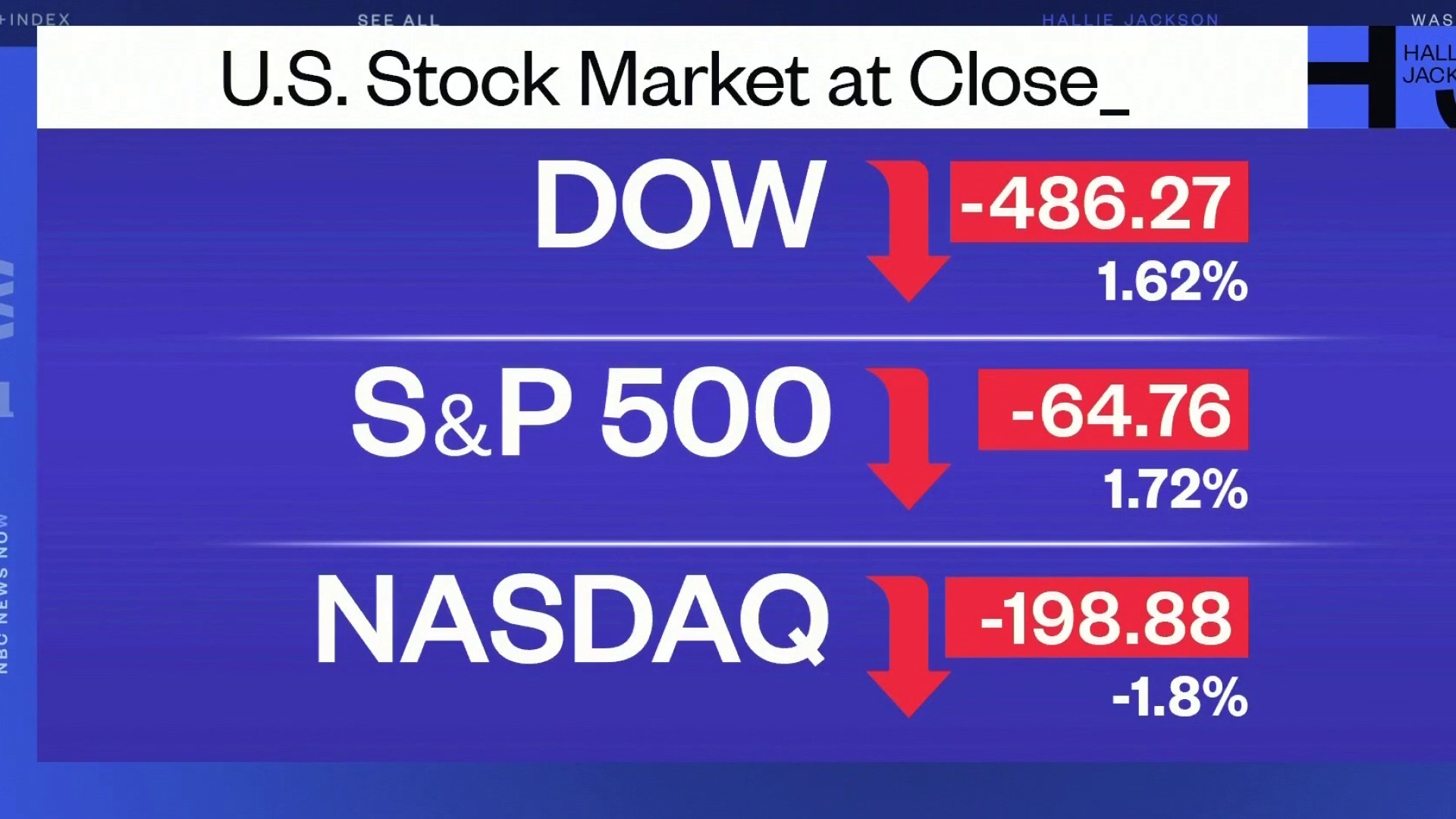
The most important lesson for any investor asking “What is the Dow right now?” is to maintain a long-term perspective. On any given day, the Dow might drop 500 points due to a bad inflation report or a geopolitical rumor. However, looking at a 10-year or 20-year chart of the Dow reveals a consistent upward trajectory. The Dow is designed to reflect the progress of human industry and American corporate ingenuity; as long as companies continue to innovate and grow, the index’s long-term trend remains positive.
The Evolving Identity of the Dow Jones
The Dow is not a static list of companies. It is a living entity that changes to reflect the modern economy. Understanding its current state requires acknowledging how it has changed and where it is going.
The Shift Toward Technology and Services
Historically, the Dow was dominated by “smokestack” industries—steel, oil, and heavy manufacturing. However, recent additions like Amazon and the removal of older industrial giants like Walgreens or General Electric (which was an original member) show that the Dow is becoming more service-oriented and tech-heavy. This shift means that the Dow “right now” is more sensitive to software cycles and e-commerce trends than it was twenty years ago.
Inflation and the “Value” Factor
In periods of high inflation, the Dow often outperforms tech-heavy indices. This is because many Dow companies have “pricing power”—the ability to raise prices for their essential goods and services without losing customers. Whether it’s a pro-consumer giant like Proctor & Gamble or a credit processor like American Express, these companies can often weather inflationary storms better than speculative startups.
Conclusion: More Than Just a Number
In conclusion, when we ask “What is the Dow Jones right now?” we are engaging with a complex ecosystem of corporate performance, investor psychology, and global economics. While the daily point total provides a quick snapshot, the true value of the index lies in its role as a long-term indicator of wealth creation. By understanding how it is calculated, why it reacts to the news, and how to invest in it strategically, you can move past the “noise” of daily fluctuations and use the Dow as a powerful tool for your personal financial success. Whether the Dow is at a record high or in the midst of a correction, it remains the definitive pulse of the market—a pulse that every serious investor should learn to read.
aViewFromTheCave is a participant in the Amazon Services LLC Associates Program, an affiliate advertising program designed to provide a means for sites to earn advertising fees by advertising and linking to Amazon.com. Amazon, the Amazon logo, AmazonSupply, and the AmazonSupply logo are trademarks of Amazon.com, Inc. or its affiliates. As an Amazon Associate we earn affiliate commissions from qualifying purchases.