
In the fast-paced world of global finance, few phrases carry as much weight as “How is the Dow doing?” For seasoned investors, retirement savers, and casual observers alike, the Dow Jones Industrial Average (DJIA) serves as the primary shorthand for the health of the American economy. When people ask, “What is the Dow Jones at right now?” they are rarely just looking for a five-digit number; they are seeking to understand the current temperature of the financial markets, the sentiment of major corporations, and the potential trajectory of their personal wealth.

The Dow Jones is more than just a ticker symbol; it is a historical legacy and a psychological benchmark. Despite the rise of more complex indices, the Dow remains the most cited market indicator in the world. Understanding where it stands today requires a deep dive into its composition, the factors that drive its movement, and how to interpret its daily fluctuations within the broader context of your financial strategy.
The Mechanics of the Dow: More Than Just a Number
To understand where the Dow is “right now,” one must first understand what the index actually represents. Unlike the S&P 500, which tracks 500 of the largest U.S. companies, the Dow Jones Industrial Average is comprised of only 30 “blue-chip” companies. These are established, stable, and industry-leading firms that are intended to represent the various sectors of the American industrial and consumer landscape.
The Price-Weighted Methodology
One of the most unique—and sometimes controversial—aspects of the Dow is that it is a price-weighted index. In most modern indices, companies with a higher total market capitalization (the total value of all their shares) have a greater impact on the index’s movement. However, in the Dow, the price per share is the deciding factor.
For example, a company with a share price of $200 will have a much larger impact on the Dow’s daily movement than a company with a share price of $50, even if the latter has a larger total market value. This quirk means that when you see the Dow “at” a certain level, that level is determined by the “Dow Divisor,” a mathematical constant used to account for stock splits, dividends, and other structural changes. This ensures that the index remains consistent over time, even as the individual stock prices of its 30 components shift.
The Selection of the “Blue-Chip 30”
The components of the Dow are not chosen by a rigid formula but by the editors of the Wall Street Journal. The goal is to select companies that have an excellent reputation, demonstrate sustained growth, and are of interest to a large number of investors. Today, the index includes giants like Microsoft, Apple, Goldman Sachs, and UnitedHealth Group. Because these companies are so deeply integrated into the global economy, the “right now” status of the Dow is often viewed as a reflection of the overall stability of the corporate world.
Critical Factors Moving the Dow in Today’s Economy
When you look at the Dow Jones at any given moment, the number you see is the result of a complex interplay of global economic forces. In the current financial climate, several key “market movers” dictate whether the Dow is climbing toward new record highs or retreating into correction territory.
Federal Reserve Policy and Interest Rates
Perhaps the most significant driver of the Dow in the current era is the Federal Reserve’s stance on interest rates. When the Fed raises rates to combat inflation, borrowing becomes more expensive for corporations and consumers. This can lead to lower profit margins and reduced spending, which often causes the Dow to dip. Conversely, when the market anticipates a “pivot” toward lower rates, the Dow frequently rallies. Investors watch the Fed’s announcements with eagle eyes because the 30 companies in the Dow are often capital-intensive businesses that rely on favorable credit conditions to fund expansion.
Corporate Earnings Season
Four times a year, the companies within the Dow report their quarterly earnings. Because the Dow only tracks 30 companies, a single “miss” or “beat” by a heavyweight component like Boeing or JPMorgan Chase can swing the entire index by hundreds of points. When you check the Dow “right now” during earnings season, you are essentially seeing a real-time report card on how the world’s largest businesses are navigating supply chain issues, labor costs, and consumer demand.
Inflation and Macroeconomic Indicators
Data points such as the Consumer Price Index (CPI), employment reports, and GDP growth figures are the lifeblood of market movement. If inflation data comes in “hotter” than expected, the Dow may drop as investors fear continued restrictive monetary policy. On the other hand, a “Goldilocks” report—one that shows a cooling economy without a full-blown recession—can send the Dow soaring as it signals a potential “soft landing.”

How to Interpret “Right Now” Performance
Checking the Dow Jones is a daily ritual for many, but the timing of your check matters significantly. The stock market is a living organism, and its “price” at 10:00 AM might tell a completely different story than its price at 3:30 PM.
Navigating Intraday Volatility
The Dow can be incredibly volatile during the trading day (9:30 AM to 4:00 PM EST). Often, the market opens with a “gap” up or down based on news that occurred overnight or in the early morning. High-frequency trading and algorithmic bots react to news headlines in milliseconds, causing sharp spikes or drops. For the individual investor, it is crucial not to overreact to these “intraday” moves. A 200-point drop in the morning might be completely erased by a “closing bell rally” as institutional investors rebalance their portfolios.
The Significance of Dow Futures
If you are asking “what is the Dow at right now” outside of standard trading hours, you are likely looking at Dow Futures. Futures are contracts that allow traders to bet on what the value of the Dow will be when the market next opens. They trade nearly 24 hours a day and serve as a leading indicator. If Dow Futures are down 1%, it suggests that the actual index will likely open lower the following morning. Watching futures is a way for investors to gauge market sentiment regarding global events that happen while the New York Stock Exchange is closed.
The Dow vs. The S&P 500 and Nasdaq
While the Dow is the most famous index, it is rarely used in isolation by financial professionals. To truly understand what the Dow’s current level means, you must compare it to its “siblings”: the S&P 500 and the Nasdaq Composite.
Diversity vs. Focus
The S&P 500 is often considered a better representation of the “total market” because it includes 500 companies and covers approximately 80% of the available market capitalization in the U.S. If the Dow is up but the S&P 500 is down, it suggests that “Value” stocks (which dominate the Dow) are performing well, while the broader market might be struggling.
The Tech Gap
The Nasdaq is heavily weighted toward technology and high-growth companies. There is often a “rotation” in the markets. In times of economic uncertainty, investors might flee the high-risk Nasdaq and move their money into the “safe haven” blue-chip stocks of the Dow. Conversely, in a booming bull market driven by Artificial Intelligence or tech innovation, the Nasdaq may significantly outperform the Dow. Monitoring the spread between these indices helps investors understand where the “smart money” is flowing “right now.”
Strategic Investing: Looking Beyond the Daily Ticker
For the average person managing a 401(k) or a brokerage account, the “right now” value of the Dow Jones is a piece of data, but it should not be a trigger for impulsive action. Successful investing is about time in the market, not timing the market.
The Danger of Recency Bias
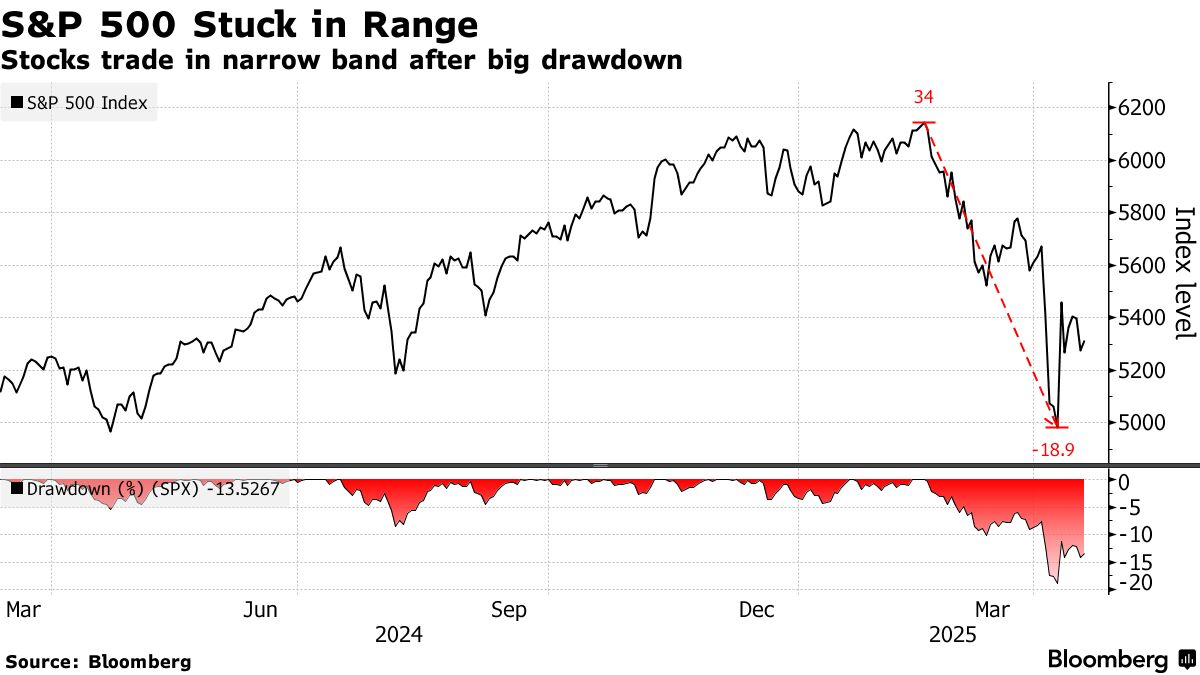
Recency bias is the tendency to believe that what is happening “right now” will continue indefinitely. If the Dow has been “in the red” for three days straight, it is easy to feel that a crash is imminent. However, history shows that the Dow Jones has an upward trajectory over the long term. Since its inception in 1896, it has survived depressions, world wars, and pandemics. The number you see on your screen today is just one point on a very long, fluctuating line.
Using the Dow as a Barometer, Not a Map
The Dow is an excellent barometer for general market sentiment, but it should not be the sole map for your investment journey. A well-diversified portfolio includes mid-cap stocks, small-cap stocks, international equities, and bonds—none of which are captured by the 30 companies in the Dow. Use the Dow to stay informed about the macro environment, but rely on your long-term financial plan to make decisions.
In conclusion, when you seek to know what the Dow Jones is at “right now,” you are participating in a century-old tradition of gauging the American economic engine. Whether the index is at 30,000 or 40,000, the value lies in understanding the underlying mechanics—interest rates, corporate earnings, and global sentiment—that push that number up or down. By maintaining a professional and detached perspective on daily volatility, you can use the Dow as a tool for insight rather than a source of anxiety, ensuring that your financial future remains secure regardless of the day’s closing number.
aViewFromTheCave is a participant in the Amazon Services LLC Associates Program, an affiliate advertising program designed to provide a means for sites to earn advertising fees by advertising and linking to Amazon.com. Amazon, the Amazon logo, AmazonSupply, and the AmazonSupply logo are trademarks of Amazon.com, Inc. or its affiliates. As an Amazon Associate we earn affiliate commissions from qualifying purchases.