
In the dynamic world of digital assets, few questions are as frequently asked, yet as nuanced to answer definitively, as “how much is my Bitcoin worth?” Unlike traditional financial instruments with relatively stable valuation methods, Bitcoin’s value is a constantly moving target, influenced by a complex interplay of market forces, technological advancements, global events, and human psychology. For both the seasoned investor and the curious newcomer, grasping the true worth of one’s Bitcoin portfolio requires more than just a glance at a price chart; it demands an understanding of its underlying economics, the tools available for real-time tracking, and a strategic perspective on long-term value.

This article will demystify the process of assessing your Bitcoin’s worth, providing practical insights and actionable strategies within the realm of personal finance and investing. We’ll explore the factors that drive its valuation, guide you through the most reliable methods for checking its current price, and offer a framework for understanding your net worth in this revolutionary digital currency.
The Volatile Nature of Bitcoin Valuation
Bitcoin’s price discovery is a fascinating, often bewildering, phenomenon. Its value is not tethered to a central bank or a tangible asset in the traditional sense, but rather emerges from a decentralized global marketplace. This unique characteristic is both its strength and the source of its legendary volatility. To truly understand “how much your Bitcoin is worth,” one must first appreciate the forces that dictate its market price.
Supply and Demand Dynamics
At its core, Bitcoin’s value, like any commodity, is dictated by the fundamental economic principles of supply and demand. However, Bitcoin introduces unique twists to these principles:
-
Fixed Supply Cap: Bitcoin has a hard cap of 21 million coins that will ever be created. This scarcity, programmed into its protocol, contrasts sharply with fiat currencies that can be printed infinitely. As the available supply diminishes due to lost coins, unmined blocks, and increasing adoption, the limited supply puts upward pressure on demand.
-
Halving Events: Approximately every four years, the reward for mining new Bitcoin blocks is cut in half. These “halving” events reduce the rate at which new Bitcoin enters circulation, effectively tightening supply and historically preceding significant price rallies.
-
Growing Demand: Demand for Bitcoin comes from various sources: individual investors seeking an alternative store of value or speculative asset, institutional investors diversifying portfolios, companies using it for cross-border payments, and nations exploring it as legal tender. Increasing utility and mainstream acceptance contribute significantly to demand.
Macroeconomic and Geopolitical Influences
While often touted as an uncorrelated asset, Bitcoin’s price is increasingly influenced by broader macroeconomic and geopolitical currents. These external factors can significantly swing market sentiment and, consequently, its valuation:
-
Inflationary Concerns: Bitcoin is often dubbed “digital gold” because many investors see it as a hedge against inflation. When traditional currencies lose purchasing power, Bitcoin’s fixed supply can make it an attractive alternative, potentially increasing its value.
-
Interest Rate Decisions: Central bank decisions on interest rates can impact investor appetite for risk assets. Higher rates can make safer investments (like bonds) more attractive, potentially drawing capital away from more volatile assets like Bitcoin.
-
Geopolitical Instability: During times of political unrest or economic uncertainty, Bitcoin can act as a safe haven asset for some, particularly in regions with unstable currencies or banking systems. Conversely, major global conflicts can also trigger a broad flight to safety, affecting all risk assets negatively.
-
Dollar Strength: As Bitcoin is primarily priced in USD, fluctuations in the strength of the U.S. dollar can indirectly affect its perceived value for international investors. A stronger dollar can sometimes lead to downward pressure on Bitcoin’s price.
Regulatory Landscape and Market Sentiment
The nascent and evolving regulatory environment for cryptocurrencies plays a crucial role in shaping market sentiment and, by extension, Bitcoin’s price. Clarity, or lack thereof, from governments worldwide can induce significant market movements:
-
Positive Regulatory Developments: When major economies announce clear regulatory frameworks, approve Bitcoin ETFs, or integrate crypto into their financial systems, it lends legitimacy and can spur institutional adoption, leading to price appreciation.
-
Restrictive Regulations: Conversely, outright bans, severe restrictions, or increased taxation on crypto activities can trigger panic selling and significant price declines. News about potential regulatory crackdowns is often met with sharp market corrections.
-
Fear, Uncertainty, and Doubt (FUD): The crypto market is notoriously susceptible to “FUD.” News stories, social media trends, and prominent figures’ opinions can quickly sway investor sentiment, leading to rapid price swings driven by emotion rather than fundamental value. Whales (large holders) can also manipulate prices through significant buy or sell orders.
Practical Tools for Checking Your Bitcoin’s Current Worth
Knowing your Bitcoin’s value is essential for personal finance management, tax planning, and strategic investment decisions. Fortunately, numerous tools are available to help you track its worth in real-time.
Cryptocurrency Exchanges
The most direct way to check your Bitcoin’s value is through the cryptocurrency exchange where you purchased it or where it is currently held. Platforms like Coinbase, Binance, Kraken, and Gemini provide up-to-the-minute pricing, often aggregated from their own order books and global market data.
-
Real-Time Price Feeds: These exchanges display the current market price of BTC against various fiat currencies (USD, EUR, GBP) and other cryptocurrencies.
-
Portfolio View: Most exchanges offer a portfolio or dashboard view that automatically calculates the current fiat value of your holdings based on the prevailing market price.
-
Trade History: You can also review your trade history to see the price at which you bought or sold Bitcoin, which is crucial for calculating your cost basis.
Dedicated Portfolio Trackers and Wallets
For those who hold Bitcoin across multiple platforms or in self-custody wallets, dedicated portfolio trackers and multi-currency wallets offer a centralized solution for monitoring your holdings.
-
Portfolio Trackers (e.g., CoinStats, Blockfolio, Koinly): These apps and web services allow you to manually input your crypto holdings or, in some cases, link directly to your exchange accounts. They then aggregate the data, provide real-time valuation, and often offer advanced analytics like profit/loss tracking, diversified portfolio views, and even tax reporting tools.
-
Non-Custodial Wallets (e.g., Ledger Live, Trezor Suite, Exodus, Electrum): Many software and hardware wallets integrate price feeds directly into their interface. While primarily designed for secure storage and transaction management, they also provide an estimated fiat value of the Bitcoin held within that specific wallet. This is particularly useful for tracking cold storage assets.
Reputable Price Aggregators
For a broad overview of the market and comparative pricing, cryptocurrency price aggregators are invaluable.

-
CoinMarketCap and CoinGecko: These websites are the industry standard for tracking cryptocurrency prices, market capitalization, trading volumes, and historical data. They aggregate data from hundreds of exchanges worldwide, providing an average market price that reflects global liquidity. You can search for Bitcoin (BTC) and see its current price, 24-hour change, and other key metrics.
-
Financial News Websites: Major financial news outlets (e.g., Bloomberg, Reuters, Wall Street Journal) and specialized crypto news sites (e.g., CoinDesk, The Block) also provide real-time Bitcoin price data and analysis, often integrated into their market sections.
Calculating Your Personal Bitcoin Net Worth
While market price tells you the per-coin value, your personal Bitcoin net worth requires a more granular calculation that considers your individual investment history. This is crucial for financial planning, understanding your returns, and accurately reporting for tax purposes.
Understanding Your Average Cost Basis
The “cost basis” is the original price you paid for your Bitcoin, including any fees. If you’ve bought Bitcoin multiple times at different prices, you’ll need to calculate your “average cost basis” to understand your actual profitability.
-
Tracking Purchases: Maintain meticulous records of every Bitcoin purchase, including the date, amount of Bitcoin acquired, the price per Bitcoin at the time of purchase, and any associated transaction fees.
-
Calculating Average: Sum the total amount of money you’ve spent on Bitcoin and divide it by the total amount of Bitcoin you own. For example, if you bought 0.1 BTC at $30,000 and another 0.1 BTC at $40,000, your total spend is $7,000 for 0.2 BTC, making your average cost basis $35,000 per BTC.
-
Tax Implications (FIFO, LIFO): For tax reporting, especially when selling, you may need to apply specific accounting methods like First-In, First-Out (FIFO) or Last-In, First-Out (LIFO), or specific identification, depending on your jurisdiction. This impacts which cost basis is used for gains/losses.
Accounting for Fees and Taxes
Transaction fees and potential taxes significantly impact your actual net worth and realized gains. Ignoring these can lead to an overestimation of your profits.
-
Exchange Fees: Every time you buy or sell Bitcoin on an exchange, you typically pay a trading fee. These fees should be factored into your cost basis when buying and subtracted from your proceeds when selling.
-
Network Fees (Gas Fees): When you send Bitcoin from one wallet to another, you pay a network transaction fee to miners. While this doesn’t directly impact your cost basis, it reduces the amount of Bitcoin effectively held or available for transfer.
-
Capital Gains Tax: In many jurisdictions, selling Bitcoin for a profit is subject to capital gains tax. This is a critical component of your financial planning. The tax rate often depends on how long you’ve held the asset (short-term vs. long-term). Understanding these obligations is paramount to knowing your net worth after tax liabilities.
-
Income Tax: If you earn Bitcoin through mining, staking, or as payment for goods/services, it may be treated as taxable income at the time of receipt, further complicating your tax situation.
The Importance of Accurate Record-Keeping
Diligent record-keeping is the bedrock of accurate Bitcoin net worth calculation. Without it, you risk miscalculating your gains/losses, facing difficulties during tax season, and making suboptimal investment decisions.
-
Spreadsheets: A simple yet effective method is to maintain a detailed spreadsheet of all your crypto transactions (buys, sells, transfers, fees, income).
-
Crypto Tax Software: Specialized crypto tax software (e.g., Koinly, CoinTracker, TaxBit) can integrate with your exchanges and wallets, automatically tracking transactions, calculating cost basis, and generating tax reports. These tools are invaluable for investors with numerous transactions.
-
Regular Reconciliation: Periodically reconcile your records with your exchange statements and wallet balances to ensure accuracy and identify any discrepancies.
Strategic Considerations for Your Bitcoin Investment
Understanding “how much your Bitcoin is worth” isn’t merely about a number; it’s about informing your broader financial strategy. Bitcoin, as a frontier asset, demands a thoughtful approach to management.
Navigating Market Volatility with a Long-Term Perspective
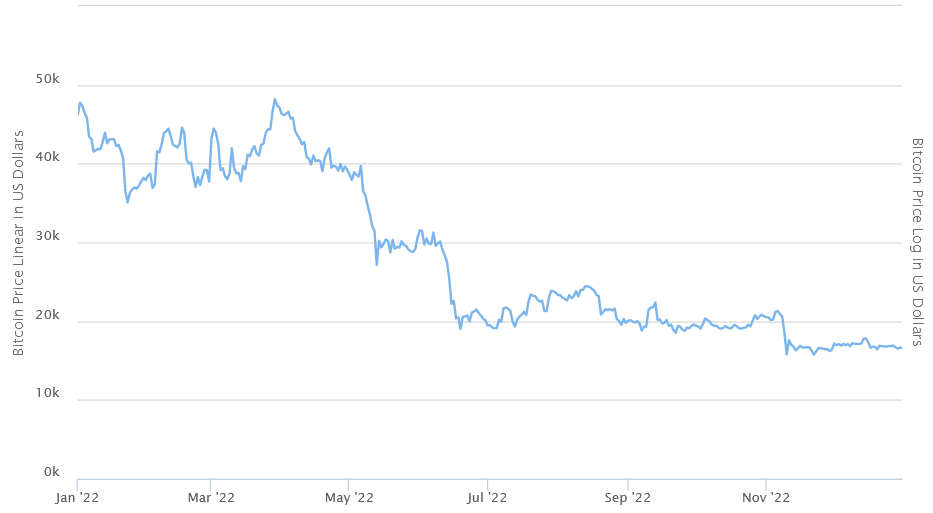
Bitcoin’s price swings can be dramatic, with double-digit percentage changes in a single day not uncommon. For most investors, attempting to time these fluctuations is a high-risk endeavor.
-
Dollar-Cost Averaging (DCA): A prudent strategy for many is Dollar-Cost Averaging, where you invest a fixed amount of money at regular intervals (e.g., weekly or monthly) regardless of the price. This strategy averages out your purchase price over time, reducing the impact of short-term volatility and mitigating the risk of buying at a market peak.
-
Focus on Fundamentals: Instead of being swayed by daily price movements, focus on Bitcoin’s long-term fundamentals: its scarcity, increasing adoption, technological advancements (e.g., Lightning Network for scalability), and its role as a decentralized, permissionless financial system.
-
Emotional Resilience: Investing in Bitcoin requires a degree of emotional resilience. Avoid making impulsive decisions based on fear or greed. Stick to your predefined investment strategy.
Security and Custody Best Practices
The security of your Bitcoin is paramount. If your Bitcoin is compromised, its worth becomes zero for you, regardless of the market price.
-
Understand Custodial vs. Non-Custodial:
-
Custodial: Your Bitcoin is held by a third-party, like an exchange. You don’t control the private keys. While convenient, it carries counterparty risk (e.g., exchange hacks or insolvency).
-
Non-Custodial: You hold your own private keys, giving you full control. This is generally considered more secure but places the full responsibility for key management on you.
-
-
Hardware Wallets (Cold Storage): For significant amounts of Bitcoin, hardware wallets (e.g., Ledger, Trezor) offer the highest level of security by keeping your private keys offline, away from internet-connected threats.
-
Strong Passwords and Two-Factor Authentication (2FA): For any online accounts, including exchanges and software wallets, use unique, strong passwords and always enable 2FA (preferably using an authenticator app, not SMS).
-
Beware of Scams: The crypto space is rife with phishing attempts, fake giveaways, and investment scams. Always verify sources and be skeptical of offers that seem too good to be true.
Integration into Your Broader Financial Plan
Bitcoin should not be viewed in isolation but as part of your overall financial portfolio. Its allocation should align with your risk tolerance, investment horizon, and financial goals.
-
Diversification: While Bitcoin can be a powerful asset, it’s generally advisable to diversify your investments across various asset classes (stocks, bonds, real estate, other cryptocurrencies) to manage risk.
-
Risk Tolerance: Bitcoin is a high-risk, high-reward investment. Only invest what you can afford to lose without impacting your financial well-being.
-
Long-Term Goals: Consider how Bitcoin fits into your long-term financial objectives, whether it’s retirement planning, wealth accumulation, or preserving purchasing power. Regular portfolio reviews are crucial to ensure your Bitcoin holdings remain aligned with your evolving goals and market conditions.
Conclusion
Understanding “how much is my Bitcoin worth” is an ongoing process that extends beyond a simple price check. It involves appreciating the complex interplay of market dynamics, leveraging the right financial tools, meticulously tracking your personal investment data, and adopting a strategic approach to managing this revolutionary asset. Bitcoin’s journey is far from over, and while its volatility can be daunting, its potential to reshape the global financial landscape makes it a compelling, albeit challenging, component of modern personal finance. By staying informed, practicing disciplined record-keeping, and adhering to robust security measures, you can confidently navigate the world of Bitcoin and accurately assess its value within your financial portfolio.
aViewFromTheCave is a participant in the Amazon Services LLC Associates Program, an affiliate advertising program designed to provide a means for sites to earn advertising fees by advertising and linking to Amazon.com. Amazon, the Amazon logo, AmazonSupply, and the AmazonSupply logo are trademarks of Amazon.com, Inc. or its affiliates. As an Amazon Associate we earn affiliate commissions from qualifying purchases.