
The global financial infrastructure is currently undergoing a silent but profound transformation. For decades, the movement of money across borders has relied on an antiquated network of correspondent banking relationships, characterized by high fees, multi-day settlement periods, and a lack of transparency. Ripple, a San Francisco-based fintech firm, has positioned itself as the primary architect of a new “Internet of Value,” aiming to streamline these processes. Unlike many blockchain-based projects that focus on retail speculation, Ripple’s utility is primarily centered on institutional applications. To understand who uses Ripple, one must look at the specific tiers of the global financial hierarchy, from Tier 1 multinational banks to regional payment providers and central governing bodies.
The Core Ecosystem: RippleNet and Institutional Adoption
At the heart of Ripple’s adoption is RippleNet, a global network of institutional payment providers that use Ripple’s proprietary technology to send money globally. This network is designed to replace or augment the Society for Worldwide Interbank Financial Telecommunication (SWIFT) system. While SWIFT provides a messaging service for banks to communicate their intentions, it does not facilitate the actual movement of funds, leading to the necessity of “pre-funded” accounts known as Nostro/Vostro accounts.
Global Banking Giants and Tier 1 Institutions
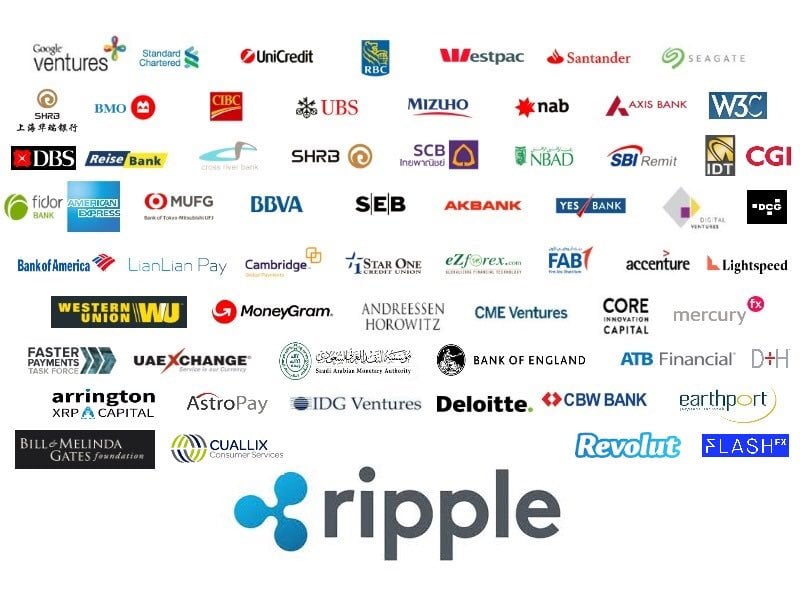
Among the most prominent users of Ripple technology are major commercial banks seeking to reduce the operational costs of international liquidity. Banks such as Standard Chartered, Santander, and Mitsubishi UFJ Financial Group (MUFG) have been long-term partners or explorers of Ripple’s enterprise solutions. For these institutions, the primary draw is the ability to offer their corporate clients real-time, low-cost international transfers.
Standard Chartered, for instance, has utilized Ripple to facilitate payment corridors between Singapore and India, two of the world’s most active trade hubs. By integrating RippleNet, the bank can bypass the layers of intermediary banks that typically extract fees and delay transactions. Similarly, Santander introduced One Pay FX, a mobile app powered by Ripple technology, which allows customers to complete international transfers in near real-time, providing a level of certainty regarding exchange rates and arrival times that was previously impossible.
Regional Banks and Emerging Markets
While global giants use Ripple to optimize existing corridors, regional banks in emerging markets use it to compete on a global scale. In regions like Southeast Asia, Latin America, and the Middle East, banks often lack the vast network of correspondent relationships enjoyed by Western institutions. Ripple acts as a leveling force.
Siam Commercial Bank (SCB) in Thailand and SBI Remit in Japan are prime examples. These institutions have leveraged Ripple to create high-speed payment corridors that serve migrant workers and small-to-medium enterprises (SMEs). For a regional bank, using RippleNet means they can offer services that rival the speed and efficiency of the world’s largest banks without needing to maintain billions of dollars in dormant capital across various foreign bank accounts.
Payment Providers and Remittance Services
The remittance sector—money sent by individuals working abroad to their families in their home countries—is perhaps the most direct beneficiary of Ripple’s financial tools. Historically, the remittance industry has been plagued by predatory pricing and slow delivery, often taking up to five days for a family to receive funds.
Disrupting Traditional Money Transfers
Several high-volume payment providers have integrated Ripple to gain a competitive edge in the high-frequency remittance market. Companies like FlashFX in Australia, Azimo in Europe, and Tranglo in Southeast Asia use RippleNet to settle transactions instantly. By doing so, they can offer lower fees to their customers while maintaining higher margins for themselves due to reduced operational overhead.
The use case here is primarily focused on liquidity management. Traditional remittance firms must keep large pools of local currency in every country where they operate. This “pre-funding” is a massive financial burden. Ripple’s solutions allow these providers to move value on-demand, freeing up capital that can be reinvested into business growth or passed on to consumers as savings.
The Role of On-Demand Liquidity (ODL)
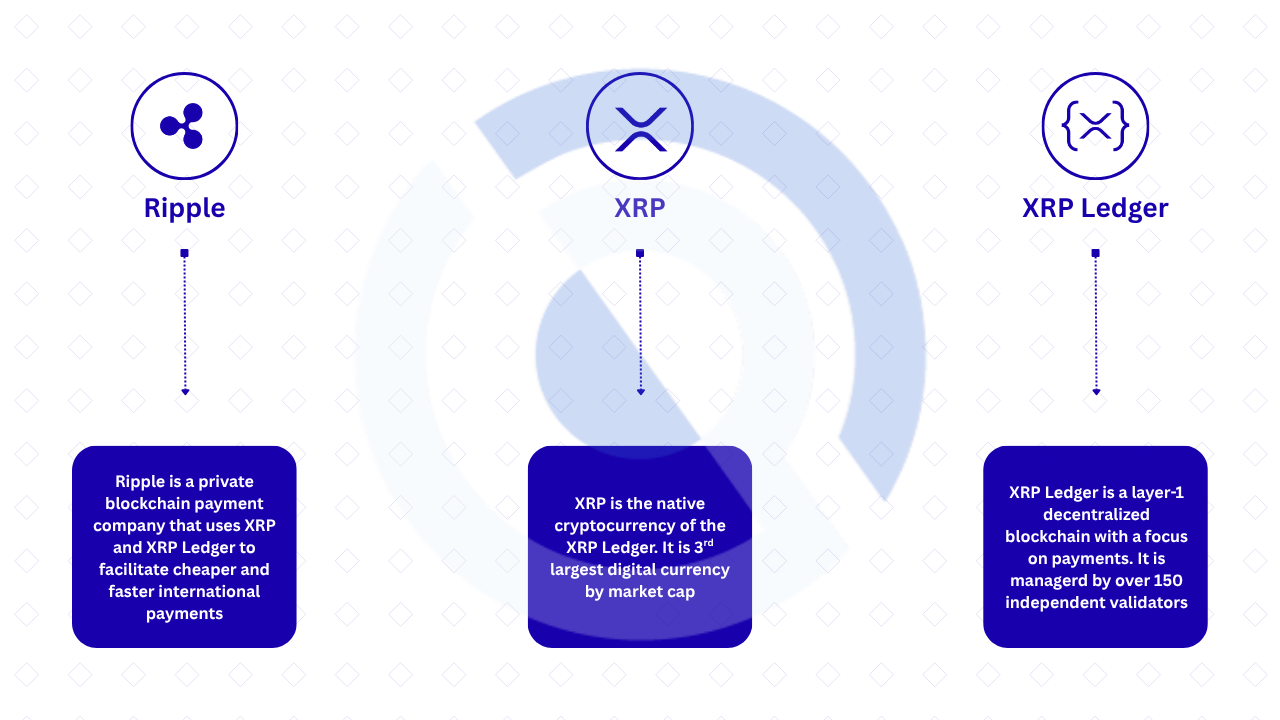
A specific subset of Ripple users utilizes a service known as On-Demand Liquidity (ODL). This service uses the digital asset XRP as a “bridge currency” to facilitate the instantaneous exchange of one fiat currency for another. For example, a payment provider in the United Kingdom can convert British Pounds to XRP, send the XRP across the ledger to Mexico, where it is instantly converted into Mexican Pesos.

Users of ODL, such as the global payments platform Nium and the Middle Eastern exchange Al Ansari Exchange, benefit from the fact that XRP settles in three to five seconds. This removes the need for the sender to hold pre-funded accounts in the destination country. This specific financial tool is increasingly attractive to businesses operating in “exotic” currency corridors where liquidity is low and volatility is high.
Digital Asset Exchanges and Liquidity Providers
To facilitate the movement of value, Ripple requires a robust infrastructure of digital asset exchanges. These entities act as the “on-ramps” and “off-ramps” for the fiat-to-crypto-to-fiat process. Consequently, many of the world’s largest cryptocurrency exchanges are integrated into the Ripple ecosystem as critical infrastructure providers.
Facilitating Market Making and Arbitrage
Exchanges such as Bitstamp, Independent Reserve, and Coins.ph are not just platforms for retail traders; they are essential nodes for Ripple’s institutional flows. These exchanges provide the liquidity necessary for ODL transactions to occur without causing significant price slippage.
Institutional market makers also use Ripple’s XRP Ledger due to its high throughput and low transaction costs. Because the ledger can handle 1,500 transactions per second at a fraction of a cent per transaction, it is an ideal environment for high-frequency financial activities. These users are less concerned with the “banking” aspect of Ripple and more focused on the technical efficiency of the ledger as a financial rail for moving capital between global markets.
Treasury Management for Corporations
Beyond banks and remittance firms, a new class of users is emerging: corporate treasuries. Large multinational corporations often have subsidiaries in dozens of countries, necessitating complex internal transfers to manage payroll, taxes, and operational expenses. Using Ripple, these corporations can treat their global capital as a single pool, moving funds between jurisdictions instantly to meet localized needs. This reduces the “drag” on corporate capital and allows for more precise financial forecasting and management.
Central Banks and the Future of CBDCs
One of the most significant developments in the Ripple ecosystem is the company’s engagement with sovereign nations. As the world moves toward the digitization of national currencies, many central banks are looking for the underlying infrastructure to support Central Bank Digital Currencies (CBDCs).
National Currency Digitization Projects
Ripple has developed a specific version of its ledger—the CBDC Private Ledger—designed specifically for central banks. This has led to partnerships with countries like Bhutan, Palau, and Montenegro. These nations are using Ripple’s technology to pilot stable, sovereign digital currencies that can interoperate with the global financial system.
For a central bank, the appeal of Ripple lies in its proven track record of security and its environmental efficiency. Unlike “proof-of-work” systems like Bitcoin, Ripple’s consensus mechanism is highly energy-efficient, aligning with the sustainability goals of many modern governments. By using Ripple, these central banks can modernize their domestic payment systems while ensuring they have a bridge to international markets and other digital currencies.
Interoperability in Global Finance
The ultimate goal for central bank users is interoperability. In a future where every nation has its own digital currency, the world will need a “neutral” rail to connect them. Ripple positions itself as this connective tissue. By adopting Ripple’s standards, central banks ensure that their domestic digital currency can be easily exchanged for foreign assets, maintaining their relevance in an increasingly digital global economy.
Conclusion: The Shifting Paradigm of Value Transfer
The user base of Ripple is a testament to the shifting requirements of the global economy. It is no longer sufficient for money to move at the speed of mail; it must move at the speed of data. From Tier 1 banks like Santander and Standard Chartered seeking to modernize their legacy systems, to remittance providers like Tranglo aiming to lower costs for migrant workers, the common thread is the pursuit of efficiency.
The adoption of Ripple by central banks for CBDC projects suggests that the technology is moving from the fringes of “fintech” into the very core of global monetary policy. While retail investors may focus on the price of the underlying asset, the real value of the Ripple ecosystem is being built by the institutions that use it daily to settle billions of dollars in transactions. As more entities move away from the friction-filled processes of the 20th century, the network of Ripple users continues to expand, signaling a new era where capital is as liquid and mobile as the information on the internet.
aViewFromTheCave is a participant in the Amazon Services LLC Associates Program, an affiliate advertising program designed to provide a means for sites to earn advertising fees by advertising and linking to Amazon.com. Amazon, the Amazon logo, AmazonSupply, and the AmazonSupply logo are trademarks of Amazon.com, Inc. or its affiliates. As an Amazon Associate we earn affiliate commissions from qualifying purchases.