
In the rapidly evolving landscape of digital assets, few cryptocurrencies have sparked as much debate, legal scrutiny, and investor interest as XRP, the native token of the Ripple network. For many investors asking “how much Ripple now,” the question isn’t just about the current price ticker on an exchange. It is a question of value, utility, and the regulatory environment that dictates its place in the global financial system. Understanding the current standing of Ripple requires a deep dive into its market mechanics, the ongoing legal precedents, and its fundamental role in reshaping cross-border payments.
Understanding the Ripple (XRP) Ecosystem and Current Market Standing
To answer how much Ripple is worth today, one must first distinguish between Ripple, the private technology company, and XRP, the decentralized digital asset. While Ripple uses XRP in its suite of financial products, they are distinct entities. This distinction is the bedrock of XRP’s valuation model.
The Distinction Between Ripple and XRP
Ripple is a software company based in San Francisco that aims to provide a frictionless experience for sending money globally using the power of blockchain technology. XRP, on the other hand, is the digital currency that operates on the XRP Ledger (XRPL), an open-source, permissionless, and decentralized blockchain technology. Investors often conflate the two, but from a financial perspective, the value of XRP is driven by its utility as a bridge currency and its supply-demand dynamics on the open market, rather than the corporate equity of Ripple Inc.
Recent Price Performance and Volatility
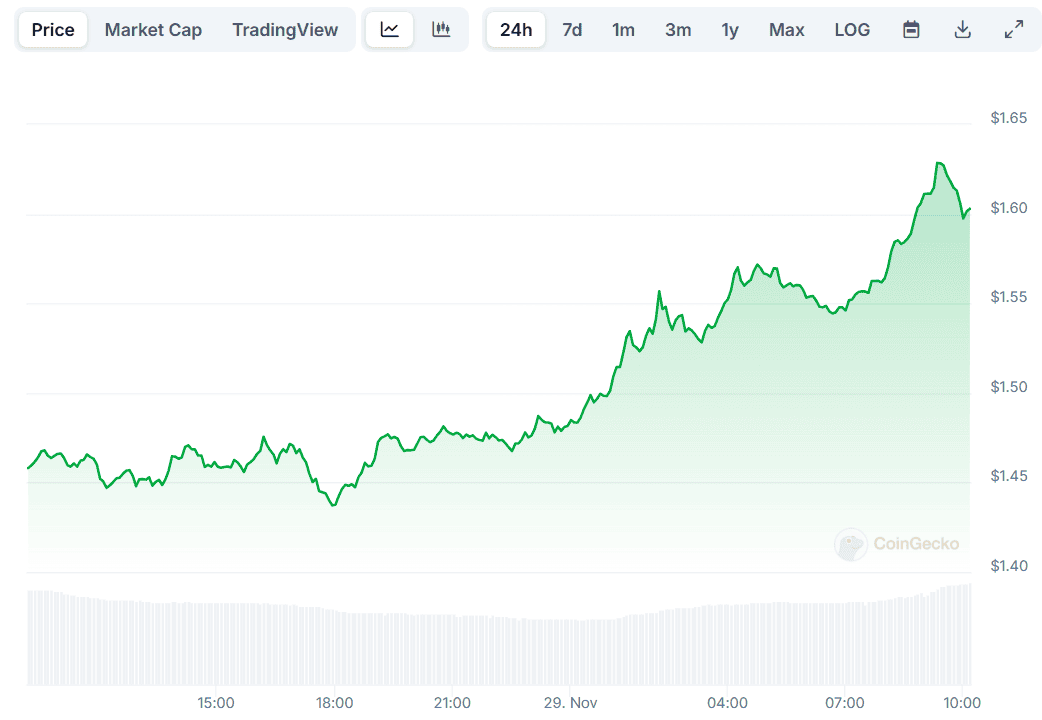
In the current fiscal climate, XRP’s price remains a subject of intense technical analysis. Like many top-tier cryptocurrencies, its value is influenced by the broader “crypto winter” cycles and subsequent recoveries. However, XRP often moves independently of Bitcoin and Ethereum due to its specific use case in the banking sector. Market capitalization is a key metric here; as XRP fluctuates, it consistently maintains its position among the top ten digital assets by market cap, signaling a deep level of liquidity and investor confidence despite external pressures.
Key Drivers Influencing the Current Price of XRP
The valuation of XRP is not a result of random market movements. It is dictated by a complex interplay of legal milestones, institutional adoption, and macroeconomic trends. To understand why XRP sits at its current price point, we must analyze these primary catalysts.
The Regulatory Landscape and the SEC Lawsuit
Perhaps no factor has influenced the “how much” of Ripple more than the United States Securities and Exchange Commission (SEC) lawsuit. Initiated in late 2020, the SEC alleged that Ripple raised over $1.3 billion through an unregistered, ongoing digital asset securities offering.
For years, this legal cloud suppressed XRP’s price, causing many U.S.-based exchanges to delist the token. However, recent court rulings—specifically the summary judgment suggesting that programmatic sales of XRP on public exchanges do not constitute investment contracts—have provided a monumental shift in sentiment. This “regulatory clarity,” a phrase often cited by Ripple CEO Brad Garlinghouse, has allowed the asset to regain its footing in the North American market, though the threat of appeals continues to introduce a “legal premium” or “legal discount” to its price.
Institutional Adoption and the RippleNet Network
Beyond the courtroom, XRP’s value is intrinsically tied to its utility. RippleNet, Ripple’s global payments network, utilizes XRP via On-Demand Liquidity (ODL) to facilitate near-instantaneous cross-border settlements. Unlike traditional systems like SWIFT, which can take days and incur high fees, XRP allows for settlements in three to five seconds.
The growth of ODL partnerships in regions like Southeast Asia, the Middle East, and Latin America provides a fundamental floor for XRP’s value. As more financial institutions buy and sell XRP to facilitate these transfers, the organic demand for the token increases. The “how much” of XRP is therefore a reflection of how much of the $150 trillion cross-border payment market Ripple can successfully capture.
Broader Market Trends and Bitcoin Correlation
Despite its unique use cases, XRP is still a part of the wider digital asset ecosystem. It remains sensitive to the “halving” cycles of Bitcoin and the movements of the S&P 500. When institutional investors move toward “risk-on” assets due to cooling inflation or lower interest rates, XRP tends to benefit. Conversely, periods of high interest rates and a strong U.S. dollar often put downward pressure on the entire crypto market, XRP included.
Analyzing the Utility and Economic Value of XRP
When assessing “how much” an asset is worth, professional investors look at the underlying tokenomics—the economic rules governing the asset’s supply and demand. XRP’s tokenomics are unique and designed to support a high-volume, low-cost payment network.
Liquidity and Cross-Border Payments
The primary value proposition for XRP is its role as a “bridge currency.” In a traditional currency exchange, a bank might need to hold pre-funded accounts in local currencies (nostro/vostro accounts) in foreign countries. This ties up trillions of dollars in stagnant capital globally.
XRP solves this by providing a liquid medium. A bank can exchange its local currency for XRP, send the XRP across the ocean, and have it converted into the destination currency in seconds. The current price of XRP must be high enough to facilitate these large transfers without causing massive slippage. Therefore, as the volume of global payments handled by RippleNet grows, the price of XRP arguably needs to rise to accommodate the liquidity requirements of the network.
The Role of Escrow and Supply Management
A common point of discussion regarding XRP’s price is the supply held by Ripple. To ensure supply predictability, Ripple placed 55 billion XRP into a series of escrows in 2017. Each month, 1 billion XRP are released to Ripple to fund operations and incentivize the ecosystem, with the unused portion being returned to escrow.
This transparency is designed to prevent “dumping” and provide market stability. For an investor asking “how much Ripple now,” understanding that the supply is mathematically capped at 100 billion tokens—with a portion being “burned” or destroyed with every transaction fee—is vital. This deflationary mechanism, though small, suggests a long-term scarcity model that could support higher valuations as demand increases.
Investment Strategies for XRP in the Current Market
Navigating the XRP market requires a disciplined approach to personal finance and risk management. Because XRP is a high-utility but high-volatility asset, investors often categorize it differently than speculative “meme coins.”
Risk Assessment and Volatility Management
Investing in XRP involves a specific set of risks. The most prominent is “regulatory risk.” While recent rulings have been favorable, the global regulatory framework for digital assets is still being written. An investor must ask: how much of my portfolio am I willing to expose to an asset that could be affected by a single court filing?
To manage this, many investors use a “Dollar Cost Averaging” (DCA) strategy. Instead of trying to time the bottom of a market cycle, they invest a fixed amount of money at regular intervals. This reduces the impact of short-term price swings and focuses on the long-term growth of the Ripple ecosystem.
Long-term vs. Short-term Outlook
The short-term price of XRP is often driven by news cycles—a new partnership, a legal update, or a tweet. However, the long-term value is driven by the integration of the XRP Ledger into the plumbing of the global financial system.
Long-term investors often look at “real-world use cases.” For instance, the development of Central Bank Digital Currencies (CBDCs) on the XRP Ledger is a significant long-term indicator. If central banks utilize the XRPL as a neutral bridge for their digital currencies, the demand for XRP could reach levels far beyond current speculative trading volumes.
The Road Ahead: Forecasts and Future Developments
Looking forward, the question of “how much” Ripple will be worth depends on several upcoming milestones. The digital finance space is at a crossroads, and XRP is positioned at the center of the transition from legacy banking to blockchain-enabled finance.
Potential Catalysts for Growth
Several catalysts could fundamentally shift XRP’s price in the coming years. First is the possibility of a Ripple Initial Public Offering (IPO). If Ripple goes public on a traditional stock exchange like the NASDAQ, it would provide a massive influx of legitimacy and capital to the ecosystem. While the IPO would be for Ripple shares, the positive sentiment would likely bleed over into the XRP token.
Second is the expansion of the “Internet of Value.” Ripple’s vision is for money to move as easily as information moves today. As more developers build decentralized finance (DeFi) applications on the XRP Ledger—such as automated market makers (AMMs) and lending protocols—the utility of XRP expands beyond just payments, creating new avenues for demand.
The Impact of CBDCs and Global Finance Integration
Perhaps the most significant frontier for Ripple is its work with sovereign nations. Several countries have already announced pilot programs to explore using a private version of the XRP Ledger for their CBDCs. Because the XRPL is designed for interoperability, it could serve as the “connective tissue” between different national digital currencies.
In a scenario where XRP acts as the global reserve bridge for CBDCs, the “how much” question takes on a new dimension. We would no longer be talking about XRP in the context of retail trading, but as a critical piece of global financial infrastructure. While this remains speculative, the technical groundwork laid by Ripple and the XRPL community makes it a plausible trajectory for the next decade of finance.
In conclusion, determining “how much Ripple now” requires looking past the daily candles of a price chart. It involves an assessment of a company’s resilience against regulatory headwinds, the expanding utility of its underlying technology, and the broader shift toward a digital, tokenized global economy. For the informed investor, XRP represents more than just a digital coin; it represents a bet on the future of how value is moved, stored, and exchanged across the globe.
aViewFromTheCave is a participant in the Amazon Services LLC Associates Program, an affiliate advertising program designed to provide a means for sites to earn advertising fees by advertising and linking to Amazon.com. Amazon, the Amazon logo, AmazonSupply, and the AmazonSupply logo are trademarks of Amazon.com, Inc. or its affiliates. As an Amazon Associate we earn affiliate commissions from qualifying purchases.