
Navigating the landscape of personal finance often requires making strategic decisions about where your capital resides. Whether you are seeking higher interest rates, lower fee structures, or more robust digital tools, closing a bank account is a standard procedure in the lifecycle of a savvy consumer. Closing a Wells Fargo account, while straightforward, requires a methodical approach to ensure that no residual transactions disrupt your financial health or credit standing.
Effective financial management is not just about earning and investing; it is about maintaining an efficient infrastructure for your liquidity. When a specific institution no longer aligns with your financial goals, the transition to a new provider must be handled with precision. This guide provides a professional roadmap for closing your Wells Fargo account while safeguarding your assets and ensuring a seamless transition to your next financial vehicle.
The Strategic Importance of Account Management
In the modern financial era, the relationship between a consumer and their bank is dynamic. Long-term loyalty to a single institution is increasingly being replaced by a performance-based approach. If an account is characterized by high monthly maintenance fees, subpar interest rates on savings, or a lack of integrated wealth management tools, it is financially prudent to move those resources elsewhere.
Why Consumers Switch Financial Institutions
The primary drivers for closing a legacy bank account typically fall into three categories: cost, convenience, and capability. Many consumers find that traditional “Big Four” banks like Wells Fargo may charge monthly service fees that eat into their principal, especially if they do not meet high minimum balance requirements. Furthermore, the rise of digital-first banks and credit unions has introduced competitive high-yield savings accounts (HYSAs) that offer significantly higher annual percentage yields (APY) than traditional brick-and-mortar institutions.
Strategically, closing an account is often the final step in a “banking upgrade.” This process involves moving from a general-purpose checking account to a more specialized ecosystem that might offer better rewards, cash-back on debit transactions, or superior integration with brokerage accounts.
The Impact on Your Financial Health
Closing a bank account does not directly impact your credit score, as checking and savings accounts are not debt instruments. However, the manner in which you close the account matters immensely. An improperly closed account that falls into a negative balance due to a forgotten subscription or a delayed fee can eventually be sent to collections or reported to ChexSystems. This can make it difficult to open new bank accounts in the future. Therefore, treating the closure as a formal financial project is essential for long-term stability.
Pre-Closure Checklist: Securing Your Assets Before Moving
Before you initiate the formal request to close your Wells Fargo account, you must perform due diligence. A premature closure can lead to bounced checks, missed bill payments, and potential late fees from third-party vendors.
Managing Recurring Transactions and Direct Deposits
The most common mistake in account closure is failing to map out the web of automated transactions. You should review at least three to six months of bank statements to identify every recurring pull. This includes:
-
Direct Deposits: Notify your employer’s payroll department or update your information in your HR portal. This transition can take one to two pay cycles, so ensure your new account is fully active first.
-
Automated Bill Pays: This includes utilities, insurance premiums, mortgage payments, and credit card bills.
-
Subscription Services: Digital platforms like streaming services, gym memberships, and cloud storage often have your debit card on file.
-
Linked Apps: Peer-to-peer payment apps like Venmo, Cash App, or Zelle must be re-linked to your new institution.
Dealing with Pending Transactions and Outstanding Checks
Ensure that every check you have written has been cashed and cleared. A “zombie” check that hits an account after it has been closed will result in a return-to-sender and potential fees from the recipient. Similarly, if you have pending debit card transactions (common with gas stations or hotels that place “holds”), wait until those transactions have moved from “pending” to “posted” before requesting closure.
Selecting Your New Financial Vehicle
It is highly recommended that you open your new account before closing the old one. Transfer the bulk of your funds, but leave a small “buffer” (e.g., $50 to $100) in the Wells Fargo account for at least 30 days. This buffer covers any unexpected trailing transactions or monthly service fees that might trigger during the transition period. Only when you are certain that no more activity will hit the account should you proceed to the final step.
Step-by-Step Methods for Closing Your Wells Fargo Account
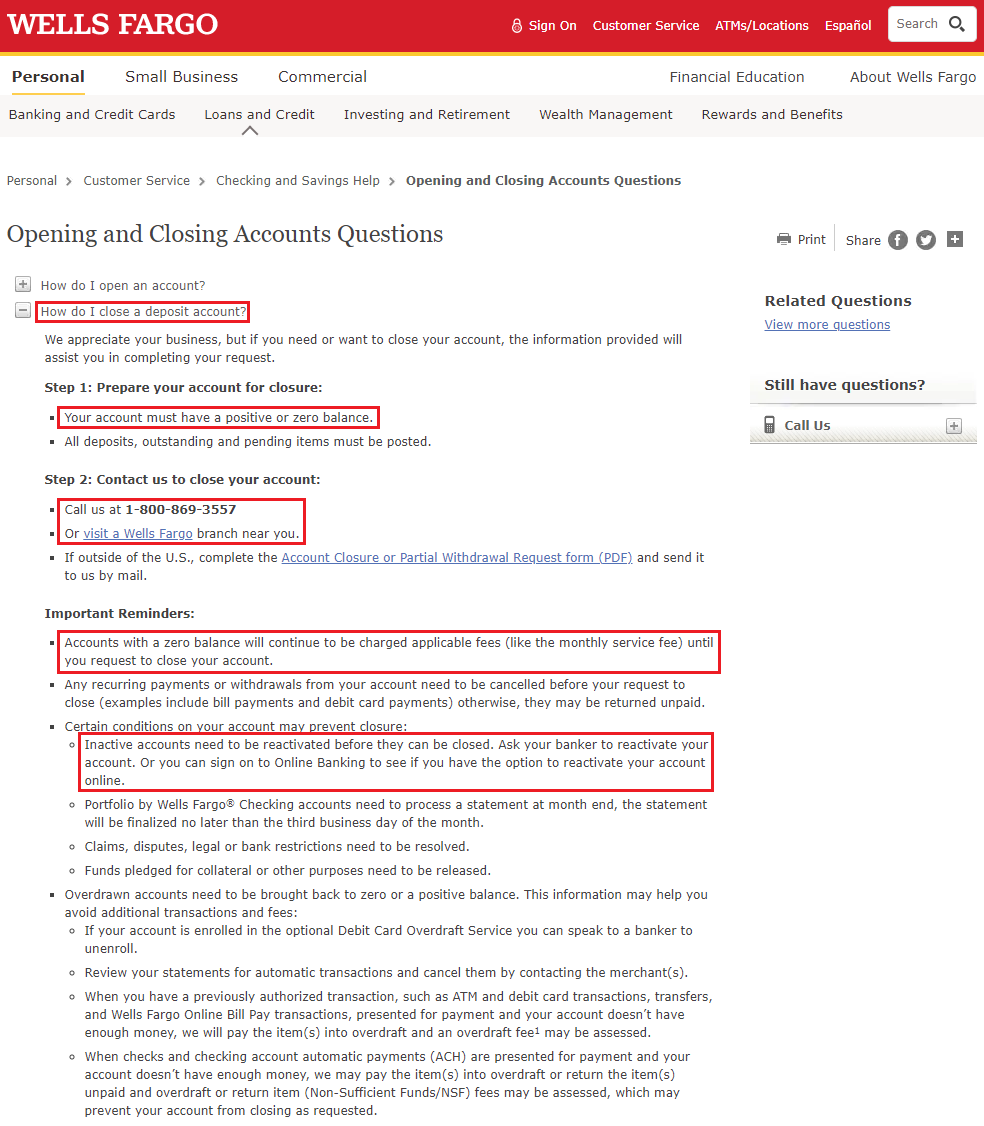
Wells Fargo provides several channels for account closure. The choice of method depends on your proximity to a branch, your comfort with phone-based customer service, and the complexity of your account (e.g., joint accounts or business accounts).

Closing in Person: The Direct Approach
For many, visiting a physical branch is the most efficient way to ensure the job is done correctly. When you visit a branch:
-
Bring Identification: You will need a valid government-issued ID (driver’s license or passport).
-
Request a Final Balance Statement: Ask the banker to provide a printout showing a zero balance and a formal confirmation that the account is “Closed at Customer Request.”
-
Withdraw or Transfer Funds: You can receive your remaining balance via a cashier’s check or cash. Note that there may be a small fee for a cashier’s check depending on your account tier.
Closing via Phone: Navigating Customer Service
If you cannot visit a branch, you can close most personal checking and savings accounts by calling Wells Fargo’s general banking customer service line.
-
Verification: Prepare to answer security questions or provide a one-time passcode sent to your mobile device.
-
The “Retention” Pitch: Be prepared for the representative to offer incentives to stay, such as waiving fees for a few months. If your decision is final, politely decline and insist on the closure.
-
Confirm the Zero Balance: The representative will likely ask where to send your remaining balance. It is usually easier to have transferred the funds out yourself via ACH transfer a few days prior, leaving a $0.00 balance.
Closing by Mail: The Formal Written Request
For those who are abroad or prefer a paper trail, you can send a notarized letter to Wells Fargo. The letter should include your name, account number, and a clear instruction to close the account. If there is a remaining balance, specify the address where the final check should be mailed. Sending this via certified mail with a return receipt requested provides legal proof that the bank received your request.
Online and Mobile Considerations
While you can transfer funds and manage most settings via the Wells Fargo mobile app or website, the bank typically requires a direct interaction (phone, in-person, or mail) to finalize a full account closure. This is a security measure to prevent unauthorized account liquidations.
Avoiding Post-Closure Pitfalls and Fee Traps
The banking industry is governed by complex regulations, and the period immediately following an account closure request is critical.
The “Zombie Account” Phenomenon
A “zombie account” occurs when an account that was thought to be closed is automatically reopened because a stray automated payment or deposit hits the account. When this happens, the bank may honor the transaction, putting the account into a negative balance, which then triggers overdraft fees. To prevent this, ensure that you receive a formal “Account Closed” notice in writing (either via email or physical mail) and monitor your statements for one final cycle.
Minimum Balance Requirements and Final Statement Cycles
Wells Fargo typically calculates monthly service fees based on the average daily balance or the balance at the end of the statement cycle. If you transfer all your money out on the 15th of the month but do not officially close the account until the 20th, you might fall below the minimum balance requirement for those five days. This could trigger a fee that puts your account into a negative balance at the moment of closure. It is often best to call and close the account on the same day you move the final balance to zero.
The Broader Financial Context: Optimizing Your Banking Portfolio
Closing an account is an opportunity to re-evaluate your overall financial strategy. Moving away from a traditional bank often leads individuals toward more specialized or high-performing financial tools.
High-Yield Savings vs. Traditional Checking
If you are moving money out of a standard Wells Fargo savings account, you are likely transitioning from an interest rate near 0.01% to something significantly higher. In the current economic climate, online-only banks and certain credit unions offer rates that are 400 to 500 times higher than traditional big banks. This shift is a fundamental component of wealth building, as it allows your “emergency fund” or “short-term savings” to keep pace with inflation.

Digital Banking and Modern Financial Tools
Beyond interest rates, consider the technological ecosystem of your next bank. Modern financial institutions offer features that include:
-
Bucket-based Savings: The ability to categorize one savings account into different goals (e.g., “Tax Reserve,” “Vacation,” “New Car”).
-
Early Payday: Access to direct deposits up to two days early.
-
Integrated Investing: Seamless transfers between your checking account and a brokerage or robo-advisor.
By closing an underperforming account and moving to a platform that offers these features, you are not just changing your bank; you are optimizing your financial engine. The process of closing a Wells Fargo account is simply the administrative bridge to a more efficient and profitable financial future. Ensure you document every step, confirm the closure in writing, and keep your records for at least one year to ensure total financial peace of mind.
aViewFromTheCave is a participant in the Amazon Services LLC Associates Program, an affiliate advertising program designed to provide a means for sites to earn advertising fees by advertising and linking to Amazon.com. Amazon, the Amazon logo, AmazonSupply, and the AmazonSupply logo are trademarks of Amazon.com, Inc. or its affiliates. As an Amazon Associate we earn affiliate commissions from qualifying purchases.