
The path to financial independence and a secure retirement often seems paved with complex terminology and a dizzying array of investment vehicles. Among the most potent tools available to the modern investor is the Individual Retirement Account, or IRA. Far from being a mere savings account, an IRA is a robust tax-advantaged investment shell designed to help individuals accumulate wealth over time while minimizing the burden of taxation. Understanding what an IRA account is, how it functions, and which variety aligns with your financial goals is an essential step in mastering personal finance.

Understanding the Fundamentals of the Individual Retirement Account (IRA)
At its core, an IRA is a personal savings plan that provides specific tax advantages for setting aside money for retirement. Unlike a 401(k), which is typically offered through an employer, an IRA is an account that you open on your own through a bank, brokerage firm, or federally insured credit union. It serves as an “umbrella” under which various assets—such as stocks, bonds, mutual funds, and exchange-traded funds (ETFs)—can grow.
How an IRA Works
An IRA functions differently than a standard brokerage account primarily due to its tax status. In a regular taxable account, you are often taxed on dividends, interest, and capital gains in the year they are realized. In contrast, funds within an IRA are shielded from these annual taxes. This allows your investments to benefit from “tax-deferred” or “tax-free” growth, meaning your money stays in the account and continues to compound without being depleted by the government every April.
When you contribute to an IRA, you are generally choosing between two primary tax treatments: paying taxes now to enjoy tax-free withdrawals later, or getting a tax break now and paying taxes on the withdrawals during retirement. This choice is the defining characteristic that separates the most popular types of IRAs.
The Power of Compound Interest in an IRA
The true magic of an IRA lies in the principle of compounding. Because the earnings within the account are not taxed annually, the entire amount of your investment returns remains in the account to generate further returns. Over a period of 20, 30, or 40 years, this lack of “tax drag” can lead to a significantly larger nest egg than a taxable account with the same investment performance. For example, a small annual contribution can swell into a substantial sum because the interest earns interest, which then earns more interest, unhindered by the immediate needs of the IRS.
Comparing the Main Types of IRAs: Traditional vs. Roth
The choice between a Traditional IRA and a Roth IRA is one of the most critical decisions an investor can make. While both offer significant benefits, they cater to different financial situations and future expectations regarding tax rates.
The Traditional IRA: Immediate Tax Relief
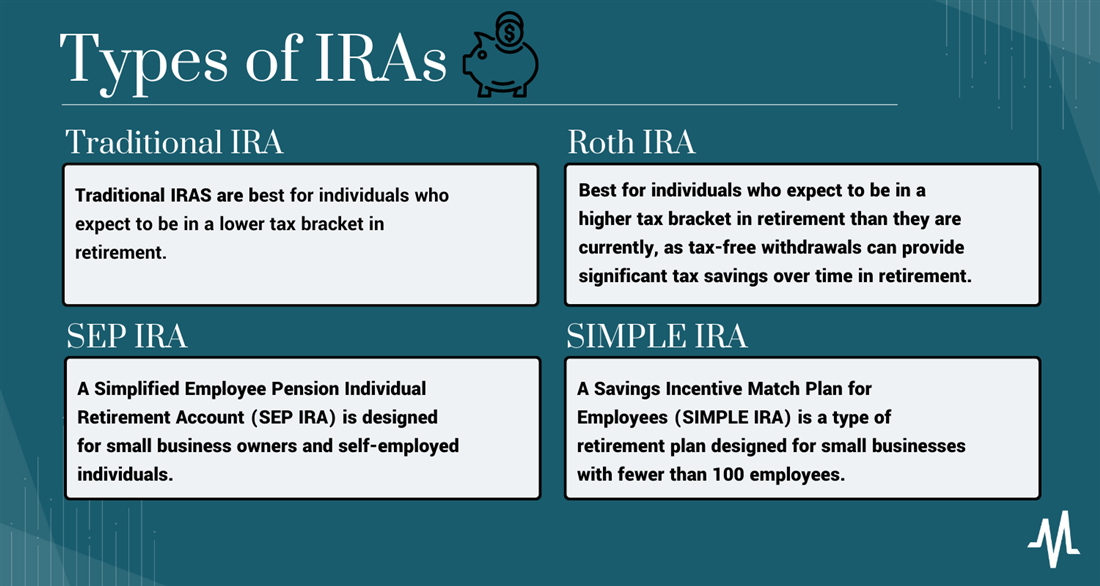
A Traditional IRA is often the go-to choice for individuals looking to lower their current taxable income. Contributions to a Traditional IRA are often tax-deductible, meaning you can subtract the amount you contribute from your gross income on your tax return. This effectively lowers your tax bill for the current year.
However, the “catch” with a Traditional IRA is that the tax is merely deferred, not eliminated. When you reach retirement age and begin taking distributions, those withdrawals are treated as ordinary income and taxed at your then-current income tax rate. This account type is particularly advantageous for individuals who believe they are currently in a higher tax bracket than they will be during retirement. By taking the deduction now, they save on taxes at a high rate and pay them later at a potentially lower rate.
The Roth IRA: Tax-Free Growth and Withdrawals
The Roth IRA, established in 1997, flipped the script on retirement savings. With a Roth IRA, you contribute “after-tax” dollars. You do not get an immediate tax deduction for your contributions. However, the trade-off is incredibly powerful: all qualified withdrawals in retirement—including all the capital gains and dividends earned over decades—are entirely tax-free.
The Roth IRA is often favored by younger investors who expect their income (and their tax bracket) to increase as they age. It also offers more flexibility; because you have already paid taxes on your contributions, you can generally withdraw the principal (the original money you put in) at any time without penalty or tax. This makes it a popular choice for those who want their retirement savings to double as a secondary emergency fund, though the primary goal should always be long-term growth.
Choosing Which One Fits Your Financial Profile
Deciding between a Traditional and Roth IRA usually comes down to a simple question: Do you want to pay taxes now or later?
-
Choose Traditional if: You need the immediate tax break, you are in a high tax bracket today, or you believe your tax rate will be significantly lower in the future.
-
Choose Roth if: You are currently in a lower tax bracket, you want the peace of mind of tax-free income in retirement, or you want the flexibility to withdraw contributions if necessary.
Many financial advisors suggest “tax diversification,” which involves holding both types of accounts. This allows for greater flexibility in retirement, as you can pull from your Traditional IRA until you hit a certain tax threshold and then pull from your Roth IRA to avoid being pushed into a higher bracket.
Specialty IRAs for Small Business Owners and Entrepreneurs
The world of IRAs extends beyond the standard Traditional and Roth models. For those who are self-employed, run a small business, or have a side hustle, specialized IRAs offer higher contribution limits and unique benefits.

The SEP IRA (Simplified Employee Pension)
A SEP IRA is a popular choice for business owners and freelancers. It allows an employer to contribute to a traditional IRA set up for themselves and their employees. The primary advantage of a SEP IRA is its high contribution limit. While standard IRAs have relatively modest annual caps, a SEP IRA allows for contributions of up to 25% of the individual’s net earnings from self-employment, subject to an annual dollar cap that is significantly higher than that of a standard IRA.
The SEP IRA follows the same tax rules as a Traditional IRA: contributions are tax-deductible, and withdrawals in retirement are taxed as ordinary income. For the high-earning entrepreneur, this is one of the most effective ways to shield a large portion of income from taxes while building a massive retirement fund.
The SIMPLE IRA
The SIMPLE (Savings Incentive Match Plan for Employees) IRA is designed specifically for small businesses with 100 or fewer employees. It operates similarly to a 401(k) in that it allows for employee salary deferrals, but it is much easier and less expensive for a small business to administer.
In a SIMPLE IRA, employees can contribute a portion of their pre-tax salary, and the employer is generally required to make a matching contribution or a fixed contribution for all eligible employees. Like the Traditional IRA, contributions are tax-deferred, and withdrawals are taxed at retirement. This is an excellent tool for small business owners who want to provide a retirement benefit to their staff without the administrative complexity of a full-scale corporate plan.
Strategic Considerations: Contribution Limits, Deadlines, and Withdrawals
To maximize the benefits of an IRA, one must navigate the specific rules set by the IRS. These rules govern how much you can put in, when you must do it, and how you can take the money out.
Annual Contribution Limits
The IRS sets annual limits on how much you can contribute to your IRAs. These limits are updated periodically to account for inflation. For 2024, the limit is $7,000 for individuals under the age of 50. Recognizing that those nearing retirement may need to accelerate their savings, the IRS allows a “catch-up” contribution for individuals aged 50 and older, bringing their total annual limit to $8,000. It is important to note that this limit applies across all your IRAs; you cannot put $7,000 into a Traditional IRA and another $7,000 into a Roth IRA in the same year.
Income Limits and Phase-outs
While anyone with earned income can contribute to a Traditional IRA, the ability to deduct those contributions from your taxes may be limited if you or your spouse are covered by a retirement plan at work and your income exceeds certain levels.
Roth IRAs have even stricter income requirements. If your Modified Adjusted Gross Income (MAGI) is too high, your ability to contribute directly to a Roth IRA is “phased out” and eventually eliminated. High earners often bypass this through a strategy known as a “Backdoor Roth IRA,” where they contribute to a non-deductible Traditional IRA and then immediately convert it to a Roth IRA.
The Logistics of Rollovers and Transfers
One of the most common ways people fund an IRA is through a “rollover.” When you leave an employer where you had a 401(k), you generally have the option to move those funds into an IRA. This is often a wise move, as IRAs typically offer a much wider range of investment choices and lower fees than employer-sponsored plans. A direct rollover—where the funds move directly from the 401(k) provider to the IRA custodian—is the preferred method to avoid any unintended tax consequences or withholding.
Maximizing Your Retirement Strategy with an IRA
Opening an IRA is only the first step. The true success of the account depends on how the assets within it are managed and how the account fits into your broader financial picture.
Diversification and Asset Allocation
Because an IRA is a long-term vehicle, it is the ideal place to practice disciplined asset allocation. Investors should diversify their IRA holdings across different asset classes—such as domestic stocks, international stocks, and bonds—based on their risk tolerance and time horizon. Since you don’t have to worry about the tax consequences of selling a winning stock within an IRA, it is the perfect environment for “rebalancing.” If your stocks have performed exceptionally well and now take up too much of your portfolio, you can sell them and buy bonds to return to your target allocation without triggering a capital gains tax.
Common Pitfalls to Avoid
The most significant mistake investors make is treated an IRA like a standard savings account. Early withdrawals (before age 59½) from a Traditional IRA usually trigger a 10% penalty in addition to regular income tax. While there are exceptions for first-time home purchases or higher education expenses, tapping into retirement funds early severely hampers the power of compounding.
Another common pitfall is failing to invest the money once it is in the account. Many people contribute to an IRA and leave the funds sitting in a “money market” or cash sweep account. While the money is technically in an IRA, it isn’t being put to work in the market. To build wealth, those funds must be used to purchase assets that have the potential for growth.
Finally, keep an eye on Required Minimum Distributions (RMDs). For Traditional, SEP, and SIMPLE IRAs, the IRS requires you to start taking withdrawals at age 73 (as of current legislation). Failing to take an RMD can result in a massive penalty—up to 25% of the amount that should have been withdrawn. Roth IRAs are unique in that they do not require RMDs during the original owner’s lifetime, making them an excellent tool for estate planning and passing wealth to heirs.
In conclusion, an IRA is one of the most versatile and powerful tools in the realm of personal finance. Whether you are seeking immediate tax relief through a Traditional IRA, tax-free growth through a Roth IRA, or high-limit contributions as a business owner, the Individual Retirement Account provides a structured, disciplined, and tax-efficient way to ensure that your financial future is secure. By understanding the rules and leveraging the power of compounding, you can transform an IRA from a simple account into a cornerstone of your long-term wealth strategy.
aViewFromTheCave is a participant in the Amazon Services LLC Associates Program, an affiliate advertising program designed to provide a means for sites to earn advertising fees by advertising and linking to Amazon.com. Amazon, the Amazon logo, AmazonSupply, and the AmazonSupply logo are trademarks of Amazon.com, Inc. or its affiliates. As an Amazon Associate we earn affiliate commissions from qualifying purchases.