
Individual Retirement Accounts (IRAs) represent one of the most powerful tools available for wealth accumulation. Unlike a standard brokerage account, an IRA offers specific tax advantages that allow your investments to compound more efficiently over decades. However, simply opening an account is only the first step; the true engine of retirement security is the investment strategy you deploy within that account. Transitioning from a saver to an investor requires a shift in mindset, focusing on asset allocation, risk management, and the nuances of tax-advantaged growth.
Understanding the Foundation: Account Selection and Funding
Before choosing specific stocks or funds, you must ensure the structure of your IRA aligns with your financial goals. The two primary vehicles—the Traditional IRA and the Roth IRA—operate on fundamentally different tax principles, and your choice dictates your long-term “net” return.
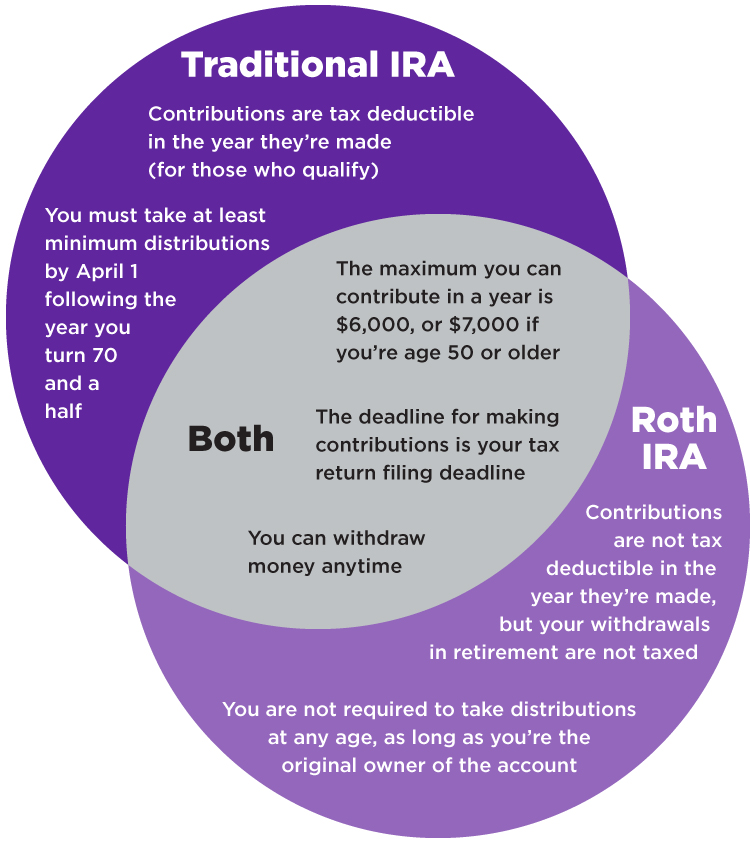
Traditional vs. Roth: The Tax Timing Strategy
A Traditional IRA offers the potential for a tax deduction on contributions today, meaning you invest “pre-tax” dollars. The trade-off is that withdrawals during retirement are taxed as ordinary income. This is often the preferred route for high-earners who expect to be in a lower tax bracket during retirement.
Conversely, the Roth IRA is funded with “after-tax” dollars. You receive no immediate tax break, but the entire account—including all capital gains and dividends—grows tax-free. Qualified withdrawals in retirement are also tax-free. For younger investors or those who believe tax rates will rise in the future, the Roth IRA is arguably the most potent wealth-building tool in the financial landscape.
Choosing the Right Custodian
The platform you choose to host your IRA will determine your investment universe. While many banks offer IRAs, they often limit you to low-yield certificates of deposit (CDs) or savings products. To truly invest, you need a brokerage custodian that provides access to the broader capital markets. Look for providers that offer commission-free trading on stocks and ETFs, a wide selection of low-cost index funds, and robust research tools.
Crafting a Strategic Asset Allocation
The most significant driver of your IRA’s performance is not the specific stock you pick, but your asset allocation—the way you divide your portfolio among different asset classes like stocks, bonds, and real estate.
The Role of Equities for Growth
For an IRA with a long time horizon, equities (stocks) should typically form the core of the portfolio. Stocks have historically outperformed other asset classes over long periods, providing the growth necessary to outpace inflation. Within your IRA, you should seek a mix of:
-
Domestic Large-Cap: Stable companies that provide consistent growth and dividends.
-
Small-Cap and Mid-Cap: Higher volatility but greater potential for explosive growth.
-
International Markets: Exposure to global economies to hedge against a downturn in the domestic market.
Fixed Income and Capital Preservation
As you approach retirement, the focus often shifts from aggressive growth to capital preservation. Bonds and other fixed-income securities serve as a cushion during market volatility. While they offer lower returns than stocks, they provide regular interest payments and reduce the overall “beta” (risk) of your portfolio. In a tax-advantaged IRA, the interest from bonds is shielded from immediate taxation, making it an ideal environment for high-yield debt instruments.
Determining Your Risk Tolerance
Your allocation depends on two factors: your ability to take risk (your time horizon) and your willingness to take risk (your temperament). An investor in their 20s can afford to be 90% or 100% in equities because they have decades to recover from market cycles. An investor in their 50s may shift toward a 60/40 or 70/30 stock-to-bond ratio to lock in gains and ensure liquidity.
Selecting Investment Vehicles within the IRA
Once the allocation is set, you must choose the specific vehicles to execute the strategy. Modern investors generally choose between three primary paths: passive indexing, active management, or automated solutions.

Low-Cost Index Funds and ETFs
For the vast majority of IRA investors, Exchange-Traded Funds (ETFs) and index funds are the gold standard. These funds track a specific market index, such as the S&P 500 or the Nasdaq 100. The primary advantage is the “expense ratio.” Because these funds are passively managed, the fees are minimal—often less than 0.10%. Over thirty years, the difference between a fund with a 1% fee and one with a 0.05% fee can equate to hundreds of thousands of dollars in lost gains due to the effects of negative compounding.
Individual Securities and the Core-Satellite Approach
Experienced investors may choose to allocate a portion of their IRA to individual stocks. A common strategy is the “Core-Satellite” approach. Here, 80% of the IRA is invested in broad-market index funds (the core), while the remaining 20% is used to purchase individual companies that the investor believes will outperform the market (the satellites). This allows for professional-grade diversification while still providing the opportunity for “alpha” or market-beating returns.
Target-Date Funds: The “Set-It-and-Forget-It” Option
If you prefer a hands-off approach, Target-Date Funds (TDFs) are an excellent choice. You select a fund with a year closest to your expected retirement (e.g., “Target 2055”). The fund automatically manages the asset allocation for you, starting with aggressive growth and gradually shifting toward conservative bonds as the target date approaches. It is a sophisticated, all-in-one solution for those who want to avoid the complexities of manual rebalancing.
Advanced Strategies for Maximum Growth
To truly optimize an IRA, you must look beyond simple buying and holding. Utilizing the unique tax structure of the account allows for advanced maneuvers that aren’t feasible in a taxable brokerage.
Dividend Reinvestment (DRIP)
One of the most effective ways to build wealth is through a Dividend Reinvestment Plan (DRIP). Most brokerages allow you to automatically use dividend payments to purchase more shares of the underlying stock or fund. In a taxable account, you would owe taxes on those dividends every year. In an IRA, the dividends are reinvested in full, allowing your “share count” to grow exponentially without a tax drag.
Strategic Asset Location
While asset allocation is about what you own, asset location is about where you own it. Because IRAs are tax-deferred or tax-free, they are the ideal place to hold investments that generate high levels of taxable income. This includes Real Estate Investment Trusts (REITs), which are required by law to distribute 90% of their taxable income to shareholders, and high-yield corporate bonds. By holding these in an IRA rather than a standard account, you avoid paying annual income tax on the distributions.
Portfolio Rebalancing
Over time, market movements will cause your asset allocation to drift. If stocks perform well, they may grow from 70% of your portfolio to 80%, exposing you to more risk than you intended. Rebalancing involves selling a portion of your winning assets and buying more of the underperforming ones to return to your target ratio. In a standard account, selling winners triggers capital gains taxes. In an IRA, you can rebalance as often as you like without any tax consequences, allowing you to “sell high and buy low” with perfect efficiency.
Common Pitfalls and the Psychology of Investing
Even with a perfect technical strategy, the greatest threat to an IRA is the behavior of the investor. Success in retirement planning is often a matter of avoiding mistakes rather than finding the next “moonshot” investment.
The Danger of Emotional Trading
The long-term nature of an IRA means you will inevitably live through multiple market crashes. The most common mistake is panic-selling during a downturn. History shows that the market’s best days often occur shortly after its worst days. If you exit the market to “protect” your capital, you risk missing the recovery, which is the single most damaging event for a retirement portfolio.
Ignoring Contribution Limits and Deadlines
The IRS sets strict limits on how much you can contribute to an IRA each year. For 2024, the limit is $7,000 ($8,000 for those 50 and older). It is vital to maximize these contributions as early in the year as possible to give your money more time to work. Additionally, be aware of the “tax-filing deadline” rule; you can typically contribute to your IRA for the previous tax year up until April 15th, providing a final opportunity to lower your tax bill or boost your retirement savings.

Excessive Fees and Portfolio Churn
High turnover—frequently buying and selling—can lead to hidden costs. Even in a commission-free environment, the “bid-ask spread” and the internal management fees of active mutual funds can erode your wealth. A successful IRA strategy is usually boring. It involves consistent contributions to high-quality, low-cost assets, and the patience to let time and compounding do the heavy lifting.
Investing an IRA is a marathon, not a sprint. By selecting the right account type, maintaining a disciplined asset allocation, and utilizing low-cost investment vehicles, you transform the IRA from a simple savings account into a sophisticated wealth-generation engine. The key is to start early, stay diversified, and remain focused on the long-term horizon, ensuring that when you finally reach retirement, your capital has grown to meet your needs.
aViewFromTheCave is a participant in the Amazon Services LLC Associates Program, an affiliate advertising program designed to provide a means for sites to earn advertising fees by advertising and linking to Amazon.com. Amazon, the Amazon logo, AmazonSupply, and the AmazonSupply logo are trademarks of Amazon.com, Inc. or its affiliates. As an Amazon Associate we earn affiliate commissions from qualifying purchases.