
The French Quarter of New Orleans, or the Vieux Carré, represents one of the most successful examples of “Place Branding” in the Western world. For brand strategists, marketers, and corporate identity experts, a visit to this historic district is more than a leisure trip; it is a deep dive into how a geographical location can maintain a cohesive, multi-sensory brand identity for over three centuries. In an era where digital brands struggle to maintain consistency across a few social media platforms, the French Quarter provides a masterclass in how to manage a legacy brand that balances historical authenticity with modern commercial necessity.
To truly understand what to do in the French Quarter from a brand perspective, one must look past the neon lights of Bourbon Street and analyze the underlying mechanics of heritage marketing, sensory engagement, and the strategic preservation of cultural equity.
Decoding the Identity: How the French Quarter Sustains a Century-Old Brand
The primary “product” of the French Quarter is not its architecture or its food, but its atmosphere. From a brand strategy standpoint, this is referred to as “Atmospherics”—the intentional design of a space to evoke specific emotional responses. The French Quarter utilizes a complex palette of visual, auditory, and olfactory cues to reinforce its brand promise of “timelessness” and “joie de vivre.”
Visual Consistency and Architectural Integrity
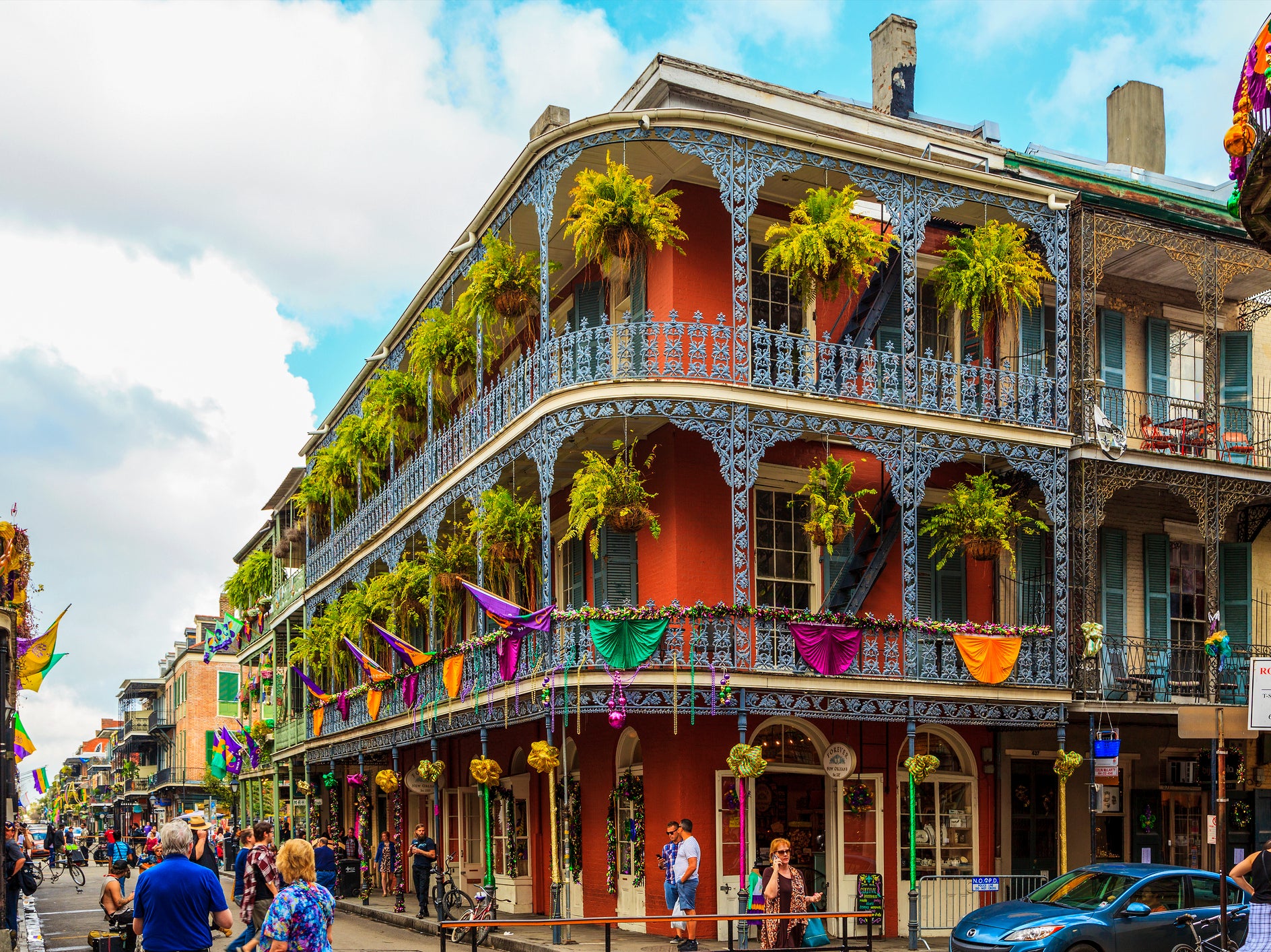
The most immediate brand asset of the French Quarter is its visual identity, protected by the Vieux Carré Commission (VCC). Established in 1936, the VCC is essentially a brand governance body. Its role is to ensure that every physical touchpoint—from the color of a shutter to the material of a balcony railing—adheres to the district’s established aesthetic guidelines.
For a brand strategist, this highlights the importance of rigid style guides. By enforcing historical accuracy, the Quarter ensures that its “brand world” remains immersive. When a visitor enters the district, the visual shift is so jarringly consistent that it signals a transition into a different psychological space. This is the same principle used by high-end luxury brands when designing flagship stores; the environment must reflect the brand’s core values before a single word is spoken or a product is sold.
The Sensory Brand Experience
While most brands focus on the visual and the digital, the French Quarter excels in sensory branding. The brand of New Orleans is experienced through the smell of jasmine and chicory coffee, the sound of brass bands echoing off brick walls, and the tactile sensation of humidity and cobblestone.
Strategic brand immersion requires a multi-sensory approach. In the Quarter, the “soundscape” is a deliberate part of the brand. Street performers are not just independent actors; they are essential contributors to the district’s auditory identity. When a brand can successfully engage all five senses, it creates “brand stickiness”—a level of memorability that traditional advertising cannot achieve. Marketers can learn from this by considering how their brand “sounds” or “feels” beyond the screen.
Commercial Synergy: Integrating Local Business into the District Narrative
A significant challenge in place branding is ensuring that individual businesses—the “sub-brands”—contribute to, rather than detract from, the master brand. In the French Quarter, the most successful enterprises are those that have aligned their corporate identity with the neighborhood’s historical narrative.
The Hotel Monteleone and the Power of Storytelling
The Hotel Monteleone serves as a quintessential case study in storytelling as a brand pillar. By positioning itself as a “literary landmark,” the hotel has hitched its brand to the legacies of Truman Capote, Ernest Hemingway, and Tennessee Williams. Their famous Carousel Bar is not just a place to get a drink; it is a branded experience that leverages mechanical novelty and historical prestige.
From a brand strategy perspective, the Monteleone demonstrates how to use “heritage prestige” to command a premium price point. They are not selling a room; they are selling a chapter in a storied history. This teaches us that a brand’s history—or the history it chooses to align with—is its most defensible competitive advantage.
Culinary Branding: From Beignets to Fine Dining
The culinary scene in the French Quarter is a lesson in brand differentiation within a crowded market. Take Café Du Monde as an example. Its brand is built on radical simplicity and extreme consistency. They serve a limited menu (coffee and beignets) in a setting that has changed little in decades. This “monumental branding” makes them a mandatory touchpoint for any consumer entering the district.

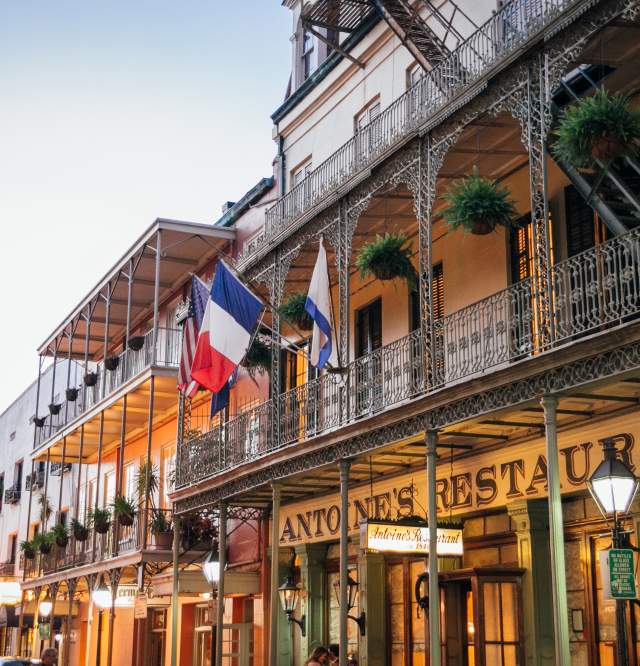
Conversely, establishments like Galatoire’s or Antoine’s represent “prestige heritage.” They use strict dress codes and traditional service rituals to maintain an aura of exclusivity and “old-world” brand values. These businesses understand that their value lies in their refusal to modernize. In a world obsessed with “pivoting” and “disruption,” these brands prove that “consistency” and “tradition” are equally powerful market positions.
Navigating the Tension Between Tradition and Commercialization
Every legacy brand faces the risk of “brand dilution” or “commodification.” The French Quarter is constantly navigating the tension between being a living neighborhood and a commercialized tourist destination. This is a struggle familiar to any brand manager overseeing a product that must evolve without losing its soul.
The Bourbon Street Dilemma: High-Energy vs. High-Culture
Bourbon Street represents the “loud” side of the New Orleans brand. It is high-energy, high-volume, and arguably, high-commodification. While it drives significant revenue, it also risks alienating the “prestige” segment of the market. The brand strategy here is one of segmentation. The French Quarter successfully bifurcates its brand: Bourbon Street handles the mass-market, high-volume “party” brand, while Royal Street and Chartres Street maintain the “sophisticated, antique, and artistic” brand.
This demonstrates the importance of “brand architecture.” A single master brand (The French Quarter) can support multiple sub-brands (Bourbon St. vs. Royal St.) that appeal to entirely different psychographic profiles. As long as the physical boundaries are maintained, these two identities can coexist without cannibalizing each other.
Preservation as a Marketing Asset
In many cities, “modernization” is seen as the only path to growth. However, the French Quarter’s growth is predicated on its refusal to modernize in the traditional sense. This is a strategy of “Authenticity Marketing.” By preserving its flaws—the uneven streets, the weathered facades, the gas-lit alleys—the Quarter builds brand trust. In a world of sterile, “Instagrammable” pop-up museums and manufactured experiences, true authenticity becomes a rare and valuable commodity.
The lesson for brand designers is that “imperfection” can be a brand asset. Authenticity is not about being perfect; it is about being real. Brands that embrace their history, including their scars and quirks, often develop a more loyal following than those that present a polished, corporate facade.
Modernizing a Legacy: Digital Strategy in a Historic Context
Even a 300-year-old brand must exist in the 21st-century digital landscape. The “what to do” in the French Quarter is now heavily influenced by digital discovery, social proof, and mobile engagement.
Social Media and the “Instagrammable” History
While the Quarter predates social media by centuries, its visual language is perfectly suited for modern platforms. The “pink wall” at the intersection of Royal and Dumaine, the ironwork of the LaBranche House, and the symmetry of Jackson Square are naturally viral.
The strategy here is “Passive Content Facilitation.” The district doesn’t need to create content; its “users” do it for them. By maintaining the physical beauty of the district, the “brand owners” (the city and business owners) ensure a constant stream of high-quality, user-generated content. This is a reminder that the best digital marketing often starts with a superior physical product.
Experience-Driven Marketing for the Modern Traveler
Modern travelers—particularly Millennials and Gen Z—value “experiences” over “things.” The French Quarter has adapted by shifting its brand focus from “seeing sights” to “participating in culture.” Whether it’s a cocktail tour that explains the branding of the Sazerac or a ghost tour that explores the dark folklore of the district, the focus is on engagement.
For marketers, this highlights the shift from transactional branding to experiential branding. Consumers are no longer content to be passive observers; they want to be part of the story. The French Quarter provides the stage, the props, and the script, but the visitor is the protagonist.
In conclusion, the French Quarter is a living case study in how to build, maintain, and evolve a world-class brand. By focusing on sensory immersion, architectural governance, storytelling, and the strategic management of sub-brands, it has remained relevant for centuries. For those looking to build brands with similar longevity, the streets of the Vieux Carré offer more than just a good time—they offer a blueprint for enduring brand equity.
aViewFromTheCave is a participant in the Amazon Services LLC Associates Program, an affiliate advertising program designed to provide a means for sites to earn advertising fees by advertising and linking to Amazon.com. Amazon, the Amazon logo, AmazonSupply, and the AmazonSupply logo are trademarks of Amazon.com, Inc. or its affiliates. As an Amazon Associate we earn affiliate commissions from qualifying purchases.