
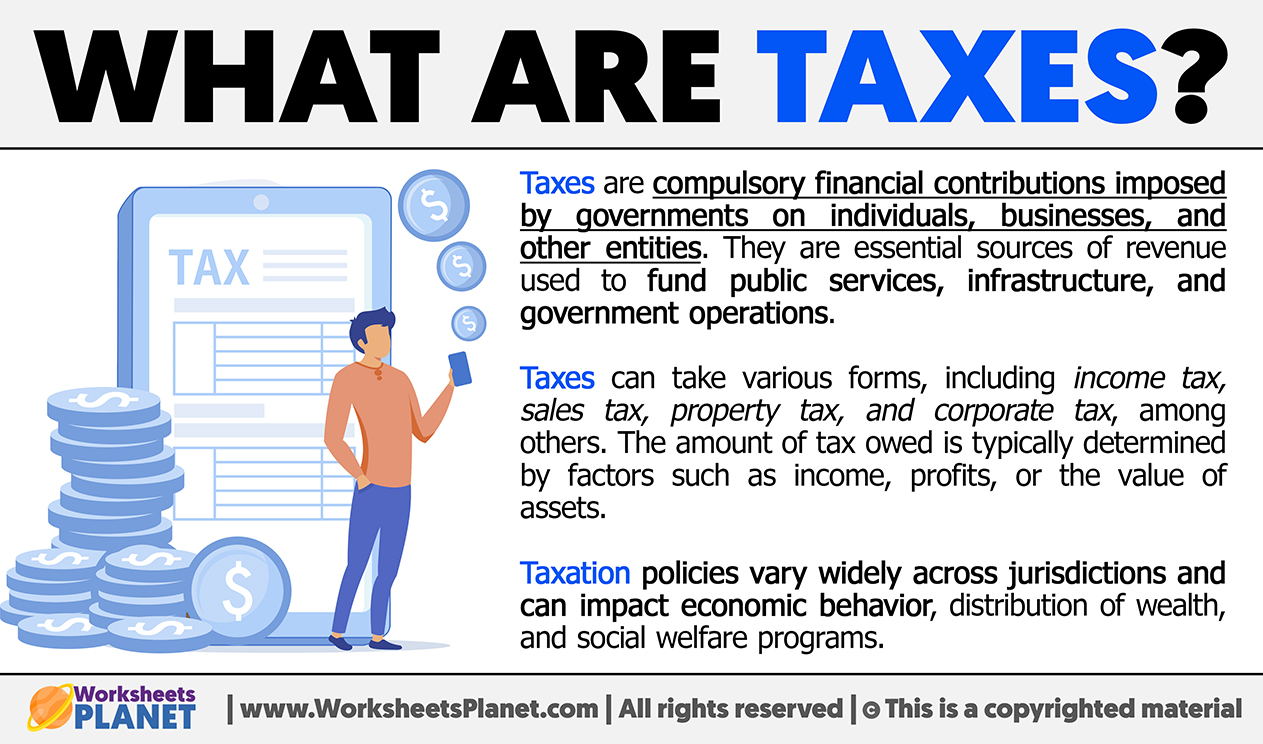
In the realm of personal and business finance, few concepts are as pervasive yet frequently misunderstood as taxation. At its most fundamental level, a tax is a mandatory financial charge or some other type of levy imposed upon a taxpayer by a governmental organization in order to fund various public expenditures. However, for the individual investor, the entrepreneur, or the household manager, “the tax” is much more than a contribution to public works; it is a critical variable in the equation of wealth accumulation and preservation.
Understanding the nuances of taxation is essential because it dictates the “net” reality of your financial life. Whether you are looking at the return on a stock market investment, the profitability of a side hustle, or the sustainability of a corporate budget, the tax liability is often the single largest expense. By demystifying the mechanisms of taxation, financial actors can move from a reactive state of compliance to a proactive state of strategic planning.
The Fundamental Mechanisms of Taxation
To grasp the impact of taxes on your financial health, one must first categorize how these levies are applied. Taxes generally fall into two broad categories: direct and indirect. Direct taxes are paid by the individual or entity directly to the government, such as income tax or property tax. Indirect taxes, such as sales tax or Value Added Tax (VAT), are collected by an intermediary (like a retailer) from the person who bears the ultimate economic burden of the tax.
Income Tax: The Primary Revenue Driver
For most individuals, the most significant encounter with taxation occurs through income tax. This is a levy imposed on the earnings of individuals and legal entities. In many jurisdictions, income tax is progressive, meaning the rate increases as the taxpayer’s income rises. This system is designed to place a higher burden on those with a greater ability to pay, but it also creates “tax brackets” that individuals must navigate carefully. Understanding which bracket your next dollar of income falls into—the marginal tax rate—is crucial for making decisions about overtime work, bonuses, or taking on new clients.
Capital Gains Tax: The Investor’s Hurdle
For those focused on wealth building through the markets, capital gains tax is a pivotal concept. This tax is triggered when you sell an asset—such as stocks, bonds, or real estate—for more than you paid for it. The distinction between short-term and long-term capital gains is a cornerstone of financial planning. Short-term gains (usually on assets held for less than a year) are often taxed at ordinary income rates, while long-term gains enjoy preferential, lower rates. This creates a powerful incentive for “buy and hold” investment strategies, as the tax code effectively rewards patience.
Corporate and Business Taxes
Businesses face a unique set of tax obligations that differ based on their legal structure. C-corporations are subject to corporate income tax on their profits; if those profits are then distributed as dividends to shareholders, they are taxed again at the individual level—a phenomenon known as double taxation. Conversely, “pass-through” entities like LLCs or S-corporations avoid this by passing profits directly to the owners, who report the income on their personal tax returns. Understanding these structures is vital for any entrepreneur deciding how to incorporate their venture.
Strategic Tax Planning for Personal Wealth
If the tax is a mandatory expense, tax planning is the art of legally minimizing that expense to maximize your net worth. It is often said that it is not what you earn, but what you keep, that determines your financial success. Strategic tax planning involves utilizing deductions, credits, and tax-advantaged accounts to shield income from the reaches of the revenue service.
Leveraging Tax-Advantaged Accounts
One of the most effective ways to manage “the tax” is through the use of specific accounts designed by the government to encourage certain behaviors, such as saving for retirement or education. Accounts like the 401(k), IRA, or HSA allow for either tax-deductible contributions (pre-tax) or tax-free growth and withdrawals (Roth-style). By directing funds into these vehicles, an individual can significantly lower their current taxable income or ensure that their future wealth is not eroded by taxes at the point of distribution.
Deductions vs. Credits: Reducing the Liability
To effectively manage your tax bill, you must distinguish between deductions and credits. A tax deduction reduces the amount of your income that is subject to tax. For example, if you earn $100,000 and have $10,000 in deductions, you are only taxed on $90,000. Common deductions include mortgage interest, charitable contributions, and certain business expenses.
A tax credit, however, is far more powerful. It is a dollar-for-dollar reduction of the actual tax you owe. If your total tax bill is $15,000 and you have a $2,000 credit, your bill drops to $13,000. Credits are often used by governments to incentivize specific social or economic goals, such as adopting green energy, child care, or higher education.
The Importance of Timing: Tax-Loss Harvesting
Sophisticated investors often use a technique called tax-loss harvesting to manage their year-end tax liability. This involves selling securities at a loss to offset capital gains realized elsewhere in the portfolio. If your losses exceed your gains, you can often use a portion of the excess to offset ordinary income. This strategy turns an investment disappointment into a strategic tax advantage, highlighting how the “tax” variable can be manipulated to support overall financial resilience.
Taxation in the Digital and Global Economy
The rise of the digital economy, remote work, and decentralized finance has complicated the traditional understanding of taxation. As borders become less relevant to how we earn and spend, the “tax” question becomes more complex, requiring individuals and businesses to stay informed on evolving regulations.
The Taxation of Digital Assets and Cryptocurrency
Cryptocurrency has presented a significant challenge to tax authorities worldwide. In many jurisdictions, crypto is treated as property rather than currency. This means that every time you swap one coin for another or use Bitcoin to buy a coffee, you may be triggering a taxable event (a capital gain or loss). The anonymity of the blockchain does not exempt users from tax obligations; in fact, many tax agencies are increasing their surveillance of digital wallets and exchange reporting. For the modern investor, keeping meticulous records of digital transactions is no longer optional—it is a financial necessity.
Remote Work and Nexus
The “Work from Anywhere” movement has introduced the concept of “tax nexus” to a broader audience. If you live in one state or country but work for a company in another, you may find yourself subject to the tax laws of both jurisdictions. Some regions have reciprocal agreements to prevent double taxation, but others do not. For freelancers and digital nomads, understanding where you are “tax resident” is the first step in avoiding unexpected audits or massive back-tax bills.
E-commerce and Sales Tax (VAT)
For online entrepreneurs, the landscape of consumption tax has shifted dramatically. Historically, online sellers only had to collect sales tax in states where they had a physical presence (a warehouse or office). Following landmark legal rulings, many regions now enforce “economic nexus,” requiring sellers to collect and remit taxes based on where their customers are located, regardless of where the business is based. This has made automated tax software an essential tool for any small business looking to scale globally without running afoul of international tax authorities.
The Economic Philosophy of “The Tax”
Beyond the spreadsheets and filing deadlines, it is helpful to understand the “why” behind taxation. Taxes are used for three primary purposes: revenue, redistribution, and regulation.
-
Revenue: This is the most straightforward purpose—funding the army, the police, the roads, and the schools. Without tax revenue, the infrastructure that allows a market economy to thrive would collapse.
-
Redistribution: Tax systems are often used to reduce income inequality. Through progressive taxation and social safety nets, governments attempt to ensure a basic standard of living for all citizens, which can lead to a more stable and productive society.
-
Regulation (Pigouvian Taxes): Sometimes, taxes are used to discourage certain behaviors. “Sin taxes” on tobacco or alcohol, or carbon taxes on pollution, are designed to make “bad” activities more expensive, thereby using the market mechanism to achieve social goals.
For the financially literate individual, recognizing these purposes helps in predicting future tax trends. For instance, if a government announces a major infrastructure plan, one can reasonably anticipate a future increase in revenue-generating taxes or a broadening of the tax base.
Conclusion: Mastering the Tax Variable
“What is the tax?” is a question that cannot be answered with a single number. It is a dynamic, multi-faceted component of the financial ecosystem. It is the price of admission for living in a civilized society, but it is also a cost that must be managed with precision.
By viewing taxes not as a seasonal nuisance but as a year-round strategic consideration, you can significantly alter your financial trajectory. Whether you are an individual contributor looking to optimize your retirement savings, an investor balancing a portfolio, or a business owner navigating global markets, the goal remains the same: to understand the rules of the game so thoroughly that you pay exactly what you owe—and not a penny more. In the pursuit of financial independence, mastering “the tax” is perhaps the most valuable skill one can acquire.
aViewFromTheCave is a participant in the Amazon Services LLC Associates Program, an affiliate advertising program designed to provide a means for sites to earn advertising fees by advertising and linking to Amazon.com. Amazon, the Amazon logo, AmazonSupply, and the AmazonSupply logo are trademarks of Amazon.com, Inc. or its affiliates. As an Amazon Associate we earn affiliate commissions from qualifying purchases.