
Dealing with unfiled tax returns can feel like a heavy weight pressing down on your financial future. Whether the delay was caused by a personal crisis, missing documentation, or simple procrastination, the internal pressure builds as the years pass. However, the process of filing back taxes is not as insurmountable as it often seems. By approaching the situation with a structured plan, you can stop the accumulation of penalties, settle your debt with the IRS, and move forward with a clean slate.
Addressing back taxes is essentially a journey of financial reconciliation. The IRS generally has a significant amount of information about your income through W-2s and 1099s reported by employers and financial institutions. When you fail to file, they may eventually file a return on your behalf—one that rarely works in your favor. Taking the initiative to file your own returns allows you to claim deductions, credits, and exemptions that the government might otherwise ignore.
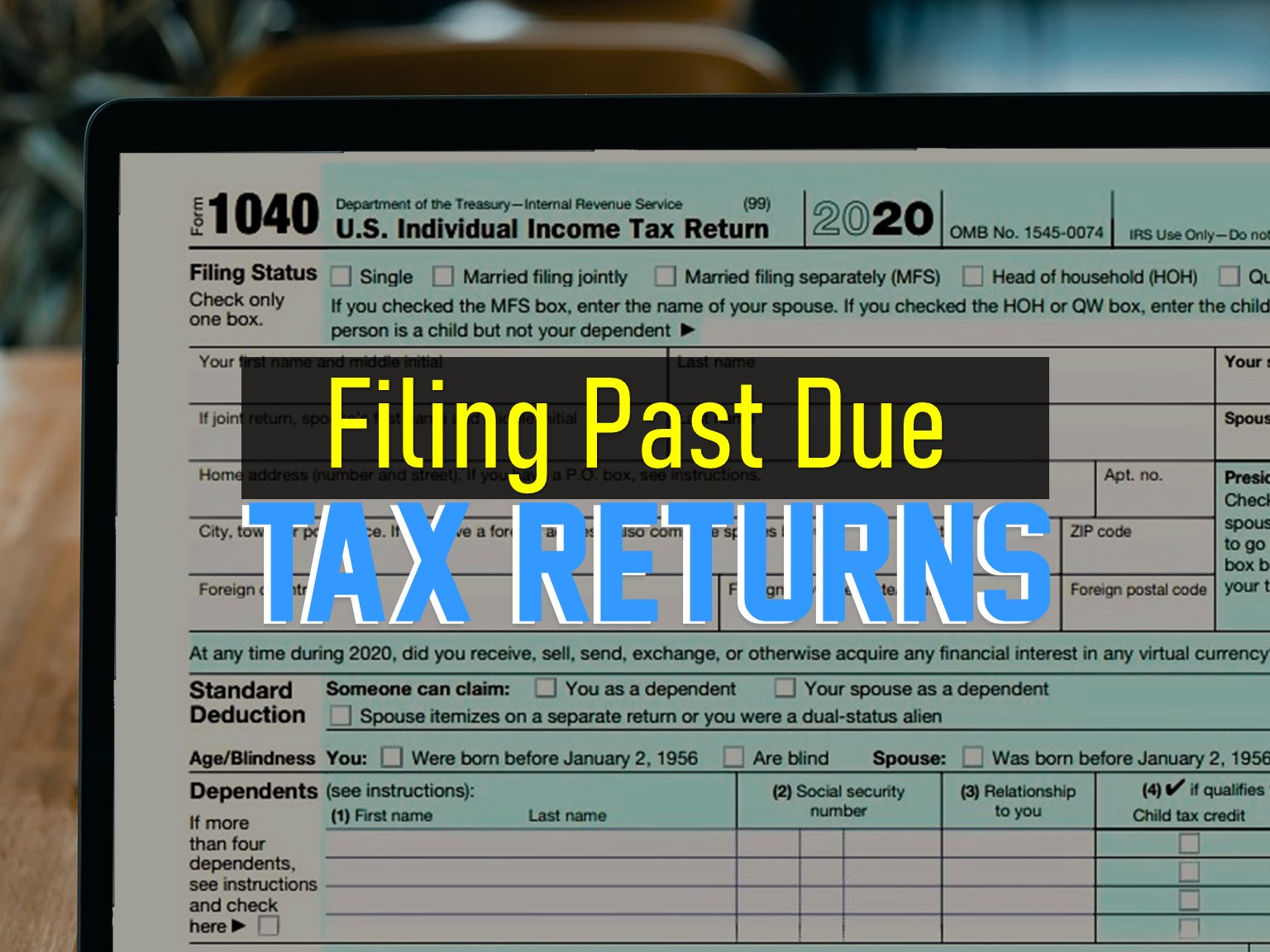
Understanding the Scope of Your Tax Liability
Before you can begin filling out forms, you must understand the gravity of your situation and the specific years that require attention. The IRS typically requires you to file the last six years of returns to be considered in “good standing” or “compliant.” However, this does not mean the debt from older years simply vanishes; it just means the IRS prioritizes the most recent six-year window for enforcement.
The Consequences of Inaction
The primary reason to address back taxes immediately is the cost of delay. The IRS charges two main types of penalties: failure-to-file and failure-to-pay. The failure-to-file penalty is particularly aggressive, often reaching 5% of the unpaid taxes for each month or part of a month that a tax return is late. If you wait too long, these penalties, combined with compounded interest, can effectively double your original tax bill.
Beyond the math, there are logistical hurdles. Unfiled taxes can prevent you from obtaining a mortgage, securing a business loan, or even renewing a passport. Furthermore, if you are owed a refund for a specific year, you generally have a three-year window from the original due date to claim it. If you file four years late, any refund you were entitled to is legally forfeited to the U.S. Treasury.
Identifying Which Years Are Missing
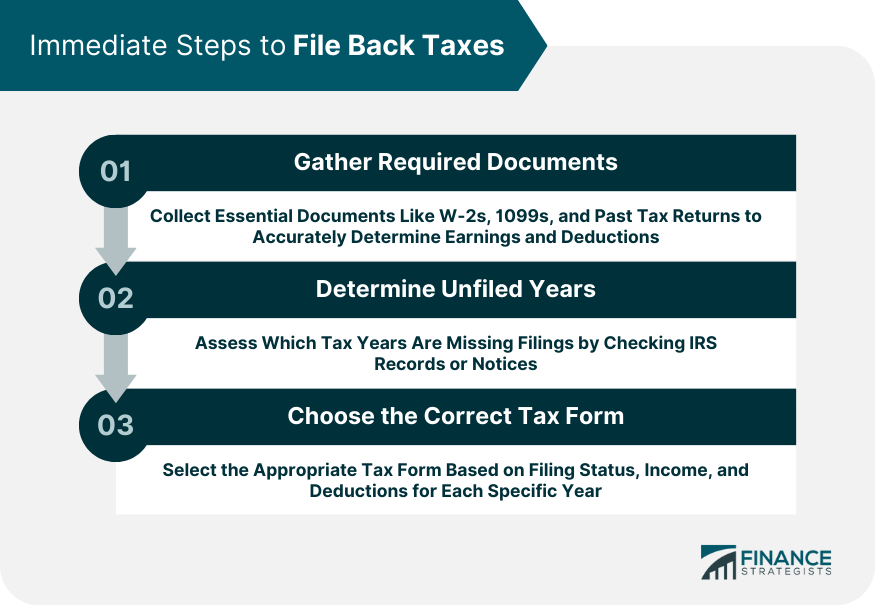
If you are unsure which years you missed, you don’t have to guess. You can request a “Tax Account Transcript” from the IRS. This document shows the basic data from your returns and lists any payments or adjustments made to your account. If the IRS has no record of a return for a specific year, the transcript will indicate that. Knowing exactly where the gaps are is the first step in building your roadmap to compliance.
Step-by-Step: Gathering Missing Information
The biggest hurdle for most people doing back taxes is the lack of records. You may have moved houses, changed jobs, or lost receipts over the years. Fortunately, the financial ecosystem leaves a trail that you can follow to reconstruct your income and expenses.
Requesting Wage and Income Transcripts
If you lack W-2s or 1099s from five years ago, don’t panic. The IRS maintains an “Information Returns Program” (IRP) file. You can request a “Wage and Income Transcript,” which summarizes the data reported to the IRS under your Social Security Number. This transcript includes information from W-2s, 1099-INT for bank interest, 1099-DIV for dividends, and 1099-MISC or 1099-NEC for independent contractor work. While it doesn’t show state tax withholding, it provides the core data needed to complete your federal return.
Tracking Down Deductible Expenses
For self-employed individuals or small business owners, income is only half the battle. You also need to prove your expenses to lower your taxable income. If you don’t have physical receipts, you can often reconstruct your history through bank statements and credit card records. Most financial institutions allow you to download CSV files of transactions for several years back. By categorizing these expenses, you can identify legitimate business deductions, such as equipment costs, travel, and home office expenses, which are vital for reducing the “Money” you owe the government.
Navigating the Filing Process for Prior Years
Once the data is gathered, the actual filing begins. It is crucial to understand that tax laws and forms change every year. You cannot use the 2023 Form 1040 to file for the 2018 tax year.
Using Year-Specific Tax Forms and Credits

Every tax year has its own specific brackets, standard deduction amounts, and available credits. For instance, the rules for the Earned Income Tax Credit (EITC) or the Child Tax Credit vary significantly from year to year. Using the wrong year’s form will lead to immediate rejection or a processing delay. You must download the specific archive forms from the IRS website for each year you are filing. This ensures that you are utilizing the laws that were in effect at that time, which could be more favorable depending on your life circumstances during those years.
Addressing the “Substitute for Return” (SFR)
In cases where a taxpayer hasn’t filed for a long time, the IRS may have already created a “Substitute for Return.” This is an automated assessment where the IRS calculates your tax based on the income they know about. Crucially, an SFR does not include any deductions or credits you might be entitled to; it assumes a filing status of “Single” or “Married Filing Separately” with no dependents.
If the IRS has filed an SFR for you, you should still file your own original return. Filing your own return allows you to claim the correct status and deductions, which almost always results in a lower tax liability than the IRS’s estimate. This is a critical move in personal finance management, as it effectively contests an inflated government bill.
Resolving the Debt: Payment Options and Relief
Filing the returns is only half the battle; the second half is paying what is owed. Many people avoid filing because they know they cannot afford the bill. However, the IRS is surprisingly flexible when it comes to collection, provided you have filed your paperwork and are transparent about your financial situation.
Installment Agreements
The most common way to handle back tax debt is through an Installment Agreement. If you owe less than $50,000, you can often set up a monthly payment plan online. These plans can span up to 72 months. While interest continues to accrue, setting up a plan stops aggressive collection actions like wage garnishments or bank levies. From a cash-flow perspective, an installment agreement allows you to treat your tax debt as a manageable monthly utility bill rather than a looming financial catastrophe.
Offer in Compromise (OIC)
In extreme cases where the total tax debt exceeds what you could reasonably ever pay, the IRS offers the “Offer in Compromise” program. This allows you to settle your tax debt for less than the full amount you owe. To qualify, the IRS conducts an in-depth review of your assets, income, and essential living expenses. If they determine that your “reasonable collection potential” is lower than the debt, they may accept a lower lump sum or a short-term payment plan. While the OIC is difficult to obtain, it represents a genuine “fresh start” for those in dire financial straits.
Penalty Abatement Strategies
The IRS has the authority to remove penalties if you can show “reasonable cause.” This might include a serious illness, a natural disaster, or the death of an immediate family member. Additionally, if you have a clean track record of filing for the previous three years, you may qualify for “First-Time Penalty Abatement.” Successfully requesting an abatement can shave thousands of dollars off your total balance, making it one of the most effective ways to protect your wealth during the reconciliation process.
Moving Forward: Maintaining Compliance
Filing back taxes is an exhausting process, but it serves as an excellent catalyst for improving your overall financial health. Once you are caught up, the focus shifts to ensuring that you never fall behind again.
Adjusting Withholding and Estimated Payments
The most common reason people fall behind on taxes is under-withholding. If you are an employee, you should review your W-4 form to ensure enough tax is being taken out of your paycheck. If you are a freelancer or business owner, you must get into the habit of making quarterly estimated tax payments. This “pay-as-you-go” approach prevents a massive, unmanageable bill at the end of the year and keeps you in the good graces of the IRS.
The Importance of Proactive Record Keeping
Modern personal finance relies on organization. Using digital tools to track expenses and store receipts ensures that if you ever face an audit or need to reference a past return, the data is at your fingertips. Moving forward, consider keeping a dedicated tax folder—either physical or digital—where every relevant document is placed the moment it arrives. By treating tax preparation as a year-round financial habit rather than a once-a-year emergency, you protect your credit, your assets, and your peace of mind.
Ultimately, doing back taxes is about taking ownership of your financial narrative. It requires a temporary period of discomfort and meticulous paperwork, but the reward is total financial freedom and the removal of a barrier that prevents long-term wealth building.
aViewFromTheCave is a participant in the Amazon Services LLC Associates Program, an affiliate advertising program designed to provide a means for sites to earn advertising fees by advertising and linking to Amazon.com. Amazon, the Amazon logo, AmazonSupply, and the AmazonSupply logo are trademarks of Amazon.com, Inc. or its affiliates. As an Amazon Associate we earn affiliate commissions from qualifying purchases.