
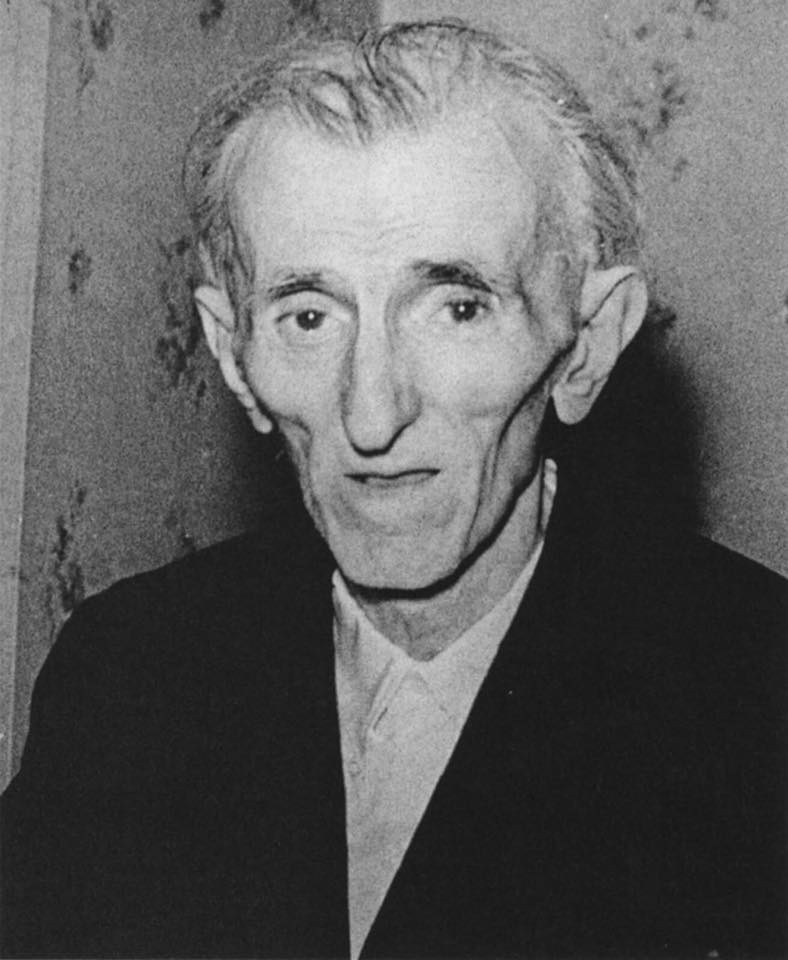
The intersection of history and modern innovation often finds its nexus in the life and works of Nikola Tesla. While contemporary headlines are dominated by the electric vehicle giant and the aerospace achievements that bear his name, the man himself ended his journey in a setting far removed from the high-tech laboratories of the 21st century. Nikola Tesla died on January 7, 1943, in Room 3327 of the New Yorker Hotel in Manhattan. At the age of 86, the visionary who paved the way for alternating current (AC), wireless communication, and the foundational principles of robotics passed away in relative isolation and financial hardship.

For the modern tech enthusiast, the location of Tesla’s death is more than a historical footnote; it represents the closing chapter of a life that predicted nearly every major technological trend we experience today. From the development of global wireless networks to the ethical dilemmas of artificial intelligence and directed energy, Tesla’s final years were spent documenting concepts that would not become technologically viable for another eighty years.
Room 3327: The New Yorker Hotel and the End of an Era
In 1943, the New Yorker Hotel was one of the most technologically advanced buildings in the world, making it a fitting, albeit lonely, sanctuary for an aging inventor. Tesla spent the final decade of his life living on the 33rd floor, primarily focused on theoretical physics and the completion of his more controversial engineering projects. Despite his lack of liquid assets, his mind remained a fertile ground for the same innovative spark that had given the world the induction motor and the Tesla coil.
The Isolated Genius and the Physics of the Future
Tesla’s presence in Room 3327 was characterized by a paradoxical mix of solitude and intense mental activity. While many of his contemporaries viewed him as a “mad scientist” during this period, his work continued to push the boundaries of what was considered possible. He spent his final days refining his “World Wireless System,” a precursor to the modern internet and global satellite communications. Tesla envisioned a world where information and energy could be transmitted through the Earth’s ionosphere, effectively making distance a non-factor in human interaction—a concept that mirrors our current reliance on cloud computing and high-speed data transfer.
The Documentation of a Lifetime: From AC to Wireless Data
Tesla was not merely resting in his final years; he was an active curator of his legacy. His room was filled with trunks of blueprints, technical notes, and patent applications. These documents detailed his research into “Teleforce,” a vacuum tube-based system designed to propel particles at high velocities. While the mainstream media of the 1940s dismissed this as a “Death Ray,” modern defense contractors and tech firms recognize these concepts in the development of directed energy weapons and advanced propulsion systems. The sheer volume of technical data in Room 3327 at the time of his death would eventually spark one of the greatest intellectual property mysteries in the history of the United States government.
The Tech Vacuum: What Happened to the “Death Ray” and the Missing Papers?
Upon his death, Tesla’s room was immediately cordoned off. The Office of Alien Property, acting on behalf of the FBI, seized his entire estate. This intervention highlights the technological significance of Tesla’s work; even in his death, the potential of his inventions was considered a matter of national security. The analysis of his papers was assigned to Dr. John G. Trump, a professor at MIT and a technical aide to the National Defense Research Committee.
Cybersecurity and the Seizure of Intellectual Property
The seizure of Tesla’s papers remains a landmark case in the history of intellectual property and digital security. In the modern era, where data breaches and the theft of proprietary algorithms are daily occurrences, the physical lockdown of Tesla’s notes serves as a historical analog to today’s high-level encryption and secure server facilities. The government’s interest centered on whether Tesla had actually solved the problem of wireless energy transmission at a scale that could be weaponized or used to revolutionize the power grid. For today’s software developers and cybersecurity experts, the “missing Tesla papers” represent the first major instance of the state intervening to control disruptive technology before it could reach the public domain.
From Teleforce to Modern Directed Energy Systems
Among the documents retrieved from the New Yorker Hotel were descriptions of what Tesla called the “tele-geodynamic oscillator.” While it sounded like science fiction in 1943, the principles he described—using mechanical vibrations to scan the Earth’s interior or transmit energy—are foundational to modern seismic imaging and certain types of wireless sensor networks. Furthermore, his work on charged particle beams, once confined to the trunks in Room 3327, now informs the development of plasma physics and high-energy laser technology used in everything from medical gadgets to satellite defense systems.
Bridging the Gap: Tesla’s Final Predictions and Today’s Tech Ecosystem
Nikola Tesla’s death occurred just as the vacuum tube era was giving way to the transistor. However, his vision for technology was far more advanced than the hardware of his time could support. If we look at the notes he left behind, it becomes clear that he was architecting a software-driven world decades before the first computer was built.
Anticipating the Smartphone: The Wireless World System
In a famous 1926 interview and subsequent writings found in his room, Tesla described a device that would allow people to communicate and see each other from across the globe, small enough to be carried in a vest pocket. He predicted that the Earth would be converted into a “huge brain,” where all things would be particles of a real and rhythmic whole. This is a strikingly accurate description of the Internet of Things (IoT) and the modern smartphone. His death in 1943 marked the end of the man, but the “operating system” for the modern world was already written in his plans for global wireless connectivity.
The Evolution of Automation and Robotics
Tesla is often credited with the invention of the first remote-controlled device—a miniature boat shown at Madison Square Garden in 1898. In his final years at the New Yorker, he continued to refine his thoughts on “tele-automata.” He believed that machines would eventually perform most labor, guided by sensors and programmed logic. Today’s advancements in AI tools and autonomous robotics are the direct descendants of Tesla’s early work in “wireless telegraphy” and mechanical automation. He understood that the future of technology lay not in physical gears, but in the invisible transmission of data and commands.
The Legacy of Innovation: How Tesla’s Departure Shaped Modern R&D
The environment in which Tesla died—bankrupt and alone—serves as a cautionary tale for the tech industry regarding the balance between pure innovation and commercial viability. His death signaled a shift in how research and development (R&D) are conducted.
The Move from Individual Inventors to Big Tech Infrastructure
Tesla was perhaps the last of the great independent “heroic” inventors. Following his death, the model for technological advancement shifted toward corporate R&D labs and government-funded institutions like Bell Labs, DARPA, and eventually, the internal labs of companies like Google and Apple. The complexity of the systems Tesla envisioned—like global wireless power—required more resources than any single individual could provide. Modern tech trends emphasize collaborative ecosystems and open-source software, recognizing that the “lone genius” model often leads to the kind of isolation Tesla experienced in his final days.
Open Source vs. Proprietary Tech: The Tesla Lesson
Tesla’s struggles with patents (most notably his battle with Marconi over radio) and his desire to provide “free energy” create a historical dialogue with today’s open-source movement. When Elon Musk released Tesla Inc.’s patents to the public in 2014, he explicitly cited the spirit of Nikola Tesla, arguing that proprietary walls often hinder the very progress an inventor hopes to achieve. The death of Tesla in a hotel room, surrounded by locked trunks of secrets, remains a powerful symbol of what happens when revolutionary technology is not successfully integrated into the market or the public commons.

Conclusion: The Enduring Current of a Technological Pioneer
Nikola Tesla died in the New Yorker Hotel, but his influence permeates every facet of our digital existence. When we use a smartphone, we are using the wireless resonance he pioneered. When we drive an electric vehicle, we are powered by the induction motor he designed in the late 19th century. Even the modern pursuit of AI-driven automation finds its roots in his early experiments with remote control and logical machines.
The “where” of his death is a specific geographical point in Manhattan, but the “what” of his death was the transition of his ideas from the mind of one man into the collective infrastructure of the modern world. Tesla’s final days were silent, but the technological noise he created continues to amplify, driving the trends, gadgets, and software that define the 21st century. As we look toward future frontiers in energy and communication, we find that we are still merely catching up to the visions that Nikola Tesla documented in Room 3327.
aViewFromTheCave is a participant in the Amazon Services LLC Associates Program, an affiliate advertising program designed to provide a means for sites to earn advertising fees by advertising and linking to Amazon.com. Amazon, the Amazon logo, AmazonSupply, and the AmazonSupply logo are trademarks of Amazon.com, Inc. or its affiliates. As an Amazon Associate we earn affiliate commissions from qualifying purchases.