
For the modern investor and the budget-conscious professional, the question of “how much is a base model Tesla” extends far beyond the initial sticker price. In the realm of personal finance and strategic asset acquisition, a vehicle is rarely just a mode of transport; it is a complex intersection of upfront capital, recurring operational expenses, and long-term depreciation. To understand the true cost of an entry-level Tesla, one must navigate a landscape of shifting MSRPs, federal incentives, and the specific financial mathematics of electric vehicle (EV) ownership.
The Current MSRP Landscape: Understanding the Entry Point
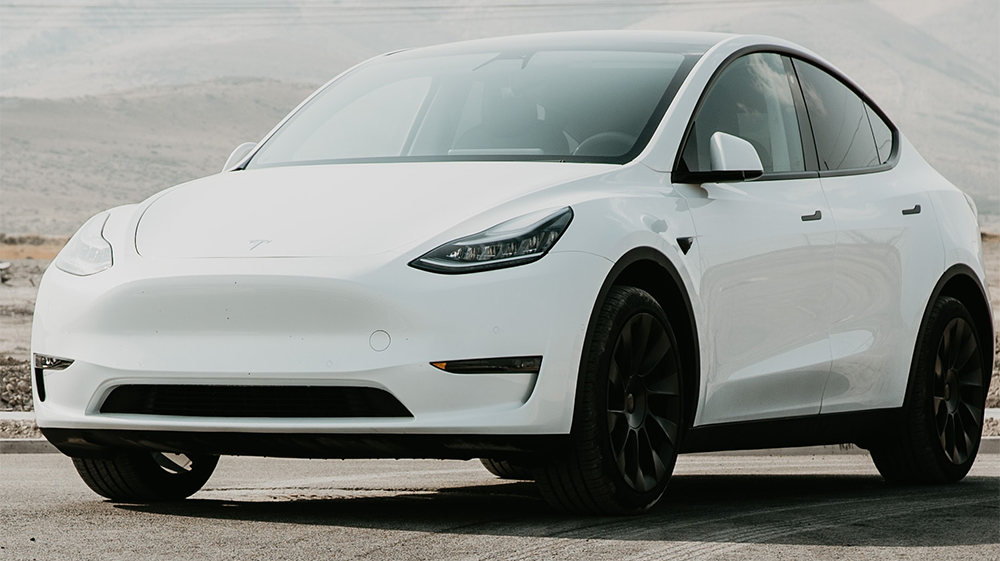
The entry point into the Tesla ecosystem is currently defined by the Model 3 and, increasingly, the Model Y. As of the current market cycle, the “Base Model” typically refers to the Tesla Model 3 Rear-Wheel Drive (RWD). Historically, Tesla has utilized a dynamic pricing model, frequently adjusting its Manufacturer’s Suggested Retail Price (MSRP) to reflect supply chain efficiencies, lithium-ion battery costs, and competitive pressure.

Currently, the base Model 3 sits in a price bracket ranging from $38,990 to $42,000, depending on the specific quarterly adjustments. However, the savvy financial planner knows that the MSRP is merely the starting point. When calculating the initial capital outlay, one must account for the non-negotiable $1,390 destination and documentation fee, along with a $250 non-refundable order fee.
The Model Y, which has recently seen “Rear-Wheel Drive” variants reintroduced as its entry-level trim, often commands a premium of $4,000 to $6,000 over the Model 3. From a financial perspective, the choice between the two often hinges on the utility-to-cost ratio. While the Model 3 offers the lowest barrier to entry, the Model Y’s higher resale demand and utility often yield a different, perhaps more favorable, long-term value proposition for families or those utilizing the vehicle for business purposes.
The Impact of Configuration on Capital Investment
In the world of base models, “standard” is a relative term. To maintain the lowest possible price point, a buyer must typically adhere to the “Pearl White Multi-Coat” or “Stealth Grey” paint options and the standard 18-inch Aero wheels. From a financial standpoint, adding premium paint ($1,000–$2,000) or upgraded wheels ($1,500) offers little to no return on investment (ROI) at the time of resale. For those focused on the “Money” niche, the base configuration is almost always the most fiscally responsible choice, as software-based upgrades can often be added later, whereas physical options represent sunk costs that depreciate the moment the vehicle leaves the delivery center.
The Federal Tax Credit and State Incentives: Reducing the Net Cost
The most significant variable in the “How much is it?” equation is the federal Clean Vehicle Credit. Under the Inflation Reduction Act, eligible buyers can receive up to $7,500 off the price of a qualified Tesla. As of 2024, a major shift in this policy allows this credit to be applied as a “Point of Sale” discount. This means that rather than waiting until tax season to realize the savings, the $7,500 can be deducted directly from the purchase price, effectively lowering the base model’s cost into the low $30,000 range.
Eligibility and Income Thresholds
From a tax planning perspective, not every buyer qualifies for this reduction. The IRS imposes strict Modified Adjusted Gross Income (MAGI) limits:
-
$300,000 for married couples filing jointly.
-
$225,000 for heads of households.
-
$150,000 for all other filers.
Furthermore, the vehicle’s MSRP must not exceed $55,000 for sedans (Model 3) or $80,000 for SUVs (Model Y). Because the base models sit well below these caps, they are the safest financial bets for ensuring incentive eligibility.
State-Level Rebates and Indirect Savings
Beyond federal intervention, state-level programs can further erode the net cost. States like Colorado, Massachusetts, and New York offer additional rebates ranging from $500 to $5,000. For a resident in a high-incentive state, the “effective cost” of a base model Tesla can drop below $30,000, positioning it competitively against mid-range internal combustion engine (ICE) vehicles like the Toyota Camry or Honda Accord.
Total Cost of Ownership: Operational Savings vs. Hidden Expenses

To determine if a base model Tesla is a sound financial move, one must move beyond the purchase price and analyze the Total Cost of Ownership (TCO). This is where the EV value proposition either shines or falters depending on individual driving habits.
Fuel Displacement and Energy Costs
The primary financial driver for Tesla ownership is the displacement of gasoline expenses. On average, charging a Tesla at home costs about one-third to one-fourth the price of fueling a comparable gasoline car. If an owner drives 15,000 miles per year, the annual savings can range from $1,000 to $2,000 depending on local electricity rates and gas prices. Over a five-year ownership period, this represents a $5,000 to $10,000 reduction in the “real” cost of the vehicle.
Maintenance and the “Service Gap”
Tesla’s base models lack many of the mechanical complexities of ICE vehicles—there are no oil changes, spark plugs, timing belts, or emissions checks. Regenerative braking also significantly extends the life of brake pads and rotors. However, a financial audit of the vehicle must include the higher cost of tires. Due to the instantaneous torque and the weight of the battery pack, Teslas tend to wear through tires 20-30% faster than standard sedans. A set of high-quality EV-rated tires can cost $1,000–$1,200, which is a recurring expense that must be factored into the long-term budget.
Insurance Premiums: The Hidden Surcharge
One area where the “Money” aspect of Tesla ownership can take a hit is insurance. Because of the high cost of repair for the vehicle’s aluminum structure and the specialized nature of its sensor arrays, insurance premiums for Teslas are often 20% to 50% higher than for equivalent luxury sedans. For a young driver or someone in a high-risk ZIP code, the monthly insurance hike can eat significantly into the savings gained from not buying gasoline.
Financing, Leasing, and the Equity Equation
Deciding how to pay for a base model Tesla is as important as the price itself. With interest rates fluctuating, the cost of capital can add thousands to the total price.
The Case for Financing
For those looking to build equity, financing through a credit union or Tesla’s in-house lending is the traditional route. At a 5% to 7% interest rate, a $35,000 loan over 60 months results in roughly $5,000 in interest payments. The advantage here is the eventual ownership of the asset, which, despite depreciation, retains significant utility value.
The Leasing Alternative
Tesla’s lease programs often feature lower monthly payments, sometimes as low as $299 to $399 for a base Model 3. While this is attractive for cash flow management, there is a major financial caveat: Tesla traditionally does not allow lessees to purchase the vehicle at the end of the lease term. This means the driver pays for the steepest part of the depreciation curve and walks away with zero equity. For a long-term wealth-building strategy, leasing a Tesla is generally less efficient than buying, unless the vehicle is used for a business where the lease payments can be fully deducted as an operating expense.
Business Use and Section 179
For entrepreneurs and small business owners, the “cost” of a Tesla can be further mitigated through tax strategy. While the Model 3 does not meet the heavy vehicle weight requirements for the full Section 179 deduction, it can still be depreciated as a business asset. Under current tax laws, bonus depreciation allows for a significant portion of the vehicle’s cost to be written off in the first year if used more than 50% for business, providing a substantial shield against taxable income.
Resale Value and Market Volatility
Historically, Teslas held their value better than almost any other vehicle on the market. However, the aggressive price cuts initiated by the company in 2023 and 2024 have introduced volatility into the used market.
Depreciation Curves
A base model Tesla now follows a more traditional depreciation curve, losing approximately 15% to 20% of its value in the first year and roughly 10% annually thereafter. For the investor, this means that the “cost” of the car is the difference between the purchase price and the resale price three to five years down the line. Because the base model has the lowest entry price, it ironically suffers the least in terms of total dollar depreciation compared to the high-performance or “Long Range” trims.
The Software Value-Add
One unique aspect of Tesla’s value retention is the Over-the-Air (OTA) software updates. Unlike traditional vehicles that remain frozen in time, a base model Tesla receives frequent updates that improve range, performance, and safety features. This technological longevity helps prop up the resale value, as a three-year-old Tesla often feels more modern than a three-year-old competitor, making it a more liquid asset in the secondary market.
In conclusion, determining the cost of a base model Tesla requires a multi-faceted financial lens. While the sticker price may hover around $40,000, the combination of federal tax credits, state incentives, and operational savings can drive the net effective cost significantly lower. Conversely, one must remain vigilant regarding insurance costs and the lack of lease-end buyouts. For the financially literate consumer, the base model Tesla represents not just a purchase, but a calculated move into a more efficient, tech-forward, and potentially lower-cost era of personal mobility.
aViewFromTheCave is a participant in the Amazon Services LLC Associates Program, an affiliate advertising program designed to provide a means for sites to earn advertising fees by advertising and linking to Amazon.com. Amazon, the Amazon logo, AmazonSupply, and the AmazonSupply logo are trademarks of Amazon.com, Inc. or its affiliates. As an Amazon Associate we earn affiliate commissions from qualifying purchases.