
Lowering your taxable income is one of the most effective ways to accelerate wealth building and secure your financial future. While many people view taxes as an inevitable, fixed expense, the reality is that the tax code is designed with various incentives that reward specific financial behaviors. By understanding the difference between your gross income and your adjusted gross income (AGI), you can implement strategies that keep more money in your pocket while remaining in full compliance with the law.
Reducing taxable income is not about tax evasion; it is about tax avoidance—the legal utilization of the tax regime to your own advantage. Whether you are a high-earning professional, a small business owner, or someone just starting their career, the following strategies provide a roadmap for minimizing your tax liability and maximizing your net worth.

Strategic Retirement Contributions: The Foundation of Tax Reduction
The most accessible and powerful tool for reducing taxable income for the average taxpayer is the use of tax-advantaged retirement accounts. When you contribute to “traditional” retirement vehicles, the government essentially subsidizes your savings by allowing you to deduct those contributions from your total income for the year.
Employer-Sponsored Plans: 401(k) and 403(b)
For those employed by companies or non-profits, the 401(k) or 403(b) is often the first line of defense. Contributions to these plans are typically made on a “pre-tax” basis. This means if you earn $100,000 and contribute $20,000 to your 401(k), the IRS only sees $80,000 of taxable income. Given that the contribution limits for these accounts are substantial—often adjusted upward for inflation annually—maximizing these contributions can drop you into a lower tax bracket entirely. Furthermore, for those aged 50 and older, “catch-up contributions” allow for even greater income reduction, providing a significant boost to both tax savings and retirement readiness.
Traditional IRAs and Eligibility
If you do not have access to an employer plan, or if your income falls within certain limits, a Traditional Individual Retirement Account (IRA) offers similar benefits. The contributions are often tax-deductible, reducing your AGI dollar-for-dollar. It is important to note, however, that if you or your spouse are covered by a retirement plan at work, the deduction may be phased out at higher income levels. Strategic planning involves calculating whether the immediate tax break of a Traditional IRA outweighs the future tax-free benefits of a Roth IRA, though only the Traditional version reduces current taxable income.
Self-Employed Retirement Options
Entrepreneurs and freelancers have even more robust options. The SEP IRA (Simplified Employee Pension) and the Solo 401(k) allow for much higher contribution limits than standard individual accounts. Because these contributions are viewed as business expenses or adjustments to income, they can drastically lower the tax burden for high-earning self-employed individuals, often allowing them to shield a significant percentage of their net business earnings from immediate taxation.
Leveraging Healthcare and Flexible Spending Accounts
Healthcare costs are one of the largest expenses for American households, but they also offer some of the most potent tax-saving opportunities through specific specialized accounts.
The Triple Tax Advantage of the Health Savings Account (HSA)
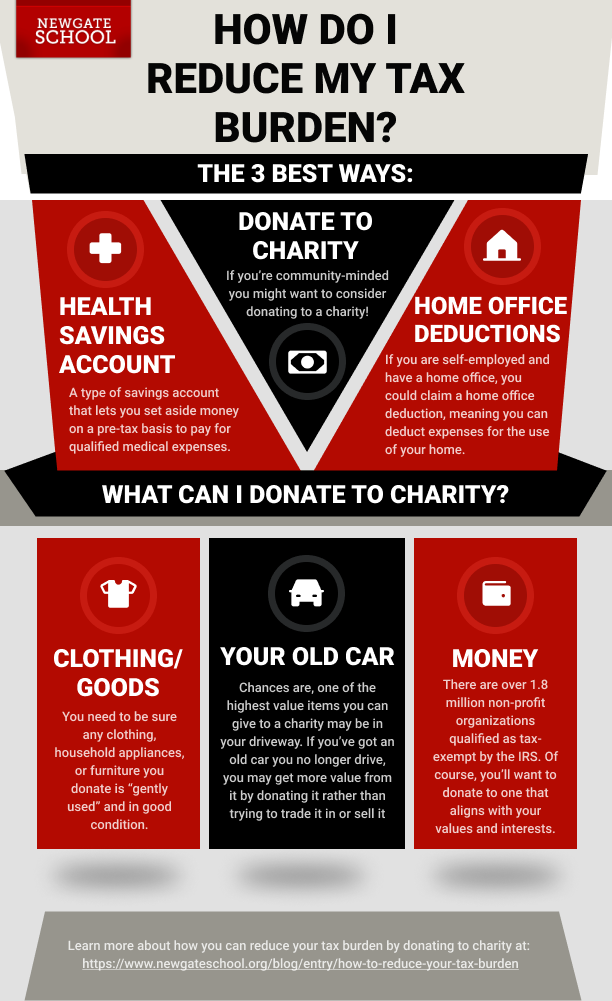
The Health Savings Account (HSA) is frequently cited by financial planners as the single most tax-efficient vehicle in the tax code. To qualify, you must be enrolled in a High Deductible Health Plan (HDHP). The HSA offers a “triple tax advantage”: contributions are tax-deductible (reducing taxable income), the money grows tax-deferred, and withdrawals for qualified medical expenses are tax-free. Unlike a Flexible Spending Account, the balance in an HSA rolls over year after year, effectively acting as a secondary retirement account that reduces your taxable income today while providing a tax-free bucket for healthcare costs in the future.
Flexible Spending Accounts (FSAs)
For those without an HDHP, the Flexible Spending Account (FSA) is a valuable alternative. These accounts allow you to set aside pre-tax dollars for healthcare or dependent care expenses. By funding an FSA, you reduce your taxable wages. However, FSAs are generally “use it or lose it” accounts, meaning you must spend the funds within the plan year or a short grace period. Despite this, for predictable costs like childcare or recurring prescriptions, the FSA provides a guaranteed reduction in your taxable income.
Maximizing Deductions: Moving Beyond the Standard Deduction
To reduce taxable income, you must understand the interplay between the standard deduction and itemized deductions. While many taxpayers take the standard deduction for its simplicity, those with significant qualifying expenses can lower their taxable income further by itemizing.
Charitable Giving and Bunching Strategies
Charitable contributions to qualified non-profits are deductible if you itemize. A sophisticated strategy used by savvy investors is “charitable bunching.” If your annual donations combined with other deductions don’t quite exceed the standard deduction threshold, you might choose to “bunch” two or three years’ worth of donations into a single tax year. This pushes your total deductions well above the standard limit for that specific year, significantly lowering your taxable income, while you take the standard deduction in the “off” years.

Mortgage Interest and State and Local Taxes (SALT)
For homeowners, the mortgage interest deduction remains a primary way to lower taxable income. While tax reforms have placed limits on the amount of debt eligible for this deduction, it remains a cornerstone of tax planning for middle and upper-class families. Additionally, the SALT deduction allows taxpayers to deduct up to $10,000 of state and local property and income (or sales) taxes. When combined, these housing-related deductions often make itemizing a superior choice to the standard deduction.
Medical and Dental Expenses
If you have a year with significant medical or dental expenses that were not covered by insurance, you may be able to deduct the portion that exceeds a certain percentage of your AGI. While this threshold is relatively high, it can provide a vital tax safety net during years of health crises or major elective procedures, ensuring that your taxable income is adjusted to reflect your actual financial capacity.
Investment Strategies for Tax Efficiency
How you manage your investment portfolio has a direct impact on your annual tax bill. High-turnover portfolios often generate significant taxable events, whereas a tax-conscious approach can keep your AGI low.
Tax-Loss Harvesting
Tax-loss harvesting is the practice of selling investments that are trading at a loss to offset capital gains realized elsewhere in your portfolio. If your losses exceed your gains, you can use the excess to offset up to $3,000 of your ordinary income (such as your salary) each year. Any remaining losses can be carried forward to future years. This strategy turns a portfolio “negative” into a proactive tool for reducing taxable income.
Long-Term vs. Short-Term Capital Gains
While both are forms of income, the IRS taxes them very differently. Short-term capital gains (on assets held for a year or less) are taxed as ordinary income, which can be as high as 37%. Long-term capital gains (on assets held for more than a year) are taxed at significantly lower rates—0%, 15%, or 20% depending on your total income. By holding assets longer, you ensure that the growth of your wealth is not eroded by the high rates applied to ordinary taxable income.
Municipal Bonds
For investors in high tax brackets, municipal bonds offer a unique advantage: the interest earned is generally exempt from federal income tax and, in many cases, state and local taxes as well. While the nominal interest rate on “munis” might be lower than corporate bonds, the “tax-equivalent yield” often makes them more profitable for those looking to keep their reportable taxable income to a minimum.
Business Expenses and Side Hustle Write-offs
In the modern economy, more people than ever have secondary income streams. If you operate a side hustle or a small business, you have access to a wide array of deductions that can lower your total taxable income.
The Home Office Deduction
If you use a portion of your home exclusively for business, you may be eligible for the home office deduction. This allows you to deduct a percentage of your rent or mortgage interest, utilities, insurance, and repairs. Even if you use the “simplified method” offered by the IRS, this deduction can provide a steady reduction in the income reported from your business activities.
Equipment, Education, and Travel
Ordinary and necessary expenses for your business—ranging from a new laptop and professional software to industry-specific education and business-related travel—are fully deductible. By reinvesting your earnings back into the tools and skills required for your business, you effectively reduce the “profit” that the IRS considers taxable income, while simultaneously building the infrastructure of your enterprise.
Qualified Business Income (QBI) Deduction
Under current tax law, many sole proprietors, partners, and S-corporation owners can deduct up to 20% of their qualified business income from their taxes. This is a powerful “above-the-line” style deduction that significantly lowers the effective tax rate for small business owners without requiring them to spend additional money on expenses.
Conclusion: The Importance of Year-Round Planning
Reducing taxable income is not a task to be relegated to the weeks leading up to the April filing deadline. True tax efficiency is the result of deliberate, year-round financial management. By automating retirement contributions, strategically timing the sale of investments, and maintaining meticulous records of business and medical expenses, you can ensure that your financial life is optimized for the lowest possible tax impact.
Each dollar saved through these strategies is a dollar that can be reinvested into your future, compounded over time, and used to achieve your long-term financial goals. While the tax code is complex, the fundamental principle is simple: use the incentives provided by the law to reduce what you owe, so you can increase what you own.
aViewFromTheCave is a participant in the Amazon Services LLC Associates Program, an affiliate advertising program designed to provide a means for sites to earn advertising fees by advertising and linking to Amazon.com. Amazon, the Amazon logo, AmazonSupply, and the AmazonSupply logo are trademarks of Amazon.com, Inc. or its affiliates. As an Amazon Associate we earn affiliate commissions from qualifying purchases.