
Navigating the landscape of student debt is one of the most significant financial challenges facing modern professionals and graduates. For many, a student loan is the first major credit obligation they encounter, often carrying implications that last for decades. Understanding how to figure out student loan payments is not merely about knowing a monthly number; it is about mastering the mechanics of interest, repayment terms, and the various federal and private structures that dictate your financial health. By deconstructing these elements, you can move from a state of passive payment to active debt management.
Understanding the Core Components of Your Loan
Before you can calculate a payment, you must identify the variables that feed into the mathematical formula of a loan. Every student loan is composed of three primary pillars: the principal, the interest rate, and the term.
Principal and Interest Accrual
The principal is the original amount you borrowed, plus any capitalized interest. Capitalization occurs when unpaid interest is added to the principal balance, often at the end of a grace period or deferment. This is a critical distinction because once interest capitalizes, you begin paying interest on that new, higher balance.
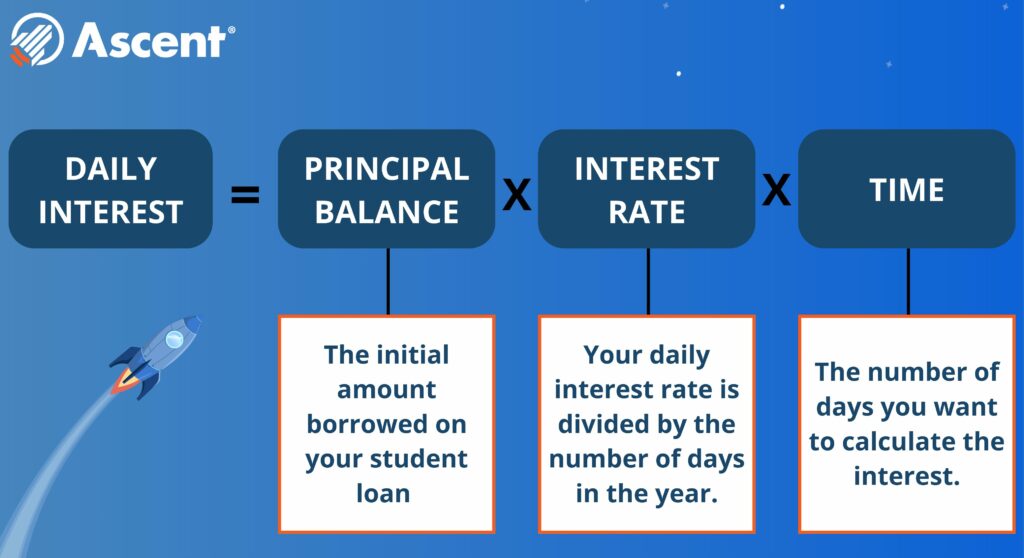
The interest rate is the cost of borrowing that money, expressed as an annual percentage. In the realm of student loans, interest is typically “simple” rather than “compound” in the traditional sense, but it accrues daily. To find your daily interest charge, divide your annual interest rate by 365 and multiply it by your current principal balance. Understanding this daily rate is essential for those looking to make mid-month payments or extra contributions.
Fixed vs. Variable Rates
Most federal student loans carry fixed interest rates, meaning the rate stays the same for the life of the loan. Private loans, however, may offer variable rates that fluctuate based on market indices like the SOFR (Secured Overnight Financing Rate). Calculating payments for a variable-rate loan requires periodic adjustments to your budget, as a one-percent increase in the market rate can translate to a significant jump in your monthly obligation.
The Loan Term
The term is the duration over which you agree to repay the loan. The standard federal repayment term is 10 years (120 months), but extended plans can stretch this to 25 or 30 years. While a longer term reduces the monthly payment, it exponentially increases the total interest paid over the life of the loan. Identifying your term is the final piece of the puzzle needed to determine your monthly “amortization”—the process of paying off a debt over time through regular installments.
Navigating Federal Repayment Plans
For federal loan borrowers, figuring out a payment is not a one-size-fits-all calculation. The U.S. Department of Education offers several repayment tracks, each with its own methodology for determining your monthly bill.
The Standard Repayment Plan
The Standard Repayment Plan is the default option. It uses a fixed monthly payment amount that ensures your loan is paid off in exactly 10 years. To figure out this payment manually, you use the standard amortization formula:
A = P [ i(1 + i)^n ] / [ (1 + i)^n – 1 ]
Where A is the monthly payment, P is the principal, i is the monthly interest rate (annual rate divided by 12), and n is the total number of months.
Income-Driven Repayment (IDR) Plans
Income-Driven Repayment plans, such as the SAVE (Saving on a Valuable Education), IBR, and PAYE plans, decouple your payment from the loan balance and instead tie it to your earnings. To calculate these payments, the government looks at your Adjusted Gross Income (AGI) and your family size.
For example, under the SAVE plan, payments are generally calculated as a percentage of your “discretionary income”—defined as the difference between your AGI and 225% of the Federal Poverty Guideline for your family size. If your income is below that threshold, your monthly payment could be as low as $0, even if your balance is in the six figures. Figuring out an IDR payment requires an annual recertification of your income, making it a dynamic part of your financial planning.
Graduated and Extended Plans
Graduated plans start with lower payments that increase every two years, usually for a period of 10 years. This is designed for graduates who expect their income to rise steadily. Extended plans allow for a 25-year window for borrowers with more than $30,000 in debt. While these provide immediate cash-flow relief, they are the most expensive options in terms of total interest cost.
Practical Tools and Manual Calculation Methods
While online calculators are ubiquitous, understanding the manual logic behind the numbers allows for better financial modeling and “what-if” scenarios.
Using Loan Simulators
The most accurate tool for federal loans is the Federal Student Aid Loan Simulator. By logging in with your FSA ID, the tool pulls your actual loan data and compares every available repayment plan side-by-side. It estimates your monthly payment, your total interest paid, and the date you will be debt-free. For private loans, most bank websites provide similar calculators that allow you to plug in your specific rate and term.
Building a Spreadsheet Model
For those who want total control, building a personal debt spreadsheet is the gold standard. By using the PMT function in software like Excel or Google Sheets, you can instantly see how different interest rates or extra payments affect your timeline.
The formula =PMT(interest_rate/12, number_of_months, -principal_balance) will give you the exact monthly payment required to zero out the balance by the end of the term. By creating an amortization table—a row-by-row breakdown of every payment—you can see exactly how much of each dollar goes toward interest versus principal. In the early years of a loan, a frustratingly large portion of your payment goes to interest; seeing this visually often provides the motivation needed to make extra principal-only payments.
Strategies to Lower Monthly Payments or Total Cost
Once you have figured out what your payments are, the next logical step is determining if those payments are optimal for your current financial situation.
Consolidation vs. Refinancing
Federal Loan Consolidation combines multiple federal loans into a single loan with a weighted average interest rate. This doesn’t necessarily save you money on interest, but it simplifies your billing and may be required to access certain repayment plans or forgiveness programs.
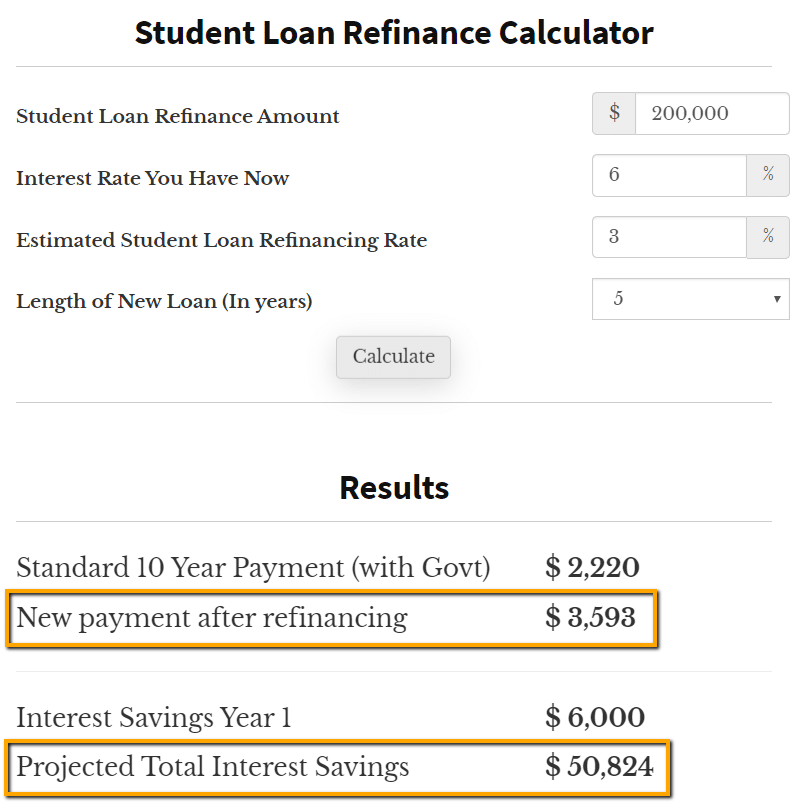
Private Refinancing, on the other hand, involves taking out a new loan with a private lender to pay off your existing ones. This is a strategy used to secure a lower interest rate based on your current credit score and income. If you have a high-interest private loan or high-interest federal loans and do not plan to use federal protections (like PSLF), refinancing can significantly lower your monthly payment and the total interest paid. However, once you refinance federal loans into private ones, you lose access to IDR plans and federal forgiveness.
The Power of Prepayment
To lower the total cost of your loan, you must attack the principal. Most student loans do not have prepayment penalties. By paying even $50 extra per month and specifying that it should be applied to the principal of your highest-interest loan (the “Debt Avalanche” method), you can shave years off your repayment timeline. When calculating your payments, always factor in how much “margin” you have in your budget to accelerate this process.
Public Service Loan Forgiveness (PSLF)
For those working in qualifying non-profit or government roles, the goal isn’t necessarily to pay off the loan, but to reach 120 qualifying payments under an IDR plan. In this scenario, “figuring out” your payment involves finding the lowest possible IDR payment to maximize the amount eventually forgiven tax-free. This requires a shift in mindset: instead of trying to pay more to reduce interest, you are trying to pay the bare minimum required by law to maximize the government’s contribution at the end of the 10-year period.

Taking Control of Your Financial Future
Figuring out student loan payments is more than an exercise in arithmetic; it is an exercise in life planning. Whether you choose the path of aggressive repayment to clear the debt quickly or opt for an income-driven plan to maintain monthly cash flow, the key is intentionality.
By understanding the math of daily interest, the nuances of federal repayment structures, and the utility of amortization tools, you transform your student debt from an overwhelming burden into a manageable line item in your broader financial portfolio. Knowledge of these mechanics provides the clarity needed to make informed decisions about home buying, investing, and career changes, ensuring that your education remains an investment in your future rather than a permanent drag on your prosperity.
aViewFromTheCave is a participant in the Amazon Services LLC Associates Program, an affiliate advertising program designed to provide a means for sites to earn advertising fees by advertising and linking to Amazon.com. Amazon, the Amazon logo, AmazonSupply, and the AmazonSupply logo are trademarks of Amazon.com, Inc. or its affiliates. As an Amazon Associate we earn affiliate commissions from qualifying purchases.