
The trajectory of Major League Soccer (MLS) represents one of the most compelling case studies in modern sports business. For investors, financial analysts, and entrepreneurs, the question of how many teams are in the MLS is not merely a matter of counting franchises; it is an exploration of market penetration, asset appreciation, and the strategic deployment of capital. As of the 2024 season, Major League Soccer consists of 29 teams, with a 30th—San Diego FC—slated to begin play in 2025. This expansion represents a deliberate financial roadmap designed to transform North American soccer into a multi-billion-dollar juggernaut.
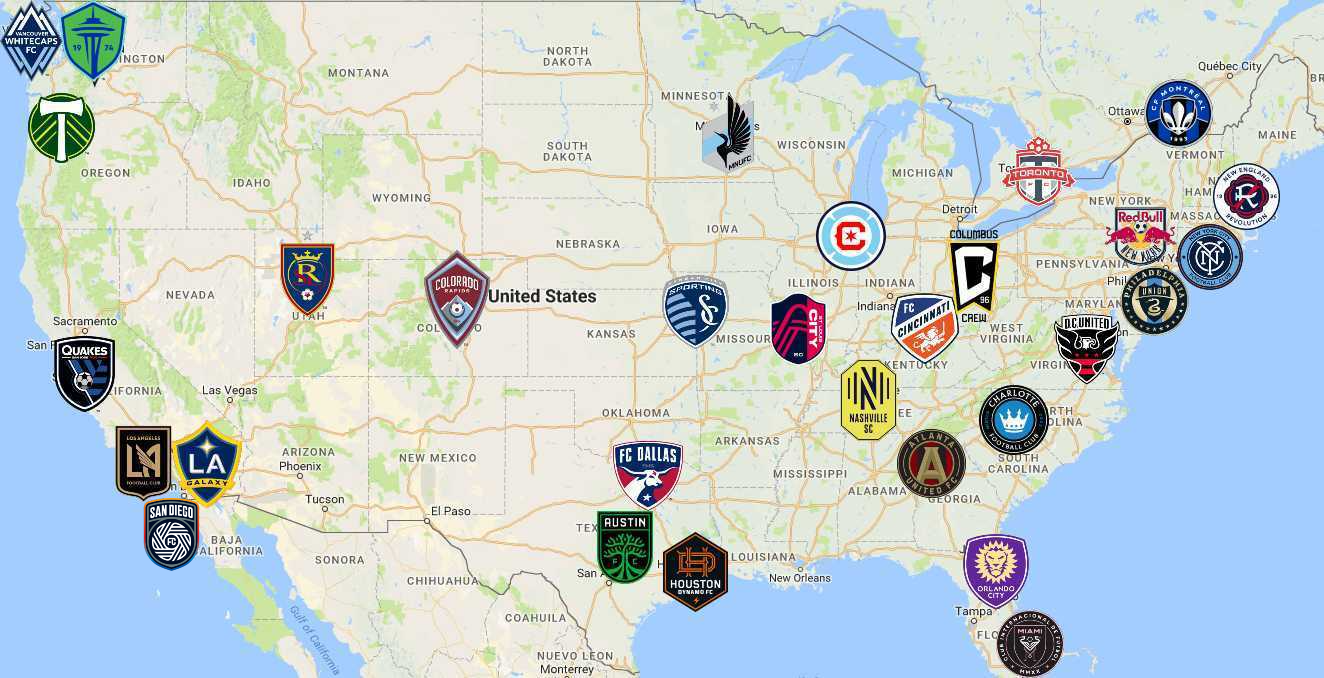
Understanding the current count of MLS teams requires looking past the standings and into the balance sheets. The league’s growth from 10 founding members in 1996 to its current scale is a testament to a “single-entity” business model that prioritizes stability and controlled growth over the volatile promotion-and-relegation systems found in Europe.
The Economics of Expansion: From 10 to 30
The financial evolution of MLS is perhaps best illustrated by the cost of entry. In the early 2000s, expansion fees—the price an ownership group pays to the league to create a new team—were roughly $10 million. By the time Toronto FC joined in 2007, the price tag had crept up. However, the last decade has seen an exponential surge.
The Astronomical Rise in Expansion Fees
When the league announced its 30th team in San Diego, the reported expansion fee was a staggering $500 million. To put this in perspective, this is a 5,000% increase from the fees paid two decades ago. This escalation is driven by several financial factors:
-
Scarcity Value: As the league approaches its projected capacity (likely 30 or 32 teams), the remaining “slots” become significantly more valuable.
-
Proven Revenue Models: Modern MLS teams are no longer speculative ventures. Most now operate in soccer-specific stadiums that they own or control, allowing them to capture 100% of match-day revenue, including concessions, parking, and premium seating.
-
Media Rights Growth: The league’s landmark 10-year, $2.5 billion partnership with Apple TV+ has provided a guaranteed revenue stream that scales with the addition of new markets.
The St. Louis and San Diego Effect
The 29th team, St. Louis City SC, which joined in 2023, served as a proof-of-concept for the high-valuation era. Their immediate success in sell-out crowds and merchandise sales validated the $200 million+ fee paid by their ownership group. San Diego FC, scheduled for 2025, represents the next phase: a high-net-worth market with a diverse demographic and existing soccer infrastructure, justifying the half-billion-dollar buy-in. These numbers demonstrate that the “number of teams” is a metric of investor confidence.
The Single-Entity Structure and Investor Security
The primary reason investors are willing to pay hundreds of millions of dollars to be one of the 29 (or 30) teams is the unique financial structure of the MLS. Unlike the English Premier League, where a team can be relegated to a lower division and lose 75% of its value overnight, MLS operates as a single entity.
Risk Mitigation and Shared Revenue
In an MLS structure, investors do not technically “own” a team; they own a share in the league and the right to operate a specific market. This distinction is crucial for business finance. It ensures that:
-
Cost Controls: Player salaries are largely managed through a centralized system, preventing the “arms race” that leads to bankruptcy in other leagues.
-
Revenue Sharing: National broadcasting deals and league-wide sponsorships are shared among all members, providing a floor for annual revenue regardless of on-field performance.
-
Asset Protection: The lack of relegation means the “floor” of a franchise’s valuation is protected. A team in last place is still a member of the elite 30-team club, preserving its resale value.
Market Capitalization and Valuation Trends
According to recent Forbes valuations, the average MLS team is now worth over $550 million, with top-tier clubs like LAFC and Atlanta United surpassing the $1 billion mark. This valuation is not based solely on annual profit—many teams still operate at a technical loss—but on the projected growth of the sport in North America ahead of the 2026 FIFA World Cup. The number of teams is carefully curated to ensure that expansion does not dilute the value of existing franchises, but rather enhances the league’s footprint for national advertisers.
Real Estate and Infrastructure as Business Assets
When analyzing the growth of MLS teams, one cannot ignore the real estate play. The “how many teams” question is inextricably linked to “how many stadiums.” The move toward soccer-specific stadiums (SSS) has been the single greatest driver of franchise valuation in the last 15 years.
Controlling the Venue
In the league’s early years, teams played in cavernous, half-empty NFL stadiums where they were secondary tenants. Today, 26 of the 29 teams play in stadiums specifically built or renovated for soccer. From a business finance perspective, this is transformative.
-
Ancillary Revenue: Owning the stadium allows ownership groups to host concerts, college sports, and other events, creating a year-round revenue stream.
-
Tax Incentives and Urban Development: Many MLS expansion projects are tied to larger urban revitalization efforts. Ownership groups often leverage the “team” to secure development rights for surrounding mixed-use real estate, including apartments, retail, and hotels.
The Miami Paradigm and Global Brand Equity
Inter Miami CF provides the ultimate example of how a single franchise can alter the financial landscape of the entire league. The addition of Lionel Messi didn’t just increase the “number of teams” by one; it fundamentally shifted the league’s revenue potential. Ticket prices surged by over 400% in certain markets, and the value of the Apple TV+ “MLS Season Pass” subscriptions skyrocketed globally. This illustrates that the business value of an MLS team is now tied to its ability to attract global icons, a feat made possible by the collective financial stability of the 29-team structure.
Future Projections: Reaching the Ceiling
As MLS reaches 30 teams with San Diego, the business community is looking toward the “ceiling.” Most major North American sports leagues (NFL, NBA, MLB, NHL) cap their growth at 30 or 32 teams.
The Dilution vs. Expansion Debate
There is a fine line between expanding the footprint and diluting the product. Financially, adding a 31st or 32nd team offers a massive one-time influx of cash (the expansion fee), which is distributed among the existing owners. However, it also means that national television revenue must be split more ways.
-
Potential Markets: Cities like Las Vegas, Phoenix, and Detroit remain on the radar. The financial logic for these markets involves their high media market ranking and potential for high-value local sponsorships.
-
The 2026 World Cup Catalyst: The upcoming World Cup in North America is expected to be a massive “liquidity event” for soccer in the region. The league’s strategy appears to be hitting the 30-team mark just before this event to maximize the commercial windfall.
Profitability vs. Growth
For the modern sports investor, MLS represents a “growth stock” rather than a “dividend stock.” The current focus is on building infrastructure, expanding the fan base, and securing the digital media future. The transition from 29 teams to a potential 32-team league will likely focus on closing the gap between team valuations and annual operating income. As the league matures, the financial focus will shift from expansion fees to maximizing Average Revenue Per User (ARPU) through digital engagement and global merchandising.

Conclusion: The Strategic Value of 29+ Teams
In conclusion, the answer to “how many teams are in the MLS” is more than a digit; it is a reflection of a meticulously managed financial ecosystem. With 29 teams active and a 30th on the horizon, Major League Soccer has successfully utilized a high-barrier-to-entry model to create immense value for its investors. The league has moved from a period of survival to a period of aggressive asset appreciation.
By prioritizing stadium ownership, centralized media rights, and a single-entity structure that mitigates risk, MLS has created a landscape where the business of soccer is as competitive and lucrative as the game itself. Whether the league stops at 30 or pushes toward 32, the focus will remain on ensuring that every new addition strengthens the financial collective, ensuring that North American soccer remains a primary destination for global sports capital.
aViewFromTheCave is a participant in the Amazon Services LLC Associates Program, an affiliate advertising program designed to provide a means for sites to earn advertising fees by advertising and linking to Amazon.com. Amazon, the Amazon logo, AmazonSupply, and the AmazonSupply logo are trademarks of Amazon.com, Inc. or its affiliates. As an Amazon Associate we earn affiliate commissions from qualifying purchases.