
In the landscape of personal finance, a vehicle is often the second-largest purchase an individual makes, trailing only the acquisition of real estate. Yet, unlike a home, which typically appreciates over time, a car is a depreciating asset that requires meticulous financial tracking. To manage your net worth effectively, you must understand the real-time value of your automotive assets. This is where the National Automobile Dealers Association (NADA) guides—now integrated with J.D. Power—become an indispensable financial tool.
Whether you are looking to trade in a vehicle, sell it privately, or secure financing for a new purchase, knowing how to navigate NADA values provides a significant advantage at the negotiating table. This guide explores how to leverage NADA data to ensure your financial decisions are backed by industry-standard metrics.

Understanding NADA’s Role in Personal Finance and Asset Management
Before diving into the mechanics of the tool, it is essential to understand why NADA holds such weight in the financial sector. For decades, NADA has been the gold standard for dealerships, credit unions, and insurance companies. While other tools like Kelley Blue Book (KBB) are popular among consumers, NADA values are frequently used by lenders to determine “loan value”—the maximum amount a bank is willing to lend against a specific vehicle.
What Sets NADA Apart from Other Valuation Tools?
The primary distinction lies in the data source. NADA values are heavily influenced by actual wholesale transaction data, including auction results and verified dealer sales. This makes the NADA value a more “market-reflective” figure in the eyes of financial institutions. While KBB often reflects what a consumer might hope to get, NADA often reflects what the market is actually paying at a professional level.
From a personal finance perspective, using NADA allows you to see your vehicle through the eyes of a lender. If you are planning to refinance an auto loan or apply for a personal loan using your car as collateral, the NADA “Clean Trade-In” or “Clean Retail” value is likely the benchmark the bank will use to assess your equity.
The Financial Importance of Accurate Valuation
Inaccurate valuation leads to “leakage” in your personal economy. If you undervalue your car during a private sale, you are leaving thousands of dollars on the table. Conversely, if you overvalue it while budgeting for a new purchase, you may find yourself “upside down” or in a position of negative equity on your next loan. By mastering the NADA valuation process, you treat your car not just as a mode of transportation, but as a liquidable asset within your broader portfolio.
Step-by-Step Guide to Navigating the NADA Valuation Process
Using the NADA tool effectively requires more than just entering a year and model. To get a high-fidelity valuation that a bank or dealer will respect, you must be precise with the data you provide.
Step 1: Gathering Essential Vehicle Data
Before visiting the NADA website (now hosted under the J.D. Power umbrella), gather the following information:
-
Mileage: Be exact. In the world of depreciation, a 5,000-mile difference can shift a car’s value by hundreds, if not thousands, of dollars.
-
Vehicle Identification Number (VIN): While you can search by make and model, the VIN ensures the tool captures the exact trim level and factory-installed options.
-
Condition Report: Be brutally honest about the vehicle’s state. NADA defines specific tiers (Rough, Average, Clean). Most consumers overestimate their car’s condition; however, for financial planning, it is safer to estimate conservatively.
Step 2: Selecting the Correct Valuation Category
NADA provides several different price points, and choosing the wrong one can lead to major budgeting errors.
-
Rough Trade-In: This value represents a vehicle with significant mechanical or cosmetic issues. Use this if you are looking to offload a “project car” quickly.
-
Average Trade-In: This is the most common benchmark for vehicles with normal wear and tear.
-
Clean Trade-In: This is the value most often used by credit unions for loan-to-value (LTV) calculations. It assumes the car is in excellent condition and ready for resale with minimal reconditioning.
-
Clean Retail: This is what a consumer should expect to pay at a dealership. If you are selling your car privately, your asking price should fall somewhere between Clean Trade-In and Clean Retail.
Step 3: Accounting for Regional and Market Adjustments
One of the strengths of NADA is its regional adjustment. A four-wheel-drive SUV carries a higher premium in the Rocky Mountains than it does in Florida. When prompted, ensure you enter the correct zip code where the transaction will take place. This ensures the valuation accounts for local demand, climate-related wear (such as salt corrosion in the North), and regional economic trends.
Strategic Applications: Using Car Values to Optimize Your Net Worth
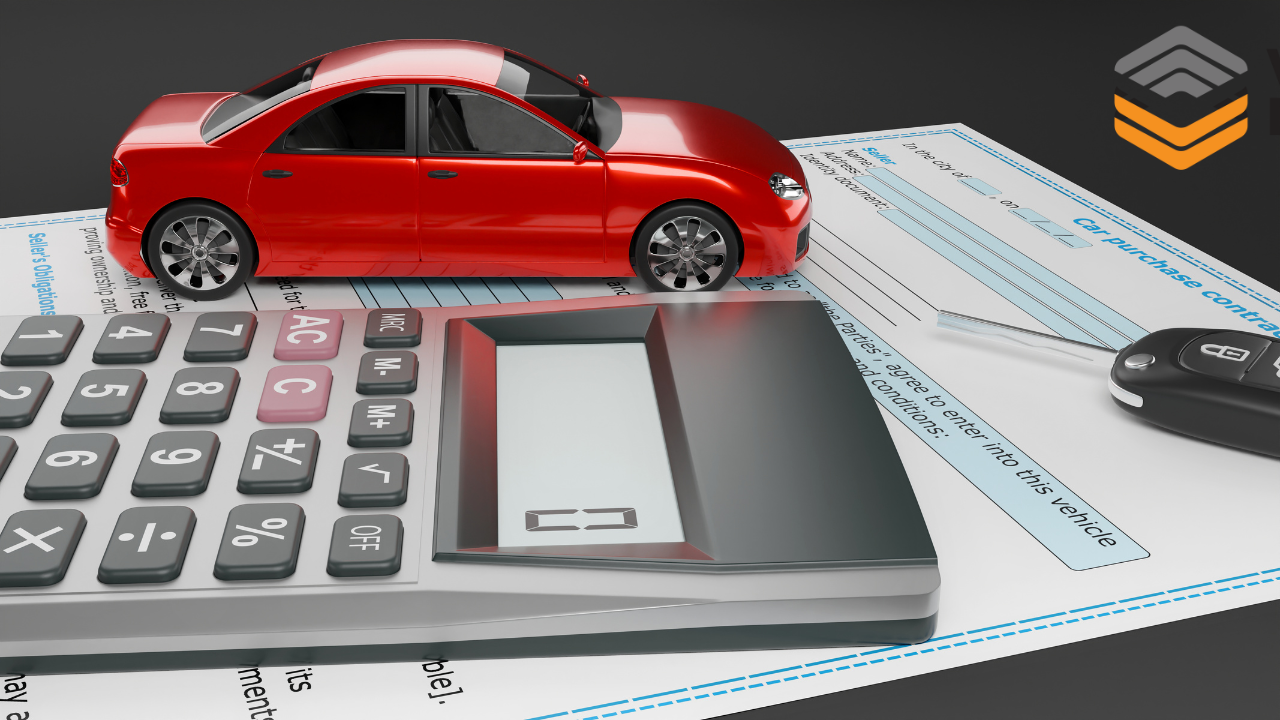
Once you have your NADA report in hand, it becomes a strategic document. In the realm of money management, this data can be used to optimize several different financial outcomes.
Maximizing Trade-In Negotiations
When you walk into a dealership, the salesperson will likely offer you a trade-in value based on their internal metrics. By presenting a NADA “Clean Trade-In” report, you are signaling that you understand the wholesale market. If the dealer offers $15,000 but NADA suggests $17,500, you have the empirical evidence needed to negotiate. This $2,500 difference is effectively a cash injection into your new deal, reducing the principal of your next loan and saving you significant interest over the life of the contract.
Setting a Competitive Private Sale Price
For those looking to maximize their return, selling a car privately is almost always more lucrative than trading it in. To attract serious buyers while protecting your profit margin, use the NADA “Clean Retail” value as your ceiling and the “Clean Trade-In” value as your floor.
Positioning your price slightly below the Clean Retail value makes your listing look like a bargain compared to a dealership, while still ensuring you earn more than you would have through a trade-in. This “arbitrage” between trade-in and retail is pure profit that stays in your pocket rather than going to the dealership’s overhead.
Evaluating Used Car Investments
If you are on the buying side, NADA serves as a protective barrier against overpaying. In a high-inflation environment where used car prices can fluctuate wildly, checking the NADA value ensures you aren’t paying a “market adjustment” that won’t be recognized by your insurance company or bank. If you pay $30,000 for a car that NADA values at $24,000, you are starting your ownership with $6,000 in negative equity—a dangerous financial position if you need to sell the car unexpectedly or if it is totaled in an accident.
Advanced Financial Implications: Depreciation and Insurance
Beyond the immediate transaction of buying or selling, NADA values play a critical role in long-term financial health, specifically concerning tax planning and risk management.
Tracking Depreciation for Business Finance
For business owners and freelancers who use their vehicles for work, NADA values are essential for calculating depreciation schedules. If you are using the actual expense method for tax deductions, knowing the fair market value of your vehicle at the beginning and end of the fiscal year can help you understand the true cost of operations. Furthermore, if you plan to sell a business vehicle, the NADA value helps you anticipate the “recapture” of depreciation, which may have tax implications.
NADA Values in Total Loss Insurance Settlements
Perhaps the most critical time to know your NADA value is following an accident. If an insurance company declares your vehicle a “total loss,” they will offer a settlement based on the Actual Cash Value (ACV). Insurance adjusters frequently use NADA (J.D. Power) data to generate these offers.
If the insurance company offers you a settlement that is significantly lower than the NADA Clean Retail value for your area, you have grounds to contest the offer. Providing a printed NADA report can be the leverage you need to secure a higher payout, ensuring you have enough capital to replace the vehicle without dipping into your emergency savings or taking on unnecessary debt.
Protecting Your “Loan-to-Value” Ratio
For those with existing auto loans, checking NADA values annually is a healthy financial habit. It allows you to track your Loan-to-Value (LTV) ratio. If your loan balance is $20,000 but the NADA value has dropped to $15,000, you are “underwater.” Recognizing this allows you to make strategic decisions, such as making extra principal payments to reach an equity position or purchasing GAP (Guaranteed Asset Protection) insurance to cover the shortfall in the event of a total loss.
Conclusion: The Value of Information in Financial Autonomy
In the world of personal finance, information is the most valuable currency. The ability to use NADA to check a car’s value is more than just a trick for car enthusiasts; it is a fundamental skill for anyone looking to maintain a healthy balance sheet. By understanding the nuances of trade-in vs. retail values, accounting for regional variations, and using these figures to lead negotiations, you take control of your largest depreciating asset.
Treating your vehicle purchase and sale with the same rigor you would an investment portfolio ensures that you minimize losses, maximize gains, and maintain the liquidity necessary for long-term financial success. In a market where every dollar counts, NADA provides the clarity needed to turn a complex transaction into a calculated financial victory.
aViewFromTheCave is a participant in the Amazon Services LLC Associates Program, an affiliate advertising program designed to provide a means for sites to earn advertising fees by advertising and linking to Amazon.com. Amazon, the Amazon logo, AmazonSupply, and the AmazonSupply logo are trademarks of Amazon.com, Inc. or its affiliates. As an Amazon Associate we earn affiliate commissions from qualifying purchases.