
Determining the exact worth of a global powerhouse like The Home Depot, Inc. (HD) requires a multi-faceted approach that looks beyond a single number. For investors, financial analysts, and business enthusiasts, “worth” is defined by market capitalization, enterprise value, and the intrinsic value of its business model. As the world’s largest home improvement retailer, Home Depot has evolved from a local hardware alternative into a massive financial engine that dictates trends in the retail and construction sectors.
To understand what Home Depot is worth today, one must analyze its position on the New York Stock Exchange, its massive physical footprint, its aggressive capital allocation strategy, and its ability to maintain dominance in an increasingly digital economy. At any given time, the market fluctuates, but the underlying financial health of the company remains a cornerstone of the American consumer discretionary sector.

Decoding Market Capitalization and Enterprise Value
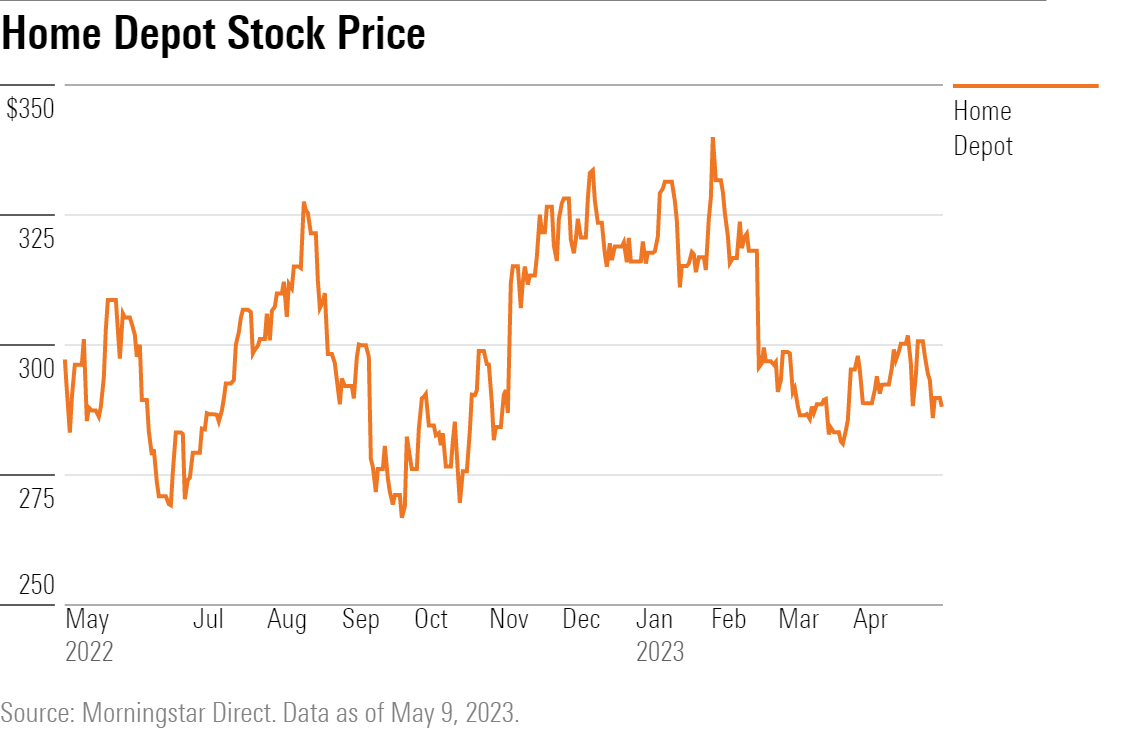
The most immediate answer to “how much is Home Depot worth” is found in its market capitalization. Market cap is calculated by multiplying the current share price by the total number of outstanding shares. For several years, Home Depot’s market cap has hovered in the range of $300 billion to $400 billion, depending on broader economic conditions and interest rate cycles. This valuation places it among the top tier of all publicly traded companies globally and makes it a heavyweight component of the Dow Jones Industrial Average and the S&P 500.
The Significance of Enterprise Value
While market cap tells us what the equity is worth, Enterprise Value (EV) provides a more comprehensive picture of the company’s total price tag. EV includes market cap plus total debt, minus cash and cash equivalents. For a capital-intensive business like Home Depot—which maintains a vast network of owned and leased real estate, high inventory levels, and a sophisticated logistics infrastructure—EV is a critical metric. It represents the theoretical “takeover” price and highlights how much of the company’s growth is fueled by leveraged capital versus equity.
Historical Valuation Trajectory
To appreciate Home Depot’s current worth, we must look at its growth trajectory. Since its IPO in 1981, the company has seen an astronomical rise. Its ability to scale from a few stores in Georgia to over 2,300 locations across North America is a masterclass in compounding value. Investors who have held the stock over decades have benefited not just from price appreciation, but from a consistent dividend growth policy that has significantly boosted the total “worth” of their holdings.
The Fundamental Drivers of Home Depot’s Financial Worth
A company’s valuation is not arbitrary; it is driven by its ability to generate cash. Home Depot’s worth is anchored in its massive annual revenue, which has consistently surpassed the $150 billion mark in recent fiscal years. However, revenue is only the top line; the true value lies in how efficiently the company converts those sales into profit.
The “Pro” Customer Moat
One of the primary reasons Home Depot commands a premium valuation compared to other retailers is its success with the professional contractor segment. While the “Do-It-Yourself” (DIY) market is a significant portion of their business, the “Pro” customer—remodelers, electricians, plumbers, and general contractors—is a major value driver. These customers shop more frequently and spend significantly more per transaction. By building a “moat” around this high-value demographic through specialized loyalty programs and job-site delivery services, Home Depot ensures a steady, high-margin revenue stream that bolsters its overall market valuation.
Operating Margins and Efficiency
Home Depot is frequently cited by financial analysts for its industry-leading operating margins. By leveraging its massive scale, the company can negotiate better pricing from suppliers and optimize its supply chain to a degree that smaller competitors cannot match. This operational efficiency means that for every dollar of sales, Home Depot retains more profit than the average retailer, directly increasing its attractiveness to institutional investors and driving up its price-to-earnings (P/E) ratio.
Interconnected Retail Strategy
The worth of a modern retailer is heavily tied to its digital infrastructure. Home Depot’s “Interconnected Retail” strategy—blending the physical store experience with a robust e-commerce platform—has been a resounding success. Over half of their online orders are actually fulfilled through a physical store, whether via in-store pickup or local delivery. This hybrid model increases the “worth” of their physical real estate, transforming stores into localized distribution hubs and reducing the “last mile” delivery costs that plague traditional e-commerce giants.
Comparative Valuation: Home Depot vs. Lowe’s
No analysis of Home Depot’s worth is complete without a comparison to its primary rival, Lowe’s Companies, Inc. While both operate in the same sector, the market consistently assigns a higher valuation to Home Depot in terms of market cap and various financial multiples.
Market Share and Dominance
Home Depot generally maintains a larger market share than Lowe’s, particularly in urban areas and among professional contractors. This dominance allows Home Depot to dictate market trends and enjoy greater economies of scale. From a “Money” perspective, Home Depot’s higher valuation reflects its superior Return on Invested Capital (ROIC). Investors are willing to pay more for Home Depot’s earnings because the company has historically proven more adept at deploying its capital to generate high returns.
Yield and Shareholder Returns
When evaluating what a company is “worth” to an individual investor, dividend yield and share buyback programs are essential. Home Depot has a storied history of returning value to shareholders. By aggressively buying back its own shares, the company reduces the total supply, which increases the earnings per share (EPS) for remaining holders. This “shareholder-friendly” approach often leads to a higher valuation floor, as investors are reluctant to sell a stock that provides consistent income and value appreciation.
Macroeconomic Influences on Valuation
Because Home Depot is intrinsically linked to the housing market, its financial worth is sensitive to macroeconomic shifts. Understanding these external factors is key to predicting how the company’s valuation will move in the future.
Interest Rates and the Housing Market
Home Depot’s valuation is often inversely correlated with interest rate hikes. When mortgage rates rise, the housing market tends to cool. Fewer people buy new homes, which traditionally triggers a “move-in” spend on renovations. However, there is a counter-argument that supports Home Depot’s worth: when homeowners are locked into low-interest mortgages and cannot afford to move, they are more likely to invest in their current property. This “renovate-in-place” trend provides a cushion for Home Depot’s earnings even during high-interest-rate environments.
Inflation and Consumer Spending
Inflation impacts the cost of goods sold (COGS) and consumer purchasing power. Home Depot’s ability to pass on price increases to customers without significantly losing volume is a testament to the essential nature of its products. Whether it is a broken water heater or a leaking roof, many of Home Depot’s core products are “needs” rather than “wants,” giving the company a level of pricing power that protects its valuation during inflationary periods.
Is Home Depot a Sound Financial Investment?
Ultimately, determining how much Home Depot is worth leads to the question of its value as an investment. For those focused on personal finance and long-term wealth building, the company represents a classic “blue-chip” asset.
The P/E Ratio and Valuation Metrics
To see if the company is “fairly valued,” investors look at the Price-to-Earnings (P/E) ratio. Historically, Home Depot trades at a P/E that reflects its growth prospects and stability. If the P/E is significantly lower than its five-year average, the market may be undervalued. Conversely, a very high P/E might suggest the stock is “expensive” relative to its current earnings. Currently, Home Depot’s valuation remains robust because of its reliable cash flows and defensive position in the retail landscape.
Future Growth Catalysts
The future worth of Home Depot will be determined by its expansion into the “complex Pro” market—larger scale construction projects—and its continued investment in supply chain automation. By moving deeper into the distribution of bulk building materials and enhancing its technological capabilities, the company aims to capture a larger slice of the $900 billion fragmented home improvement market.
In conclusion, Home Depot’s worth is far more than its $300 billion+ market capitalization. It is a reflection of its operational excellence, its strategic dominance over the professional contractor segment, and its ability to navigate complex macroeconomic cycles. For the investor, Home Depot represents a high-quality asset that blends the stability of a brick-and-mortar giant with the efficiency of a modern tech-integrated retailer. Its value lies in its consistency: a company that has mastered the art of helping people build, while simultaneously building immense wealth for those who own a piece of it.
aViewFromTheCave is a participant in the Amazon Services LLC Associates Program, an affiliate advertising program designed to provide a means for sites to earn advertising fees by advertising and linking to Amazon.com. Amazon, the Amazon logo, AmazonSupply, and the AmazonSupply logo are trademarks of Amazon.com, Inc. or its affiliates. As an Amazon Associate we earn affiliate commissions from qualifying purchases.