
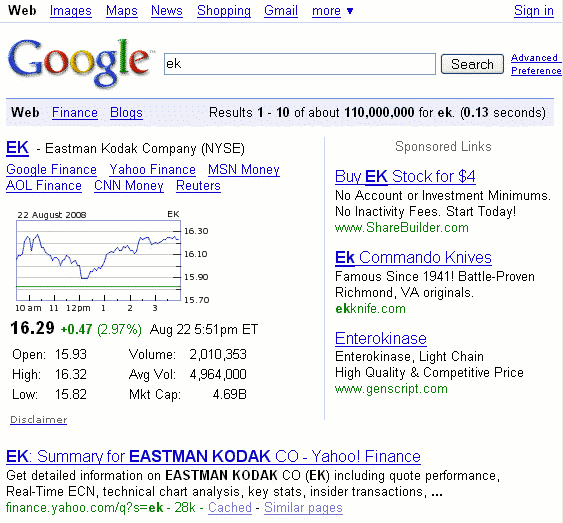
When investors look to add one of the world’s most dominant technology companies to their portfolio, they often encounter a moment of confusion. Searching for “Google” on a brokerage platform reveals not one, but two primary results: GOOGL and GOOG. Understanding the distinction between these two symbols is essential for any investor looking to navigate the equity markets, as the difference lies in the fundamental structure of corporate governance and shareholder rights.
While the company rebranded as Alphabet Inc. in 2015, the market still largely refers to it by its flagship product name. However, the ticker symbols themselves serve as a roadmap to how the company manages its equity, its voting power, and its long-term strategic vision. To invest effectively in Alphabet, one must understand why these two tickers exist and what each represents in the context of a modern financial portfolio.

The Tale of Two Tickers: GOOG vs. GOOGL
The primary reason Alphabet has two ticker symbols is the result of a strategic stock split that occurred in April 2014. At that time, the company’s leadership, specifically co-founders Larry Page and Sergey Brin, wanted to ensure they maintained control over the company’s direction while still being able to issue stock for employee compensation and acquisitions.
Class A Shares (GOOGL)
Alphabet Class A shares are traded under the ticker symbol GOOGL. These are the “common” shares that most individual investors and institutional funds hold. The defining characteristic of Class A shares is that they carry voting rights. For every one share of GOOGL held, the investor is entitled to one vote at shareholder meetings. This allows investors to have a formal, albeit often small, voice in corporate elections, executive compensation packages, and major policy shifts.
Class C Shares (GOOG)
Alphabet Class C shares are traded under the ticker symbol GOOG. These shares were created during the 2014 split to allow the company to continue issuing equity without diluting the voting power of the founders. The crucial difference here is that Class C shares carry no voting rights. When you buy GOOG, you are buying an economic stake in the company’s success, but you do not have a say in how the company is governed.
Class B Shares: The Insider Tier
It is also worth noting the existence of Class B shares, although these are not available to the general public and do not have a public ticker symbol. Class B shares are held exclusively by the company’s founders and a small group of early insiders. These shares carry ten votes each. Because of this “super-voting” structure, Page and Brin maintain a majority of the voting power despite holding a minority of the total outstanding equity. This structure is common in the tech industry, utilized by companies like Meta and Snap to protect the long-term vision of the founders from the short-term pressures of activist investors.
Strategic Implications of the Dual-Class Structure
The decision to split the stock into two distinct tickers was a calculated move in corporate finance. For the average retail investor, the choice between GOOG and GOOGL might seem academic, but the market dynamics behind them reveal a great deal about the company’s financial philosophy.
Price Disparity and Arbitrage
In a perfectly efficient market, GOOGL (with voting rights) should technically trade at a slight premium to GOOG (without voting rights). After all, a vote has some intrinsic value. Historically, this premium has existed, but it is usually quite narrow—often less than 1% or 2%. Occasionally, the prices converge or even flip due to liquidity needs or institutional trading patterns. For long-term investors, the price difference is rarely significant enough to change the fundamental investment thesis, though those interested in corporate governance will naturally gravitate toward GOOGL.
Liquidity and Inclusion
Both GOOG and GOOGL are highly liquid assets, meaning they are easily bought and sold on the Nasdaq exchange. They are also both included in major indices like the S&P 500. However, for a period of time, index providers had to decide how to handle companies with multiple share classes. The S&P 500 eventually decided to include both classes of Alphabet stock in the index, which is why when you look at the top holdings of an S&P 500 ETF, you will often see both GOOG and GOOGL listed separately.
The 2022 Stock Split
In July 2022, Alphabet executed another major corporate action: a 20-for-1 stock split. This did not change the ticker symbols, but it significantly lowered the price per share for both GOOG and GOOGL. Before the split, shares were trading north of $2,000 each, which created a barrier to entry for smaller investors. By bringing the price down to approximately $100 per share at the time of the split, Alphabet made its stock more accessible to the retail market and paved the way for potential inclusion in price-weighted indices like the Dow Jones Industrial Average.
Alphabet Inc.: The Financial Powerhouse Behind the Symbols
To understand the value of the GOOG and GOOGL tickers, one must look at the underlying business of Alphabet Inc. The company has evolved from a simple search engine into a global conglomerate with diversified revenue streams and a massive balance sheet.
Search and Advertising Dominance
The core of Alphabet’s financial strength remains Google Search. Despite the rise of social media and alternative search platforms, Google maintains a dominant market share in global search. This translates into massive advertising revenue through Google Ads and YouTube. For investors, the ticker symbols represent a stake in the most efficient advertising machine ever built. The high margins associated with digital advertising provide the “dry powder” Alphabet needs to invest in its “Other Bets.”
Google Cloud: The Growth Engine
In recent years, the financial narrative around GOOG and GOOGL has shifted toward Google Cloud. While it trailed behind Amazon Web Services (AWS) and Microsoft Azure for years, Google Cloud has reached a state of scale and profitability. For an investor, the Cloud segment represents the company’s play for the enterprise market, moving beyond consumer-facing products into the backbone of global digital infrastructure.
The AI Frontier
As of the current market cycle, the primary driver of Alphabet’s valuation is its positioning in Artificial Intelligence (AI). From integrating Gemini (its large language model) into search to developing specialized AI hardware (TPUs), Alphabet is competing for dominance in the next era of computing. Investors buying GOOG or GOOGL today are essentially betting that Alphabet can successfully transition from a “mobile-first” company to an “AI-first” company without cannibalizing its existing advertising monopoly.
How to Choose: Which Ticker Should You Buy?
When it comes to the practicalities of investing, the question remains: which symbol is the right choice for your brokerage account?
For the Individual Investor
If you are a retail investor holding shares in a standard brokerage account, the difference between GOOG and GOOGL is largely negligible. If you care about participating in shareholder votes—even if your individual vote is a drop in the ocean compared to the founders—then GOOGL is the correct choice. If you are simply looking for the cheapest entry point into the company and don’t care about voting, you can simply choose whichever ticker is trading at a lower price at that specific moment.
For the Institutional and Dividend Investor
Institutional investors often have specific mandates regarding voting rights, which may force them into GOOGL. Furthermore, while Alphabet does not currently pay a significant dividend (it recently initiated its first-ever dividend in 2024), any future dividend payments are distributed equally across both share classes on a per-share basis. Therefore, from an income perspective, both tickers provide the same benefit.
Strategic Asset Allocation
Because both tickers are part of the same company, they move in near-perfect correlation. Buying both GOOG and GOOGL does not provide diversification; it simply doubles down on your exposure to Alphabet’s business risks. When building a portfolio, it is more important to consider how much total Alphabet exposure you have relative to other sectors like healthcare, energy, or consumer staples.
Risks and Considerations for Alphabet Shareholders
No investment is without risk, and holding GOOG or GOOGL comes with specific challenges that investors must monitor.
Regulatory and Antitrust Hurdles
Alphabet is a frequent target of regulatory bodies in the United States and the European Union. Concerns over data privacy, search monopolies, and unfair competition in the advertising technology stack have led to multi-billion dollar fines and ongoing legal battles. A significant adverse ruling, such as a court-ordered breakup of the company, would have a profound impact on the value of both ticker symbols.
Competition in the AI Era
The emergence of generative AI and chatbots like ChatGPT poses a potential threat to traditional search. If users begin to find answers through conversational AI rather than clicking on search result links, Alphabet’s primary advertising revenue model could be disrupted. While the company is innovating rapidly in this space, the transition period introduces volatility that investors should be prepared for.
Macroeconomic Factors
As an advertising-heavy business, Alphabet is sensitive to the global economic cycle. During recessions, companies tend to slash their marketing budgets first. While Alphabet’s “moat” is wide, it is not immune to broad market downturns. Fluctuations in interest rates also impact the valuation of high-growth tech companies, as the “discount rate” applied to future earnings changes.
Conclusion: The Symbol of a Digital Era
Whether you choose GOOGL for the voting rights or GOOG for the pure economic exposure, you are investing in one of the most significant pillars of the modern economy. These ticker symbols represent more than just a search engine; they represent a global leader in data, cloud computing, artificial intelligence, and digital media.
Understanding the difference between the Class A and Class C shares is a hallmark of a sophisticated investor. By recognizing the intent behind the dual-class structure, you gain insight into Alphabet’s commitment to founder-led, long-term innovation over short-term market fluctuations. As the company continues to redefine the boundaries of technology and finance, GOOG and GOOGL will remain essential fixtures in the portfolios of those looking to capture the growth of the digital age.
aViewFromTheCave is a participant in the Amazon Services LLC Associates Program, an affiliate advertising program designed to provide a means for sites to earn advertising fees by advertising and linking to Amazon.com. Amazon, the Amazon logo, AmazonSupply, and the AmazonSupply logo are trademarks of Amazon.com, Inc. or its affiliates. As an Amazon Associate we earn affiliate commissions from qualifying purchases.