
In the realm of personal finance, travel is often viewed as a discretionary expense that sits at the top of the “budget-cutting” list. However, for the strategic consumer, travel is not merely a cost to be managed but an opportunity for sophisticated financial arbitrage. Securing “really cheap” flights is less about luck and more about understanding the complex algorithms of airline yield management, leveraging financial instruments like credit card rewards, and applying a rigorous cost-benefit analysis to every booking decision.
To the uninitiated, airline pricing appears chaotic. To the financially savvy, it is a predictable ecosystem governed by supply, demand, and consumer psychology. By treating travel booking as a form of financial optimization, you can drastically reduce your largest overhead costs, allowing your capital to work harder for you elsewhere in your portfolio.

The Economics of Airline Pricing and Timing
The first step in mastering travel finance is understanding how airlines price their inventory. Airlines use sophisticated AI-driven “Yield Management Systems” to ensure they extract the maximum possible revenue from every seat. These systems adjust prices in real-time based on historical data, competitor pricing, and remaining inventory.
The Myth of the “Best Day to Buy”
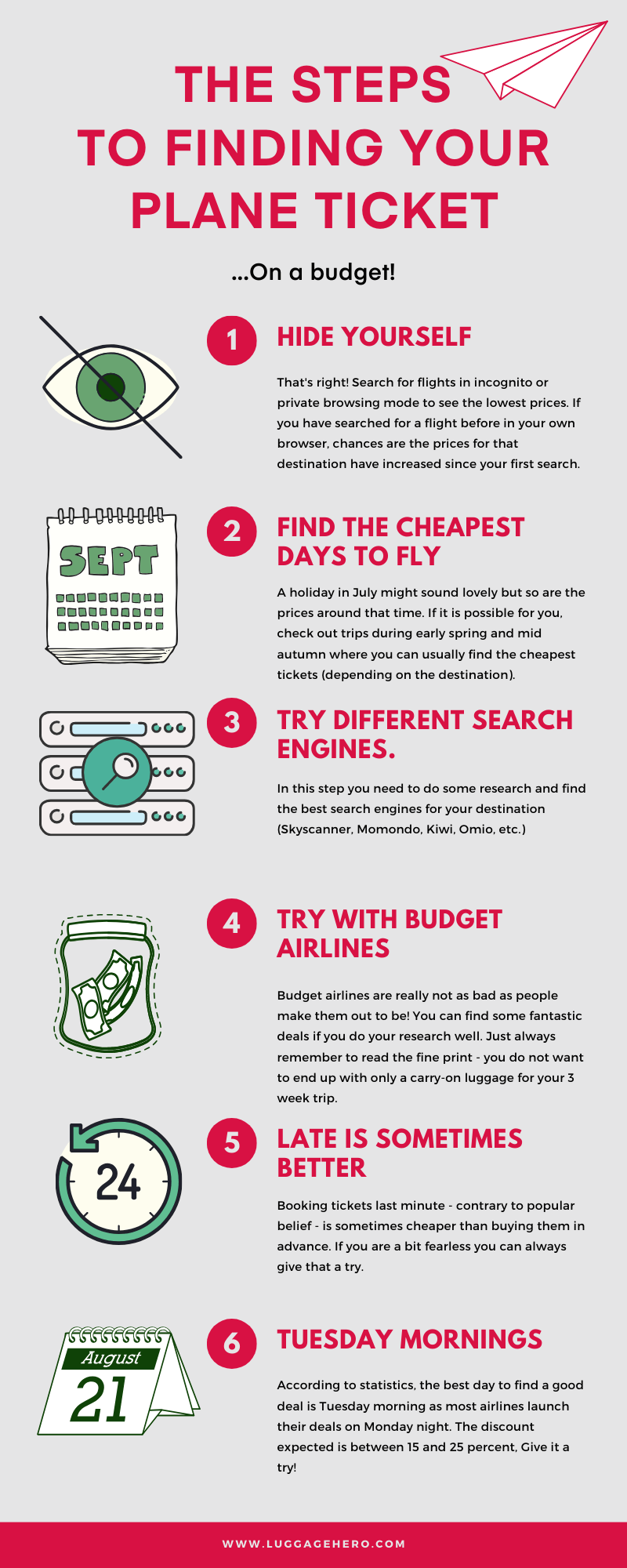
There is a persistent myth in personal finance circles that booking on a Tuesday at 3:00 AM will magically yield the lowest prices. While historical data once supported this when airlines manually updated their databases, modern dynamic pricing has rendered this advice largely obsolete. Instead of focusing on the day of the week you buy, focus on the day of the week you fly. Mid-week departures (Tuesday and Wednesday) are statistically the cheapest because they avoid the weekend rush of leisure travelers and the Monday/Thursday/Friday rush of business travelers.
The “Goldilocks Window” for Booking
Timing your purchase is a matter of managing risk. If you book too early, you may miss out on sales; if you book too late, you are subject to the “last-minute” premiums charged to desperate business travelers. For domestic flights, the financial “sweet spot” typically lies between one and three months before departure. For international routes, that window expands to three to six months. Monitoring these windows allows you to capitalize on the baseline fare before scarcity-driven price hikes occur.
Leveraging Financial Tools and Credit Card Arbitrage
Perhaps the most powerful weapon in a traveler’s arsenal is the strategic use of financial tools, specifically rewards-based credit cards. When handled with the discipline of a professional investor, credit card points and miles can reduce the cash cost of a flight to near zero.
The High-Yield Strategy of Sign-Up Bonuses
The fastest way to accumulate the capital necessary for “free” or heavily discounted flights is through sign-up bonuses (SUBs). High-tier travel cards often offer bonuses ranging from 60,000 to 100,000 points after a specific spending threshold is met. When valued at a conservative 1.5 to 2.0 cents per point, a single bonus can represent $1,000 to $2,000 in travel value. By timing these applications around large, necessary purchases—such as home renovations or insurance premiums—you turn mandatory spending into travel equity.
Calculating Your “Cent Per Point” (CPP)
A disciplined approach to travel finance requires calculating the “Cent Per Point” value of every redemption. To find the CPP, take the cash price of the flight (minus any taxes/fees you still have to pay) and divide it by the number of points required. If a flight costs $500 or 50,000 points, your CPP is 1.0. If you can transfer those same points to a partner airline and book a flight that would have cost $1,500, your CPP jumps to 3.0. A financially savvy traveler never redeems points for a value lower than the baseline cash-back rate of 1.5% to 2%.
Transfer Partners: The Ultimate Arbitrage
The real “alpha” in the points and miles world comes from transfer partners. Instead of booking through a bank’s travel portal at a fixed rate, transferring points to airline programs allows you to take advantage of “sweet spots” in their award charts. For example, using 50,000 points for a domestic flight might be a poor use of capital, but transferring those same 50,000 points to a partner for a trans-Atlantic flight in a premium cabin could net you a 5x or 10x return on the value of those points.
Advanced Search Strategies and Digital Arbitrage
Beyond financial tools, getting the lowest possible price requires navigating the digital marketplace with a focus on data and location-based pricing discrepancies.

Location-Based Pricing and VPNs
Airlines often vary their pricing based on the point of sale. A ticket purchased in London might be priced differently than the exact same ticket purchased in New York or New Delhi. Using a Virtual Private Network (VPN) to change your IP address to a lower-income country or the airline’s home country can occasionally reveal lower fares. Furthermore, booking in the local currency of the departure country (using a credit card with no foreign transaction fees) allows you to benefit from favorable exchange rates that the airline’s own currency converter might ignore.
The Logic of “Hidden City” Ticketing
A controversial but effective financial maneuver is “hidden city” ticketing. This occurs when a flight with a layover in your actual destination is cheaper than a direct flight to that destination. For instance, a flight from Los Angeles to New York with a stop in Chicago might be cheaper than a direct flight from Los Angeles to Chicago. You simply exit the airport at the layover. While this can yield massive savings, it comes with risks: you cannot check bags (as they go to the final destination), and you must only book one-way, as the airline will cancel the remainder of your itinerary once you “miss” a leg.
Open-Jaw and Multi-City Routing
To maximize the “return on investment” of a single long-haul ticket, consider “open-jaw” routing. This involves flying into one city (e.g., London) and returning from another (e.g., Paris). By using low-cost ground transportation or budget regional carriers to bridge the gap, you eliminate the cost and time of backtracking to your original arrival point, effectively getting “two cities for the price of one” and saving on fuel surcharges.
Managing the True Cost of Travel: Ancillaries and Fees
In a “low-cost carrier” (LCC) economy, the ticket price is often just the “entry fee.” To ensure a flight is truly cheap, one must account for the ancillary costs that airlines use to pad their margins.
The Unbundling of the Airfare
Budget airlines like Spirit, Ryanair, or Frontier operate on an unbundled model. They lure travelers with a $20 base fare, then charge for carry-on bags, seat assignments, and even water. From a personal finance perspective, you must calculate the “fully loaded” cost of the flight. If a $20 fare requires $60 in bag fees, but a “legacy” carrier offers the same route for $75 with a bag included, the legacy carrier is the superior financial choice.
Avoiding “Convenience Taxes”
Fees for seat selection and priority boarding are essentially “convenience taxes.” For the budget-conscious traveler, these represent a high cost for low utility. By checking in exactly 24 hours in advance, you can usually secure a reasonable seat for free. Furthermore, investing in high-quality, “personal item” sized luggage can bypass carry-on fees entirely, saving a traveler hundreds of dollars annually.
Error Fares: Capitalizing on Systemic Glitches
Occasionally, a glitch in an airline’s pricing algorithm or a human data-entry error results in “error fares”—international flights for $150 or business class seats for $400. These are the “black swan” events of travel finance. Utilizing monitoring tools and being prepared to book instantly is key. While airlines are not always legally required to honor these fares, many do for the sake of public relations, providing an incredible ROI for those who are fast enough to catch them.
The Long-Term Financial Strategy of Travel
Viewing flight booking as a one-off transaction is a mistake. To truly optimize your travel spending, you must view it as a long-term financial strategy.
The Value of Airline Loyalty and Status
For frequent travelers, “chasing status” can have a legitimate financial upside. Elite status often provides free checked bags, complimentary upgrades, and waived change fees. Calculate the value of these perks against the potential higher cost of sticking with one airline alliance. If you spend $500 more per year to maintain status but save $800 in bag fees and enjoy $1,000 worth of lounge access and upgrades, the “investment” has a positive yield.
Creating a Travel Sinking Fund
Rather than putting travel on a high-interest credit card and paying it off later, the financially responsible approach is the “sinking fund.” By automating a monthly transfer into a dedicated high-yield savings account, you ensure that when a “deal of a lifetime” or an error fare appears, you have the liquid capital to deploy immediately without disrupting your broader financial goals.
Flexibility as a Financial Asset
In the world of cheap flights, flexibility is your greatest asset. Being willing to fly on a Tuesday instead of a Friday, or being open to visiting Portugal instead of Spain because of a fare sale, can save you thousands. In financial terms, flexibility is a form of “optionality.” The more options you are willing to accept, the lower the price you have to pay.
By applying these principles of personal finance, market analysis, and disciplined spending, the world becomes significantly more accessible. Getting “really cheap” flights isn’t a matter of luck; it is the result of a calculated, strategic approach to navigating one of the most complex pricing environments in the modern economy. Turning travel into a math problem allows you to see the world without compromising your long-term wealth accumulation.
aViewFromTheCave is a participant in the Amazon Services LLC Associates Program, an affiliate advertising program designed to provide a means for sites to earn advertising fees by advertising and linking to Amazon.com. Amazon, the Amazon logo, AmazonSupply, and the AmazonSupply logo are trademarks of Amazon.com, Inc. or its affiliates. As an Amazon Associate we earn affiliate commissions from qualifying purchases.