
In the landscape of personal finance, travel is often categorized as a discretionary luxury—a significant “leak” in a household budget that can delay long-term wealth accumulation. However, for the financially savvy individual, airfare is not a fixed cost but a variable expense subject to optimization. Finding a cheap flight is less about “luck” and more about understanding the complex economic algorithms used by airlines and leveraging financial tools to turn those algorithms in your favor. By treating travel booking as a strategic exercise in asset management and arbitrage, you can drastically reduce your overhead without sacrificing the quality of your experiences.
The Economics of Airfare: Navigating Dynamic Pricing and Yield Management
To consistently secure low-cost airfare, one must first understand how airlines price their seats. This is not a static process; it is governed by a sophisticated system known as yield management. Airlines use predictive modeling to maximize the revenue per available seat mile (RASM). This means that two people sitting in the same row may have paid prices that differ by hundreds, or even thousands, of dollars.
The core of this system is dynamic pricing. Prices fluctuate based on real-time demand, historical data, and the proximity to the departure date. From a financial perspective, your goal is to identify the “inflection point” where the airline’s need to fill a seat overrides their desire to extract a premium from late-booking business travelers.
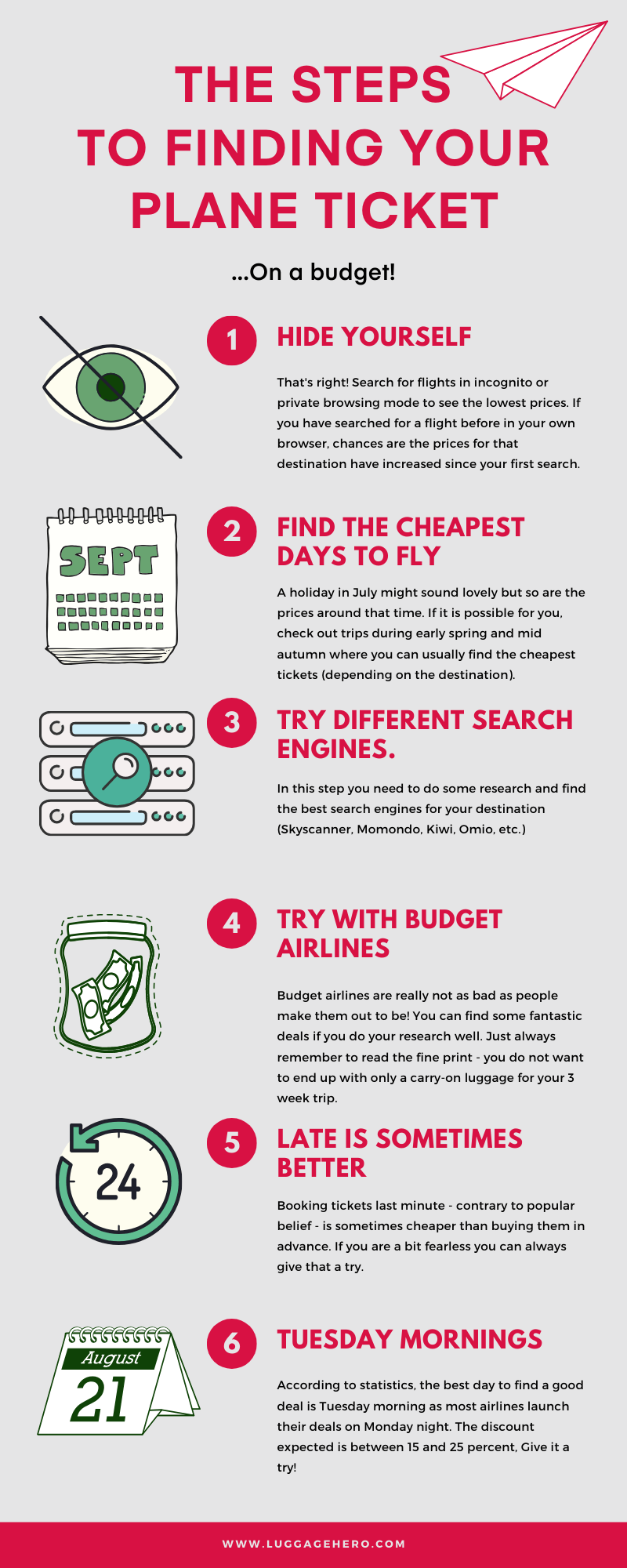
Historically, conventional wisdom suggested that booking on a Tuesday at midnight was the golden rule. However, modern data analysis shows that the specific day of the week you book is less important than the day you fly. Mid-week departures (Tuesday and Wednesday) remain the most cost-effective due to lower demand from both leisure and corporate sectors. Furthermore, the “booking window”—the timeframe in which you finalize the purchase—has shifted. For domestic flights, the financial “sweet spot” typically occurs between one and three months before departure, while international routes require a lead time of four to seven months.
Maximizing ROI Through Credit Card Rewards and Point Valuation
The most potent tool in the travel hacker’s arsenal is not a search engine, but a well-managed portfolio of financial products. Strategic credit card usage allows you to decouple the cost of travel from your liquid cash flow, effectively turning everyday spending into a travel-specific currency.
Understanding the Ecosystem of Transferable Points
Financial institutions like Chase, American Express, Capital One, and Citi offer “transferable points” programs. These are far more valuable than points tied to a specific airline. From a financial optimization standpoint, transferable points offer protection against “devaluation”—when an airline suddenly increases the number of miles required for a flight. By holding your points in a bank program, you maintain the liquidity to move those assets to whichever airline partner offers the best redemption value at that moment.
The Math of Redemptions
To truly find a “cheap” flight, you must calculate the “cents per point” (CPP) value. This is determined by taking the cash price of the flight, subtracting any taxes and fees associated with an award booking, and dividing the result by the number of points required. If a flight costs $600 or 30,000 points, your CPP is 2.0. If you can consistently achieve a CPP higher than 1.5, you are outperforming the standard “cash back” rate of most premium credit cards, representing a significant return on investment for your routine spending.
Sign-Up Bonuses as Capital Injections
The fastest way to accumulate travel capital is through sign-up bonuses (SUBs). High-tier travel cards often offer bonuses ranging from 60,000 to 100,000 points after a specific spending requirement is met. For a disciplined spender, this represents a massive infusion of travel credit that can cover multiple domestic flights or a round-trip international journey for essentially $0 in out-of-pocket airfare costs.
Strategic Search Methodology and Geographic Arbitrage
Once your financial tools are in place, the next step is utilizing search technology to identify price discrepancies. This requires moving beyond basic search queries and adopting a global perspective on airfare.

The Power of “Everywhere” and Open-Jaw Routing
Most travelers start with a destination and look for a price. To find the cheapest flights, you must reverse this logic: start with a budget and look for a destination. Tools like Google Flights or Skyscanner allow you to search from your home airport to “Everywhere.” This financial approach prioritizes the lowest cost-per-mile, allowing you to explore regions that are currently experiencing a “downward” price correction due to increased airline competition or decreased seasonal demand.
Additionally, consider “Open-Jaw” tickets—flying into one city and out of another. This can often be cheaper than two one-way tickets or a standard round-trip, especially when factoring in the time and money saved by not having to circle back to your original arrival point.
Geographic Arbitrage and VPN Usage
Airlines often price tickets differently based on the “point of sale”—the location from which the booking is made. A flight booked from a high-income country like the United States may be priced higher than the exact same flight booked through a localized version of the airline’s website in a country with a lower cost of living.
While not always successful, using a Virtual Private Network (VPN) to change your digital location to a lower-GDP country can sometimes reveal lower base fares or different currency conversion rates that favor the traveler. Similarly, paying in the local currency of the airline’s home country (using a credit card with no foreign transaction fees) can save 2–5% on the total cost by avoiding the airline’s unfavorable internal exchange rates.
Advanced Tactics: Hidden-City Ticketing and Error Fares
For the advanced financial optimizer, there are “fringe” tactics that can result in massive savings, though they come with specific risks that must be managed.
The Logic of Hidden-City Ticketing
Hidden-city ticketing occurs when a traveler books a flight with a layover in their actual intended destination, but the final leg of the journey is to a different city. For example, a direct flight from New York to Charlotte might cost $400, but a flight from New York to Atlanta with a layover in Charlotte might only cost $150. In this scenario, the traveler simply exits the airport in Charlotte and skips the second leg.
From a financial standpoint, this exploits the irrationality of hub-and-spoke pricing. However, it requires traveling with only a carry-on (as checked bags go to the final destination) and carries the risk of the airline canceling the return portion of your trip if you miss a segment.
Capitalizing on Error Fares
Occasionally, due to human error or technical glitches in global distribution systems, airlines list fares for a fraction of their intended price—such as a $200 round-trip ticket from Los Angeles to Tokyo. These “error fares” usually only last for a few hours. To capitalize on these, one must have a dedicated “travel emergency fund” and the ability to book immediately. Services that monitor these glitches allow the financially prepared traveler to lock in rates that are mathematically impossible under normal market conditions.

Long-Term Financial Planning for Travel
Finding a cheap flight is not a one-off event; it is a component of a broader lifestyle of financial intentionality. High-frequency travelers should integrate their travel goals into their monthly budget through “sinking funds.” By automating a set amount of money into a high-yield savings account specifically for travel, you ensure that when a deal or an error fare arises, you have the liquidity to act instantly without impacting your primary savings or retirement goals.
Furthermore, the “cost” of a flight should always be viewed through the lens of Total Trip Cost. A $300 flight to a city with an extremely high cost of living may ultimately be more expensive than a $600 flight to a region where your home currency has significant purchasing power. True financial efficiency in travel requires looking past the ticket price and evaluating the entire economic landscape of the journey.
By combining the data-driven approach of yield management awareness, the leverage provided by credit card rewards, and the technical agility of modern search tools, you can transform the way you interact with the airline industry. You are no longer a passive consumer of travel; you are an active manager of a complex financial ecosystem, ensuring that every dollar spent on airfare yields the highest possible return in experience and value.
aViewFromTheCave is a participant in the Amazon Services LLC Associates Program, an affiliate advertising program designed to provide a means for sites to earn advertising fees by advertising and linking to Amazon.com. Amazon, the Amazon logo, AmazonSupply, and the AmazonSupply logo are trademarks of Amazon.com, Inc. or its affiliates. As an Amazon Associate we earn affiliate commissions from qualifying purchases.