
The aviation industry operates on some of the most sophisticated dynamic pricing models in the global economy. For the modern traveler, tracking airline ticket prices is no longer a matter of checking a website once a week; it is a technical endeavor that involves navigating complex Global Distribution Systems (GDS), leveraging machine learning algorithms, and utilizing specialized software tools. To master fare tracking, one must understand the underlying technology that drives price volatility and the digital tools available to intercept those fluctuations.
Leveraging Global Distribution Systems and Metasearch Aggregators
At the core of every airline ticket search is a Global Distribution System (GDS). These are massive computer networks—the most prominent being Amadeus, Sabre, and Travelport—that act as the technical backbone for the travel industry. They manage the inventory of hundreds of airlines, processing millions of data points every second. When you track a price, you are essentially querying a subset of this GDS data.
The Role of APIs in Fare Tracking
The most effective tracking tools do not simply “scrape” airline websites; they interface with APIs (Application Programming Interfaces) that provide structured data from these GDS networks. For example, the ITA Matrix—a powerful tool originally developed by scientists at MIT and later acquired by Google—provides the raw data that fuels many modern tracking apps. By using tools that tap into these high-level data streams, users can see far more than just a price; they can see fare classes, routing rules, and fuel surcharges, which are often the technical precursors to a price change.
Metasearch Engine Architecture
Metasearch engines like Skyscanner or Momondo function by aggregating results from hundreds of Online Travel Agencies (OTAs) and airline direct-connects. From a technical perspective, these engines use “caching” to deliver fast results. This is why you occasionally see a price disappear when you try to book it; the tracking tool was looking at a cached snapshot rather than live GDS data. Understanding this latency is key to effective tracking. To get the most accurate, real-time data, technical users often rely on tools that refresh their queries at higher frequencies or utilize direct API calls.
Utilizing AI and Machine Learning for Price Prediction
Tracking a price tells you what it is today, but predicting where it will go tomorrow requires the application of machine learning and historical data analysis. The travel tech sector has seen a surge in “predictive analytics” tools that attempt to decode the black-box algorithms airlines use for yield management.
The Hopper Algorithm and Predictive Modeling
Hopper is perhaps the most well-known example of a tool built entirely on predictive modeling. By processing trillions of historical flight prices, its algorithm can predict with a high degree of accuracy whether a fare will rise or fall. It uses a “regression analysis” approach, looking at seasonal trends, historical demand for specific routes, and real-time sales velocity. For the technical-minded traveler, utilizing these predictions is a move from reactive tracking to proactive strategy. Instead of setting a simple price alert, you are effectively subscribing to a data-driven forecast.
Understanding Yield Management Systems
Airlines use sophisticated software called Yield Management Systems (YMS) to maximize revenue per seat. These systems monitor “load factors” (how many seats are filled) and adjust prices in milliseconds based on demand. To track these effectively, one must understand that price drops often occur when the YMS detects that a flight is underperforming its historical load benchmarks. Tools that track “price drops” are essentially detecting when an airline’s algorithm has triggered a corrective price reduction to stimulate demand.
Essential Digital Tools and Browser Extensions
While mobile apps provide convenience, the most robust tracking often happens at the browser level, where extensions and specialized web-based tools offer more granular control over data filtering and notification parameters.

Google Flights and the ITA Matrix
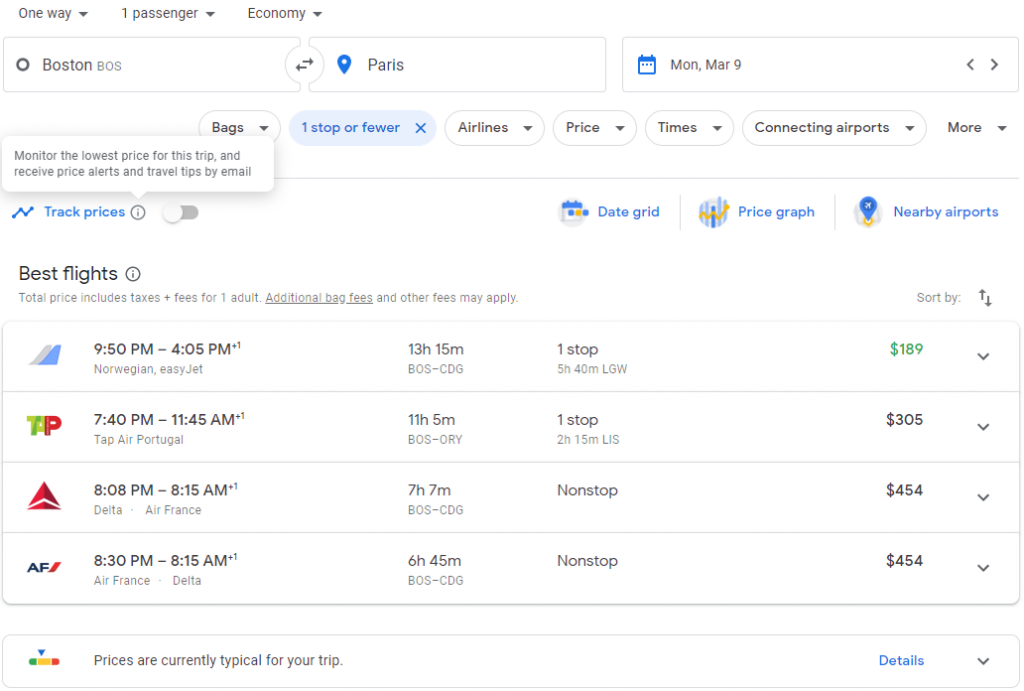
Google Flights is the industry standard for a reason: it is built on the ITA Matrix “QPX” software. Its technical advantage lies in its speed and its ability to visualize price trends over time. The “Track Prices” toggle on Google Flights creates a persistent query that monitors the GDS for specific fare buckets. When the inventory in a lower-priced bucket (like ‘Q’ or ‘O’ class) becomes available, the system triggers an immediate notification.
Specialized Browser Extensions
Extensions like Flight Fare Search or specialized scripts can provide additional layers of data. Some power users utilize browser-based automation tools to refresh tabs or monitor specific elements on a page for changes. More advanced users may even use “Headless Browsers” (like Puppeteer or Selenium) to build custom tracking scripts. These scripts can be programmed to run on a server 24/7, checking for price deviations that occur in the middle of the night—a common time for system updates and “mistake fares” to surface.
Setting Up Webhooks and Automated Notifications
For those who want to automate their tracking without writing custom code, services like IFTTT (If This Then That) or Zapier can be integrated with travel APIs. By setting up a webhook, a user can receive a notification in Slack, Discord, or via SMS the moment a specific price threshold is met. This moves the tracking process out of the browser and into an automated workflow, ensuring that the user is the first to know when an airline’s pricing algorithm makes a move.
Digital Security, Privacy, and Dynamic Pricing
A common debate in the travel tech community is whether airlines use “fingerprinting” or cookies to increase prices for users who repeatedly search for the same route. While most evidence suggests that price changes are driven by inventory levels rather than individual user tracking, maintaining digital hygiene is a sound technical practice.
The Impact of Cookies and Cache
Airlines and OTAs certainly use cookies to track user behavior for marketing purposes. While they may not always use this data to “hike” prices, it can lead to “persisted results” where your browser shows you an older, cached price instead of the new, lower one. Clearing your browser cache or using a “Private” or “Incognito” window ensures that you are receiving a clean query from the server, free of any localized data that might interfere with the price display.
VPNs and Regional Pricing Nodes
One of the most powerful technical strategies for tracking airline prices is the use of a Virtual Private Network (VPN). Airlines often use “Point of Sale” (POS) pricing, meaning the price of a ticket can vary depending on where the purchase is being made. For example, a flight from London to New York might be priced differently if queried from a Japanese IP address versus a UK IP address.
By using a VPN to route your traffic through different regional nodes, you can uncover these localized price discrepancies. This is not about “tricking” the system, but rather about accessing different pricing databases within the GDS that are assigned to different geographic markets. When tracking prices, it is often useful to check the fare from the “home country” of the airline (e.g., using a Turkish IP address to check Turkish Airlines) to see if localized discounts are available.
Advanced Data Analysis: Tracking Mistake Fares and Fare Classes
To truly master fare tracking, one must go beyond the “dollars and cents” and look at the underlying metadata of a ticket. This involves understanding fare classes and the technical anomalies that lead to “mistake fares.”
Deciphering Fare Classes
Every seat on a plane is categorized into a fare class, represented by a single letter (Y, B, M, H, Q, etc.). Airlines assign a certain number of seats to each letter. Price tracking tools often only show the lowest available fare, but a technical tracker will look at the “buckets.” If a tool shows that there are only two seats left in the “K” class, you know a price jump is imminent because the next available class (“L” or “M”) is more expensive. Tools like ExpertFlyer allow users to see this raw inventory data, providing a much higher level of tracking precision than a standard consumer website.

Identifying Mistake Fares
Mistake fares occur due to human error (fat-finger syndrome), currency conversion glitches, or technical malfunctions during a GDS update. Tracking these requires joining specialized digital communities and using “scraping” tools that monitor thousands of routes simultaneously for statistical outliers. When a price for a transcontinental business class seat drops by 90% in a matter of seconds, it is flagged as an outlier. Because these fares are often “fixed” by the airline within hours, the tracking must be automated and the notification instantaneous.
Tracking airline ticket prices is a sophisticated intersection of data science, network infrastructure, and digital automation. By moving beyond manual searches and embracing the technical tools—from API-driven aggregators and machine learning predictors to VPNs and inventory monitors—travelers can gain a significant advantage over the automated yield management systems used by the aviation industry. In the digital age, the best fare is not found by luck; it is captured by the best-configured tracking system.
aViewFromTheCave is a participant in the Amazon Services LLC Associates Program, an affiliate advertising program designed to provide a means for sites to earn advertising fees by advertising and linking to Amazon.com. Amazon, the Amazon logo, AmazonSupply, and the AmazonSupply logo are trademarks of Amazon.com, Inc. or its affiliates. As an Amazon Associate we earn affiliate commissions from qualifying purchases.