
In the complex landscape of American healthcare, prescription drug pricing remains one of the most volatile variables in a personal budget. For many, the cost of a monthly maintenance medication can fluctuate wildly between pharmacies, often without a clear explanation. This is where GoodRx enters the conversation—not as a pharmacy itself, but as a financial intermediary designed to provide price transparency and significant discounts. Understanding the cost of GoodRx requires looking at more than just a subscription fee; it involves analyzing the different tiers of service, the hidden trade-offs of using coupons over insurance, and the potential return on investment for high-frequency prescription users.
The Dual Pricing Model: Free Coupons vs. GoodRx Gold
The most important distinction to make when evaluating the cost of GoodRx is that the platform operates on a “freemium” model. For the vast majority of casual users, the cost of using GoodRx is zero dollars out-of-pocket for the service itself. However, for those with chronic conditions or families with multiple prescriptions, the paid subscription tier offers a different financial value proposition.
The Free GoodRx Experience
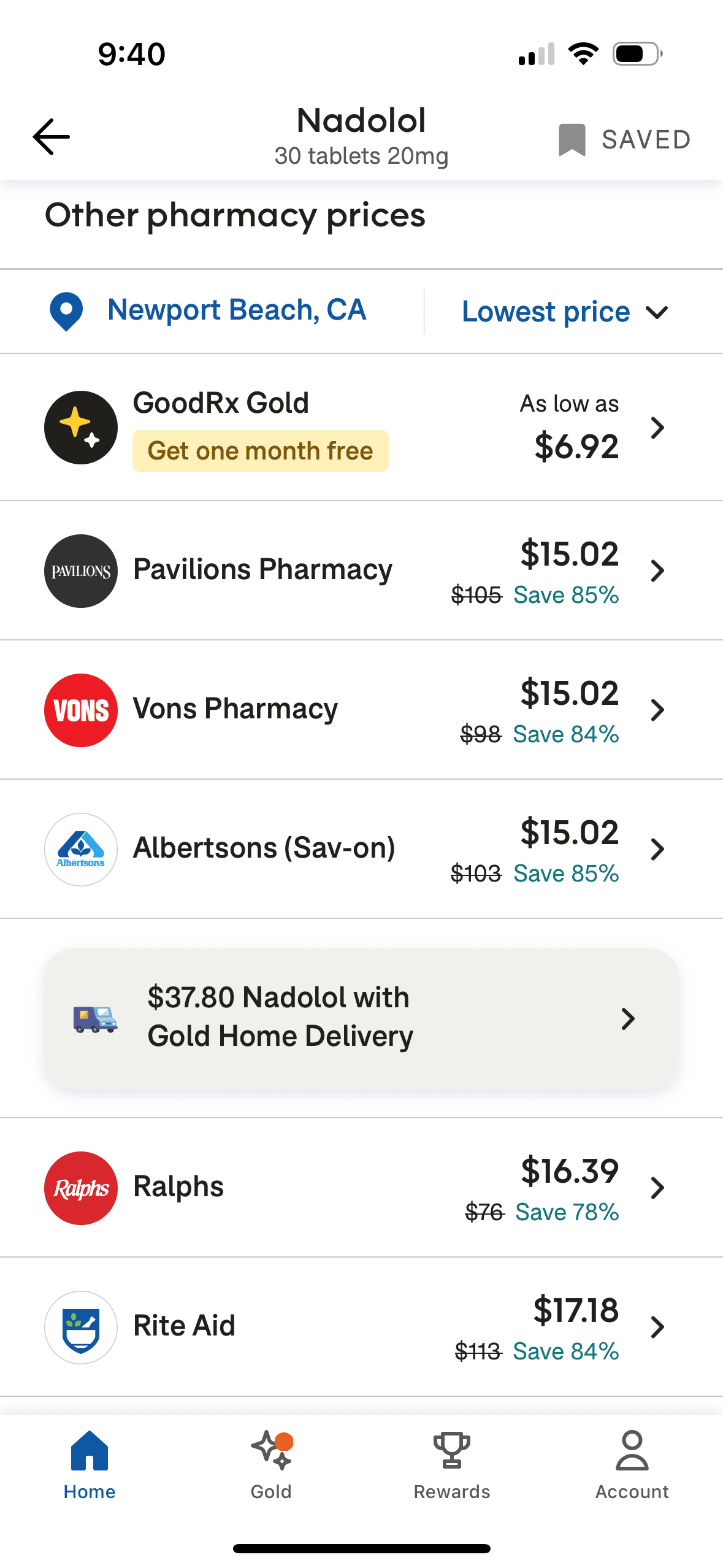
The primary way people interact with GoodRx is through its free website and mobile app. There are no sign-up fees, monthly dues, or hidden administrative charges to access the basic discount codes. When you search for a medication, the “cost” you encounter is simply the price of the drug at the pharmacy counter using the provided coupon.
From a financial perspective, these coupons act as a form of price arbitrage. GoodRx aggregates prices from Pharmacy Benefit Managers (PBMs) to find the lowest negotiated rate. The user pays the discounted price directly to the pharmacy, and the pharmacy pays a small transaction fee to the PBM, which is then shared with GoodRx. For the consumer, the transaction is straightforward: the price you see on the screen is the price you pay at the register, provided the pharmacy accepts the discount.
GoodRx Gold: The Subscription Tier
For those seeking deeper discounts, GoodRx offers a premium service called GoodRx Gold. As of the current market rates, this service typically carries two primary pricing structures:
-
Individual Plan: Approximately $9.99 per month.
-
Family Plan: Approximately $19.99 per month, covering up to six people (including pets).
The financial logic behind paying for GoodRx Gold is centered on the “steepness” of the discount. Gold members often receive prices that are lower than the standard free coupons, sometimes by as much as 30% to 50% more. For a household spending $100 a month on various medications, a $19.99 investment that reduces that bill to $50 results in a net monthly savings of $30.01.
The Financial Trade-off: GoodRx vs. Health Insurance
The most critical financial decision a consumer must make when using GoodRx is whether to bypass their health insurance entirely. This is a nuanced area of personal finance that requires a deep dive into the mechanics of deductibles and out-of-pocket maximums.
The Deductible Dilemma
When you use a GoodRx coupon, you are essentially opting for a “cash pay” transaction. In almost all cases, the money you spend using GoodRx does not count toward your health insurance deductible. This creates a strategic financial crossroad.
If you have a high-deductible health plan (HDHP), paying $20 via GoodRx instead of a $50 insurance co-pay saves you $30 in the short term. However, that $20 does not bring you any closer to hitting your deductible. If you anticipate a major medical event or a surgery later in the year, it might be more financially sound to pay the higher insurance co-pay so that you reach your deductible sooner, after which the insurance company covers 100% of costs.
Co-pay Caps and Tiered Pricing
Insurance companies often group drugs into “tiers.” Tier 1 (generic) drugs might have a $10 co-pay, while Tier 3 (specialty) drugs might have a 50% coinsurance requirement. GoodRx is most effective as a financial tool for generic medications. If your insurance co-pay for a generic drug is $15, but the GoodRx price is $6, the choice is easy. However, for brand-name drugs, insurance coverage usually remains the more cost-effective route, as manufacturer rebates and insurance negotiations often outperform third-party discount cards.
HSA and FSA Compatibility
From a tax-advantage perspective, the “cost” of GoodRx can be mitigated using Health Savings Accounts (HSA) or Flexible Spending Accounts (FSA). Even though you are using a discount card, the purchase remains a qualified medical expense. Using pre-tax dollars to pay for a GoodRx-discounted medication effectively lowers the cost by another 20% to 30%, depending on your tax bracket.
GoodRx Care: The Cost of Digital Healthcare
GoodRx has expanded beyond prescriptions into the realm of telehealth through its “GoodRx Care” platform. This introduces another layer of costs that consumers must evaluate against traditional urgent care or primary care visits.
One-Time Visit Fees
For users without a subscription, a telehealth visit through GoodRx Care generally starts around $59. This covers a variety of common needs, such as refills for maintenance medications, treatment for urinary tract infections, or hair loss consultations. When compared to the average $150 cost of an uninsured urgent care visit, the financial benefit is clear.
The Gold Member Discount
GoodRx Gold members receive a significant discount on these telehealth services. A visit that costs $59 for a standard user might cost as little as $19 for a Gold member. This creates a “bundling” effect. If you require two telehealth visits a year and have multiple monthly prescriptions, the $9.99 monthly Gold fee pays for itself through the combination of lower drug prices and discounted doctor consultations.
Lab Testing and Screenings
GoodRx also offers a marketplace for lab tests, such as cholesterol screenings or A1C checks. These are priced transparently, often ranging from $20 to $150. By providing a fixed price upfront, GoodRx eliminates the “billing surprise” that often comes with hospital-affiliated labs, where a simple blood draw can result in a $400 invoice after insurance processing.
Maximizing the ROI: Is the Cost of GoodRx Worth It?
To determine if GoodRx is a sound financial tool for your specific situation, you must conduct a basic audit of your annual medical spending.
The Break-Even Analysis
If you are considering GoodRx Gold, your break-even point is the monthly fee divided by your average savings per prescription. If the Individual Plan is $9.99, and you save $5 more per month on each of your three medications compared to the free version of GoodRx, you are saving $15. Subtracting the $9.99 fee leaves you with a net gain of $5.01. If you only have one prescription, the subscription is likely a net loss unless that single medication has a massive price delta between the free and Gold versions.
Competitive Landscape
GoodRx is not the only player in the discount space. Competitors like SingleCare, WellRx, and Amazon Pharmacy’s RxPass offer similar value. Amazon’s RxPass, for instance, costs $5 per month and covers all eligible generic medications in their list. For a patient on five different generics, $5 a month is an unbeatable flat rate. However, GoodRx’s primary financial advantage is its massive network; it is accepted at over 70,000 pharmacies, whereas smaller competitors may have more limited footprints.
The “Price Search” Habit
The true cost of GoodRx is the time spent auditing prices. Prescription costs can change daily. A medication that was $12 last month at CVS might be $22 this month, but $9 at Walgreens. To truly optimize the financial benefits of GoodRx, users must treat prescription shopping like any other major budgetary line item—checking prices before every refill to ensure they are getting the best possible rate.
Strategic Integration into Personal Finance
Using GoodRx should not be a reactive move made only when a price at the pharmacy counter shocks you. Instead, it should be integrated into a broader strategy for managing healthcare costs.
Managing the “Donut Hole”
For seniors on Medicare, the “Donut Hole” or coverage gap is a significant financial hurdle. When a patient enters this gap, they are responsible for a larger percentage of their drug costs. GoodRx can be a vital financial bridge during this period. Because GoodRx operates outside of the Medicare system, patients can use it to pay for medications during the coverage gap without affecting their Medicare status, often finding prices lower than the Medicare Part D “gap” pricing.
Employer-Side Considerations
From a business finance perspective, some small business owners encourage employees to use GoodRx for low-cost generics to reduce the overall claims experience of the company’s group health plan. While this doesn’t directly lower the employee’s premium, it can help stabilize the company’s insurance renewals over the long term by shifting high-frequency, low-cost claims away from the insurance carrier.

Conclusion: The Value Proposition
Ultimately, the cost of GoodRx is highly subjective. For the casual user, it is a free tool that provides a safety net against price gouging. For the power user, it is a $120 to $240 annual investment (via Gold) that can yield hundreds or even thousands of dollars in savings. By understanding the interplay between coupon pricing, subscription tiers, and insurance deductibles, consumers can transform their prescription spending from an unpredictable burden into a controlled, optimized component of their financial life.
aViewFromTheCave is a participant in the Amazon Services LLC Associates Program, an affiliate advertising program designed to provide a means for sites to earn advertising fees by advertising and linking to Amazon.com. Amazon, the Amazon logo, AmazonSupply, and the AmazonSupply logo are trademarks of Amazon.com, Inc. or its affiliates. As an Amazon Associate we earn affiliate commissions from qualifying purchases.