
To understand the current state of personal finance, one must first address a fundamental question: how old is the concept of a bank? While modern consumers interact with their wealth through sleek smartphone interfaces and encrypted digital tokens, the “age” of banking spans over four millennia. The journey from ancient grain storage to the high-frequency trading floors of Wall Street is not just a history of money; it is a history of human trust, social structure, and the relentless pursuit of financial efficiency.
The institutions we recognize today as “banks” are the result of a multi-thousand-year evolution. This evolution has moved through three distinct phases: the religious and agricultural storage systems of antiquity, the merchant-driven credit houses of the Renaissance, and the technology-first fintech ecosystems of the 21st century.

The Ancient Roots: When the Concept of a “Bank” First Emerged
The origins of banking predated the invention of coined money. In the fertile crescent of Mesopotamia, around 2000 BCE, the first “banks” were actually temples. These sacred spaces were considered the safest locations to store wealth, which at the time consisted primarily of grain, livestock, and precious metals.
The Mesopotamian Grain Banks
In ancient Sumer and Babylon, farmers would deposit their surplus grain in the local temple. The priests, acting as the first de facto bankers, would record these deposits on clay tablets. This system allowed for a rudimentary form of credit; a farmer could “borrow” seed for the next planting season, promising to repay the temple with interest after the harvest. The Code of Hammurabi, one of the oldest legal scripts in human history, contains specific laws governing these financial transactions, proving that the regulation of “banks” is nearly 4,000 years old.
Greek and Roman Innovations
As civilizations expanded, so did the complexity of their financial needs. In Ancient Greece, the transition from grain to metallic currency necessitated the rise of “trapezitai,” or money changers. These individuals sat at tables in marketplaces to exchange foreign coins, take deposits, and arrange loans.
The Romans further formalized this by moving banking out of the temples and into the secular world. They developed the concept of the “praescriptio,” which functioned similarly to a modern check, allowing funds to be transferred between accounts without the physical movement of gold or silver. However, with the fall of the Roman Empire, much of this sophisticated financial infrastructure vanished from Europe for centuries, entering a period of stagnation known as the Dark Ages.
The Renaissance Shift: The Birth of Modern Banking Brands
The banking industry as we understand it today—defined by private institutions, global networks, and the charging of interest—found its second birth in the city-states of medieval Italy. The word “bank” itself is derived from the Italian word banca, meaning “bench,” referring to the wooden benches where Florentine merchants conducted their business.
The Medici Influence and the Rise of International Credit
In the 14th and 15th centuries, the Medici family of Florence revolutionized the “age” of banking by creating a brand that spanned across Europe. They moved away from simple money-changing and toward “bill of exchange” systems. This allowed a merchant in London to receive a piece of paper that could be redeemed for currency in Venice, effectively eliminating the risk of highway robbery during the transport of physical gold. This was the dawn of international business finance.
The 17th Century and the Arrival of Central Banks
As global trade exploded during the Age of Discovery, the need for institutional stability led to the creation of the world’s first central banks. The Wisselbank (Bank of Amsterdam) was established in 1609 to bring order to the chaotic variety of currencies circulating in the Dutch Republic.
Later, in 1694, the Bank of England was founded. Originally a private institution designed to fund the government’s war efforts, it eventually set the blueprint for the modern central banking system. It introduced the concept of a “banknote”—a promise to pay the bearer on demand—which laid the groundwork for the fiat currency systems we use in our personal finances today.
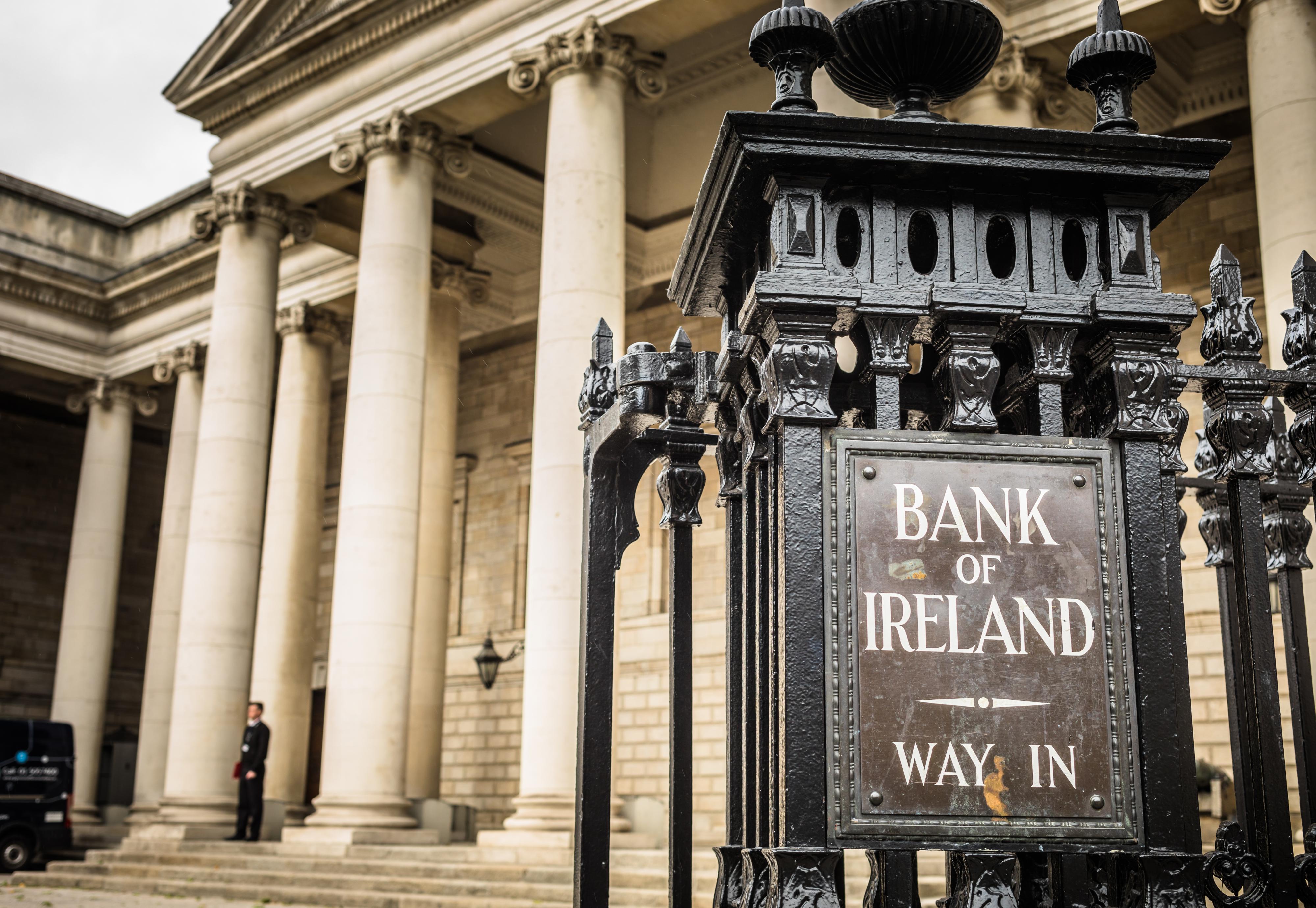
The Industrial Revolution to the 20th Century: Scaling Personal and Business Finance
The 18th and 19th centuries saw banking shift from an elite service for merchants and monarchs to a foundational tool for the common person. The Industrial Revolution required massive amounts of capital, leading to the rise of investment banking and the expansion of retail banking for the growing middle class.
The Fractional Reserve System and Stability
During this era, the “fractional reserve” system became the industry standard. Banks realized that not all depositors would withdraw their money at the same time. By keeping only a fraction of deposits on hand (the reserve) and lending out the rest, banks could generate interest and fuel economic growth. This period also saw the emergence of massive financial dynasties, such as the Rothschilds and the Morgans, whose influence shaped the borders of nations and the trajectory of global markets.
The 1930s and the Birth of Modern Regulation
The “age” of modern, secure banking was truly forged in the fires of the Great Depression. Before the 1930s, bank runs were common, and if a bank failed, depositors lost everything. In the United States, the Glass-Steagall Act of 1933 and the creation of the Federal Deposit Insurance Corporation (FDIC) transformed the industry. These regulations separated risky investment banking from consumer retail banking, ensuring that personal savings were protected by the government. This era established the “trust” factor that remains the cornerstone of any legacy banking brand today.
The Digital Age: From Brick-and-Mortar to FinTech and Neobanks
If we ask how old “banks” are in the context of our daily lives, the answer is often “not very old at all.” The technological revolution of the late 20th century completely dismantled the traditional barriers to entry in the financial world.
The Rise of the ATM and Electronic Ledgers
In 1967, the first ATM was installed in Enfield, London. This marked the beginning of the end for the “banker’s hours” era. For the first time in 4,000 years, customers did not need a human intermediary to access their funds. By the 1980s and 90s, the internal ledgers of banks moved from paper books to mainframes, enabling the high-speed processing of credit card transactions and the birth of online banking.
The Neobank Revolution and Online Income
In the last decade, we have seen the emergence of “Neobanks”—digital-only institutions that have no physical branches. Brands like Chime, Revolut, and Monzo are often less than 15 years old, yet they handle billions of dollars in transactions. These platforms are built on modern tech stacks that allow for features traditional banks struggle to provide: real-time spending notifications, cryptocurrency integration, and specialized tools for those generating online income through the gig economy.
Why the Age of Your Bank Matters for Your Money Today
When choosing where to store wealth or how to manage a business, the age of the institution is a critical factor in financial strategy. There is a constant tension between the “Old Guard” and the “New Wave.”
Stability vs. Innovation
Legacy banks, some of which are hundreds of years old (like JPMorgan Chase or Barclays), offer an unparalleled sense of security and a deep well of capital. Their age is their brand; they have survived world wars, depressions, and market crashes. For long-term investing and complex business finance, these institutions provide a level of “too big to fail” reassurance that newer players cannot yet match.
On the other hand, the “young” banks—the fintech startups—prioritize user experience and financial tools. For the modern consumer focused on side hustles, micro-investing, and fee-free international transfers, a five-year-old app is often more functional than a two-hundred-year-old institution.

The Hybrid Future
The current landscape of money is a merger of these eras. We are seeing 150-year-old banks acquiring two-year-old tech startups to stay relevant. At the same time, decentralized finance (DeFi) and blockchain technology are attempting to recreate the banking system without the “bank” itself, returning us to a peer-to-peer trust model reminiscent of the ancient marketplaces, but powered by mathematics rather than clay tablets.
Ultimately, “banks” as a concept are roughly 4,000 years old. They have survived every technological and social shift in human history by adapting their form while keeping their function identical: the safe storage, transfer, and growth of value. Whether you use a legacy institution or a cutting-edge digital wallet, you are participating in a financial tradition that is as old as civilization itself.
aViewFromTheCave is a participant in the Amazon Services LLC Associates Program, an affiliate advertising program designed to provide a means for sites to earn advertising fees by advertising and linking to Amazon.com. Amazon, the Amazon logo, AmazonSupply, and the AmazonSupply logo are trademarks of Amazon.com, Inc. or its affiliates. As an Amazon Associate we earn affiliate commissions from qualifying purchases.