
In the modern financial landscape, your bank account number serves as the foundational identifier for your personal economy. It is the specific string of digits that distinguishes your assets from millions of others within a financial institution. Whether you are setting up a direct deposit for a new career, linking a high-yield savings account to a brokerage firm, or configuring automated bill payments, knowing exactly where to find and how to protect this number is a fundamental skill in personal finance management.
While it may seem like a simple piece of information, the account number is often shielded by layers of security and buried within various documents to prevent unauthorized access. Understanding the diverse locations—both physical and digital—where this number resides is essential for maintaining seamless control over your liquidity and financial tools.
Physical Methods of Locating Your Bank Account Number
Despite the rapid shift toward paperless banking, physical documents remain one of the most reliable ways to verify your account details. These documents are often required during formal financial processes, such as applying for a mortgage or verifying identity for a high-value wire transfer.
The Anatomy of a Personal Check
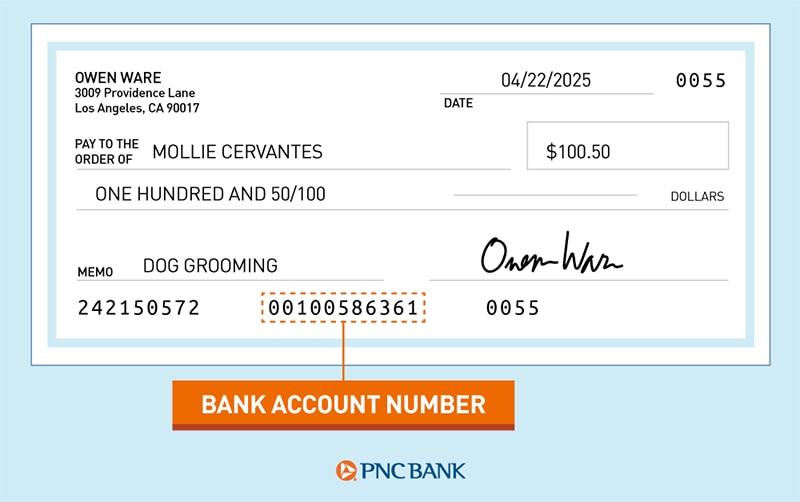
The most traditional place to find your bank account number is on a personal check. If you still utilize a checkbook, the information is printed at the very bottom of every leaf using a specialized font known as MICR (Magnetic Ink Character Recognition).
When looking at the bottom of a check, you will typically see three distinct sets of numbers. The first set, usually nine digits long and flanked by specific symbols, is the ABA routing number. The second set of numbers is your unique bank account number. The third, and usually shortest, set is the individual check number. It is important to note that while the routing number is the same for every member of your bank in a specific region, the middle set—the account number—is unique to you.
Monthly Bank Statements
Your monthly bank statement is a comprehensive record of your financial activity, and it serves as an official document for account verification. Whether you receive these via physical mail or download them as PDFs from your online portal, the account number is always present.
Typically, the account number is located at the top right or top left of the first page, often near your name and address. However, for security purposes, many banks have transitioned to “masking” these numbers on the statement summary (e.g., showing only the last four digits). To find the full number, you may need to look at the specific “Account Detail” section or the “Account Summary” header where the full string is legally required to be listed for identification.
Original Account Opening Documents
When you first open a bank account, the institution provides a “Welcome Packet” or a Truth in Savings disclosure. This documentation contains your full account number, your routing number, and the specific terms of your account. In a professional financial filing system, these documents should be kept in a secure, fireproof location as they are the primary evidence of your contractual relationship with the bank.
Digital Platforms: Navigating Apps and Online Banking
As the world pivots toward digital-first finance, the majority of consumers interact with their account numbers through mobile applications and web browsers. These platforms offer convenience but require a basic understanding of user interface (UI) design to locate sensitive data quickly.
Mobile Banking Applications
Most modern banking apps prioritize security, which means your account number is not immediately visible upon logging in. To find it, you usually need to follow a specific path. Generally, you tap on the specific account you wish to view (such as “Checking” or “Savings”). Once inside the account view, look for a tab or icon labeled “Account Details,” “Info,” or “Settings.”
In many apps, the account number will initially appear as a series of dots or asterisks. There is usually a “Show” or an “Eye” icon next to it that, when tapped, reveals the full string of digits. This extra step is a security measure designed to prevent “shoulder surfing” in public places.
Web Portals and Online Dashboards
Accessing your bank via a desktop browser provides a broader view of your financial tools. Similar to mobile apps, the account number is usually found within the specific account’s detail page. Online portals are particularly useful because they often provide a “Direct Deposit” or “ACH Transfer” assistant. These tools are designed to display your routing and account numbers clearly alongside instructions on how to provide them to employers or external vendors.
Digital Wallets and Third-Party Integrations
If you have linked your bank account to a digital wallet like Apple Pay, Google Pay, or a peer-to-peer payment app like Venmo, you might be tempted to look for your account number there. However, for security reasons, these apps almost never show your full account number once it has been linked. They use “tokenization” to mask your real data. If you need your number to set up a new service, you must return to your primary banking app or a physical document rather than relying on a third-party intermediary.

Differentiating Between Account and Routing Numbers
A common point of confusion in personal finance is the distinction between the routing number and the account number. Mistaking one for the other can lead to failed transfers, late fees, and significant administrative headaches.
The Purpose of the Routing Number
The routing transit number (RTN) is a nine-digit code used in the United States to identify a specific financial institution. Think of the routing number as the “address” of the bank itself. It tells the financial system exactly which building or digital vault the money needs to travel to. All customers at a specific bank in a specific state or region typically share the same routing number.
The Uniqueness of the Account Number
While the routing number identifies the bank, the account number identifies you. It is the specific “apartment number” within that bank building. Account numbers can vary in length, typically ranging from 8 to 12 digits, depending on the bank’s internal systems. This number is what ensures that when an employer sends a direct deposit to “Big National Bank,” the funds land in your specific pocket rather than someone else’s.
How They Work Together: ACH and Wire Transfers
When you provide your information for an ACH (Automated Clearing House) transfer—the system used for most direct deposits and bill pays—both numbers are required to complete the circuit. The routing number gets the transaction to the right bank, and the account number places it in the right hands. When performing international transfers, these numbers are often integrated into an IBAN (International Bank Account Number) or paired with a SWIFT/BIC code to facilitate cross-border movement.
Best Practices for Financial Security and Privacy
Because your bank account number is the “key” to your liquid assets, it is a primary target for fraudsters. Protecting this information is a cornerstone of digital security and personal wealth preservation.
Guarding Your Personally Identifiable Information (PII)
You should treat your bank account number with the same level of caution as your Social Security number. Never share it over unsecured email or text messages. Scammers often use “phishing” techniques, pretending to be a bank official or a government agency, to trick you into revealing these digits. Remember: a legitimate bank will never ask you for your full account number over an unsolicited phone call or email, as they already have it on file.
What to Do If Your Number Is Compromised
If you suspect that an unauthorized individual has obtained your account number, time is of the essence. You must contact your bank’s fraud department immediately. In most cases, the bank will need to “freeze” or close the compromised account and issue a new account number. This process can be disruptive, as it requires you to update all your direct deposits and automated payments, but it is the only way to ensure your funds remain secure from theft.
The Rise of Virtual Account Numbers
To combat the risks associated with sharing account numbers, some FinTech companies and traditional banks are now offering “virtual account numbers.” These are temporary or merchant-specific numbers that link back to your main account but keep your real account number hidden. Utilizing these tools when connecting to new or less-familiar online services adds a powerful layer of insulation to your financial core.
The Role of the Account Number in Modern Money Management
Beyond simply “knowing” where the number is, understanding its role allows you to better utilize modern financial tools to grow your net worth and streamline your life.
Optimizing Direct Deposits and Savings
The most common use for your account number is the setup of direct deposits. Savvy financial planners often split their direct deposits by providing two different account numbers to their employers: one for a checking account to cover monthly expenses and another for a high-yield savings account or an investment portal. This “pay yourself first” strategy automates wealth building, but it is only possible if you have your account numbers organized and accessible.
Connecting to FinTech and Budgeting Tools
Apps like Mint, YNAB (You Need A Budget), and various investment platforms require you to link your bank accounts to aggregate data. Most of these services use secure APIs like Plaid to connect. While you often log in using your bank credentials rather than typing in your account number, understanding your account structure helps you verify that the right accounts (checking vs. savings vs. money market) are being tracked correctly.

Navigating International Banking
If you are involved in the global economy—whether through remote work for an overseas company or sending money to family abroad—the traditional account number format changes. You will likely encounter the IBAN. The IBAN is a standardized international code that includes your country code, check digits, and your domestic bank account number. Understanding that your domestic account number is a subset of this larger code is vital for ensuring that international wires are processed without being rejected by intermediary banks.
In conclusion, your bank account number is more than just a string of digits; it is the fundamental coordinate of your financial identity. By knowing where to find it on physical documents, how to safely navigate digital portals to access it, and how to differentiate it from other banking codes, you empower yourself to manage your money with greater precision and security. In an era where financial speed and digital safety are paramount, being the master of your account information is a non-negotiable aspect of modern financial literacy.
aViewFromTheCave is a participant in the Amazon Services LLC Associates Program, an affiliate advertising program designed to provide a means for sites to earn advertising fees by advertising and linking to Amazon.com. Amazon, the Amazon logo, AmazonSupply, and the AmazonSupply logo are trademarks of Amazon.com, Inc. or its affiliates. As an Amazon Associate we earn affiliate commissions from qualifying purchases.