
The American banking system relies on a complex architecture of codes and identifiers to ensure that trillions of dollars move accurately between millions of accounts every day. At the heart of this system is the routing transit number (RTN), a nine-digit code that serves as the “address” for a financial institution. Whether you are setting up direct deposit for a new job, authorizing an automated bill payment, or receiving a tax refund from the IRS, knowing how to find and verify your bank routing number is a fundamental skill in personal finance management.

While many consumers interact with their bank accounts daily through apps and debit cards, the routing number often remains in the background until a specific administrative task requires it. Understanding where this number lives and how to ensure its accuracy can prevent significant financial delays and errors.
The Anatomy and Purpose of the Routing Number
Before searching for the digits, it is helpful to understand what a routing number actually represents. Established by the American Bankers Association (ABA) in 1910, the routing transit number system was designed to facilitate the sorting, bundling, and shipment of paper checks. While we have moved largely into a digital-first economy, the structural logic of the routing number remains essentially the same.
A routing number is always exactly nine digits long. These digits are not random; they are a structured sequence that tells the Federal Reserve and other banks exactly where a transaction is headed. The first two digits represent the Federal Reserve district where the bank is located. The third digit identifies the Federal Reserve check processing center originally assigned to the bank. The fourth digit denotes the bank’s specific state location. The next four digits are a unique identifier for the financial institution itself, and the final ninth digit is a “check digit,” calculated via a complex mathematical formula to verify that the previous eight digits were entered correctly.
In the modern financial landscape, the routing number is the primary tool for Automated Clearing House (ACH) transfers. This includes payroll, government benefits, and peer-to-peer transfers. Without a valid routing number, the banking network would be unable to distinguish between two banks with similar names or identify which regional branch of a national conglomerate holds your specific account.
Reliable Methods to Locate Your Routing Number
In an era of diversified banking—ranging from traditional brick-and-mortar institutions to digital-only neobanks—there are several ways to retrieve your routing number. Depending on your preference for digital or physical tools, one of the following methods will be the most efficient.
The Bottom of a Paper Check
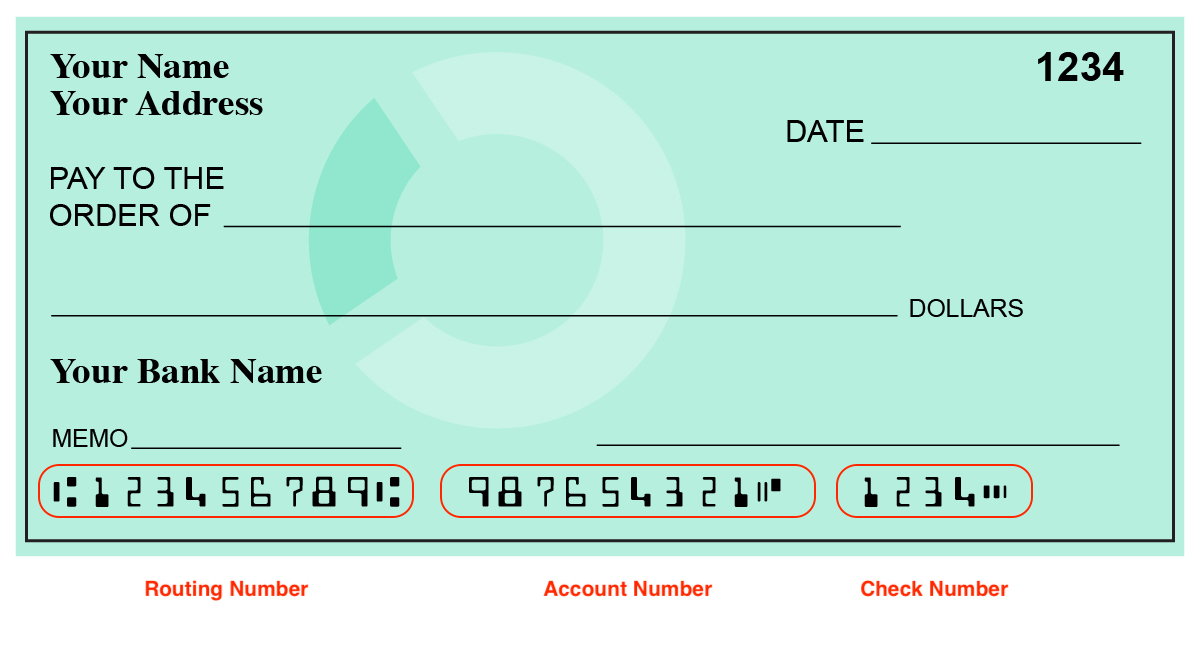
For those who still use physical checkbooks, the most traditional and reliable way to find your routing number is to look at a personal check. At the bottom of every check, there is a string of numbers printed in a specialized magnetic ink character recognition (MICR) font. These numbers are typically arranged in three groups.
The first group of nine digits, usually located on the far left, is your bank’s routing number. It is often flanked by a specific symbol that looks like a vertical bar and two dots. The second group of numbers is your individual account number, and the third, shorter group is the check number. It is important to note that you should use a check, not a deposit slip, for this purpose. Some banks use different routing numbers for deposit slips than they do for checks or electronic transfers.
Online Banking and Mobile Apps
As digital banking becomes the standard, most consumers find their routing numbers through their bank’s website or mobile application. Once you log in to your secure portal, the routing number is typically found under “Account Details,” “Account Information,” or “Settings.”
In many mobile apps, you can tap on your specific checking or savings account to view its details. Because many large national banks use different routing numbers for different states or types of transactions (such as ACH versus domestic wire transfers), the app is often the most accurate source for your specific regional code.
Monthly Bank Statements
If you do not have a checkbook and cannot access your mobile app, your monthly bank statement is a legal document that must contain pertinent account identifiers. Whether you receive your statement in the mail or download it as a PDF, look at the header or the summary section. Along with your account balance and transaction history, the routing number is almost always listed near the top of the first page.
The Financial Institution’s Public Website
For most large banks, routing numbers are not considered private information. You can often find them by searching the bank’s public website. Many institutions have a dedicated page for “Routing Numbers” or a “Help/FAQ” section that lists the numbers based on the state where you opened your account.
The American Bankers Association (ABA) Lookup Tool
The ABA maintains a central registry of all routing numbers. If you are unsure if a number you have found is correct, you can use the ABA’s online routing number lookup tool. You will need to provide the bank’s official name and the state where it is located. This is a highly secure and official way to verify the information before committing it to a high-value financial form.
Distinguishing Between Routing and Account Numbers
A common point of confusion for many individuals is the difference between the routing number and the account number. In the context of personal finance, it is helpful to think of the routing number as the “zip code” and the account number as the “street address.”
The routing number identifies the financial institution as a whole. Thousands, or even millions, of other customers will share the exact same routing number as you. It is a public identifier that allows the global financial system to point funds toward the correct building.
The account number, conversely, is unique to you. It identifies your specific “vault” within that building. When you provide both numbers for a transaction, you are telling the sender: “Go to this specific bank (Routing Number), and once you are there, put the money into this specific bucket (Account Number).”
Understanding this distinction is vital for security. While sharing your routing number is generally safe—it is printed on every check you write—your account number should be guarded more closely. Combined, these two numbers allow for the withdrawal of funds, which is why they should only be provided to trusted entities like your employer, the government, or reputable billing companies.
Navigating Multiple Routing Numbers: ACH vs. Wire Transfers
One of the more nuanced aspects of modern business finance is that a single bank account may be associated with more than one routing number. The number you use depends entirely on the method of the transfer.
ACH Routing Numbers
The ACH (Automated Clearing House) routing number is the most common. This is what you use for “standard” electronic transfers, such as direct deposit of your paycheck, paying your electric bill, or linking your bank account to a payment app like Venmo or PayPal. These transfers usually take one to three business days to clear.
Wire Transfer Routing Numbers
Wire transfers are a different mechanism entirely, designed for high-speed, often high-value moves of capital. Many banks use a specific, separate routing number for incoming domestic wire transfers. If you are closing on a house or sending a large sum of money to an investment brokerage, you must confirm whether the recipient requires the standard ACH routing number or a specific Wire routing number. Using the ACH number for a wire transfer can result in the funds being rejected or, in rare cases, lost in the system for several days.
International Transfers (SWIFT and BIC)
If you are receiving money from an account outside of the United States, a standard nine-digit ABA routing number is often insufficient. International banking relies on the SWIFT (Society for Worldwide Interbank Financial Telecommunication) network. In these cases, you will need to provide your bank’s SWIFT code or BIC (Bank Identifier Code). These are 8 to 11 characters long and consist of letters and numbers. While the SWIFT code serves a similar purpose to the routing number on an international scale, they are not interchangeable.
Security Best Practices and Fraud Prevention
Because the routing number and account number together act as the keys to your financial liquid assets, they must be handled with professional care. In the realm of personal finance, “account takeover” fraud often begins with the unauthorized acquisition of these two pieces of data.
When to Share Your Information
You should only provide your routing and account numbers to verified entities. Legitimate uses include:
-
Setting up payroll with an employer’s HR department.
-
Authorizing tax payments or refunds with the IRS or state treasury.
-
Setting up automated payments for recurring bills (mortgage, utilities, insurance).
-
Linking accounts between two financial institutions you own.
Avoiding “Phishing” and Social Engineering
Be wary of any email, text message, or phone call asking for your routing and account numbers. Scammers often pose as bank representatives or government officials claiming there is an “issue” with your account that requires verification of your numbers. A legitimate bank will never call you to ask for your routing number—they already have it. If you are ever in doubt, hang up and call the number on the back of your debit card or go directly to the bank’s official website.

The Importance of Monitoring
Even if you are careful with your routing number, it is essential to monitor your bank statements regularly. The rise of “micro-transactions”—where thieves withdraw pennies to see if a combination of routing and account numbers is active—makes vigilant oversight a necessity. If you see any unauthorized ACH activity, contact your bank immediately to freeze the account and issue a new account number.
Finding your bank routing number is a simple task that sits at the intersection of administrative necessity and financial literacy. By knowing where to look—whether on a paper check, a mobile app, or an official statement—and understanding the difference between ACH and wire protocols, you ensure that your financial life operates with the precision and security required in today’s digital economy.
aViewFromTheCave is a participant in the Amazon Services LLC Associates Program, an affiliate advertising program designed to provide a means for sites to earn advertising fees by advertising and linking to Amazon.com. Amazon, the Amazon logo, AmazonSupply, and the AmazonSupply logo are trademarks of Amazon.com, Inc. or its affiliates. As an Amazon Associate we earn affiliate commissions from qualifying purchases.