
In the modern financial landscape, speed and accuracy are the cornerstones of effective money management. Whether you are setting up a direct deposit for a new high-yield savings account, initiating an automated payment for a mortgage, or linking a brokerage account to your primary checking, there is one piece of data that remains indispensable: the routing transit number (RTN). Often referred to simply as a routing number, this nine-digit code acts as the “GPS” for the American banking system, ensuring that funds move from Point A to Point B without getting lost in the digital ether.

Understanding how to find and utilize this number is more than a clerical necessity; it is a fundamental aspect of financial literacy. Misidentifying a routing number can lead to delayed payments, returned check fees, or, in some cases, funds being sent to the wrong institution entirely. This guide provides an in-depth analysis of where to find your routing number, the structural meaning behind those nine digits, and how to navigate the complexities of modern banking transfers.
Locating Your Routing Number: Digital and Physical Methods
Finding your routing number is generally straightforward, but the method you choose may depend on the tools you have at your disposal. Because banking has shifted significantly toward digital-first platforms, you are no longer tethered to paper documentation to retrieve this information.
Check Your Physical Checks
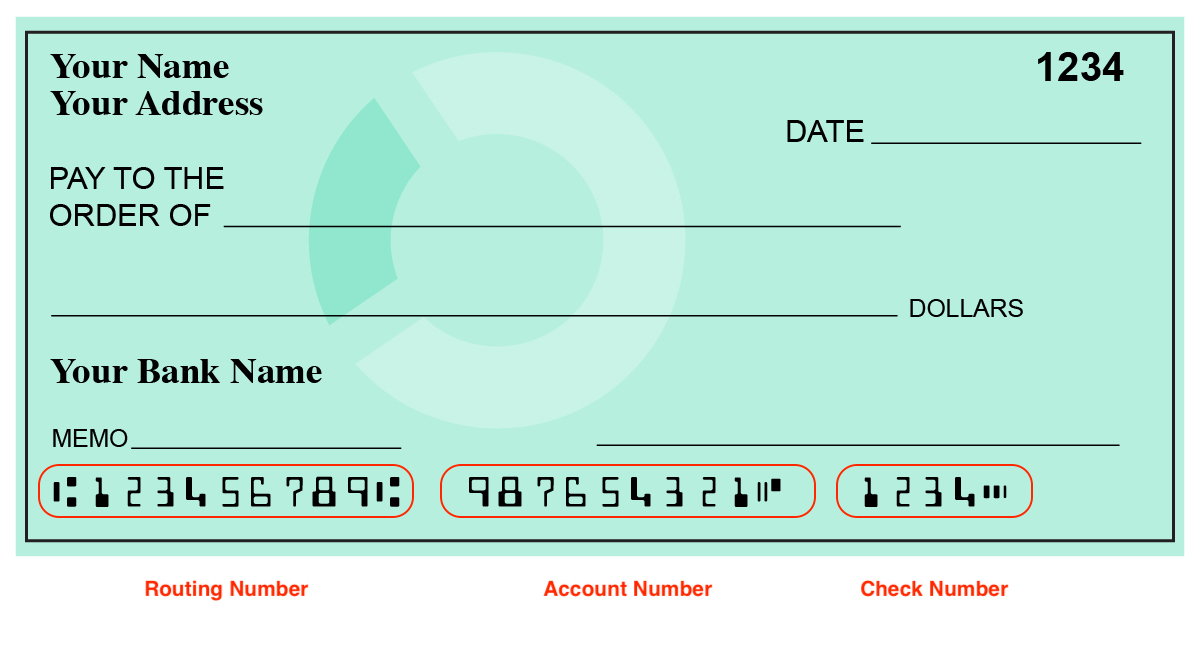
For those who still maintain a physical checkbook, the routing number is readily available. If you look at a standard personal or business check, you will notice a series of numbers printed at the bottom using Magnetic Ink Character Recognition (MICR) technology.
The sequence typically follows a specific order:
-
The Routing Number: This is the first set of nine digits located on the far left of the bottom row. It is usually flanked by a specific symbol that looks like a vertical bar and a colon.
-
The Account Number: This is the second set of numbers in the middle.
-
The Check Number: This is the final set of digits on the far right.
It is important to note that you should not use the numbers found on a deposit slip. While deposit slips look similar to checks, they occasionally feature different internal codes that may not function correctly for outgoing electronic transfers.
Mobile Banking Apps and Online Portals
In the age of fintech, most consumers access their financial data via mobile applications. To find your routing number digitally, log in to your bank’s secure portal or app and navigate to the “Account Details” or “Account Information” section.
Most major institutions, such as Chase, Bank of America, or Wells Fargo, display the routing number alongside your account balance and account number. If you have multiple accounts—such as a checking account and a money market account—ensure you are looking at the specific details for the account you intend to use, as some institutions use different routing numbers for different account types or geographic regions.
Bank Statements and Official Correspondence
Your monthly bank statement is a legal document that contains a wealth of structural data. Most statements list the routing number in the header or the footer of the first page. If you receive digital statements (e-statements), you can download the most recent PDF from your bank’s website. This is often the most reliable way to verify your routing number if you are applying for a loan or setting up a significant wire transfer, as it provides a verifiable paper trail.
The American Bankers Association (ABA) and Federal Reserve Tools
If you are unable to access your accounts, you can verify a routing number through the American Bankers Association (ABA) lookup tool. The ABA is the custodian of the routing number system. By entering the official name of your bank and the state where the account was opened, you can often cross-reference the number. However, because large national banks may have dozens of routing numbers based on the state of branch origin, using your bank’s specific internal tools is always the safer route.
Understanding the Anatomy of a Routing Number
To the average consumer, a routing number is just a string of digits. However, in the world of professional finance, these numbers carry a specific architecture that tells a story about the institution’s location and its relationship with the Federal Reserve.
The Nine-Digit Breakdown
The routing transit number was developed by the ABA in 1910 to facilitate the sorting and shipping of paper checks. Today, it serves the same purpose for electronic bits. The nine digits are broken down as follows:
-
Digits 1–4: These represent the Federal Reserve routing symbol. Specifically, the first two digits indicate which of the 12 Federal Reserve districts the bank belongs to (e.g., “02” for New York, “12” for San Francisco).
-
Digits 5–8: These are the unique identifiers for the specific financial institution. No two banks share this specific four-digit sequence within the same district.
-
Digit 9: This is known as the “check digit.” It is calculated using a complex mathematical formula based on the previous eight digits. This serves as a security feature; if a single number is entered incorrectly during a manual transfer, the check digit algorithm will fail, alerting the system that the routing number is invalid.
Routing Numbers vs. Account Numbers
A common point of confusion in personal finance is the distinction between the routing number and the account number. Think of the routing number as the address of the apartment building and the account number as the specific apartment unit. The routing number identifies the bank as a whole to the rest of the financial world, while the account number identifies your specific “shelf” within that bank’s vault. You share your routing number with millions of other customers at the same bank, but your account number is unique to you.
ACH vs. Wire Transfer Routing Numbers
It is a critical nuance in business and personal finance to understand that a bank may have more than one routing number. Many institutions use one number for Automated Clearing House (ACH) transactions—such as direct deposits and bill pays—and a completely different number for domestic wire transfers.
Using an ACH routing number for a wire transfer can result in the transaction being rejected or delayed. Always verify with your institution which number is required for the specific type of transfer you are initiating. Generally, wire routing numbers are used for high-value, same-day movements of capital, whereas ACH numbers are used for standard, high-volume electronic payments.
The Role of Routing Numbers in Financial Security and Strategy
Beyond the simple mechanics of moving money, routing numbers are a vital component of a secure and efficient personal finance strategy.
Automating Wealth Building
One of the most effective ways to build wealth is through the “pay yourself first” principle. This involves setting up a direct deposit that splits your paycheck between your checking account and various investment or savings vehicles. To do this, you need the routing numbers for your brokerage (like Vanguard or Fidelity) and your high-yield savings account (like Ally or Marcus). By mastering the use of these numbers, you can create a frictionless ecosystem where your money moves into productive assets automatically every month.
Direct Deposits and Government Payments
The routing number is the primary mechanism for receiving IRS tax refunds, Social Security benefits, and stimulus payments. The move away from physical government checks has significantly reduced fraud and “lost in the mail” scenarios. When providing your routing number to a government agency, double-checking the digits is paramount. While the check digit (the 9th digit) prevents many errors, a typo that happens to form a valid (but incorrect) routing number could send your refund to an entirely different bank.
Security and Fraud Prevention
Because routing numbers are public information (anybody can look up a bank’s routing number online), they are not “secret” in the same way a PIN or a password is. However, when combined with an account number, they provide the keys to your financial kingdom.
Financial institutions use the routing number system to flag suspicious activity. If a series of ACH withdrawals are attempted using a routing number that is inconsistent with your geographic location or typical spending patterns, bank security algorithms may freeze the transaction. Understanding your routing number allows you to verify that the “originating institution” on your bank statement is legitimate.
Common Challenges: Mergers, Regions, and International Transfers
The banking industry is in a constant state of flux, which can occasionally complicate the process of identifying your routing number.
Bank Mergers and Acquisitions
When one bank acquires another, routing numbers often change. However, this change is rarely immediate. To prevent widespread disruption, the acquiring bank will typically continue to support the old routing numbers for a “sunset period,” which can last several years. If your bank has recently merged, check your most recent statement or the bank’s website to see if you need to update your direct deposit information. Eventually, you will be required to switch to the parent company’s routing number.
Geographic Specificity
Large national banks often have different routing numbers for different states. If you opened an account in California and then moved to New York, your routing number will remain the California one unless you close that account and open a new one in the New York branch. This is a common pitfall when people try to “guess” their routing number based on their current location rather than looking at their original account documentation.
International Transfers: SWIFT and BIC
It is important to note that the nine-digit ABA routing number is a uniquely American system. If you are sending or receiving money internationally, a standard routing number will not suffice. Instead, you will need a SWIFT (Society for Worldwide Interbank Financial Telecommunication) code or a BIC (Bank Identifier Code). These codes serve a similar purpose to the routing number but are formatted for the global financial network. Some international transfers also require an IBAN (International Bank Account Number), which integrates the bank’s identity and the individual’s account number into one long string of characters.

Optimizing Your Financial Operations
Accuracy in managing your banking data is a hallmark of professional financial management. Whether you are an individual managing a household budget or an entrepreneur overseeing business cash flow, the routing number is the bridge between your capital and its destination.
By keeping a secure record of your routing and account numbers, you can respond quickly to new financial opportunities—whether that is jumping on a new investment platform or switching to a bank with better interest rates. In the digital age, being “good with money” starts with understanding the technical infrastructure that moves it. The nine-digit routing number may seem like a small detail, but it is the foundation upon which the efficiency, security, and growth of your personal economy are built. Always verify, double-check the type of transfer (ACH vs. Wire), and ensure that you are using the most current data provided by your institution to maintain a seamless financial life.
aViewFromTheCave is a participant in the Amazon Services LLC Associates Program, an affiliate advertising program designed to provide a means for sites to earn advertising fees by advertising and linking to Amazon.com. Amazon, the Amazon logo, AmazonSupply, and the AmazonSupply logo are trademarks of Amazon.com, Inc. or its affiliates. As an Amazon Associate we earn affiliate commissions from qualifying purchases.