
The story of Costco Wholesale Corporation’s journey to the public markets is a compelling narrative for investors, encapsulating strategic mergers, consistent growth, and enduring shareholder value. While the question “when did Costco go public” might seem straightforward, it involves understanding a crucial merger that ultimately shaped the retail giant we know today. The modern Costco, trading under the NASDAQ symbol COST, emerged from the strategic combination of two pioneering warehouse clubs, each with its own public trading history, before they united to form Price/Costco Inc., which began trading as a single entity on October 25, 1993. This date marks a pivotal moment in its financial history, setting the stage for decades of investor returns.

The Genesis of a Retail Giant and Its Path to Public Markets
Before delving into the specific date, it’s essential to appreciate the foundational elements that made Costco an attractive proposition for public markets and investors. The company’s unique business model, predicated on membership fees and high-volume, low-margin sales, promised stability and consistent cash flow—qualities highly valued by financial institutions and individual investors alike.
Independent Beginnings and the Power of Consolidation
Costco’s roots trace back to two distinct entities: Price Club and Costco Wholesale Corporation. Price Club, founded by Sol Price in 1976 in San Diego, California, was the first membership warehouse club, trailblazing a new retail format. Its innovative approach quickly gained traction, and Price Club went public in 1980, offering early investors a stake in a burgeoning concept.
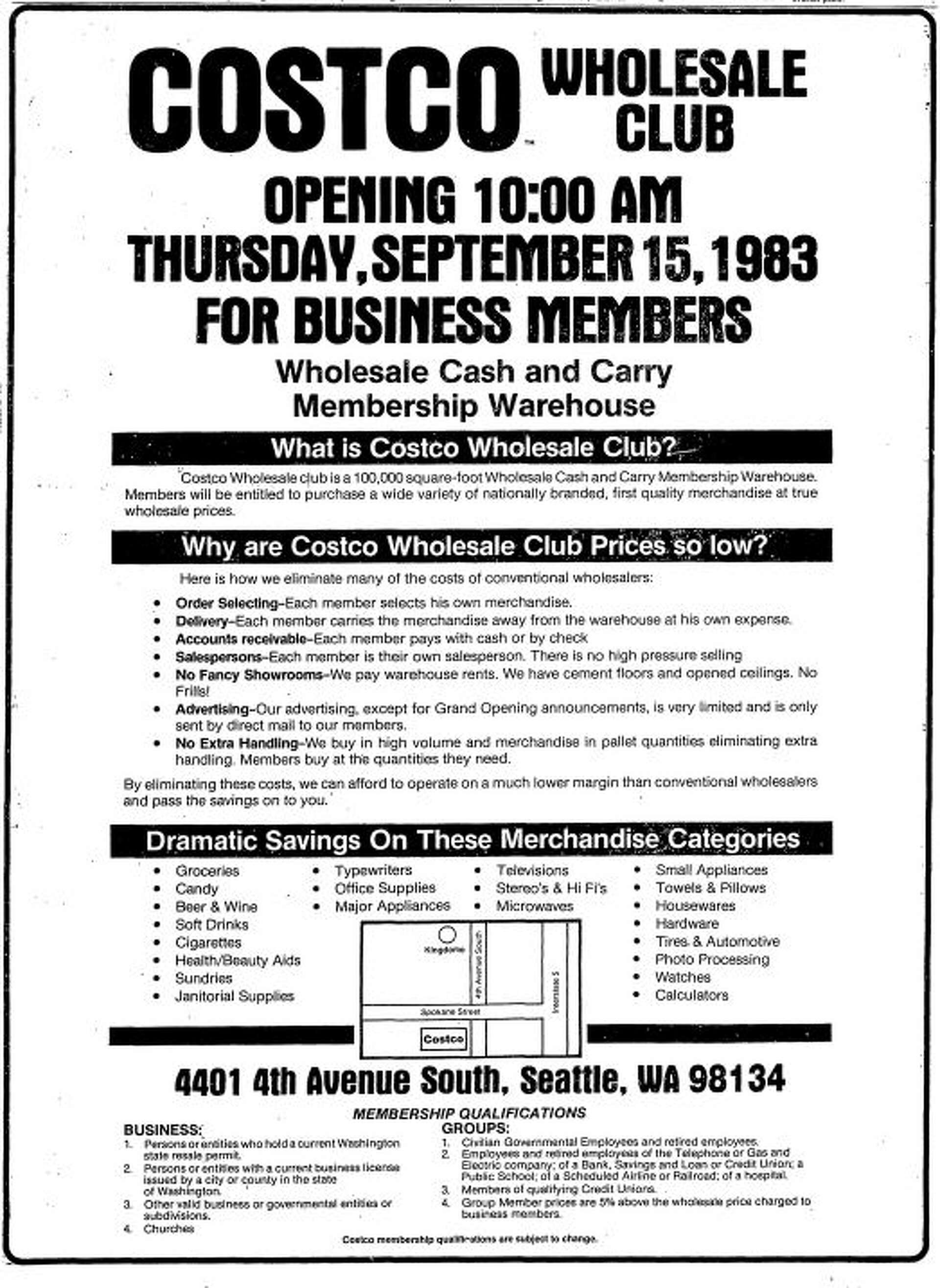
Not long after, in 1983, James Sinegal and Jeffrey Brotman founded Costco Wholesale Corporation in Seattle, Washington. Leveraging insights from the success of Price Club, Costco rapidly expanded, demonstrating the viability of the warehouse club model across different geographies. Costco Wholesale Corporation itself went public in 1985, also attracting significant investor interest as it too was seen as a high-growth retail player.
By the early 1990s, both companies were formidable forces in the retail landscape, yet they recognized the immense potential in combining their strengths. The rationale for a merger was compelling: it promised greater economies of scale, enhanced purchasing power, reduced competition, and a broader geographic footprint. From a corporate finance perspective, mergers of this magnitude are complex undertakings, but the strategic advantages often outweigh the challenges, especially when both entities bring complementary strengths to the table.
The Formation of Price/Costco Inc. and its Public Debut
The monumental merger between Price Club and Costco Wholesale Corporation officially occurred in October 1993. This transaction created a new combined entity known as Price/Costco Inc. This was not a traditional Initial Public Offering (IPO) where a private company first offers its shares to the public. Instead, it was a major corporate restructuring where two existing public companies merged, and their shares were essentially consolidated into shares of the new, larger public company.
On October 25, 1993, the shares of Price/Costco Inc. began trading on the NASDAQ stock exchange under the ticker symbol PCCO. This date is the definitive answer for when the unified Costco entity, as a publicly traded company, made its debut. For investors, this meant their shares in either Price Club or Costco Wholesale Corporation were exchanged for shares in Price/Costco Inc., providing them continued ownership in a now even larger and more robust retail enterprise. This event was closely watched by the financial community, signaling a major consolidation in the retail sector and offering a new investment vehicle with significant potential.
The journey didn’t stop there. In 1997, Price/Costco Inc. underwent a name change to Costco Wholesale Corporation and simultaneously changed its stock ticker symbol to COST, which it retains to this day. This change simplified the corporate identity and aligned the public face of the company more closely with its primary brand. From an investor’s perspective, this was a largely administrative change that did not alter the fundamental value or ownership structure but streamlined how the company was identified on financial markets.
Understanding the Significance of Going Public for Investors
The decision for a company, or in this case, a merged entity, to be publicly traded carries profound implications for its financing, governance, and ultimately, its value proposition for investors.
What Going Public Means for a Company and Its Founders
For companies like Price Club and Costco Wholesale, being publicly traded offered several key advantages. Primarily, it provided access to significant capital through equity markets. Issuing shares allows companies to raise funds for expansion, debt repayment, research and development, or acquisitions without incurring additional debt. This access to public capital markets was crucial for the rapid growth phase of both original companies and for the combined entity’s continued expansion.
Beyond capital, going public elevates a company’s visibility and prestige. It often leads to increased brand recognition, which can attract both customers and top talent. Furthermore, public trading provides liquidity for early investors, founders, and employees who hold company stock. They can sell their shares on the open market, realizing returns on their initial investments or compensation packages. This liquidity is a strong incentive for entrepreneurs and early-stage investors.
Why Investors Watch IPOs and Major Public Listings: The Case of Costco
For individual and institutional investors, major public listings like that of Price/Costco Inc. represent opportunities to invest in potentially high-growth companies. Investors actively scrutinize financial statements, management teams, market share, and competitive advantages during these periods. In Costco’s case, its unique membership-based model, bulk purchasing power, and perceived value proposition resonated strongly with the investment community.
The subscription-like nature of the membership fees provided a predictable revenue stream, a highly attractive quality for financial modeling and valuation. Its efficient supply chain and ability to offer competitive pricing further solidified its position as a compelling investment. By understanding the business model and its potential, investors who bought into Price/Costco Inc. (and later COST) were making a bet on the long-term viability and growth of the warehouse club concept, a bet that has paid off handsomely for many.
Costco’s Financial Journey and Investor Returns
Following its formation and public trading debut as Price/Costco Inc., and subsequently as Costco Wholesale Corporation, the company embarked on a remarkable financial journey characterized by consistent growth and strong shareholder returns.
Initial Performance and Long-Term Growth
After the 1993 merger, Price/Costco Inc. demonstrated its combined strength, leveraging its increased scale to optimize operations and expand its market reach. The stock performed steadily, reflecting the company’s robust business fundamentals. Over the decades, Costco has exhibited consistent revenue growth, driven by an expanding store footprint, rising membership numbers, and increasing sales per warehouse.
Its profitability has been equally impressive, often exceeding analyst expectations. Key financial metrics such as net income, earnings per share (EPS), and return on equity (ROE) have consistently pointed to a well-managed and financially sound enterprise. This sustained performance has cemented Costco’s reputation as a reliable and high-quality investment, often outperforming broader market indices over extended periods. For long-term investors, the initial public listing of Price/Costco Inc. proved to be an entry point into one of retail’s most successful stories.
Dividends, Stock Splits, and Shareholder Value
Costco’s commitment to shareholder value extends beyond just stock price appreciation. The company has a history of returning capital to shareholders through regular dividends and, on occasion, special dividends. Regular dividends provide investors with a steady income stream, while special dividends, often significant in size, signal strong financial health and a willingness to share excess cash with owners. These actions reinforce investor confidence and contribute to the stock’s overall appeal.
Moreover, Costco has implemented stock splits at various points in its history. A stock split increases the number of shares outstanding while proportionally decreasing the price per share, making the stock more accessible to a wider range of investors, particularly individual retail investors who might be deterred by a high nominal share price. While a stock split does not change the fundamental value of an investor’s holdings, it can improve liquidity and perception, potentially leading to increased trading volume and broader ownership. Such corporate actions, combined with its operational excellence, have contributed to Costco’s status as a coveted “buy and hold” investment.
Lessons for Modern Investors from Costco’s Public Trajectory
The Costco story, from its dual public beginnings to its merged public identity and subsequent financial success, offers valuable insights for contemporary investors navigating today’s complex markets.
Identifying Enduring Business Models
Costco’s enduring success underscores the importance of investing in companies with strong, resilient business models. Its membership-driven approach fosters customer loyalty and provides a predictable revenue base, insulating it somewhat from economic fluctuations that plague traditional retail. Its operational efficiency, bulk purchasing power, and commitment to value pricing create a significant competitive advantage. For investors, this means looking beyond fleeting trends and identifying companies with fundamental strengths, sustainable competitive moats, and a clear value proposition to their customers.
The Power of Long-Term Investing
The trajectory of Costco stock serves as a powerful testament to the benefits of long-term investing. Investors who bought shares around the time of the Price/Costco Inc. listing in 1993 and held them through market cycles have witnessed substantial wealth creation through compounding returns. This highlights the wisdom of focusing on a company’s fundamentals and growth prospects over years, rather than reacting to short-term market volatility. Patient investors who maintain a diversified portfolio with high-quality companies like Costco often reap the greatest rewards.

Diversification and Due Diligence in Portfolio Management
While Costco has been an exceptional performer, its story also reinforces the broader principles of sound portfolio management. No single stock, regardless of its strength, should comprise an investor’s entire portfolio. Diversification across various industries, asset classes, and geographies is crucial to mitigate risk. Furthermore, the extensive financial reporting and transparency required of public companies like Costco allow investors to perform thorough due diligence. Before investing, it’s paramount to research a company’s financial health, management team, industry outlook, and competitive landscape. The journey of Costco from two pioneering entities to a global retail powerhouse, and its continuous presence on public exchanges since the 1993 merger, offers a rich case study in how strong businesses can translate into significant long-term financial opportunities for informed investors.
aViewFromTheCave is a participant in the Amazon Services LLC Associates Program, an affiliate advertising program designed to provide a means for sites to earn advertising fees by advertising and linking to Amazon.com. Amazon, the Amazon logo, AmazonSupply, and the AmazonSupply logo are trademarks of Amazon.com, Inc. or its affiliates. As an Amazon Associate we earn affiliate commissions from qualifying purchases.