
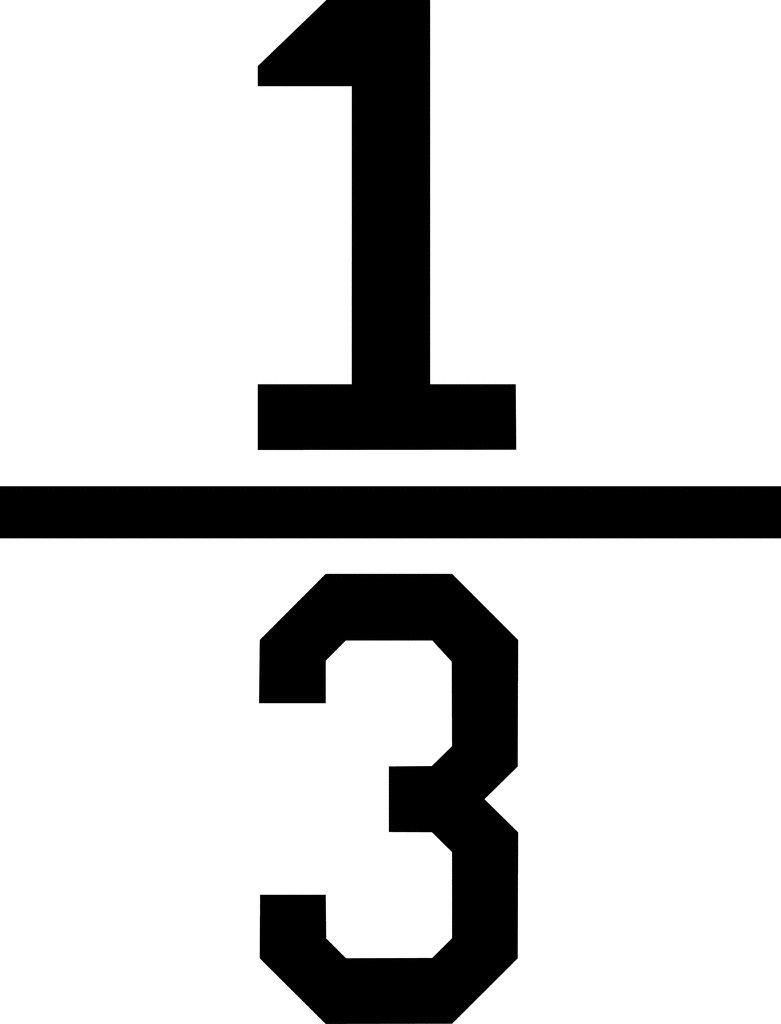
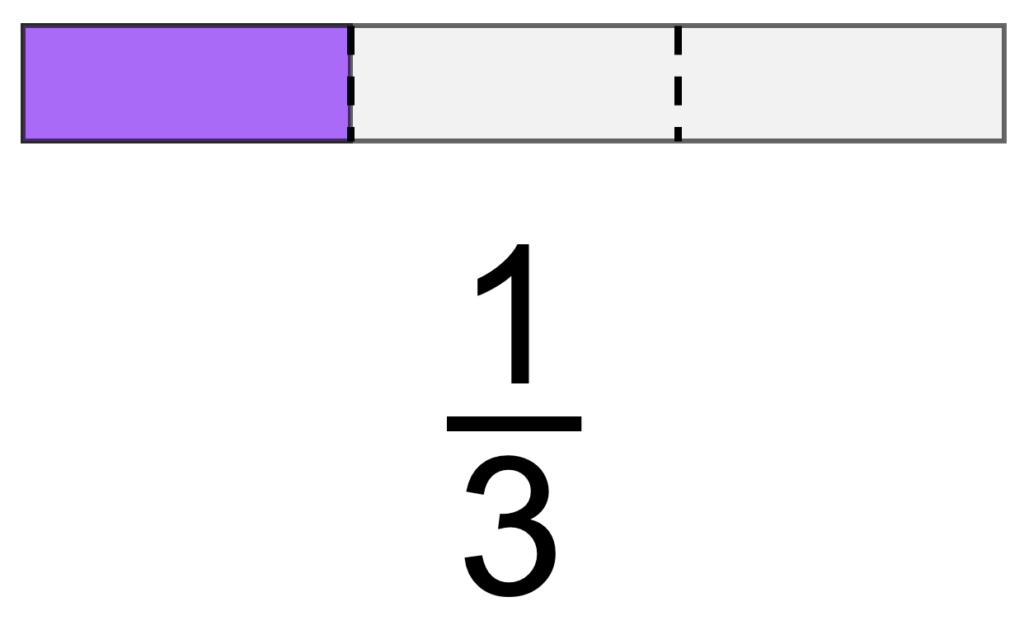
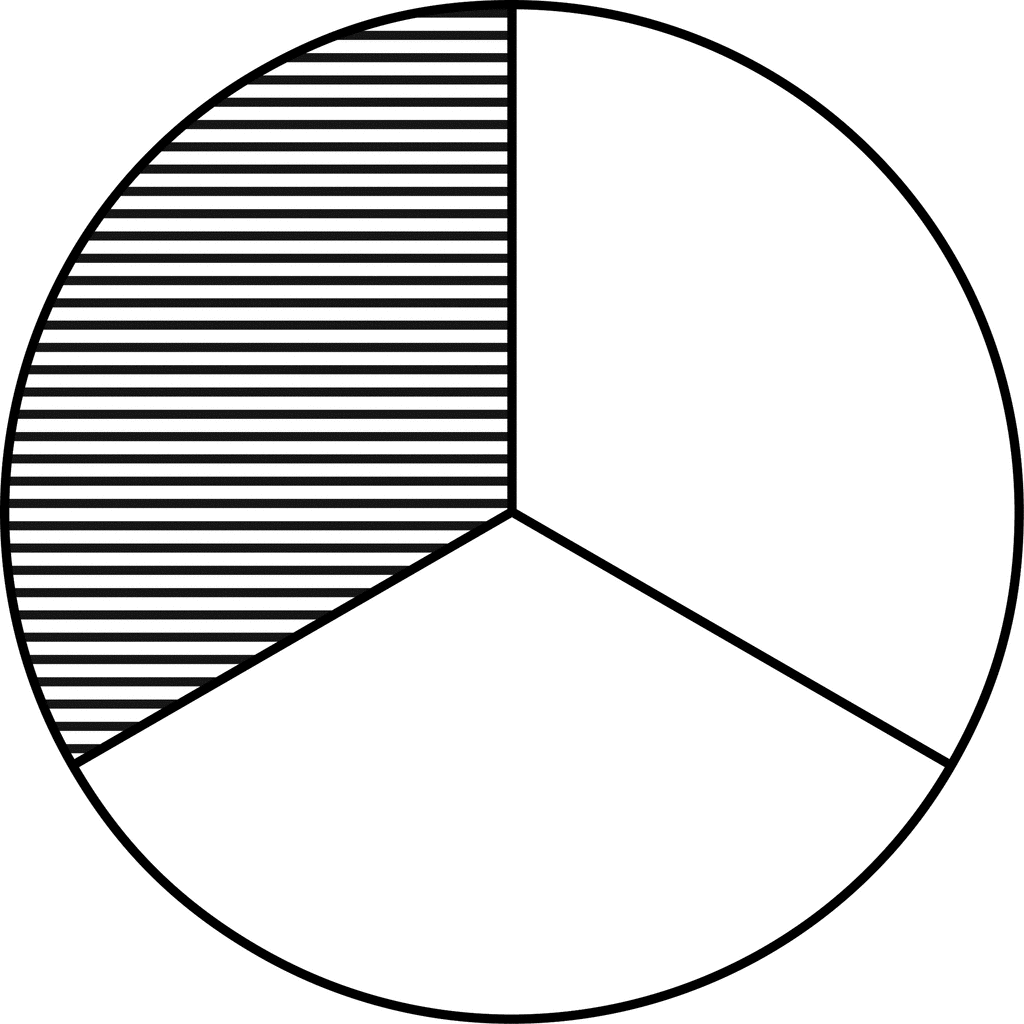
At its most fundamental, the fraction 1/3 represents a portion, a division, or a specific share of a whole. While seemingly a basic mathematical concept, its implications extend profoundly into the world of personal finance, investing, business strategy, and wealth management. Understanding “what is the fraction of 1/3” goes beyond simple arithmetic; it unlocks a powerful framework for dissecting financial data, making informed decisions, and optimizing resource allocation. In finance, fractions are the building blocks of proportions, percentages, and ratios – the very language used to describe economic reality. Grasping this foundational idea is crucial for anyone looking to navigate the complexities of money effectively, whether managing a household budget, evaluating investment opportunities, or structuring a business deal.
The Foundational Role of Fractions in Financial Literacy
The concept of a fraction, particularly one as simple as 1/3, serves as a cornerstone for financial literacy. It’s the initial step in understanding how money is divided, allocated, and grown. Without a clear grasp of fractions, comprehending more advanced financial concepts like percentages, interest rates, equity stakes, or profit margins becomes significantly more challenging.
Beyond Basic Math: Fractions as Financial Language
In the financial world, fractions are not just numbers on a page; they are a concise language for expressing relationships and distributions. When we talk about “one-third of our income” going towards housing, or “a third of our portfolio” being allocated to a specific asset class, we are using fractional thinking to convey precise financial instructions. This seemingly simple mathematical idea provides a universal framework for discussing proportions of wealth, debt, income, and expenditure. It allows for quick comparisons and facilitates strategic planning, enabling individuals and businesses to see how different components contribute to or detract from the overall financial picture.
The Interplay with Percentages and Decimals
While often presented separately, fractions are inextricably linked to percentages and decimals, forming a triumvirate of proportional representation that dominates financial discourse. A fraction like 1/3 translates directly to approximately 0.3333 in decimal form and roughly 33.33% as a percentage. This seamless conversion is vital. Financial statements often use percentages to show growth rates or expense ratios, while investment returns might be quoted in decimals or as a specific fraction of the original capital. Understanding this fluidity allows for a more comprehensive analysis of financial data, enabling swift mental calculations and comparisons between different financial metrics, regardless of their presented format. For example, comparing a 1/3 ownership stake to a 30% dividend payout requires an intuitive understanding of these conversions.
Budgeting and Income Allocation: The Power of Proportions
One of the most immediate and impactful applications of fractional thinking in personal finance is budgeting. Effective budgeting is essentially the art of allocating your income into different categories, and fractions provide the perfect tool for this proportional division.
The 50/30/20 Rule and Other Budgeting Frameworks
The popular 50/30/20 budgeting rule is a prime example of fractional allocation in action. This guideline suggests dedicating 50% of your after-tax income to needs, 30% to wants, and 20% to savings and debt repayment. While not explicitly using fractions like 1/3, the underlying principle is identical: dividing your total income into distinct, manageable proportions. A more aggressive savings plan might aim to save 1/3 of income, while another might allocate 1/3 of discretionary spending to entertainment. These frameworks provide clear, actionable targets, ensuring that financial resources are distributed purposefully rather than haphazardly. By adhering to such fractional guidelines, individuals can build a robust financial foundation, ensuring bills are paid, savings goals are met, and discretionary spending is kept in check without feeling overly restrictive.
Optimizing Spending and Saving with Fractional Thinking
Beyond established rules, applying fractional thinking allows for highly personalized and optimized budgeting. Imagine you earn $3,000 per month. If you decide to save 1/3 of your income, you immediately know you need to put $1,000 aside. This precise calculation helps you visualize your financial capacity and set realistic goals. Similarly, if your housing costs consume more than 1/3 of your gross income, it might signal an imbalance, prompting you to consider downsizing or increasing your income. By consistently asking, “What fraction of my income does this expense represent?” or “What fraction of my total budget can I allocate to this goal?”, you gain unparalleled clarity and control over your finances, moving beyond vague intentions to concrete, measurable actions. This granular perspective enables strategic adjustments, ensuring every dollar works towards your financial objectives.
Investing and Wealth Building: Dividing the Financial Pie
In the realm of investing, the concept of fractions is indispensable. It underpins strategies for risk management, diversification, and understanding returns, dictating how an investor carves up their wealth to maximize growth and minimize potential losses.
Asset Allocation: Strategic Diversification Through Fractions
Perhaps the most critical application of fractions in investing is asset allocation. This strategy involves distributing an investment portfolio among different asset categories, such as stocks, bonds, real estate, and commodities, to balance risk and reward. An investor might decide to allocate 1/3 of their portfolio to growth stocks, 1/3 to stable bonds, and 1/3 to real estate investment trusts (REITs). This fractional approach to diversification is designed to mitigate risk; if one asset class performs poorly, the others might compensate, preventing significant losses to the overall portfolio. The specific fractions chosen depend on an individual’s risk tolerance, investment horizon, and financial goals. Without understanding fractions, constructing a diversified portfolio with intentional proportions would be practically impossible, leading to either overly concentrated risk or suboptimal returns.
Equity Ownership and Business Stakes
Beyond asset allocation, fractions are fundamental to understanding ownership in businesses. When you invest in a company’s stock, you are buying a tiny fraction of that company’s ownership. In private equity or startup investments, the concept becomes even more direct. An investor might acquire a 1/3 equity stake in a small business, meaning they own one-third of the company’s assets, profits, and voting rights. This fractional ownership determines their influence, their share of future profits (dividends or capital gains), and their liability. Understanding these fractional stakes is crucial for assessing potential returns, navigating partnership agreements, and comprehending the distribution of control within an enterprise. It dictates the division of the “financial pie” among owners.
Understanding Returns, Dividends, and Growth
Fractions also simplify the understanding of investment returns. A dividend might be expressed as a fraction of the stock price, or an investment’s growth might be calculated as a fraction of its original value. If an investment increases by 1/3, it means for every $100 initially invested, it is now worth $133.33. This direct proportional thinking helps investors quickly gauge the performance and potential of various assets. Furthermore, concepts like compound interest, while seeming complex, rely on the iterative application of fractional growth over time. Each compounding period adds a fraction of the principal (and accumulated interest) back into the total, demonstrating the powerful cumulative effect of small fractions over long durations.
Business Finance and Operational Insights
For businesses, fractions are not merely a tool for allocation but a vital instrument for analyzing performance, structuring agreements, and making strategic operational decisions. They provide clarity on profitability, efficiency, and partnership dynamics.
Profit Margins and Revenue Shares
In business, understanding fractions is critical for calculating profit margins. A gross profit margin, for example, is the fraction of revenue left after deducting the cost of goods sold. If a product costs $2 to make and sells for $3, the gross profit is $1, representing 1/3 of the selling price. Similarly, revenue-sharing agreements are inherently fractional. Partners might agree to split profits 1/3 to Partner A and 2/3 to Partner B. These calculations directly impact cash flow, pricing strategies, and ultimately, the viability and profitability of the business. Accurate fractional understanding ensures fair distribution and informed decision-making regarding operational efficiency and pricing.
Financial Ratios: Deconstructing Performance
Financial ratios are essentially fractions that compare two related figures from a company’s financial statements to provide insights into its performance, liquidity, solvency, and efficiency. Ratios like the debt-to-equity ratio, current ratio, or price-to-earnings (P/E) ratio are all expressed as fractions (or decimals that represent fractions). For instance, a debt-to-equity ratio of 1/3 (or 0.33) indicates that the company has one dollar of debt for every three dollars of equity, suggesting a relatively low leverage. Analyzing these fractional relationships helps stakeholders—investors, creditors, and management—deconstruct complex financial data into easily digestible metrics, enabling comparative analysis across industries or over different time periods for the same company.
Partnership Agreements and Equity Distribution
When forming a business, partnership agreements are built upon the foundation of fractional ownership. Whether it’s a 50/50 split, a 1/3, 1/3, 1/3 division among three founders, or a more complex tiered structure, these fractions dictate control, responsibilities, profit distribution, and liability. Clear understanding and agreement on these fractional stakes are paramount to avoid future disputes and ensure a smooth operational framework. Furthermore, as businesses grow and seek external funding, dilution of ownership is often expressed fractionally. An investor might receive a 1/3 equity stake in exchange for capital, thereby reducing the original founders’ proportional ownership but providing crucial funding for expansion.
Avoiding Pitfalls: Common Fractional Misinterpretations in Finance
Despite their apparent simplicity, fractions can lead to significant financial missteps if not properly understood or misinterpreted in context. The nuances of proportional thinking are critical to sound financial judgment.
The Illusion of “A Little Bit”
One common pitfall is underestimating the cumulative impact of small fractions. Saying “it’s just a small fraction of my income” for a recurring expense can mask significant long-term financial drain. For instance, if 1/3 of your discretionary spending goes to daily coffee, over a year, that “small fraction” can amount to hundreds or thousands of dollars that could have been saved or invested. Similarly, in business, a “small fraction” of profit margin lost on each unit due to inefficiency can quickly erode overall profitability when scaled across thousands of transactions. Fractional thinking demands a holistic perspective, recognizing that even small proportions, when consistent, can lead to substantial financial outcomes.
Compound Interest and the Power of Small Fractions Over Time
Conversely, failing to appreciate the exponential power of small positive fractions is another missed opportunity. Compound interest, often hailed as the “eighth wonder of the world,” is the purest manifestation of this. Even a modest annual return of, say, 1/30 (approximately 3.3%) on an investment, when compounded over decades, can transform into a substantial sum. Each year, that small fraction of growth is added to the principal, and in the subsequent year, the same fractional return is calculated on a larger base. This iterative process, fueled by seemingly minor fractions, dramatically accelerates wealth accumulation. Understanding that “a small fraction of growth, consistently applied,” is far more potent than occasional large gains is a fundamental lesson in long-term financial planning and investing. It highlights the importance of starting early and maintaining consistent, even if modest, investment habits.
Ultimately, “what is the fraction of 1/3?” is a question that, when applied to finance, transcends its mathematical definition. It becomes a metaphor for understanding division, allocation, ownership, and growth. Mastering the intuitive grasp of fractions empowers individuals and businesses to navigate the financial landscape with greater precision, confidence, and strategic foresight, turning abstract numbers into actionable financial wisdom.
aViewFromTheCave is a participant in the Amazon Services LLC Associates Program, an affiliate advertising program designed to provide a means for sites to earn advertising fees by advertising and linking to Amazon.com. Amazon, the Amazon logo, AmazonSupply, and the AmazonSupply logo are trademarks of Amazon.com, Inc. or its affiliates. As an Amazon Associate we earn affiliate commissions from qualifying purchases.