
Child support stands as a critical financial mechanism designed to ensure the economic well-being of children following parental separation or divorce. Far from being an arbitrary figure, the calculation of child support is a complex process rooted in a detailed assessment of financial circumstances, parental responsibilities, and the child’s needs. Understanding the foundational principles and specific financial inputs that drive these calculations is essential for both paying and receiving parents, enabling informed financial planning and ensuring compliance with legal obligations. This financial imperative underscores a parent’s ongoing duty to contribute monetarily to their child’s upbringing, regardless of their marital status.
The Financial Imperative: Understanding Child Support’s Core Purpose
At its heart, child support is a financial obligation, not a punitive measure. It is an economic framework built to mitigate the financial impact of family restructuring on children, striving to maintain, as much as possible, the standard of living they would have enjoyed had their parents remained together. This principle is grounded in the belief that both parents share an ongoing financial responsibility for their children.
Protecting the Child’s Economic Well-being
The primary objective of child support is to safeguard and enhance a child’s economic welfare. This encompasses a broad spectrum of daily expenses: food, clothing, shelter, education, healthcare, and extracurricular activities. When parents live separately, one parent (the custodial parent) typically incurs the majority of these day-to-day costs. Child support payments are therefore a financial contribution from the non-custodial parent to the custodial parent, intended to offset these shared expenses and ensure the child’s needs are consistently met. The emphasis is always on the child’s requirements, not on the parents’ individual financial aspirations or grievances.
Ensuring Fair Parental Financial Contribution
Beyond simply covering expenses, child support aims for a fair and equitable distribution of financial responsibility between parents. Courts assess the financial capacity of both parents to contribute, ensuring that the burden is not disproportionately borne by one party. This fairness principle often translates into calculations that consider the income and resources of both parents, reflecting the idea that children should benefit from both parents’ economic capacities. It’s an economic sharing model, recognizing that raising a child involves significant and ongoing financial investment from both individuals who brought them into the world.
Deconstructing Child Support Calculations: Key Financial Inputs
The exact methodology for calculating child support varies significantly by jurisdiction, but certain core financial inputs are universally recognized as critical to determining the final monetary figure. These inputs form the bedrock of any child support order, influencing the economic landscape for both the parents and the child.
Gross Income and Earning Potential
The most pivotal factor in nearly all child support calculations is the gross income of both parents. Gross income typically includes wages, salaries, bonuses, commissions, self-employment income, rental income, disability benefits, unemployment benefits, and sometimes even gifts or inheritances, depending on state law. Courts often look beyond current income to earning potential, particularly if a parent is voluntarily underemployed or unemployed, calculating “imputed income” based on their work history, skills, and prevailing wages. This ensures that a parent’s deliberate choice not to earn does not unjustly reduce their financial obligation to their child. The higher the combined parental income, the greater the financial capacity to support the child, and thus potentially higher support payments.
Number of Children and Custody Arrangements
The number of children requiring support directly impacts the total financial obligation. Each additional child generally increases the required support amount, though not always proportionally, as economies of scale may be considered. Custody arrangements also play a significant financial role. When parents share physical custody more equally (e.g., 50/50), the financial contribution from the non-custodial parent might be adjusted downwards, as both parents are directly incurring daily expenses for the child for substantial periods. Conversely, in sole custody arrangements, the non-custodial parent’s financial contribution typically remains higher to reflect the custodial parent’s greater daily economic burden.
Health Insurance, Childcare, and Special Needs Expenses
Beyond basic living costs, specific recurring expenses are often factored directly into the child support calculation. Health insurance premiums for the child are almost always included, with the cost typically allocated between parents based on their respective incomes. Childcare expenses, particularly those incurred due to a parent’s work or education, are also frequently added to the basic support amount and shared proportionally. Furthermore, children with special medical, educational, or therapeutic needs often incur significantly higher costs. These documented extraordinary expenses can lead to an upward deviation from standard child support guidelines, ensuring the child receives the necessary financial resources for their unique requirements. These are significant financial outlays that impact the overall economic well-being of the child.
Existing Support Orders and Other Deductions
Courts also consider a parent’s existing financial obligations. If a parent is already paying child support for children from a previous relationship, this prior financial commitment is often deducted from their gross income before calculating support for current obligations. Similarly, certain mandatory deductions, such as union dues, mandatory retirement contributions, and sometimes even extraordinary debt payments, can be considered, though this varies by state. These deductions aim to provide a more accurate picture of a parent’s disposable income, upon which child support calculations are ultimately based, ensuring a realistic assessment of their financial capacity.
Navigating State-Specific Financial Models
The United States does not have a single federal child support formula. Instead, each state employs one of several primary models to calculate child support, each with its own nuances in financial application. Understanding these models is key to comprehending the precise monetary outcome.
Income Shares Model

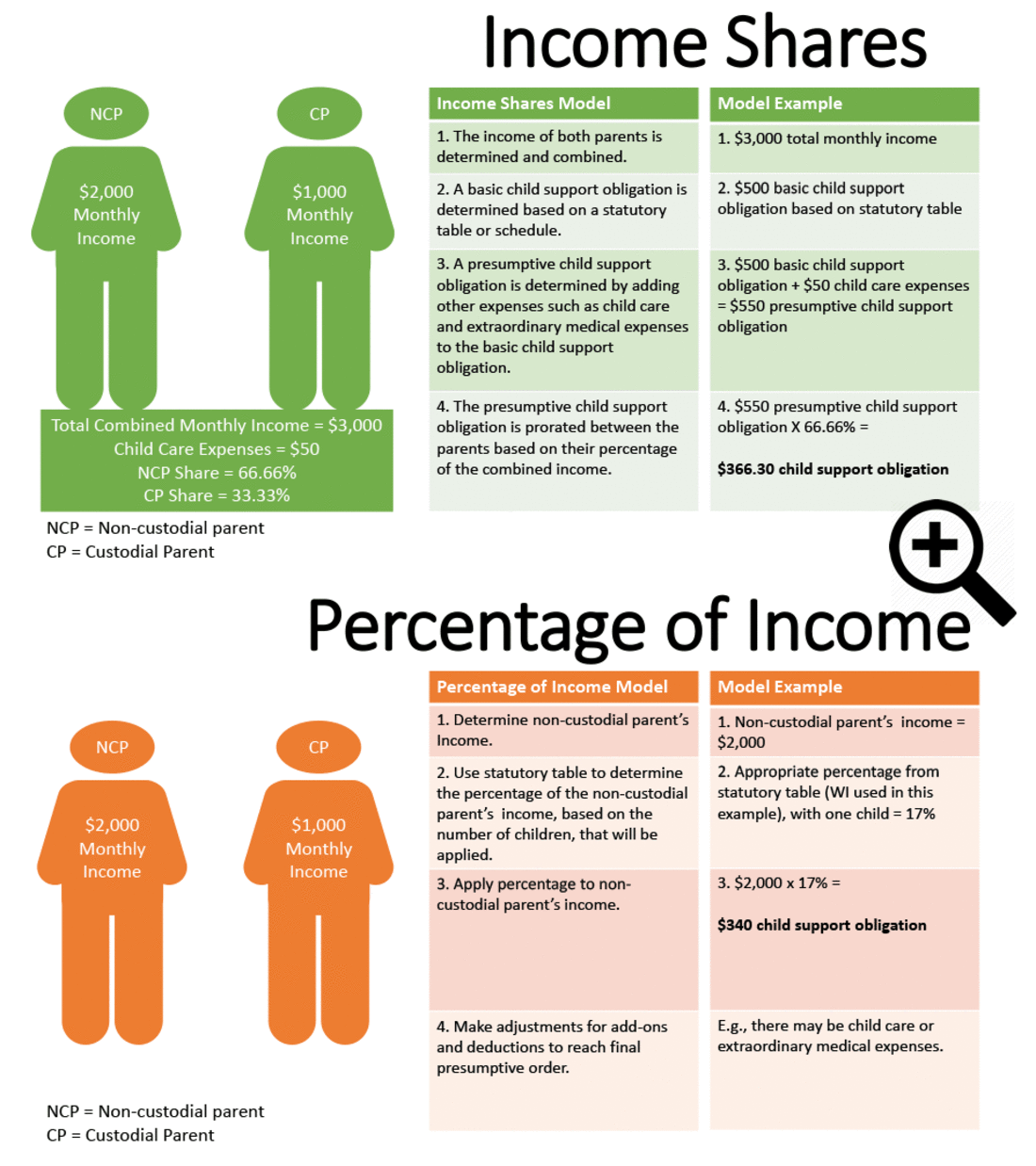
The most prevalent model, used in the majority of states, is the Income Shares Model. This model operates on the principle that a child should receive the same proportion of parental income they would have received if their parents lived together. The court first calculates the combined adjusted gross income of both parents. Then, based on established state guidelines (often tables or schedules), it determines the total theoretical amount of support needed for the child(ren) at that income level. This total amount is then divided proportionally between the parents based on their respective contributions to the combined income. For example, if Parent A earns 60% of the combined income and Parent B earns 40%, Parent A would be responsible for 60% of the calculated support amount, and Parent B for 40%. The non-custodial parent then typically pays their share to the custodial parent. This model is essentially an economic simulation of a single-household budget.
Percentage of Income Model
Used in a smaller number of states, the Percentage of Income Model is simpler in its financial application. It calculates child support as a percentage of the non-custodial parent’s income only. This percentage can be a flat rate regardless of income (e.g., a fixed percentage for one child, a higher fixed percentage for two children) or a varying rate that decreases as income increases. In some states using this model, the custodial parent’s income is not directly factored into the initial calculation, though it may be considered for deviations or adjustments. The financial burden is primarily placed on the non-custodial parent based solely on their earning capacity, streamlining the calculation but potentially overlooking the full financial picture.
Melson Formula Model
A more complex approach, the Melson Formula Model (used notably in Delaware and Hawaii), seeks to ensure that both parents’ basic needs are met before calculating child support for the children. It first calculates each parent’s minimum self-support reserve. Then, it determines the children’s primary support needs. Any remaining income, after these basic needs are met, is then used to calculate additional support for the children, aiming to maintain their prior standard of living. This model is arguably the most financially conservative, prioritizing the economic viability of both parents while still ensuring children’s needs are met, often leading to a more nuanced financial assessment.
The Role of Economic Changes and Adjustments
Child support orders are not necessarily static financial decrees; they can and often do evolve with significant changes in financial circumstances. Life is dynamic, and the economic realities of parents and children can shift dramatically over time.
Modifications Based on Income Fluctuations
A substantial change in either parent’s income is a common trigger for a child support modification. This includes involuntary job loss, a significant promotion, a demotion, or a substantial increase or decrease in business profits for self-employed individuals. Most states require a “material change in circumstances” for a modification request to be considered, often defined as a specific percentage change in income or a certain dollar amount. The underlying principle is that the child’s financial support should reflect the current economic capacity of both parents. This adjustment ensures that the support order remains equitable and continues to meet the child’s needs without imposing an undue financial burden on either parent.
Cost of Living Adjustments and Emancipation
While not universal, some child support orders may include provisions for automatic cost of living adjustments (COLAs) to account for inflation and the rising expense of raising children over time. This helps maintain the purchasing power of the support payments. Furthermore, child support typically has an endpoint – the emancipation of the child, usually at age 18 or 19, or upon high school graduation, or if the child becomes self-supporting or marries. However, financial obligations can extend beyond this for children with special needs or those pursuing higher education, depending on state law and specific agreements, representing a continued economic commitment.
Deviations from Guidelines: Proving Financial Hardship or Enhanced Needs
Courts generally adhere to state child support guidelines, but they also retain the discretion to deviate from these guidelines in exceptional financial circumstances. A parent might argue for a deviation due to unusual medical expenses for themselves, an inability to work due to disability, or the financial responsibility for other dependents. Conversely, a deviation could be sought for exceptionally high needs of the child, such as specialized medical care, extensive therapeutic services, or unique educational requirements that exceed standard living costs. Any deviation requires substantial financial documentation and compelling evidence to demonstrate that applying the standard guidelines would be unjust or inappropriate given the specific economic realities.
Financial Tools, Enforcement, and Long-Term Planning
Managing child support involves more than just understanding calculations; it requires utilizing financial tools, navigating enforcement mechanisms, and engaging in proactive financial planning to ensure stability for both the children and parents.
Utilizing Financial Calculators and Legal Resources
Many state judicial websites offer online child support calculators, which can provide an estimate of potential support obligations based on income and other factors. While these are estimates and not legal advice, they serve as valuable financial tools for initial budgeting and understanding the economic implications. Consulting with family law attorneys or financial advisors specializing in divorce settlements can provide accurate projections and guidance on navigating the complex financial landscape of child support, helping parents understand their rights and obligations and plan accordingly.
Mechanisms for Financial Enforcement: Wage Garnishments and Liens
When a paying parent fails to meet their child support obligations, robust enforcement mechanisms are in place to secure the necessary financial contributions. These can include wage garnishment (where support is automatically deducted from a parent’s paycheck), interception of tax refunds, liens on property or bank accounts, suspension of professional licenses or driver’s licenses, and even passport denial. These measures highlight the serious financial and legal consequences of non-payment, emphasizing the state’s commitment to ensuring children receive their due economic support. For receiving parents, understanding these tools is crucial for protecting their child’s financial future.

Budgeting and Financial Planning Post-Settlement
For both paying and receiving parents, child support significantly alters personal financial landscapes. Receiving parents must integrate support payments into their household budgets, allocating funds for essential child-related expenses. Paying parents must adjust their income and expenditures to consistently meet their obligations, potentially requiring a re-evaluation of discretionary spending and savings plans. Effective budgeting, long-term financial planning, and sometimes, a review of investment strategies become paramount to ensure ongoing financial stability for all parties involved. This comprehensive financial approach ensures that the child’s needs are continuously met while allowing parents to manage their own economic lives responsibly.
aViewFromTheCave is a participant in the Amazon Services LLC Associates Program, an affiliate advertising program designed to provide a means for sites to earn advertising fees by advertising and linking to Amazon.com. Amazon, the Amazon logo, AmazonSupply, and the AmazonSupply logo are trademarks of Amazon.com, Inc. or its affiliates. As an Amazon Associate we earn affiliate commissions from qualifying purchases.