
Understanding how to convert fractions to decimals is a foundational skill that resonates throughout the landscape of personal and business finance. While the direct answer to “what is 8 3/8 as a decimal?” is straightforward—it is 8.375—the profound implications of this seemingly simple conversion stretch across myriad financial scenarios, impacting everything from investment calculations to budget management. In the world of money, precision is paramount, and decimals serve as the universal language for accurate and unambiguous financial representation.
The Imperative of Decimal Precision in Financial Calculations
In the realm of finance, decimals are not merely an alternative notation; they are the bedrock upon which complex financial models, analyses, and transactions are built. Their inherent linearity and ease of manipulation make them indispensable for a multitude of reasons. Financial systems, from basic accounting software to advanced algorithmic trading platforms, are designed to process and display values in decimal format. This standardization ensures consistency, reduces ambiguity, and facilitates accurate computations across diverse financial instruments and markets.
While fractions might offer an intuitive way to describe parts of a whole in everyday life, their utility quickly diminishes in the face of financial complexity. Imagine calculating compound interest over several years with an interest rate expressed as a complex fraction, or attempting to compare stock prices quoted in thirty-seconds of a dollar. The inefficiencies and potential for error would be immense. Decimals, by contrast, streamline these processes, allowing for precise comparisons, aggregations, and projections with minimal friction. The entire financial ecosystem, from credit card transactions to global equity markets, relies on the granular accuracy that decimals provide, often extending to multiple places beyond the decimal point. Consider “basis points” (BPS), a common unit of measure in finance for interest rates and other percentages, where one basis point equals 0.01% or 0.0001 in decimal form. This illustrates the extreme level of precision required, far beyond what fractions could practically offer.
Bridging Fractions and Decimals: A Core Financial Skill
Historically, fractions played a more prominent role in financial reporting. For instance, stock prices on exchanges like the New York Stock Exchange were quoted in eighths, sixteenths, or even thirty-seconds of a dollar until the early 2000s, reflecting a bygone era where such granular divisions were commonplace. While decimalization has largely replaced fractional pricing in modern markets, the ability to convert fractions to decimals remains a critical component of financial literacy. It’s a skill that bridges historical context with contemporary practice, enabling individuals to interpret older data, understand legacy financial instruments, and perform ad-hoc calculations efficiently.
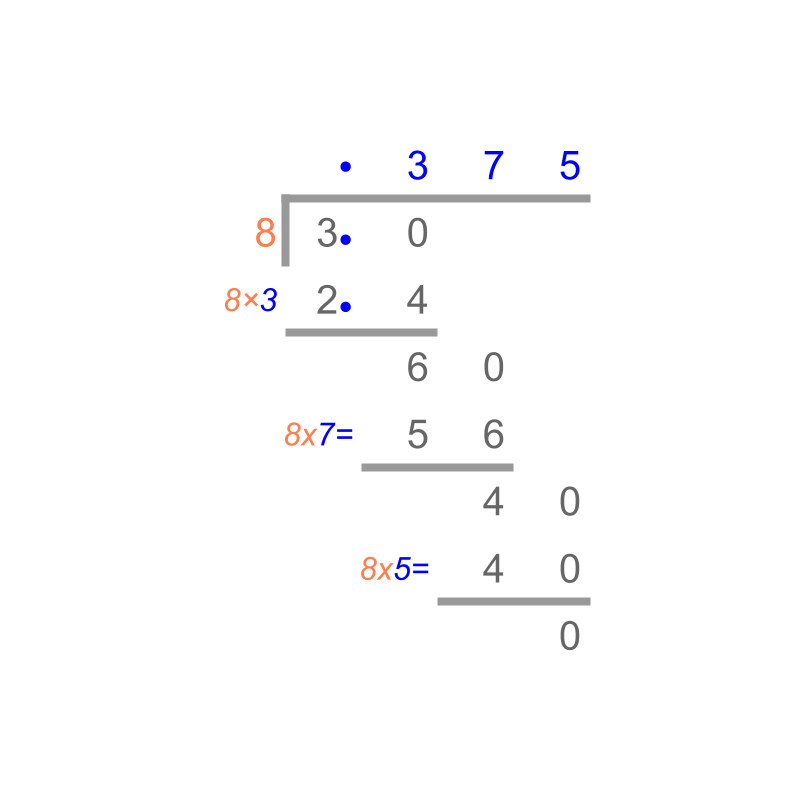
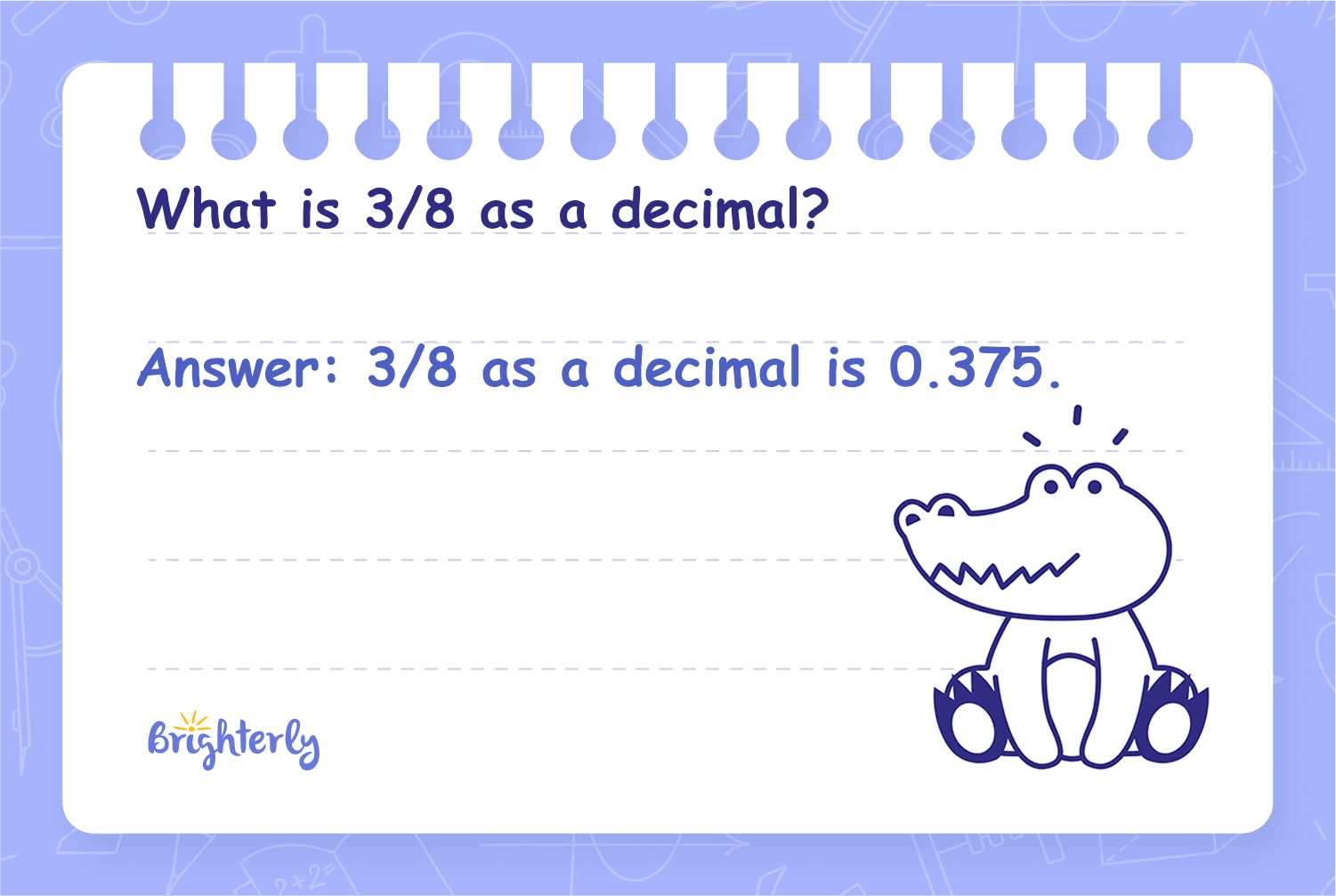
The conversion process itself is a fundamental mathematical operation: divide the numerator of the fraction by its denominator. For 8 3/8, the mixed number consists of a whole number (8) and a fraction (3/8). To convert 3/8 to a decimal, one simply divides 3 by 8, yielding 0.375. Adding this to the whole number, 8, results in 8.375. Mastering this process, both mentally for common fractions and through calculation for less familiar ones, empowers individuals to navigate financial data with greater confidence and accuracy.
Real-World Financial Scenarios Demanding Fractional to Decimal Conversion
The practical applications of converting fractions to decimals are extensive, touching nearly every facet of financial management. From personal budgeting to sophisticated investment strategies, the need for decimal representation is constant.
Investing and Securities Trading
Even though modern stock markets primarily use decimal pricing, understanding the mechanics of fractional conversions can be valuable. Historically, if a stock was quoted at 75 3/8, an investor needed to quickly convert that to $75.375 to understand its precise value. In today’s markets, while quotes are in decimals, the underlying logic of allocation, share splits, or percentage changes often originates from fractional thinking that eventually demands a decimal translation. For example, if an analyst predicts a company’s earnings per share (EPS) to grow by “three-eighths” this quarter, converting 3/8 to 0.375 is essential for calculating the exact expected EPS and comparing it against other growth metrics. Similarly, interest rates on bonds, certificates of deposit (CDs), or even mortgage rates might occasionally be discussed in fractional terms in less formal settings, necessitating a quick decimal conversion for accurate comparison and calculation of returns or costs. If a bond yields “8 3/8 percent,” translating that to 8.375% (or 0.08375 for calculations) is crucial for determining actual income.
Personal Budgeting and Expense Tracking
For individuals managing their personal finances, converting fractions to decimals is a frequent, if sometimes subconscious, exercise. Allocating portions of a monthly income to various categories—housing, savings, discretionary spending—might start as fractional ideas. “I want to save at least one-quarter of my income,” or “rent should not exceed three-eighths of my paycheck.” To operationalize these goals within a budget spreadsheet or financial app, these fractions must be converted to decimals to determine precise dollar amounts. For instance, if one earns $4,000 per month and dedicates 3/8 to housing, converting 3/8 to 0.375 allows for the calculation: $4,000 * 0.375 = $1,500. This decimal precision ensures that budgets are balanced, savings goals are met, and spending remains within limits. Furthermore, when splitting bills among friends or calculating discounts expressed as fractions, the ability to convert quickly to decimals ensures fairness and accuracy.
Business Finance and Operations

Businesses, regardless of size, rely heavily on decimal precision for financial reporting, operational efficiency, and strategic decision-making. Inventory management might involve tracking parts of products or raw materials, where fractional quantities need to be converted to decimals for accurate valuation and reordering. For example, if a recipe calls for 3/8 of a specific ingredient per batch, and a business produces many batches, converting this to 0.375 allows for precise bulk ordering and cost analysis. Profit margins, sales growth rates, and return on investment (ROI) are almost universally expressed as percentages derived from decimal calculations. If a sales team projects a growth of “eight and three-eighths percent,” converting this to 8.375% (or 0.08375) is vital for forecasting revenues, setting targets, and evaluating performance. Loan amortization schedules, depreciation calculations, and capital expenditure analyses all demand meticulous decimal accuracy to ensure financial health and compliance.
The Tools and Techniques for Accurate Conversion
While the underlying principle of converting fractions to decimals is simple, the methods employed can range from manual calculation to sophisticated technological solutions, each with its place in financial practice.
Manual Calculation: The Foundation
The most fundamental method is direct division. For a mixed number like 8 3/8, the whole number (8) remains separate. The fractional part (3/8) is converted by dividing the numerator (3) by the denominator (8).
3 ÷ 8 = 0.375.
Then, combine the whole number with the decimal: 8 + 0.375 = 8.375.
This method is invaluable for building an intuitive understanding of fractions and decimals, especially for common fractions like halves, quarters, eighths, and tenths, which frequently appear in financial contexts. Mental math proficiency for these common conversions can save time and foster greater financial agility.
Leveraging Technology: Calculators and Spreadsheets
For more complex fractions or simply for efficiency, financial professionals and individuals alike turn to technology.
Calculators: Standard scientific or financial calculators can perform these conversions with ease. Most have a fraction button or simply allow for direct entry of the division.
Spreadsheet Software: Programs like Microsoft Excel or Google Sheets are arguably the most powerful and versatile tools for financial calculations. Entering =3/8 into a cell will immediately display 0.375. If you have a mixed number like 8 3/8, you can enter =8 + 3/8 to get 8.375. Spreadsheets are particularly useful because they allow for the integration of these conversions into larger financial models, automatically updating calculations as inputs change. They also offer robust functions for managing potential rounding issues, which is critical in finance.
Online Converters: Numerous websites provide quick and free fractional to decimal conversion tools, which can be useful for quick checks or less frequent calculations.
Mitigating Risks: Common Pitfalls in Financial Conversions
Despite the apparent simplicity of fractional to decimal conversions, several common pitfalls can lead to significant financial errors if not carefully managed.
Rounding Errors and Their Financial Impact
One of the most insidious risks in financial calculations is premature or incorrect rounding. While 8.375 is an exact decimal representation of 8 3/8, many fractions produce non-terminating decimals (e.g., 1/3 = 0.3333…). Rounding too early or to an insufficient number of decimal places can introduce errors that compound over time or across large sums. For example, calculating interest on a large loan over many years with an interest rate rounded prematurely can lead to discrepancies of thousands or even tens of thousands of dollars. Financial institutions often carry calculations out to many decimal places before rounding only at the final reported figure to minimize these errors. Understanding the context and required precision for each financial calculation is crucial.
Misinterpretation of Fractional Values
Another common mistake is misinterpreting the meaning of a fraction within a financial context. For instance, sometimes a fractional value might imply a percentage change, while at other times it refers to a proportion of an amount. Confusing “an increase of 3/8” with “a total of 3/8” can lead to wildly inaccurate financial forecasts or budget allocations. Always clarifying what the fraction represents—whether it’s an additive component, a multiplier, or a proportion—is essential before performing any conversion or calculation.
The Cost of Imprecision
Ultimately, the cost of imprecision in finance can be substantial. A small error in converting 8 3/8 to its decimal equivalent, or any other fractional value, can propagate through an entire financial model, leading to incorrect investment decisions, misstated earnings, erroneous tax filings, or imbalanced budgets. Whether it’s underestimating the cost of a project by a fraction of a percent or miscalculating the yield on an investment, even seemingly minor inaccuracies can have significant negative repercussions on financial health and stability. Mastering the conversion of fractions to decimals, therefore, is not just about mathematical accuracy; it’s about safeguarding financial well-being and ensuring sound decision-making in an increasingly data-driven world.
aViewFromTheCave is a participant in the Amazon Services LLC Associates Program, an affiliate advertising program designed to provide a means for sites to earn advertising fees by advertising and linking to Amazon.com. Amazon, the Amazon logo, AmazonSupply, and the AmazonSupply logo are trademarks of Amazon.com, Inc. or its affiliates. As an Amazon Associate we earn affiliate commissions from qualifying purchases.