
At first glance, the question “what is 3 1/2 as a fraction?” appears to be a basic arithmetic query, perhaps suitable for an elementary school math class. It’s a straightforward conversion: 3 1/2 is equal to 7/2, or 3.5 in decimal form. However, to dismiss it as merely simple would be to overlook a crucial truth in the realm of personal finance, investing, and business. This seemingly innocuous mathematical concept serves as a foundational building block for a vast array of financial understandings, calculations, and decisions. In a world increasingly driven by complex financial instruments and data, the ability to grasp and manipulate basic fractions, mixed numbers, and their decimal equivalents is not just a mathematical skill—it is a critical component of robust financial literacy, empowering individuals and businesses to navigate the monetary landscape with clarity and confidence. This article delves into why mastering such fundamental arithmetic is indispensable for anyone seeking to achieve financial acumen and make informed money choices.
The Foundation: Understanding Mixed Numbers and Fractions in Finance
The journey to financial clarity often begins not with advanced algorithms or intricate economic models, but with a solid grasp of basic arithmetic. Mixed numbers, improper fractions, and decimals are different representations of the same underlying value, and fluency in converting between them is a prerequisite for interpreting and manipulating financial data effectively.
Deciphering “3 1/2”: A Step-by-Step Financial Conversion
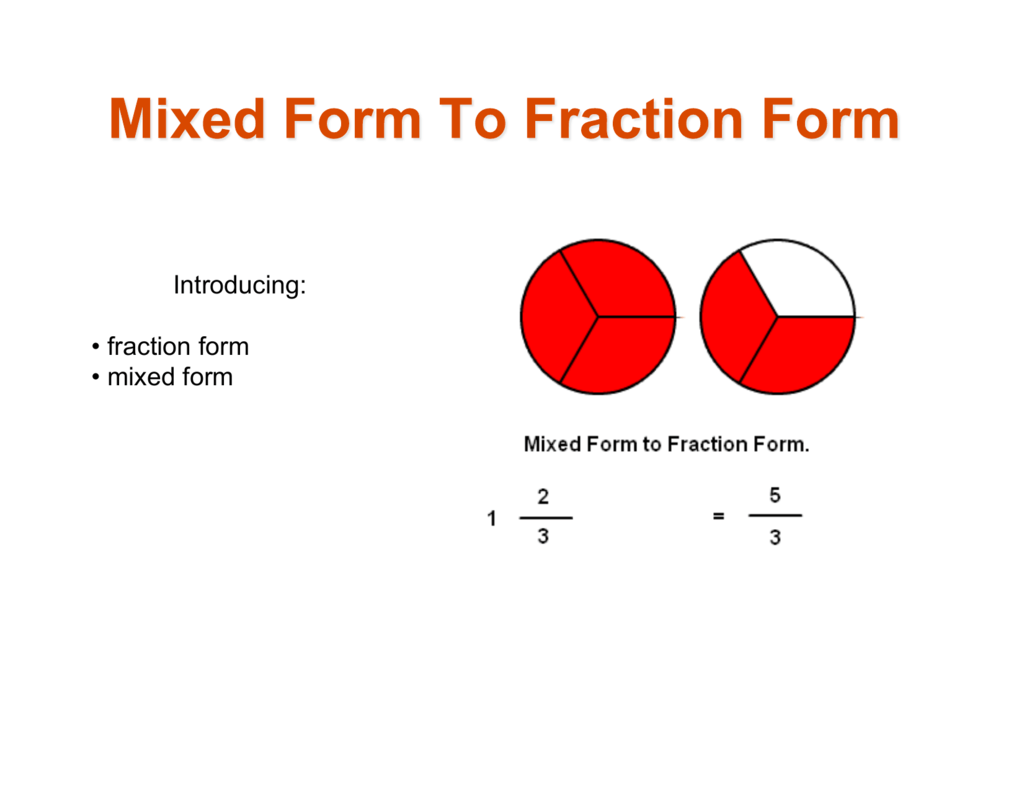
Let’s re-examine the core question: “what is 3 1/2 as a fraction?” A mixed number, like 3 1/2, combines a whole number (3) and a proper fraction (1/2). To convert it into an improper fraction (where the numerator is greater than or equal to the denominator), we follow a simple process:
-
Multiply the whole number by the denominator of the fraction: 3 * 2 = 6.
-
Add the numerator to that product: 6 + 1 = 7.
-
Place this sum over the original denominator: 7/2.
So, 3 1/2 is indeed 7/2.
To convert this to a decimal, we simply divide the numerator by the denominator: 7 ÷ 2 = 3.5.
Why is this simple conversion so vital in finance? Because financial information is presented in various formats, and the ability to seamlessly switch between them allows for a more comprehensive understanding. A stock price might be quoted as $3.50, an interest rate as 3 1/2%, or a share of ownership as 7/200 (if a company has 200 shares and you own 7, which is equivalent to 3 1/2 out of 100 shares if we scale down). Understanding that these are just different ways of expressing the same value (or proportion) is the first step toward accurate financial interpretation and calculation. It builds the cognitive bridge between abstract numbers and tangible financial implications.
Why Basic Math Matters: Beyond Simple Calculations
The relevance of basic math in finance extends far beyond the conversion itself. It’s about developing a numerical intuition that allows for quick assessment and critical thinking. When faced with financial statements, investment proposals, or budgeting scenarios, a solid grasp of fractions and percentages allows you to:
-
Identify inconsistencies: Spot when numbers don’t add up or when a presented share seems disproportionate.
-
Estimate quickly: Make mental calculations to get a ballpark figure, which is invaluable for on-the-spot decision-making or validating more precise computations.
-
Understand proportional relationships: Grasp how different parts relate to a whole, whether it’s a budget allocated, a profit distributed, or an investment portfolio diversified.
Without this foundational understanding, individuals are reliant on calculators and software without truly comprehending the underlying mechanics, leaving them vulnerable to misinterpretation and poor decisions.
Practical Applications of Fractions in Personal Finance
Personal finance is replete with instances where fractions, mixed numbers, and their decimal equivalents are implicitly or explicitly used. From managing daily expenses to planning for long-term goals, these basic mathematical concepts are the bedrock of sound financial management.
Budgeting and Allocating Resources
One of the most fundamental aspects of personal finance is budgeting. Here, fractions are omnipresent, often disguised as percentages. For instance, common budgeting rules suggest allocating a certain fraction of your income to different categories:
-
The “50/30/20 rule” (50% for needs, 30% for wants, 20% for savings/debt repayment) is essentially a fractional breakdown of your income (1/2, 3/10, 1/5).
-
If your rent is 3 1/2 times your utility bill, or if you save 3 1/2 times more than you spend on entertainment, you are inherently dealing with mixed numbers and their proportional implications.
Understanding these fractional relationships allows for a clear visualization of where your money goes and helps in making conscious decisions about resource allocation. It empowers individuals to divide their income effectively, track expenses, and ensure that their financial pie is sliced according to their priorities and goals.
Understanding Interest Rates and Loan Terms
Interest rates, whether on savings accounts, loans, or credit cards, are universally expressed as percentages—which are, at their core, fractions out of 100. An annual interest rate of 3 1/2% means you earn or pay 3.5 units for every 100 units invested or borrowed, which is precisely 7/200 as a fraction (or 3.5/100).
-
Compound Interest: The magic (or burden) of compound interest relies on iteratively applying these fractional rates to growing principal amounts. Understanding how 3.5% interest accumulates over time requires not just knowing the percentage but grasping its fractional nature in each compounding period.
-
Loan Repayments: Calculating monthly payments, understanding the principal vs. interest components, and evaluating the total cost of a loan often involves complex formulas built upon these basic fractional rates. While financial calculators simplify the process, a conceptual understanding of how these percentages translate into actual dollar amounts is crucial for comparing loan offers and avoiding costly mistakes.
Savings Goals and Financial Projections
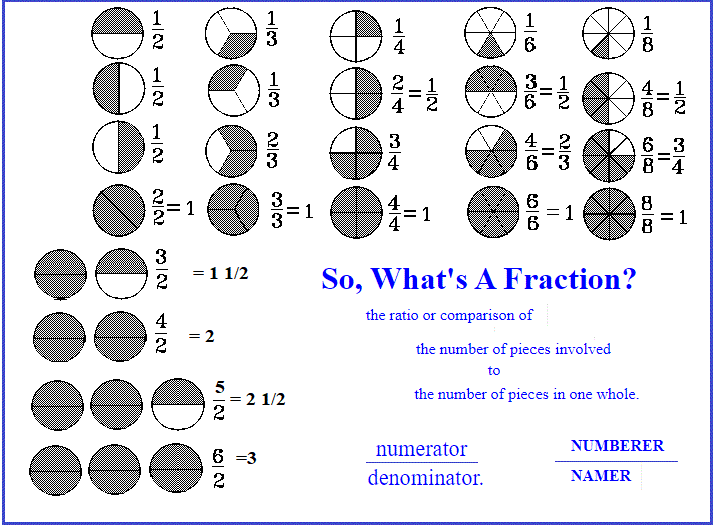
Setting and achieving savings goals also heavily relies on fractional thinking. If you aim to save $10,000 for a down payment and you’ve already accumulated $3,500, you’ve saved 3.5 tenths (or 7/20) of your goal. Recognizing this fractional progress helps in:
-
Motivation: Seeing a clear fraction of your goal completed can be a strong motivator.
-
Adjustment: If you’re behind schedule, you can adjust the fraction of your monthly income dedicated to savings.
-
Retirement Planning: Understanding how a fraction of your income contributed to a retirement account will grow over decades, often expressed as a percentage of your salary match or contribution rate, is fundamental to securing your future.
Fractions in Investing and Business Finance
Moving beyond personal finance, fractions are equally, if not more, integral to the worlds of investing and business finance. They quantify ownership, evaluate performance, and structure deals, providing a common language for financial professionals and savvy investors alike.
Stock Prices and Ownership Stakes
Historically, stock prices were often quoted in fractions (e.g., $3 1/2 per share) before the widespread adoption of decimals. While decimals are now standard, the underlying concept of fractional ownership remains paramount.
-
Shareholding: When you buy shares in a company, you are acquiring a fraction of its total ownership. If a company has 2 million shares outstanding and you own 7,000 shares, you own 7,000/2,000,000 (or 7/2000, or 0.35%) of the company. This fractional understanding is crucial for assessing your stake, voting rights, and potential returns.
-
Stock Splits: A 2-for-1 stock split means you get two shares for every one you owned, effectively halving the fractional value of each share while doubling your quantity, maintaining your overall fractional ownership of the company. A deep understanding of fractions helps investors grasp the implications of such corporate actions on their portfolios.
Business Performance Ratios and Profit Sharing
In business, financial ratios are a critical tool for analyzing performance, liquidity, solvency, and profitability. These ratios are, by definition, fractions comparing two financial metrics.
-
Profit Margins: A net profit margin of 3 1/2% means the business earns $3.50 in profit for every $100 in revenue. This 3.5/100 fraction (or 7/200) is a vital indicator of efficiency.
-
Debt-to-Equity Ratio: This ratio compares a company’s total debt to its shareholder equity, providing insight into its financial leverage. If a company has a debt-to-equity ratio of 1.5 (or 3/2), it means it has 1.5 times more debt than equity, indicating a higher risk profile than a company with a lower ratio.
-
Profit Sharing: In partnerships or employee incentive programs, profits are often distributed as fractions. “Partner A gets 3/8 of the profits, Partner B gets 5/8.” Understanding these allocations is crucial for managing expectations and ensuring fair distribution.
Real Estate and Asset Division
The real estate sector also extensively uses fractions.
-
Joint Ownership: Properties are often owned by multiple parties, with each holding a fractional interest (e.g., each sibling owns 1/3 of an inherited property). Calculating property taxes, maintenance costs, or sale proceeds requires accurately applying these fractions.
-
Fractional Investments: Opportunities like Real Estate Investment Trusts (REITs) or crowdfunding platforms allow investors to own small fractions of large properties, making real estate accessible with smaller capital commitments. Understanding the yield, expenses, and returns per unit requires fractional analysis.
-
Mortgage Rates: Similar to other loans, mortgage interest rates are percentages, and understanding their fractional nature is key to calculating amortization schedules and comparing different loan products.
Bridging the Gap: From Calculation to Financial Insight
While the direct conversion of 3 1/2 to 7/2 might seem trivial, its implications for developing genuine financial insight are profound. The ability to perform these basic calculations and comprehend their meaning is what transforms raw data into actionable knowledge.
The Power of Estimation and Mental Math
In the fast-paced world of finance, the ability to quickly estimate can be as valuable as precise calculation. If a store offers “3 1/2% cash back” on a $200 purchase, knowing that 3 1/2% is roughly 1/30 (since 3 is about 1/33 of 100) allows you to quickly estimate a return of about $6-$7. This mental agility, rooted in fractional understanding, empowers individuals to make rapid, informed decisions without always needing a calculator. It helps in quickly assessing the reasonableness of a deal, comparing offers, or catching potential errors in presented figures.
Leveraging Tools, But Understanding the Basics
Modern financial tools, from budgeting apps to investment platforms, perform complex calculations instantaneously. However, these tools are only as effective as the user’s understanding of the inputs and outputs. Without a grasp of what 3 1/2% actually means in terms of dollars and cents, or what a 7/2 debt-to-equity ratio signifies, even the most sophisticated software can lead to uninformed decisions. A foundational understanding of fractions ensures that users can critically evaluate the results provided by these tools, identify potential misconfigurations, and, most importantly, interpret the financial implications accurately. It fosters a sense of control and reduces reliance on blind trust in technology.

Conclusion
The question “what is 3 1/2 as a fraction?” serves as a powerful reminder that complex financial literacy is built upon simple mathematical truths. The journey from a mixed number to an improper fraction and decimal is not just an academic exercise; it’s a foundational skill that underpins everything from personal budgeting and savings goals to intricate investment strategies and business analysis. By mastering these basic concepts, individuals gain the numerical fluency required to interpret financial data, make informed decisions, and navigate the monetary landscape with confidence and insight. In a world where financial success often hinges on meticulous planning and accurate understanding, the ability to grasp and apply the principles of fractions remains an indispensable asset, empowering everyone to unlock greater financial clarity and security.
aViewFromTheCave is a participant in the Amazon Services LLC Associates Program, an affiliate advertising program designed to provide a means for sites to earn advertising fees by advertising and linking to Amazon.com. Amazon, the Amazon logo, AmazonSupply, and the AmazonSupply logo are trademarks of Amazon.com, Inc. or its affiliates. As an Amazon Associate we earn affiliate commissions from qualifying purchases.