
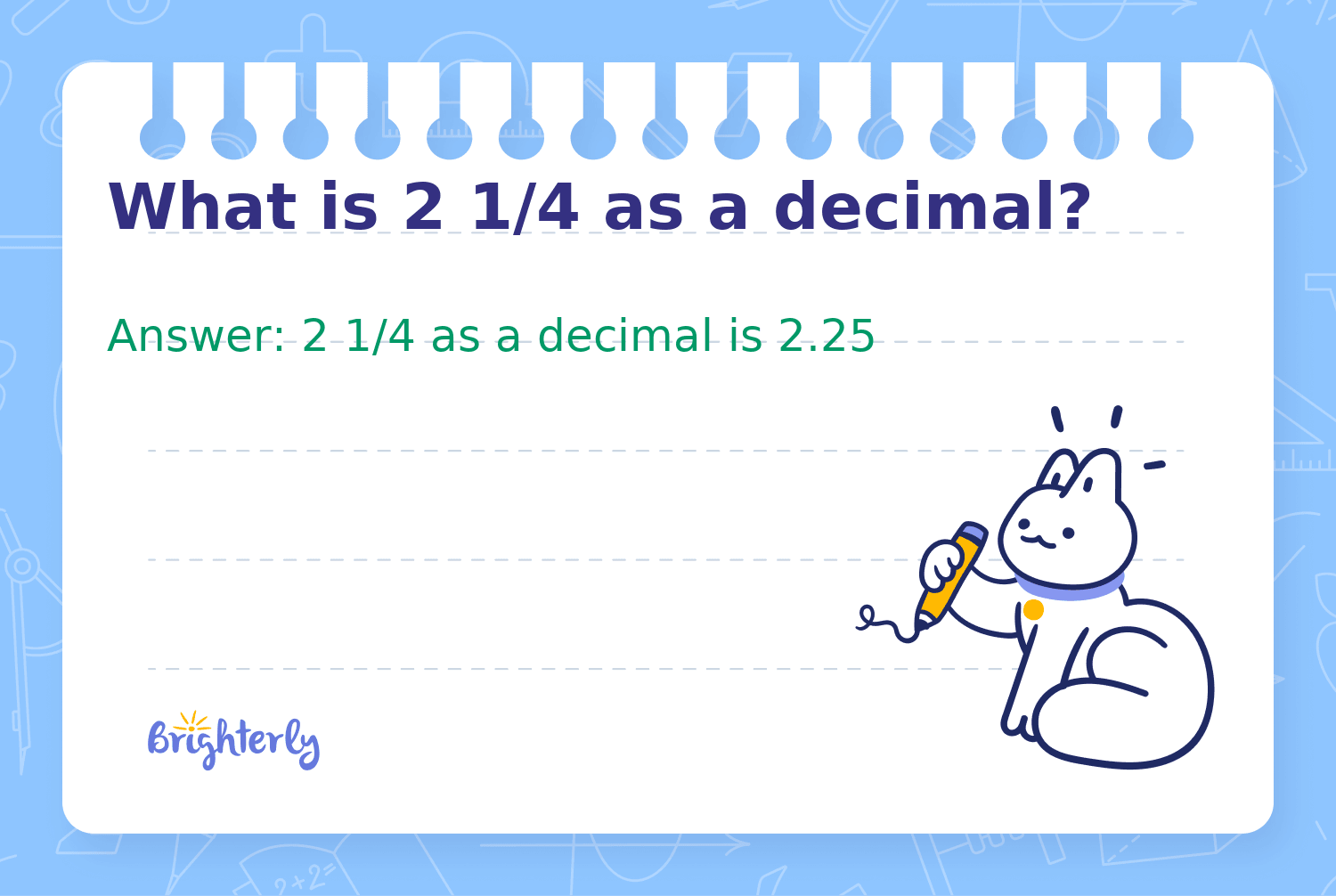
In the intricate world of personal finance, investing, and business operations, clarity and precision are paramount. While a seemingly simple mathematical query, “what is 2 and 1/4 as a decimal?” actually underpins a vast array of financial calculations and decisions. The direct answer is 2.25. However, the significance of this conversion goes far beyond basic arithmetic, serving as a fundamental building block for financial literacy, accurate budgeting, savvy investing, and sound business analysis.
Understanding how to convert fractions to their decimal equivalents is not just an academic exercise; it’s a critical skill that empowers individuals and organizations to navigate complex financial landscapes with confidence. From interpreting interest rates and stock prices to balancing budgets and analyzing financial reports, the ability to fluently switch between fractional and decimal representations is indispensable. This article delves into the conversion itself and, more importantly, explores why this foundational mathematical concept is absolutely crucial in the realm of money.
The Foundation: Understanding Fractions and Decimals in Finance
At its core, financial understanding relies on the ability to interpret and manipulate numbers. Fractions and decimals are two different ways of representing parts of a whole, each with its own advantages and common uses. In finance, decimals typically reign supreme due to their universality in digital systems and ease of computation.
The Basic Conversion Explained: 2 and 1/4 to 2.25
Let’s break down the specific conversion that forms the basis of our discussion: 2 and 1/4.
-
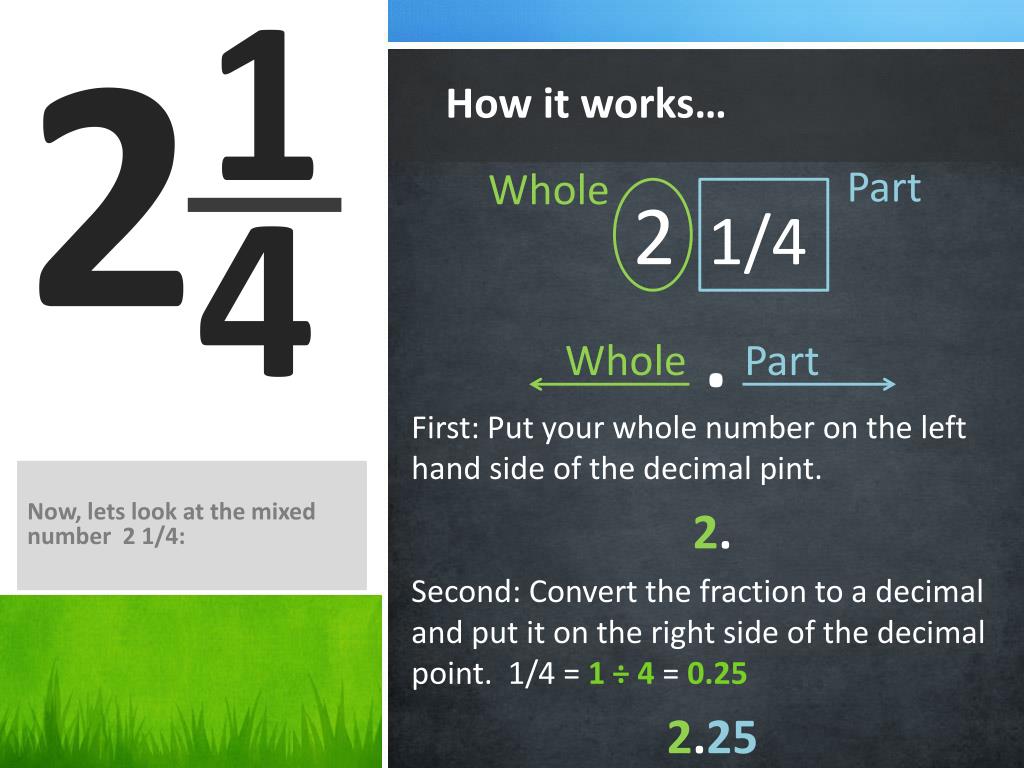
Identify the Whole Number: The “2” in “2 and 1/4” is already a whole number. In decimal form, it remains “2.”.
-
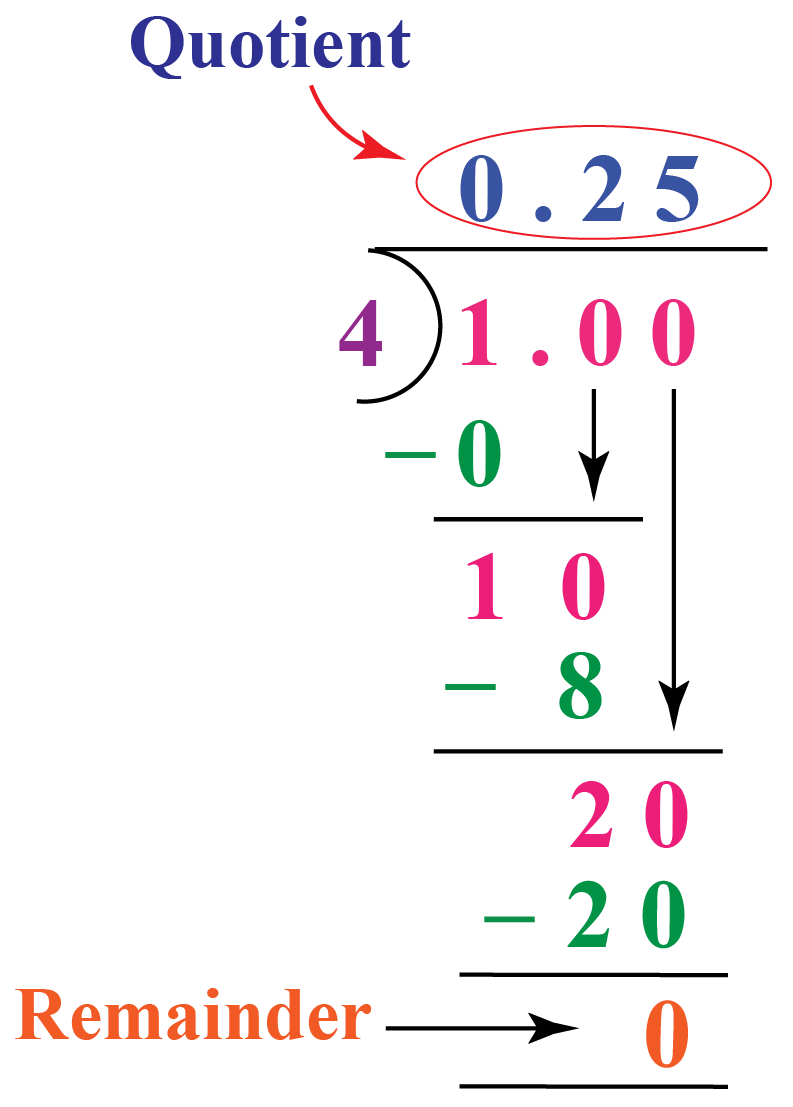
Convert the Fraction to a Decimal: The fraction is “1/4”. To convert a fraction to a decimal, you divide the numerator (top number) by the denominator (bottom number).
- 1 ÷ 4 = 0.25
-
Combine the Whole Number and the Decimal: Now, simply add the whole number part to the decimal part.
- 2 + 0.25 = 2.25
Thus, 2 and 1/4 is indeed 2.25 as a decimal. While this might appear straightforward, it’s the gateway to understanding how many financial figures are derived and interpreted.
Why Decimal Representation Matters in Financial Contexts
The preference for decimals over fractions in financial matters is not arbitrary; it’s driven by practical necessities:
-
Standardization and Universality: Financial markets, banking systems, accounting software, and economic reports globally rely almost exclusively on decimal notation. This standardization ensures that financial figures are universally understood and processed across different platforms and geographical locations. Imagine the chaos if different institutions used varying fractional forms for interest rates or stock prices.
-
Ease of Calculation: Decimals significantly simplify arithmetic operations. Adding, subtracting, multiplying, or dividing numbers with fractional components can be cumbersome and prone to error without a common denominator. Decimals, on the other hand, integrate seamlessly with calculators, spreadsheets, and financial software, making complex computations efficient and accurate.
-
Precision and Granularity: While some fractions can represent exact values, decimals often allow for finer granularity, especially when dealing with very small parts of a whole or when numbers don’t perfectly resolve into simple fractions (e.g., 1/3 as 0.333…). Financial calculations, from calculating compound interest over decades to pinpointing stock price movements, demand this level of precision.
Practical Applications of Decimal Conversion in Personal Finance
The relevance of converting fractions like 2 and 1/4 to decimals permeates nearly every aspect of personal financial management, from daily budgeting to long-term wealth building.
Budgeting and Expense Tracking
Effective budgeting hinges on accurately tracking income and expenses. While some transactions might be easily expressed in whole numbers, others inherently involve fractions or percentages that need decimal conversion:
-
Partial Income or Expenses: Imagine receiving a “half-paycheck” due to an unusual work schedule or paying “a quarter share” of a utility bill. To integrate these figures into a comprehensive budget, they must be converted to decimals. For instance, if your monthly income is $4,000, and you anticipate a half-paycheck, you’d budget $2,000 (0.5 * $4,000), not “$4,000 and 1/2”.
-
Category Allocation: When allocating a percentage of your income to various budget categories (e.g., 1/4 of your income for housing), converting the fraction to a decimal (0.25) makes the calculation straightforward and compatible with budgeting software.
Interest Rates and Loans
Perhaps one of the most critical areas where decimal understanding is vital is in dealing with interest rates on loans, savings accounts, and investments:
-
Annual Percentage Rate (APR) and Annual Percentage Yield (APY): These are almost always presented as percentages (e.g., 5% APR). To calculate the actual interest paid or earned, this percentage must be converted to its decimal equivalent (e.g., 5% = 0.05). If an advertisement states “one-quarter of a percent interest,” you immediately translate that to 0.0025 for your calculations.
-
Loan Payments and Accruals: Calculating monthly loan payments, understanding the impact of varying interest rates, or projecting future interest accruals on savings accounts all depend on using decimal forms of interest rates in various financial formulas. A minor misinterpretation of a rate (e.g., thinking 1/4% is 0.25 instead of 0.0025) can lead to significant financial errors.
Saving and Investment Contributions
Whether you’re making regular contributions to a retirement account or investing in fractional shares, decimals simplify the process:
-
Consistent Contributions: If you decide to contribute a fixed fraction of your income (e.g., 1/10th) to your savings each month, converting this to 0.10 allows for easy multiplication with your fluctuating income to determine the exact dollar amount.
-
Portfolio Allocation: Financial advisors often recommend allocating a certain percentage or fraction of a portfolio to different asset classes (e.g., “half in stocks, a quarter in bonds”). Converting these to decimals (0.50, 0.25) simplifies portfolio rebalancing and performance tracking.
Decimals in the World of Investing and Business Finance
Beyond personal finance, decimals are the lingua franca of financial markets and corporate reporting, enabling investors and businesses to make informed, data-driven decisions.
Stock Prices and Trading
Historically, stocks in the U.S. were traded in fractions (e.g., $25 and 1/8). However, since 2001, U.S. markets have universally adopted decimalization:
-
Enhanced Transparency and Liquidity: Decimal pricing (e.g., $25.12 instead of $25 and 1/8) has made stock prices clearer, reduced the minimum price increment, and fostered greater liquidity by narrowing bid-ask spreads.
-
Ease of Analysis: Investors can more easily compare stock prices, calculate gains or losses, and understand price movements when dealing with decimals. A stock moving from $2.25 to $2.50 is a clear 25-cent increase, a concept far less intuitive with fractional equivalents.
-
Fractional Share Investing: The rise of platforms offering fractional share investing (where you can buy parts of a share, e.g., 0.25 of a share of Amazon) makes decimal understanding directly relevant for individual investors wanting to invest specific dollar amounts.
Financial Ratios and Reporting
Business finance relies heavily on ratios to assess a company’s health, performance, and valuation. These ratios are almost exclusively presented in decimal form:
-
Profit Margins: Gross profit margin, operating profit margin, and net profit margin are expressed as decimals (or percentages derived from decimals), e.g., 0.15 for a 15% margin.
-
Debt-to-Equity Ratio: A ratio like 2.25 means the company has $2.25 of debt for every $1 of equity. Understanding the decimal allows for direct comparison against industry benchmarks.
-
Earnings Per Share (EPS) and Price-to-Earnings (P/E) Ratio: These crucial investor metrics are reported in decimals (e.g., $2.25 EPS). An investor might be told a stock trades at “2 and a quarter times earnings,” which they immediately interpret as a 2.25 P/E ratio, essential for valuation comparisons.
Currency Exchange and International Transactions
In the global economy, currency exchange rates are almost always quoted in decimals:
-
Exchange Rate Precision: Exchange rates like USD/EUR 1.0825 indicate that 1 US dollar is equivalent to 1.0825 Euros. The decimal representation allows for extreme precision in international trade and travel calculations.
-
Calculating Costs: Whether you’re planning an international trip, purchasing goods from abroad, or managing cross-border business transactions, converting currency accurately requires applying decimal exchange rates. Misinterpreting these rates, even slightly, can lead to significant financial discrepancies.
Avoiding Common Financial Miscalculations
While the conversion of 2 and 1/4 to 2.25 is simple, overlooking the importance of decimal precision can lead to significant financial errors over time.
The Dangers of Estimation vs. Precision
In everyday conversation, saying “two and a quarter” might suffice. However, in finance, estimation can be costly. Rounding errors, especially when compounding over many transactions or extended periods, can lead to substantial discrepancies in financial projections, investment returns, or outstanding loan balances. A small fraction mistakenly rounded or improperly converted can throw off an entire financial model.
Leveraging Financial Tools
Fortunately, modern financial tools largely automate decimal conversions and calculations:
-
Spreadsheets (Excel, Google Sheets): These are indispensable for financial modeling, budgeting, and analysis. They effortlessly handle decimals, allowing users to input raw data and apply complex formulas without manual fractional conversions.
-
Financial Calculators and Budgeting Apps: Designed with financial operations in mind, these tools process numbers in decimal form, providing immediate and accurate results for everything from loan amortization to retirement planning.
However, understanding the underlying mathematical principles, like converting 2 and 1/4 to 2.25, remains crucial. It allows you to:
-
Validate results: If a tool produces an unexpected number, your foundational understanding helps you identify potential input errors or formula misapplications.
-
Interpret data: You can better understand what the numbers mean and how they relate to the real world.
-
Perform quick mental checks: For simple scenarios, a quick mental conversion can offer immediate insight without needing to open an app.
Building Financial Fluency Through Mathematical Understanding
The seemingly basic question, “what is 2 and 1/4 as a decimal?”, serves as a microcosm for the broader concept of financial literacy. Mastering such fundamental mathematical conversions is not just about getting the right answer; it’s about building the intellectual framework to understand, analyze, and strategically navigate the financial world.
Empowering Financial Decision-Making
The ability to confidently convert between fractions, decimals, and percentages is a cornerstone of financial empowerment. It enables individuals to:
-
Critically Assess Information: Understand the true cost of a loan, the real return on an investment, or the actual impact of a percentage-based discount.
-
Make Informed Choices: Whether it’s choosing between mortgage options, understanding a stock prospectus, or optimizing a personal budget, a solid grasp of these numerical representations allows for better, more confident decisions.
-
Avoid Misinformation: Without this foundational understanding, one can easily be misled by complex financial jargon or obscure numerical presentations.
Continuous Learning and Application
Financial markets, products, and personal circumstances evolve. Therefore, the continuous application and reinforcement of basic mathematical skills in a financial context are vital. Regularly engaging with personal finance tasks, even simple ones like calculating a tip or understanding a discount, reinforces these core concepts and builds lasting financial fluency.
Conclusion
So, what is 2 and 1/4 as a decimal? It is 2.25. But more profoundly, it is a testament to the fact that even the most basic mathematical conversions hold immense power and relevance in the domain of money. From managing personal budgets and assessing investment opportunities to interpreting complex business reports, the ability to fluently convert between fractions and decimals is an indispensable skill. It simplifies calculations, ensures accuracy, and fosters a deeper understanding of financial concepts, ultimately empowering individuals and businesses to make smarter, more informed financial decisions. Mastering these fundamental building blocks is not just about solving a math problem; it’s about unlocking a more secure and prosperous financial future.
aViewFromTheCave is a participant in the Amazon Services LLC Associates Program, an affiliate advertising program designed to provide a means for sites to earn advertising fees by advertising and linking to Amazon.com. Amazon, the Amazon logo, AmazonSupply, and the AmazonSupply logo are trademarks of Amazon.com, Inc. or its affiliates. As an Amazon Associate we earn affiliate commissions from qualifying purchases.