
At first glance, the question “What is 1/3 + 1/3 in fraction?” appears to be a simple arithmetic problem, a task for a primary school student. The answer, of course, is 2/3. Yet, beneath this seemingly straightforward sum lies a profound principle that underpins some of the most critical aspects of personal finance, investing, and business strategy. Understanding how to combine and allocate fractions—especially simple ones like thirds—is not merely an academic exercise; it’s a fundamental skill for anyone seeking to build financial literacy, manage wealth effectively, and make informed economic decisions.

In the world of money, fractions represent proportions, allocations, and shares. They help us divide, distribute, and understand the relative sizes of different components within a whole. Whether you’re budgeting your income, diversifying an investment portfolio, or analyzing business performance, the ability to grasp and manipulate these foundational proportions is indispensable. This article will delve into the practical significance of “1/3 + 1/3” as a gateway to mastering essential financial concepts, demonstrating how basic fractional understanding can illuminate complex monetary landscapes and empower you to navigate them with confidence.
The Foundational Math: Understanding Fractions in Finance
Before we explore the broader financial implications, let’s address the core mathematical problem and its immediate solution, as it serves as our springboard into deeper financial insights.
Deciphering “1/3 + 1/3”: A Simple Sum, Profound Implications
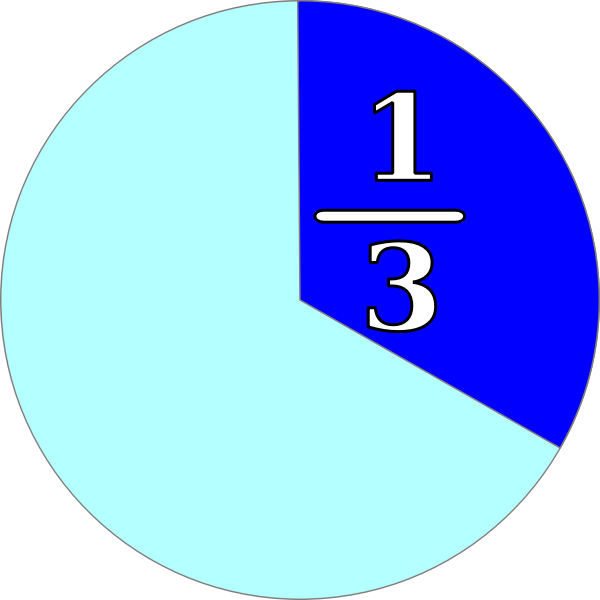
When you add 1/3 to 1/3, you are combining two equal parts of a whole. If you imagine a pie divided into three equal slices, taking one slice and then another slice means you now have two of those three slices. Therefore, 1/3 + 1/3 = 2/3. This simple operation teaches us that when fractions share a common denominator (the bottom number), you simply add the numerators (the top numbers) and keep the denominator the same.
While mathematically elementary, this concept of combining discrete, proportional units is at the heart of many financial calculations. It teaches us about aggregation and the accumulation of parts to form a larger share of a whole. In finance, this “whole” could be your income, your investment capital, a company’s profit, or an entire market.
Beyond the Numerator: Why Proportions Matter in Money
The true power of fractions in finance isn’t just in the sum itself, but in what the “1/3” or “2/3” represents: a proportion. A proportion describes the relationship between a part and the whole. When we say “1/3 of your income,” we are not talking about a fixed dollar amount but a relative share that adjusts with your total income.
-
Relativity: Fractions allow for proportional thinking, which is crucial for financial planning regardless of the absolute numbers involved. A financial plan based on percentages or fractions remains relevant whether you earn $3,000 or $30,000 a month.
-
Fair Distribution: In partnerships, profit-sharing, or estate planning, fractions ensure equitable distribution, defining each party’s rightful share of assets or profits.
-
Risk Management: By understanding the fractional allocation of your investments, you can better assess and manage risk, ensuring no single asset class dominates your portfolio excessively.
-
Growth and Decline: Financial ratios, often expressed as fractions or decimals derived from fractions, provide insights into a company’s health, growth potential, and debt levels.
Understanding that “1/3 + 1/3 = 2/3” is just the beginning. The real financial wisdom comes from applying this proportional mindset to real-world monetary decisions.
Budgeting by the Rule of Thirds: A Practical Application
One of the most immediate and impactful applications of fractional thinking in personal finance is budgeting. While many popular budgeting rules exist, the concept of dividing your income into fractional shares is a cornerstone of effective financial management.
The 50/30/20 Rule and its Fractional Roots
Perhaps the most well-known budgeting guideline is the 50/30/20 rule, popularized by Senator Elizabeth Warren. This rule suggests allocating:
-
50% of your after-tax income to Needs: Housing, utilities, groceries, transportation.
-
30% to Wants: Dining out, entertainment, hobbies, vacations.
-
20% to Savings & Debt Repayment: Emergency fund, retirement, investments, paying down high-interest debt.
While not strictly using “thirds,” this rule is fundamentally fractional. It teaches us to divide our “whole” (our income) into distinct proportional buckets. The underlying principle is identical to adding fractions: each category represents a portion of the total, and ideally, these portions sum up to the whole (100% or 1/1).
Allocating Income: Housing, Essentials, Savings – The 1/3 Approach
Let’s imagine a simpler, perhaps more aggressive, budgeting strategy using “thirds,” directly reflecting our core problem. A simplified “Rule of Thirds” for budgeting might suggest:
-
1/3 for Fixed Expenses (Housing, Utilities): This portion covers your essential, non-negotiable monthly outlays.
-
1/3 for Discretionary Spending & Other Essentials (Food, Transport, Wants): This portion covers your flexible spending, including groceries, transport, and leisure.
-
1/3 for Savings & Investments: This ambitious chunk is dedicated to building your future wealth, paying off debt, and creating an emergency fund.
In this scenario, if you allocate 1/3 to fixed expenses and another 1/3 to discretionary spending, you have accounted for 2/3 of your income (1/3 + 1/3 = 2/3). The remaining 1/3 is then earmarked for savings and investments. This framework provides a clear, actionable way to visualize and manage your cash flow, ensuring that a significant portion is always directed towards your financial future.
Customizing Your Budget: Adjusting the Fractional Shares
The beauty of proportional budgeting is its flexibility. While the “Rule of Thirds” or 50/30/20 rule offers a great starting point, they are not rigid laws. Your personal circumstances, financial goals, and stage of life will dictate the ideal fractional allocation for your income.
-
High-Cost-of-Living Areas: You might find your “Needs” fraction must be higher than 1/2 or 1/3, perhaps 60%. This would necessitate reducing your “Wants” or “Savings” fractions.
-
Aggressive Savings Goals: If you’re saving for a down payment or early retirement, you might deliberately boost your savings fraction to 1/2 or even more, at the expense of wants.
-
Debt Repayment: If you have high-interest debt, a larger fraction of your income might initially be allocated to debt repayment, effectively treating it as a “savings” category until cleared.
The core idea remains the same: identify the whole (your income), break it into logical fractional parts, and ensure these parts sum up to the whole. This systematic approach, rooted in basic fractional math, transforms abstract financial goals into concrete, manageable actions.
Investment Portfolio Allocation: Diversifying with Fractions
Beyond budgeting, fractions play an indispensable role in investment strategy, particularly in portfolio allocation and diversification. Here, “1/3 + 1/3” could represent an allocation strategy across different asset classes.
Spreading Risk: The Power of Fractional Ownership in Assets
Diversification is the cornerstone of prudent investing. It involves spreading your investments across various asset classes, industries, and geographies to mitigate risk. Each investment category then becomes a “fraction” of your total portfolio. If you put all your money into one stock, that’s 1/1 (or 100%) in a single asset, making you highly vulnerable. By diversifying, you break that “1” into smaller, more manageable fractions.
For instance, you might decide to allocate:
-
1/3 of your portfolio to broad-market stock index funds.
-
1/3 to bonds for stability.
-
The remaining 1/3 to real estate or alternative investments.
Here, the sum of “1/3 + 1/3” represents 2/3 of your portfolio dedicated to traditional assets like stocks and bonds, leaving a strategic 1/3 for other ventures. This fractional approach ensures that if one asset class performs poorly, the impact on your overall portfolio is limited, as it only constitutes a fraction of your total wealth.
Equity, Bonds, and Alternatives: Dividing Your Investment Pie
Common portfolio strategies often involve dividing investments into core categories:
-
Equities (Stocks): Representing ownership in companies, typically higher risk/higher reward.
-
Fixed Income (Bonds): Loans to governments or corporations, generally lower risk/lower return.
-
Alternatives: Assets like real estate, commodities, private equity, or cryptocurrencies, which can offer diversification benefits.
Your age, risk tolerance, and financial goals will dictate the optimal fractional mix. A younger investor might have a larger fraction in equities (e.g., 2/3 stocks, 1/3 bonds), while someone nearing retirement might reverse that (e.g., 1/3 stocks, 2/3 bonds) or even adopt an “all-thirds” approach for a balanced, diversified strategy across different risk profiles.
Rebalancing Your Portfolio: Maintaining Your Desired Fractional Mix
Over time, market fluctuations will cause your fractional allocations to drift. If stocks perform exceptionally well, their proportion in your portfolio might grow from 1/3 to, say, 1/2, meaning your bond fraction has proportionally shrunk. This is where rebalancing comes in.
Rebalancing means periodically adjusting your portfolio back to your target fractional allocations. If stocks now represent 1/2 of your portfolio but your target is 1/3, you would sell some stocks and buy more bonds (or other underperforming assets) until the original 1/3, 1/3, 1/3 balance is restored. This disciplined approach ensures you consistently maintain your desired risk profile and avoids letting one fraction dominate your financial future.
Understanding Financial Ratios and Business Shares
The application of fractions extends into the realm of business finance, where ratios are paramount for analyzing performance, value, and ownership.
Profit Sharing and Ownership Stakes: Dividing the Pie Fairly
In business, particularly partnerships or startups, fractions define ownership stakes and profit-sharing agreements. If two co-founders each own 1/3 of a company, together they own 2/3 of the equity (1/3 + 1/3 = 2/3), with the remaining 1/3 potentially allocated to future investors, employee stock option pools, or a third partner. Similarly, profit-sharing schemes often distribute profits based on predefined fractional splits. Understanding these fractional arrangements is crucial for legal agreements, valuation, and ensuring fair compensation.
Key Financial Metrics: Where Fractions Inform Decisions
Many critical financial metrics and ratios are inherently fractional. They are calculated by dividing one financial figure by another to derive a proportion that offers insights into a company’s health:
-
Debt-to-Equity Ratio: Measures a company’s financial leverage (Total Debt / Shareholder Equity). A high ratio indicates a larger fraction of assets financed by debt.
-
Price-to-Earnings (P/E) Ratio: Compares a company’s share price to its earnings per share (Market Price per Share / Earnings per Share). It’s a key valuation metric, where earnings per share is itself a fraction (Total Earnings / Number of Shares).
-
Profit Margins: Gross Profit Margin (Gross Profit / Revenue) or Net Profit Margin (Net Income / Revenue) show what fraction of each dollar of revenue turns into profit.
These ratios, derived from fractional relationships, allow investors and analysts to make apples-to-apples comparisons between companies, regardless of their absolute size. They transform raw numbers into meaningful proportions that inform investment decisions and business strategy.
From Simple Sums to Strategic Wealth Building
The journey from understanding “1/3 + 1/3” to building substantial wealth is a testament to the power of foundational knowledge and consistent application.
The Cumulative Power of Small, Consistent Fractional Contributions
Whether it’s saving 1/3 of your income, allocating 1/3 of your investment budget, or consistently rebalancing your portfolio, the fractional approach emphasizes consistency. Small, regular fractional contributions or adjustments, compounded over time, lead to significant wealth accumulation. The seemingly insignificant 1/3 of your income saved each month, year after year, grows into a substantial sum, illustrating the magic of compounding when applied to consistent fractional contributions.

Empowering Financial Decisions with Fractional Clarity
Ultimately, understanding fractions provides a clear and intuitive framework for thinking about money. It demystifies complex financial concepts by breaking them down into manageable, proportional parts. This clarity empowers individuals to:
-
Set Realistic Goals: If you know you can save 1/3 of your income, you can project how long it will take to reach a specific savings target.
-
Identify Imbalances: A quick review of your budget or portfolio, viewed through a fractional lens, can highlight areas where you are overspending or under-diversified.
-
Communicate Effectively: Whether discussing a budget with a partner or investment strategy with an advisor, expressing concepts in terms of fractions or percentages provides a common, understandable language.
The simple sum of “1/3 + 1/3 = 2/3” is far more than an elementary math problem. It is a powerful conceptual tool that, when applied to finance, transforms how we understand, manage, and grow our money. By embracing this fundamental proportional thinking, individuals can gain greater control over their financial lives, build robust strategies, and ultimately achieve their long-term wealth aspirations.
aViewFromTheCave is a participant in the Amazon Services LLC Associates Program, an affiliate advertising program designed to provide a means for sites to earn advertising fees by advertising and linking to Amazon.com. Amazon, the Amazon logo, AmazonSupply, and the AmazonSupply logo are trademarks of Amazon.com, Inc. or its affiliates. As an Amazon Associate we earn affiliate commissions from qualifying purchases.