
At first glance, the question “what is 1/4 plus 1/8?” appears to be a simple arithmetic problem, a vestige of grade-school mathematics. The direct answer, after finding a common denominator, is 2/8 + 1/8, which equals 3/8. However, within the intricate world of money—personal finance, investing, business strategy, and wealth creation—this seemingly straightforward calculation carries profound implications. It represents the foundational understanding of proportions, allocations, and incremental growth that underpins every sound financial decision.
Far from being merely academic, comprehending how to combine or compare fractions like 1/4 and 1/8 is a critical skill for anyone looking to master their financial destiny. It’s the language through which budgets are balanced, investments are diversified, business profits are shared, and financial goals are realized. This article delves beyond the simple sum, exploring how this fundamental mathematical concept serves as an indispensable tool for navigating the complexities of the monetary landscape, offering a framework for insightful, engaging, and professional financial management.

The Core Concept: Fractions as Financial Building Blocks
Understanding fractions isn’t just about passing a math test; it’s about grasping the inherent proportionality of finance. Every dollar earned, spent, saved, or invested can be viewed as part of a larger whole, and fractions provide the perfect lens to dissect and manage these portions.
Understanding the “Why” Beyond the “What”
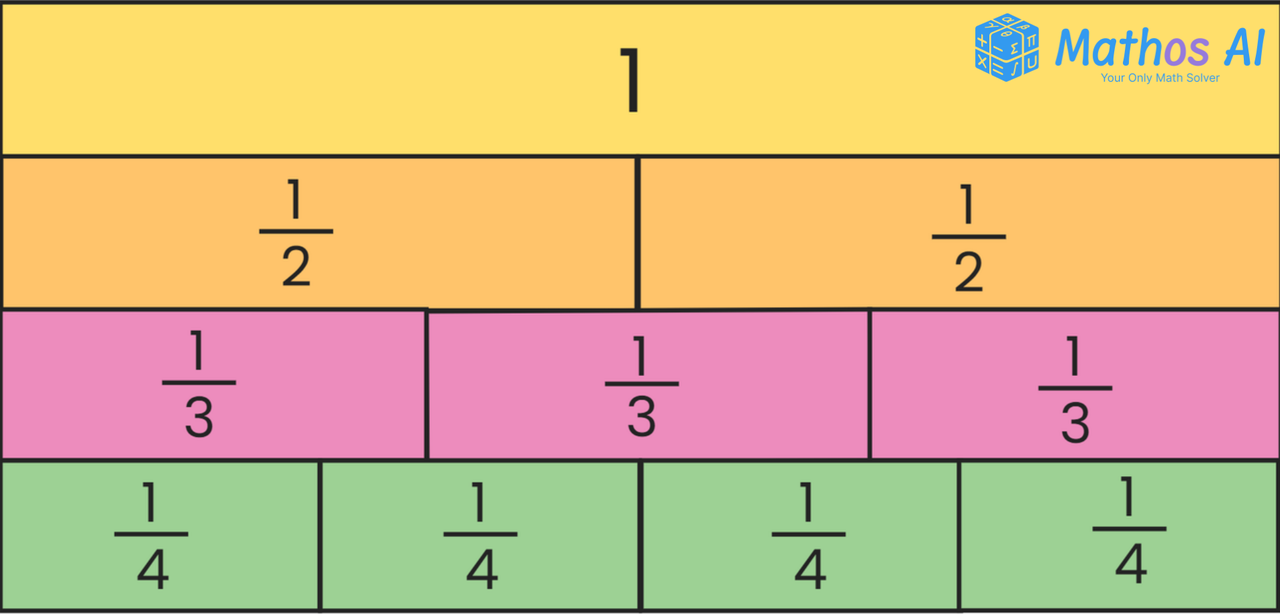
The mechanical act of adding 1/4 and 1/8 involves finding a common denominator, in this case, 8. This transforms 1/4 into 2/8, making the sum 2/8 + 1/8 = 3/8. But why is this process so vital in finance? The “why” lies in the need for comparison and aggregation on a level playing field. Imagine you’re comparing two investment opportunities: one promises a return of 1/4 of your initial capital, while another offers 1/8. To truly understand the combined impact or the relative value, you must normalize these figures. You wouldn’t just add “a quarter” to “an eighth” without understanding their relationship to the same total.
In finance, this principle extends to evaluating different income streams, comparing various expense categories, or understanding the distribution of assets. Without the ability to convert these disparate “fractions” into comparable units, financial analysis becomes muddled, leading to inaccurate conclusions and suboptimal decisions. It’s about establishing a universal benchmark for evaluation, ensuring that every financial piece is accurately measured against the same whole.
Visualizing Financial Proportions
The beauty of fractions, particularly simple ones like 1/4 and 1/8, is their inherent visual clarity. A quarter represents a slice that is twice as large as an eighth. This visual intuition is incredibly powerful in finance. Consider a personal budget: a pie chart often illustrates how different portions of your income are allocated. If 1/4 of your income goes to housing and 1/8 goes to transportation, you can immediately visualize that housing consumes twice as much as transportation.
This visualization extends to more complex scenarios:
-
Business Equity: If you own 1/4 of a startup, and your co-founder owns 1/8, you intuitively understand your larger stake and, consequently, your greater share of potential profits or losses.
-
Investment Portfolio Diversification: Allocating 1/4 of your portfolio to growth stocks, 1/8 to bonds, and another 1/8 to real estate gives you a clear mental picture of your risk exposure and diversification strategy.
-
Debt Repayment: Understanding that 1/4 of your loan payment goes to interest and 1/8 to principal allows you to visualize the slow crawl towards debt freedom.
By converting abstract numbers into relatable proportions, fractions empower individuals and businesses to make more informed decisions, fostering a deeper understanding of their financial situation.
Practical Applications in Personal Finance and Budgeting
The principles of “1/4 plus 1/8” find their most direct and impactful application in personal finance, forming the bedrock of effective budgeting, savings, and debt management strategies.
Budgeting by Fraction: A Simplified Approach
While many budgets rely on percentages, fractional budgeting offers an equally powerful, often more intuitive, framework for allocating income. The classic 50/30/20 rule, for instance, can be easily translated into fractions: 1/2 for needs, 3/10 for wants, and 1/5 for savings/debt. But for those just starting or preferring simpler divisions, fractions like 1/4 and 1/8 can be incredibly effective.
Imagine taking your monthly take-home pay and consciously deciding:
-
1/4 (25%) for housing (rent/mortgage)
-
1/4 (25%) for essential living expenses (groceries, utilities)
-
1/8 (12.5%) for transportation
-
1/8 (12.5%) for debt repayment
-
1/8 (12.5%) for savings
-
The remaining 1/8 (12.5%) for discretionary spending and entertainment.
This fractional breakdown immediately makes your budget tangible and actionable. It simplifies the mental arithmetic and reinforces the idea that every dollar has a designated role. Furthermore, it allows for easy adjustments: if you want to increase savings, you might aim to reduce your “discretionary 1/8” to “1/16,” adding the difference to your savings fraction.
Tracking Expenses and Allocating Savings
Beyond initial budget setting, fractional thinking aids in ongoing financial monitoring. When reviewing your spending, you can quickly categorize where portions of your income are going. Did 1/4 of your last paycheck disappear into impulse purchases? Or did you manage to set aside a full 1/8 for your emergency fund this month? This approach fosters accountability and helps identify areas for improvement.
For savings goals, fractions provide a clear pathway. If you know you need a certain amount for a down payment, you can calculate what fraction of your income needs to be saved each month to reach that goal within a specific timeframe. For example, consistently putting aside 1/8 of every paycheck might seem small, but over time, these fractional contributions compound into substantial savings, embodying the principle of incremental progress towards significant financial milestones.
Debt Reduction Strategies
Fractions are equally critical in understanding and attacking debt. When you make a loan payment, only a fraction of it goes towards reducing the principal, especially in the early stages of a loan (like a mortgage) where a larger fraction is allocated to interest. Understanding this dynamic—for instance, realizing that 1/4 of your payment covers interest while only 1/8 reduces the actual debt—can be a powerful motivator to make extra payments.
If you have multiple debts, you can apply a fractional strategy to accelerate repayment. For example, dedicating 1/4 of your available extra funds to the highest-interest debt and 1/8 to another, smaller debt. This targeted approach, guided by fractional allocation, optimizes your debt reduction efforts, saving you money on interest in the long run and speeding up your journey to financial freedom.
Fractional Insights in Investing and Business Finance
The elegance of fractional thinking extends profoundly into the realms of investing and business finance, offering a clear framework for portfolio management, profit distribution, and equity understanding.
Decoding Investment Portfolios
A well-diversified investment portfolio is fundamentally a collection of fractions. Each asset class, sector, or individual investment represents a portion of the total portfolio value. Understanding “1/4 plus 1/8” here means consciously allocating your capital to mitigate risk and optimize returns. You might decide to put 1/4 of your investment capital into stable, blue-chip stocks, 1/8 into emerging market funds, and another 1/8 into real estate investment trusts (REITs).
This fractional allocation allows investors to visualize their exposure to different market segments. If one asset class underperforms, say the 1/8 allocated to a specific sector, its impact on the overall 3/8 represented by other assets is manageable. Rebalancing a portfolio also relies on fractional adjustments: if your stocks grow to represent more than their initial 1/4, you might sell a portion to bring it back to that fraction, reallocating the proceeds to an underrepresented 1/8 in another asset class. This disciplined approach ensures your portfolio remains aligned with your risk tolerance and financial goals.
Calculating Returns and Profit Shares
Fractions are indispensable for calculating investment returns and distributing profits in business. If an investment increases by 1/4 of its initial value, you immediately understand the magnitude of your gain. Similarly, if a business generates a certain profit, and you are entitled to 1/8 of that profit, the calculation is straightforward and transparent.
Consider a scenario where a startup achieved a 1/4 growth in revenue this quarter, and their profit margins improved by an additional 1/8. These fractional indicators provide critical insights into a company’s performance, enabling investors to make informed decisions and business owners to assess their strategies. For private businesses with multiple owners, profit-sharing agreements are almost always defined by fractions or percentages derived from them, ensuring fair and agreed-upon distribution.
Business Ownership and Equity Distribution
In the entrepreneurial world, fractions dictate ownership and control. When starting a company with partners, the distribution of equity is often a fractional negotiation. One partner might receive 1/2 for their capital contribution, another 1/4 for their intellectual property, and a third 1/8 for their operational expertise. The remaining 1/8 might be reserved for future employees or strategic partners.
Understanding these fractional stakes is crucial because it directly translates to decision-making power, voting rights, and, ultimately, the share of future profits or sale proceeds. Knowing that owning 1/4 gives you a significant voice, while 1/8 might grant less direct control but still a valuable financial stake, shapes collaboration and legal agreements. This foundational understanding prevents disputes and aligns expectations among stakeholders, paving the way for successful ventures.
The Power of Compound Interest and Fractional Growth
The seemingly small sums represented by fractions like 1/4 and 1/8 gain immense power when combined with the principle of compound interest, illustrating how consistent, incremental growth leads to exponential financial accumulation.
Small Fractions, Big Returns
Compound interest is often called the eighth wonder of the world, and its magic is best understood through fractional growth over time. Even if your investment portfolio yields a modest 1/8 (12.5%) annual return, the impact over decades is transformative. That 1/8 return isn’t just applied to your initial principal; it’s applied to the principal plus all the accumulated 1/8s from previous years.
This cumulative effect demonstrates that even small, consistent fractional gains, when given enough time, can turn modest savings into significant wealth. It underscores the importance of starting early and maintaining disciplined investment habits, allowing even a 1/8 contribution from each paycheck to blossom into a substantial financial buffer or retirement fund. The power isn’t in the size of the initial fraction, but in its consistent application and compounding effect.
Understanding Financial Leverage and Risk
Fractions also play a vital role in understanding financial leverage and associated risks. Leveraging your investments means using borrowed capital to amplify potential returns. If you invest 1/4 of your own money and borrow the remaining 3/4, a small fractional gain in your investment’s value (say, 1/8) can translate into a much larger fractional return on your own capital, because the gain is applied to the total, larger investment.
However, leverage is a double-edged sword. A fractional loss of 1/8 on the total investment can also lead to a much larger fractional loss of your own equity, potentially wiping out a significant portion, if not all, of your initial 1/4 contribution. Understanding these proportional risks is paramount for investors and businesses contemplating the use of debt to finance growth. It’s about weighing the potential fractional gains against the amplified fractional losses.
The Cost of Waiting: Opportunity Fractions Lost
Perhaps one of the most compelling applications of fractional thinking in finance is understanding the “cost of waiting.” Every day an individual delays investing, they are losing out on a fraction of potential compound growth. The impact of missing even a few years of consistent 1/8 (12.5%) annual returns on a starting investment can be astonishingly large over a 20-30 year horizon.
If you start saving 1/8 of your income at age 25 versus age 35, the difference in accumulated wealth by retirement can be hundreds of thousands, if not millions, of dollars. This lost opportunity, this “fraction” of time not spent compounding, is irreversible. It highlights the urgency of financial planning and the power of consistent, early action, however small the initial fractional contribution may seem.
Beyond the Calculation: Cultivating Financial Literacy and Acumen
While the arithmetic of “1/4 plus 1/8” is simple, its implications for financial literacy and developing robust financial acumen are profound and far-reaching.
From Simple Sums to Strategic Decisions
The journey from understanding how to add fractions to making complex financial decisions is a testament to the power of foundational knowledge. The ability to break down complex financial scenarios into digestible proportions, to compare relative values, and to project incremental growth all stem from this basic understanding. It’s the intuitive leap from knowing that 1/4 is bigger than 1/8, to understanding that a 1/4 share of profits gives you more control than a 1/8 share, or that allocating 1/4 of your income to savings will build wealth faster than 1/8.
This fractional mindset cultivates an analytical approach to money, enabling individuals and business leaders to move beyond reactive spending or investing to proactive, strategic planning. It’s about seeing the interconnectedness of different financial components and making choices that optimize for long-term health and growth.
Empowering Financial Independence
A strong grasp of fundamental financial arithmetic, exemplified by questions like “1/4 plus 1/8,” is a cornerstone of financial independence. It empowers individuals to:
-
Negotiate Better: Understand percentages and fractional discounts, ensuring they get the best deals.
-
Evaluate Opportunities: Quickly assess the proportional returns or risks of various investments or business ventures.
-
Manage Debt Effectively: Comprehend interest rates and principal reduction, accelerating their path to being debt-free.
-
Plan for the Future: Accurately project savings growth, retirement needs, and major purchases.
This foundational knowledge removes the mystique from financial jargon, making money matters accessible and controllable. It instills confidence and reduces anxiety, replacing guesswork with informed decision-making.
Continuous Learning for Financial Mastery
The financial world is constantly evolving, but the basic mathematical principles remain constant. The lesson of “1/4 plus 1/8” serves as a powerful reminder that continuous learning, starting with these fundamental building blocks, is essential for financial mastery. Whether it’s learning about new investment vehicles, understanding complex tax laws, or analyzing economic indicators, the ability to break down information into proportional parts and assess their combined impact is invaluable.
Embracing this spirit of continuous education, grounded in basic arithmetic, ensures that individuals and businesses can adapt to changing financial landscapes, make resilient decisions, and consistently strive towards greater financial well-being.
In conclusion, while the query “what is 1/4 plus 1/8?” yields a simple mathematical answer, its true value lies in its profound implications for financial literacy. It is a potent reminder that mastering personal finance, making savvy investments, and building successful businesses hinge on a clear understanding of proportions, allocations, and incremental growth. These fractions, far from being mere academic exercises, are the bedrock upon which sound financial decisions are built, enabling individuals to navigate the complex world of money with confidence, insight, and strategic acumen.
aViewFromTheCave is a participant in the Amazon Services LLC Associates Program, an affiliate advertising program designed to provide a means for sites to earn advertising fees by advertising and linking to Amazon.com. Amazon, the Amazon logo, AmazonSupply, and the AmazonSupply logo are trademarks of Amazon.com, Inc. or its affiliates. As an Amazon Associate we earn affiliate commissions from qualifying purchases.