
Fraction division, a cornerstone of elementary mathematics, often presents a conceptual hurdle for learners. Yet, in an increasingly digital world, the “how” of dividing fractions has evolved dramatically, moving beyond pencil-and-paper methods to embrace sophisticated technological solutions. From interactive educational apps to powerful symbolic computation engines, technology has not only streamlined the process of performing fraction division but also enhanced our understanding, accessibility, and application of this vital mathematical skill. This article delves into how various technological advancements facilitate, teach, and execute the division of fractions, offering insights into efficiency, accuracy, and the future of mathematical computation.
The Core Concept Revisited: Fraction Division Fundamentals
Before exploring the technological landscape, it’s essential to briefly revisit the foundational principles of fraction division. Understanding the underlying mathematical logic provides context for appreciating how technology abstracts and automates these processes.
Understanding the ‘Why’ Behind the ‘How’
At its heart, dividing fractions answers the question: “How many times does one fraction fit into another?” For instance, dividing 1/2 by 1/4 asks how many 1/4s are in 1/2. Conceptually, it implies measuring one quantity using another as the unit. This inverse relationship with multiplication is critical, as it forms the basis for the most common procedural method. While abstract for many, grasping this conceptual framework is crucial for truly understanding the results, whether derived manually or through an app.
The Traditional Method: Reciprocal Multiplication
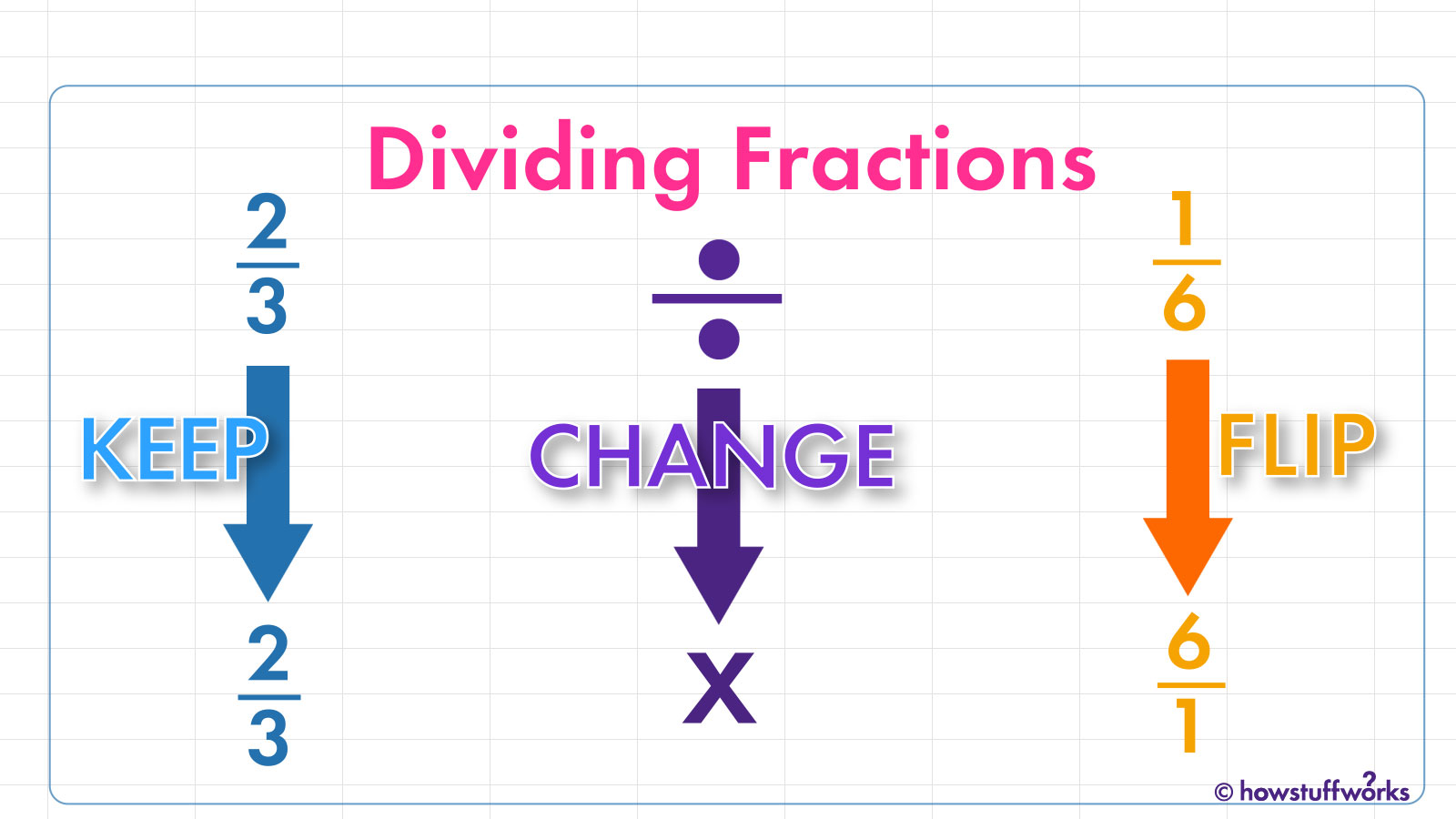
The standard manual procedure for dividing fractions involves the “invert and multiply” rule: keep the first fraction as it is, change the division sign to multiplication, and flip (find the reciprocal of) the second fraction. For example, (a/b) ÷ (c/d) becomes (a/b) × (d/c). This elegant rule simplifies the operation to a more straightforward multiplication of two fractions. This traditional algorithm serves as the baseline against which technological efficiency and pedagogical innovation are often measured, highlighting how software either replicates this process or offers alternative visual and interactive pathways to the same outcome.
Leveraging Software and Applications for Fraction Division
The most direct way technology impacts fraction division is through the myriad of software and applications designed for mathematical computation and learning. These tools democratize access to mathematical proficiency and enhance problem-solving capabilities.
Educational Software and Interactive Learning Platforms
Dedicated educational software and online learning platforms have revolutionized how fraction division is taught and learned. Platforms like Khan Academy, Prodigy Math, or custom-built educational apps utilize interactive exercises, animated explanations, and step-by-step tutorials to break down the concept. They often feature virtual manipulatives, such as fraction bars or circles, allowing users to visually grasp the idea of dividing parts of a whole. These tools provide immediate feedback, identify common misconceptions, and adapt to individual learning paces, transforming a potentially abstract concept into an engaging and accessible experience. They move beyond rote memorization by illustrating the ‘why’ alongside the ‘how,’ making the learning process more intuitive and effective.
Calculator Apps and Online Tools
For immediate calculation, calculator apps on smartphones, tablets, and desktops, as well as specialized online fraction calculators, are indispensable. These tools perform fraction division with astounding speed and accuracy, eliminating human error. Users simply input the fractions, and the app instantly provides the simplified answer, often showing the steps taken. While immensely convenient for quick checks or complex problems, their primary benefit lies in their utility rather than their pedagogical value. They serve professionals and students who need reliable results without manually working through the inverse and multiply steps. Their accessibility means that fraction division is now just a few taps away, making it a routine task rather than a laborious calculation.
Spreadsheet Programs for Complex Fractional Calculations
Beyond simple standalone calculations, spreadsheet programs like Microsoft Excel, Google Sheets, or LibreOffice Calc offer robust capabilities for handling fractions, particularly in scenarios involving large datasets or recurring calculations. While not inherently designed for educational purposes, their ability to perform calculations on cells formatted as fractions makes them invaluable in fields such as engineering, finance, or scientific research where precise fractional values are common. For instance, a financial analyst might use fractions to represent stock splits or proportional allocations of assets, leveraging spreadsheet functions to divide these values across various scenarios. This utility extends fraction division into practical, real-world applications, showcasing its importance in complex data management and analytical tasks.
AI and Advanced Computing in Mastering Fractions
The frontier of technological assistance in mathematics extends to artificial intelligence and advanced computing, offering highly personalized and powerful tools for fraction division.

AI Tutors and Adaptive Learning Systems
AI-driven tutors represent the next evolution in personalized learning. These systems, utilizing machine learning algorithms, can analyze a student’s performance on fraction division problems, pinpoint areas of weakness, and tailor instructional content and practice problems accordingly. They can interpret natural language inputs, allowing students to ask questions as they would a human tutor, and provide explanations that adapt to their specific knowledge gaps. Some AI tutors can even predict where a student might make an error before it occurs, offering proactive guidance. This adaptive nature ensures that the learning experience for fraction division is highly efficient and uniquely suited to each individual, moving beyond one-size-fits-all approaches.
Symbolic Computation Engines and Mathematical Software (e.g., Wolfram Alpha, MATLAB)
For those operating at higher academic or professional levels, symbolic computation engines and sophisticated mathematical software packages like Wolfram Alpha, MATLAB, or Mathematica go far beyond simple arithmetic. These tools can not only perform fraction division but also simplify complex fractional expressions, solve equations involving fractions, analyze their properties, and even provide detailed, step-by-step solutions with explanations. They can handle variables, functions, and intricate algebraic manipulations alongside numerical fractions. For researchers, engineers, and advanced students, these platforms are indispensable for validating calculations, exploring mathematical concepts, and developing algorithms that might implicitly or explicitly involve fraction division as a fundamental operation. They embody the pinnacle of computational power applied to mathematical problems.
The Digital Security of Mathematical Operations
In an era where calculations are increasingly entrusted to digital platforms, the integrity and security of these mathematical operations become paramount. This is especially true for foundational concepts like fraction division, which underpin more complex calculations in critical systems.
Ensuring Accuracy and Data Integrity
The reliability of software that performs fraction division is crucial. Developers employ rigorous testing methodologies, including unit tests, integration tests, and extensive validation against known correct answers, to ensure mathematical engines are robust and error-free. In financial software, scientific simulations, or engineering design tools, an inaccurate fraction division could have catastrophic real-world consequences. Therefore, cryptographic hashing and checksums might be used to verify the integrity of calculation inputs and outputs in highly sensitive applications, safeguarding against accidental data corruption or malicious tampering that could alter computational results. The ‘how you divide fractions’ through technology is implicitly tied to the assurance that the division is performed correctly every single time.
Privacy and Educational Data
Educational apps and platforms that track student progress on fraction division problems often collect significant amounts of personal data. This includes performance metrics, time spent on tasks, common errors, and learning patterns. Ensuring the privacy and security of this sensitive educational data is critical. Compliance with regulations like GDPR or COPPA, robust data encryption, secure storage protocols, and transparent data usage policies are essential to protect students’ information. The insights derived from this data can personalize learning, but they must be managed responsibly to prevent unauthorized access or misuse, ensuring that technological assistance for fraction division remains a beneficial and trustworthy tool.
Future Trends: The Evolution of Fraction Division in a Digital World
The trajectory of technology suggests even more innovative ways we will interact with and understand fraction division in the future.
Augmented Reality (AR) and Virtual Reality (VR) for Immersive Learning
Imagine learning fraction division by manipulating virtual fraction blocks in a 3D AR environment projected onto your kitchen table, or stepping into a VR world where fractions are physical objects you can split and combine. AR and VR promise to make abstract mathematical concepts incredibly concrete and immersive. These technologies could provide intuitive, hands-on experiences that transcend the limitations of 2D screens, allowing learners to literally “see” and “feel” what fraction division means, fostering deeper comprehension and engagement. This tactile and visual learning could particularly benefit kinesthetic and visual learners, revolutionizing early math education.
Seamless Integration with Everyday Devices
As technology becomes more ubiquitous, fraction division functionality could be seamlessly integrated into an even wider array of everyday devices. Voice assistants like Alexa or Google Assistant might be able to perform complex fractional calculations on demand. Smart boards in classrooms could instantly convert spoken math problems into interactive visual representations. IoT devices in kitchens could help scale recipes involving fractions. This pervasive integration would embed mathematical problem-solving into daily life, making the process of “how you divide fractions” an almost invisible, yet always available, utility, empowering individuals with instant computational power wherever they are.

Conclusion
The journey of “how you divide fractions” has transformed from a fundamental manual procedure into a multifaceted technological endeavor. From foundational calculator apps that offer efficiency and accuracy to sophisticated AI tutors providing personalized learning paths, and robust software handling complex fractional data, technology has fundamentally reshaped our interaction with this mathematical concept. While these tools undeniably streamline calculation and enhance accessibility, they also underscore the enduring importance of conceptual understanding. As we look ahead, emerging technologies like AR/VR and ubiquitous computing promise even more innovative and immersive ways to engage with fractions, further integrating mathematical proficiency into the fabric of our digital lives. Ultimately, technology empowers us not just to divide fractions, but to understand, apply, and master them with unprecedented ease and insight.
aViewFromTheCave is a participant in the Amazon Services LLC Associates Program, an affiliate advertising program designed to provide a means for sites to earn advertising fees by advertising and linking to Amazon.com. Amazon, the Amazon logo, AmazonSupply, and the AmazonSupply logo are trademarks of Amazon.com, Inc. or its affiliates. As an Amazon Associate we earn affiliate commissions from qualifying purchases.