
In an increasingly data-driven and automated world, the ability to understand, interpret, and solve expressions is no longer confined to the classroom; it’s a fundamental skill for navigating the digital landscape. From simple arithmetic equations to complex logical conditions embedded in software, expressions are the language of computation. This article delves into how modern technology empowers us to efficiently and accurately solve various forms of expressions, transforming daunting challenges into manageable tasks through sophisticated tools and methodologies. We’ll explore the underlying principles, essential software, and emerging AI capabilities that redefine our approach to problem-solving.
The Ubiquity of Expressions in the Digital Age
Expressions form the bedrock of almost every technological interaction, often hidden beneath user-friendly interfaces but ever-present in their functionality. Understanding their pervasive nature is the first step towards mastering their resolution.
From Basic Arithmetic to Complex Algorithms
At its simplest, an expression can be 2 + 3, yielding 5. But this fundamental concept scales exponentially in complexity. In computer science, an expression might involve variables, functions, operators, and data structures, dictating how a program processes information. For instance, (x * y) / (z - 5) is an algebraic expression that becomes a computational instruction within a program. Complex algorithms, from sorting arrays to simulating physical phenomena, are essentially elaborate sequences of expressions evaluated in a specific order. Each step of an algorithm, be it a conditional check (IF A > B THEN...) or a data transformation (SUM(column_data)), relies on the evaluation of an expression. The digital age thrives on these evaluations, driving everything from financial models to scientific research and even the graphics on our screens.
The Role of Expressions in Programming and Data Science
For programmers, expressions are the building blocks of logic and computation. Every line of code that calculates a value, compares two items, or assigns data utilizes expressions. Variables hold values, and operators combine or modify them to form new expressions. Debugging often involves tracing the evaluation of expressions to pinpoint errors. In data science, expressions are critical for data manipulation, analysis, and modeling. Data scientists routinely write expressions to filter datasets (WHERE sales > 1000), transform features (LOG(income)), create new metrics, or define conditions for machine learning models. SQL queries, Python scripts using libraries like Pandas or NumPy, and R scripts are replete with expressions that articulate data relationships and analytical operations. Without a clear understanding of how these expressions are formed and evaluated, effective programming and data analysis would be impossible. They are the grammar through which we instruct computers to make sense of information.
Essential Software Tools for Expression Solving
The market offers a rich ecosystem of software designed to tackle expressions of varying complexity, each catering to different needs and skill levels. Leveraging these tools effectively can dramatically enhance productivity and accuracy.
Spreadsheets: The Everyday Calculator
For many, a spreadsheet program like Microsoft Excel, Google Sheets, or LibreOffice Calc is the first and most accessible tool for solving expressions. These applications excel at numerical computation, data organization, and visualization. Users can enter algebraic expressions directly into cells, reference other cells as variables, and quickly perform calculations across vast datasets. Features like autofill, conditional formatting, and built-in functions (e.g., SUM, AVERAGE, IF, VLOOKUP) transform a basic grid into a powerful analytical engine. Spreadsheets are ideal for budgeting, financial modeling, simple data analysis, and any scenario where numerical expressions need to be solved interactively. Their intuitive interface lowers the barrier to entry, making complex calculations achievable for a broad audience without requiring programming knowledge.
Symbolic Math Software: Beyond Numerical Solutions
When expressions go beyond simple arithmetic to involve variables, functions, and the need for symbolic manipulation, dedicated symbolic math software becomes indispensable. Tools like Wolfram Alpha, MATLAB (with Symbolic Math Toolbox), Maple, and SymPy (a Python library) can perform operations such as differentiation, integration, solving equations algebraically, simplifying complex expressions, and working with matrices symbolically. Instead of just returning a numerical answer, they provide a symbolic result, preserving variables and functions. This capability is crucial for advanced mathematics, engineering, physics, and any field requiring theoretical analysis or derivation of formulas. These platforms can tackle problems that are intractable by hand, offering insights into the structure and properties of expressions rather than just their numerical outcomes.
Integrated Development Environments (IDEs) and Programming Languages
For developers and data scientists, Integrated Development Environments (IDEs) combined with programming languages like Python, Java, C++, or JavaScript are the ultimate toolkit for solving expressions. IDEs such as VS Code, PyCharm, or Eclipse provide a comprehensive environment for writing, testing, and debugging code that incorporates complex expressions. Programming languages offer a vast array of operators, data types, and control structures to construct and evaluate any conceivable expression. Python, in particular, with its clear syntax and extensive libraries (e.g., NumPy for numerical operations, SciPy for scientific computing, Pandas for data manipulation), has become a go-to for solving complex data and mathematical expressions programmatically. This approach offers unparalleled flexibility, scalability, and automation, allowing users to define custom logic, process large datasets, and integrate expression solving into larger applications and systems.
Leveraging AI and Machine Learning for Expression Evaluation
The advent of Artificial Intelligence and Machine Learning has introduced new paradigms for solving expressions, moving beyond explicit programming to predictive and adaptive capabilities.
AI-Powered Calculators and Solvers
Modern AI-powered calculators and online solvers represent a significant leap from traditional tools. Platforms like PhotoMath or Microsoft Math Solver use computer vision and natural language processing to interpret handwritten or typed expressions, ranging from basic algebra to calculus, and then provide step-by-step solutions. This not only solves the expression but also acts as a powerful learning aid, demonstrating the methodology. Beyond direct mathematical problems, AI is increasingly used in more abstract “expression solving,” such as evaluating logical conditions in expert systems, processing natural language queries, or determining the optimal path in complex graphs. These tools democratize access to advanced problem-solving techniques, making complex mathematical and logical expressions accessible to a wider audience.

Predictive Models and Data Expressions
Machine learning models are inherently sophisticated expression solvers. During the training phase, these models learn intricate expressions (functions) that map input features to output predictions. A linear regression model, for example, learns a linear expression like y = mx + b. More complex models like neural networks learn highly non-linear, multi-dimensional expressions through layers of interconnected “neurons,” each performing a simple weighted sum and activation function. When presented with new data, the model “solves” these learned expressions to generate a prediction or classification. This approach is fundamental to forecasting stock prices, diagnosing diseases from medical images, recommending products, or detecting anomalies. Here, “solving expressions” isn’t about finding a single numerical answer but about discovering and applying a predictive relationship encoded as a complex, learned function.
Understanding AI’s Algorithmic Approach
At its core, AI’s ability to “solve expressions” stems from its algorithmic foundation. Whether it’s a search algorithm finding the shortest path in a graph (evaluating path length expressions), a neural network minimizing a loss function (solving a complex optimization expression), or a reinforcement learning agent calculating expected rewards (evaluating utility expressions), AI operates by systematically evaluating and manipulating expressions. Large Language Models (LLMs), for instance, generate human-like text by predicting the next word based on a complex probabilistic expression derived from vast amounts of training data. Understanding this algorithmic approach reveals that AI doesn’t magically “think” but rather efficiently evaluates complex, multi-layered expressions to achieve its objectives, pushing the boundaries of what’s computationally solvable.
Best Practices for Efficient Expression Solving
Regardless of the tool or the complexity of the expression, adopting best practices can significantly improve the efficiency, accuracy, and reliability of your solutions.
Structuring Your Problem for Computational Efficiency
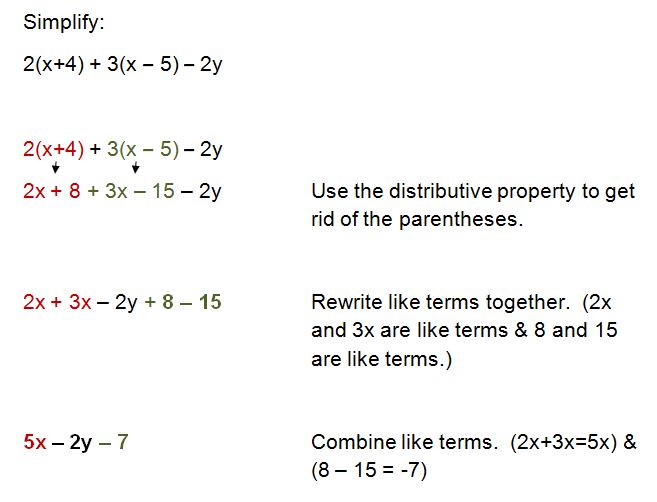
Before diving into solving, take time to structure the problem effectively. Break down complex expressions into smaller, manageable sub-expressions. For programming, this means using functions or methods to encapsulate parts of the logic. In spreadsheets, it involves organizing data logically and using intermediate cells for complex calculations. Simplify expressions algebraically where possible before feeding them into computational tools, as this can reduce processing time and potential for numerical instability. Understanding the order of operations (PEMDAS/BODMAS) is crucial, as is recognizing opportunities to parallelize computations or use optimized data structures. A well-structured problem is half-solved, making the computational phase smoother and more efficient.
Debugging and Error Handling
Even with the most sophisticated tools, errors are inevitable. Developing robust debugging and error-handling skills is paramount. Learn to interpret error messages from your software (e.g., syntax errors in code, #DIV/0! in spreadsheets, domain errors in symbolic solvers). Use debugging tools in IDEs to step through code execution, inspect variable values, and trace expression evaluations. Implement error handling mechanisms (like try-except blocks in Python) to gracefully manage unexpected inputs or computational issues, preventing crashes and providing informative feedback. For complex numerical expressions, validate intermediate results and cross-check with simpler cases or known values to build confidence in the solution’s accuracy. Proactive debugging and comprehensive error handling are hallmarks of a professional approach to expression solving.
The Importance of Documentation and Collaboration
Solving expressions, especially in a professional context, is rarely a solitary endeavor. Documenting your methodology, assumptions, and the expressions used is crucial for reproducibility, maintainability, and collaboration. For code, this means clear comments, meaningful variable names, and comprehensive README files. In spreadsheets, use cell comments, descriptive labels, and separate tabs for different components. If using symbolic math software, save your notebooks or scripts with explanations. Good documentation allows others (and your future self) to understand the logic, verify the solution, and extend the work. Furthermore, fostering collaboration through version control systems (like Git for code) or shared cloud documents for spreadsheets ensures that multiple stakeholders can contribute, review, and iterate on solutions effectively, enhancing collective problem-solving capabilities.
Future Trends in Expression Solving Technology
The evolution of technology continues to push the boundaries of what expressions we can solve, how we solve them, and the implications for various fields.
Quantum Computing’s Potential
Quantum computing, still in its nascent stages, promises a revolutionary leap in expression solving capabilities for certain types of problems. Unlike classical computers that process bits as 0s or 1s, quantum computers leverage qubits that can exist in superposition (both 0 and 1 simultaneously) and entanglement. This allows them to explore vast computational spaces in parallel, potentially solving expressions that are intractable for even the most powerful classical supercomputers. Examples include factoring large numbers, optimizing complex logistical problems, and simulating molecular structures – all of which rely on evaluating and solving highly complex mathematical expressions. While practical quantum computers are still some years away, their potential to fundamentally alter our approach to solving previously unresolvable expressions is immense.
Enhanced Human-AI Collaboration
The future of expression solving will likely involve even deeper collaboration between humans and AI. Instead of AI merely providing answers, we’ll see more sophisticated interfaces where AI assists in problem formulation, suggests optimal solution strategies, helps debug complex logic, and even explains the reasoning behind its own expression evaluations. Tools leveraging AI will become more adept at interpreting natural language instructions, translating abstract ideas into executable expressions, and offering proactive insights. This synergy will empower individuals to tackle more ambitious problems, offloading the tedious aspects of expression evaluation to AI while retaining human oversight and creative problem-solving. This collaboration will be key to unlocking solutions to global challenges that require both computational power and human ingenuity.
Low-Code/No-Code Solutions for Complex Logic
Another significant trend is the rise of low-code and no-code platforms, which aim to democratize expression solving for users without extensive programming backgrounds. These platforms allow individuals to build sophisticated applications and automate workflows using visual interfaces, drag-and-drop components, and pre-built templates, effectively abstracting away the underlying code and complex expressions. For example, a business analyst could build an application to calculate complex financial metrics or automate data processing tasks without writing a single line of Python or SQL. As these platforms mature, they will enable more users to create and solve complex logical and data expressions, fostering innovation across a broader spectrum of industries and empowering citizen developers to leverage technology more effectively.
Solving expressions is a skill that bridges theoretical knowledge with practical application in the digital realm. From the basic spreadsheet formula to the intricate algorithms of AI, technology continually refines and expands our capacity to derive meaning and solutions from complex data and logic. By embracing the right tools, adhering to best practices, and staying abreast of emerging trends, we can navigate the challenges of the digital age with confidence and precision, turning complex expressions into clear, actionable insights.
aViewFromTheCave is a participant in the Amazon Services LLC Associates Program, an affiliate advertising program designed to provide a means for sites to earn advertising fees by advertising and linking to Amazon.com. Amazon, the Amazon logo, AmazonSupply, and the AmazonSupply logo are trademarks of Amazon.com, Inc. or its affiliates. As an Amazon Associate we earn affiliate commissions from qualifying purchases.