
Understanding the true value of money across different time periods requires delving beyond a mere face-value conversion. Five dollars in 1960 held a significantly different purchasing power and economic weight than its equivalent today. This exploration isn’t just a historical curiosity; it’s a fundamental lesson in personal finance, inflation, and the evolution of our economic landscape.
The Tangible Value of a 1960 Dollar
To truly grasp what $5 could buy in 1960, we must consider the purchasing power relative to the goods and services available at the time. The dollar of the early 1960s possessed a robust purchasing power, reflective of a different economic era with lower average incomes but also considerably lower costs for everyday necessities.
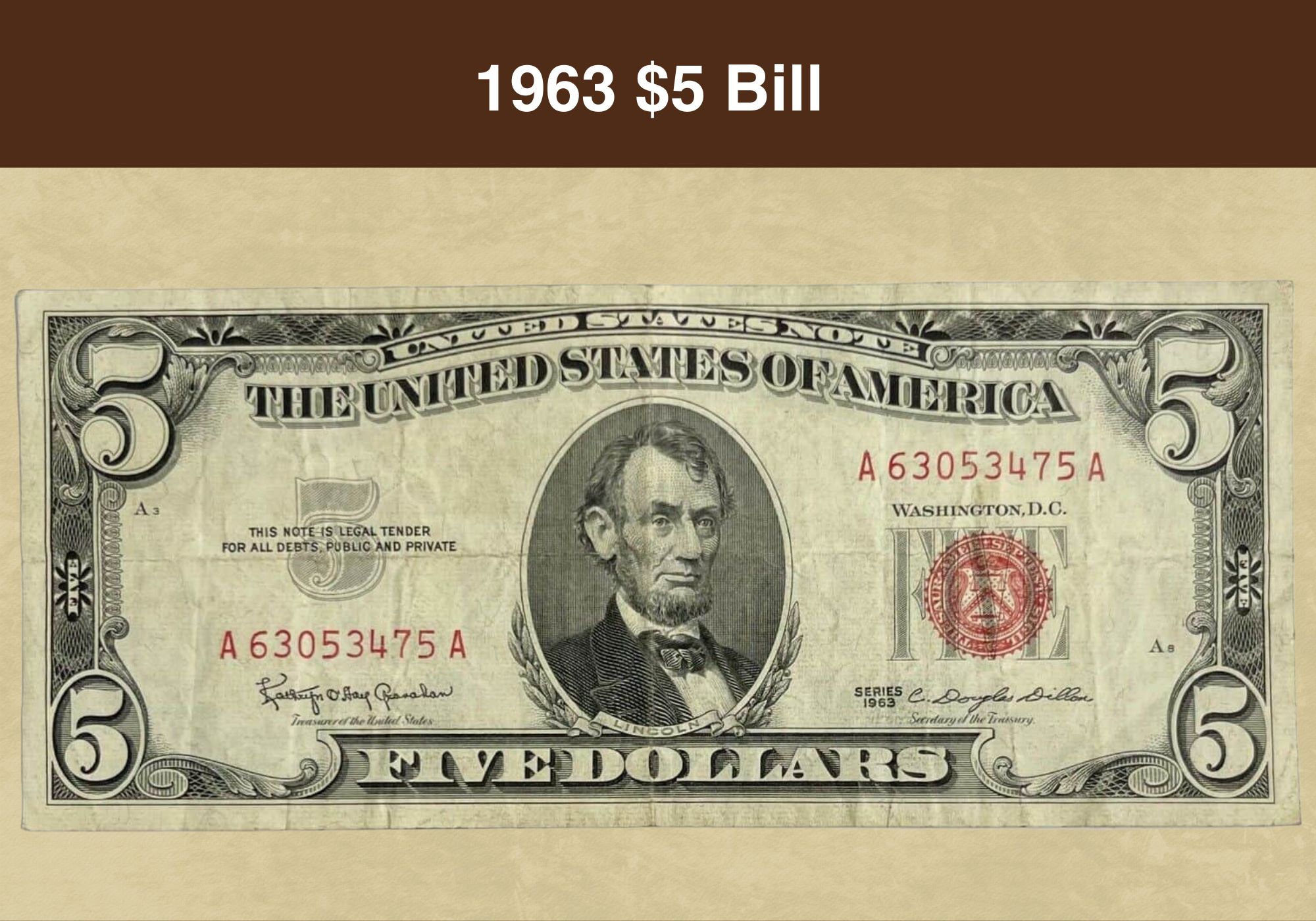
The Purchasing Power Index: Measuring Inflation’s Erosion
Inflation is the silent wealth destroyer, steadily eroding the purchasing power of money over time. The primary tool for measuring this change is the Consumer Price Index (CPI), which tracks the average change over time in the prices paid by urban consumers for a market basket of consumer goods and services. A dollar’s worth in 1960 can be starkly contrasted with its equivalent value today by applying inflation adjustments.
Using the CPI, we can calculate that $5 in 1960 would require approximately $52.50 to $55.00 today to command the same purchasing power, depending on the specific inflation calculator and end year used (e.g., 2023 or 2024). This means that a mere five-dollar bill in 1960 represented a substantial chunk of change, capable of covering expenses that would seem incredibly cheap by modern standards.
Everyday Expenditures Then vs. Now
To visualize this, let’s consider what that $5 bill could purchase in 1960:
-
Groceries: A gallon of milk cost around $1.00, a loaf of bread was about $0.20, and a dozen eggs could be bought for roughly $0.55. With $5, you could easily stock up on basic staples for a few days, perhaps even purchasing a whole chicken (around $0.30 per pound) and several pounds of fresh produce.
-
Gasoline: The average price for a gallon of gas hovered around $0.31. Your $5 could fill a significant portion of a car’s tank, giving you approximately 16 gallons of fuel. For many cars of that era, this was more than a full tank, enabling considerable travel.
-
Entertainment: A movie ticket typically cost less than $1.00, often around $0.75. For $5, you could treat a small family to a matinee or enjoy several solo screenings. A popular magazine might cost $0.35, and a paperback book around $0.50.
-
Dining Out: A diner meal, perhaps a hamburger, fries, and a soda, could be had for less than $1.50. A more upscale dinner might cost $3-4 per person. That $5 could comfortably cover a hearty lunch for two or a decent dinner for one.
-
Miscellaneous: A pack of cigarettes cost around $0.25, a stamp was $0.04, and a haircut for a man might be $1.50. You could buy multiple items from these categories with your $5.
Comparatively, these prices highlight the dramatic shift in living costs and illustrate the robust purchasing power of 1960’s $5.
Economic Landscape of the Early 1960s
The economic environment of 1960 was distinct, shaped by the post-World War II boom and a burgeoning industrial society. This context is crucial for understanding why $5 held such significant value.
A Different Economic Era
The United States in 1960 was largely a manufacturing-driven economy. There was a strong sense of economic stability following the post-war recovery, characterized by steady growth and relatively low inflation. The cost of living was significantly lower across the board, from housing to education, making it easier for a single income to support a family. Homeownership was more attainable, and consumer debt, while present, was not as pervasive or as easily acquired as it is today. The average American household prioritized savings, and conspicuous consumption had not yet reached its modern levels.
Government spending and fiscal policies were also different, often focused on infrastructure and social programs that benefited a broad spectrum of the population. The global economic landscape was less interconnected, and supply chains were simpler, contributing to more predictable pricing for many goods.
Average Incomes and Wage Realities
While $5 could buy a lot, it’s also important to remember the average income levels of the time. In 1960, the median household income in the United States was approximately $5,620 per year, or roughly $108 per week. For many workers, a $5 bill represented a substantial portion of their daily earnings. For instance, if an hourly wage was $1.50 (a decent wage for many non-skilled jobs), $5 represented more than three hours of work.
This relationship between wages and prices further underscores the value of the 1960 dollar. A small sum like $5 wasn’t just pocket change; it was often enough to make a meaningful dent in a household’s weekly expenses or afford a significant personal treat. This contrast highlights how financial planning and budgeting strategies would have differed considerably from today’s challenges.
Understanding Inflation: More Than Just Numbers
Inflation is not merely an abstract economic concept; it’s a tangible force that shapes our financial reality. Its impact is most clearly seen when comparing money’s value across generations.
The Mechanics of Inflation
At its core, inflation is the rate at which the general level of prices for goods and services is rising, and subsequently, the purchasing power of currency is falling. Several factors contribute to inflation:
-
Demand-Pull Inflation: Occurs when aggregate demand in an economy outpaces aggregate supply, leading to upward pressure on prices. This can be fueled by increased consumer spending, government expenditure, or export growth.
-
Cost-Push Inflation: Arises when the cost of producing goods and services increases, such as higher wages, raw material costs, or energy prices. Businesses pass these increased costs onto consumers in the form of higher prices.
-
Monetary Inflation: When there is an excessive growth in the money supply relative to the production of goods and services, the value of each unit of currency decreases, leading to higher prices.
The Federal Reserve, as the central bank of the United States, plays a critical role in managing inflation through monetary policy, primarily by adjusting interest rates and controlling the money supply. While some inflation is considered healthy for a growing economy (typically around 2-3% annually), high or unpredictable inflation can destabilize financial markets and significantly erode savings.
Calculating the Equivalent Value: A Financial Lens
To accurately calculate the equivalent value of $5 in 1960 to today’s dollars, financial analysts and economists use the CPI. The formula is straightforward:
Current Value = Original Value × (CPI in Current Year / CPI in Original Year)
For example, if the CPI in 1960 was approximately 29.5 and the average CPI for 2023 was around 304, then:
$5 times (304 / 29.5) approx $5 times 10.30 approx $51.50$
This simple calculation reveals the dramatic loss in purchasing power. A $5 bill held under a mattress since 1960 would now buy a fraction of what it once did. This principle is fundamental for investors, retirees, and anyone planning their financial future, as it underscores the importance of investments that outpace inflation.
Investment and Financial Decisions Across Time
The erosion of purchasing power due to inflation has profound implications for how individuals manage their money and make long-term financial decisions.
The Opportunity Cost of Holding Cash
One of the most significant lessons from comparing money’s value over time is the opportunity cost of holding cash. While having an emergency fund is crucial, keeping substantial sums of money in low-interest savings accounts or, worse, literally under a mattress, guarantees a loss of real value over time. In an inflationary environment, the purchasing power of static cash diminishes annually.
In 1960, while inflation was lower, the principle still applied. Prudent individuals understood the need to invest their money to grow it, even if the options and accessibility were different from today. Investments in stocks, bonds, or real estate were avenues to preserve and enhance wealth. A $5 bill invested wisely in 1960, even in a diversified portfolio, would have grown substantially, far outpacing the simple inflation adjustment and turning into hundreds or even thousands of dollars in today’s terms.
Long-Term Financial Planning Lessons from 1960
The stark contrast between $5 in 1960 and its modern equivalent offers invaluable lessons for long-term financial planning:
-
Combatting Inflation is Key: Any financial plan, particularly for retirement or large future expenditures, must account for inflation. Strategies like investing in growth assets (stocks), real estate, or inflation-protected securities are crucial.
-
The Power of Compounding: Early and consistent investment allows the magic of compounding to work over decades, significantly outpacing inflation and building substantial wealth. The earlier one starts, the less the impact of inflation on future goals.
-
Diversification is Essential: Just as economic conditions evolve, so do investment opportunities and risks. A diversified portfolio across different asset classes helps mitigate risk and adapt to changing market environments.
-
Financial Education is Timeless: Understanding concepts like purchasing power, inflation, and compounding is as vital today as it was in 1960. These foundational principles enable informed financial decisions, regardless of technological advancements or economic shifts.
Beyond the Dollars: Lifestyle and Expectations
The numerical difference in purchasing power also reflects deeper shifts in lifestyle, consumer behavior, and societal expectations over the past six decades.
A Simpler Consumer Landscape
In 1960, consumer choices were generally simpler and less abundant. There were fewer brands, fewer product categories, and less globalized supply chains. Advertising, while present, was not as pervasive or sophisticated as it is today. This simpler landscape meant that “keeping up with the Joneses” might have involved fewer aspirational purchases. The focus was often on durability and necessity rather than constant upgrades and trend-driven consumption.
The societal emphasis on saving, avoiding debt, and living within one’s means was more pronounced. The “American Dream” often revolved around a stable job, homeownership, and providing for one’s family, often without the immense financial pressures of modern housing costs, healthcare, and education.

The Modern Perspective on Money Management
Today, money management is far more complex. We face a wider array of investment vehicles, digital financial tools, and online income opportunities, but also unprecedented levels of consumer debt, rapidly rising costs for essential services, and a globalized economy that introduces new volatilities.
Understanding how much $5 was worth in 1960 helps contextualize our current financial realities. It underscores the challenges of maintaining living standards in an inflationary world and reinforces the need for robust personal finance strategies, including vigilant budgeting, strategic investing, and continuous financial education. The past serves as a powerful reminder that while the nominal value of currency may remain constant, its real economic power is perpetually in motion, demanding proactive and informed management.
aViewFromTheCave is a participant in the Amazon Services LLC Associates Program, an affiliate advertising program designed to provide a means for sites to earn advertising fees by advertising and linking to Amazon.com. Amazon, the Amazon logo, AmazonSupply, and the AmazonSupply logo are trademarks of Amazon.com, Inc. or its affiliates. As an Amazon Associate we earn affiliate commissions from qualifying purchases.