
For millions of Americans, Social Security represents a cornerstone of their financial security, particularly in retirement. It’s a promise of support, built over a lifetime of contributions, that provides a safety net during your golden years, in the event of disability, or for your surviving family members. Yet, despite its profound importance, many individuals remain uncertain about the exact nature and amount of their personal Social Security benefits. This lack of clarity can lead to anxiety and hinder effective financial planning for the future.
Understanding “how much Social Security do I have” isn’t just about curiosity; it’s a critical component of building a comprehensive retirement strategy. Your Social Security benefit will likely be a significant income stream, but for most, it’s not designed to be your sole source of income. Knowing your estimated benefit allows you to project your retirement income, assess potential shortfalls, and adjust your savings and investment strategies accordingly. This article will demystify the process of calculating your Social Security benefits, guide you on how to access this vital information, and explore the various factors that influence your ultimate payout. By the end, you’ll have a clearer picture of your Social Security future and the tools to plan effectively.
The Foundation of Your Social Security Benefit Calculation
The Social Security Administration (SSA) employs a complex yet transparent formula to determine your benefits. This formula is primarily based on your lifetime earnings, aiming to provide a fair reflection of your contributions to the system. Understanding its core components is the first step toward estimating your future income.
Earning Credits: The Gateway to Eligibility
Before you can receive any Social Security benefits, you must be “insured” by the system. This means you need to have accumulated a certain number of Social Security “credits” through your work history. Each year, you can earn up to four credits. In 2024, you earn one credit for every $1,730 in wages or self-employment income, up to the maximum of four credits for earning $6,920 or more. The vast majority of people need 40 credits to be eligible for retirement benefits, which typically translates to 10 years of work. It’s important to note that these credits don’t need to be earned consecutively. They simply accumulate over your working life. For disability or survivor benefits, the number of required credits can be fewer, depending on your age at the time of the event. Ensuring your earnings are correctly reported is paramount, as errors can impact your eligibility and the eventual size of your benefit. Regularly checking your earnings record, as we’ll discuss later, is a proactive measure to safeguard your future.
Average Indexed Monthly Earnings (AIME): The Key Metric
Your actual benefit amount is primarily derived from your Average Indexed Monthly Earnings (AIME). This isn’t just a simple average of all your earnings. The SSA takes your highest 35 years of indexed earnings into account. “Indexing” adjusts your past earnings to reflect changes in general wage levels in the economy. This process ensures that your past contributions are brought up to current value, preventing inflation from eroding the real value of your earlier earnings. If you have fewer than 35 years of earnings, the missing years are counted as zero, which can significantly reduce your AIME. This underscores the financial incentive to work for at least 35 years, or even longer, if it means replacing a low-earning year with a higher one. The calculation involves summing your 35 highest indexed annual earnings and then dividing by the number of months in those 35 years (420 months) to arrive at your AIME. This figure is critical because it directly feeds into the calculation of your Primary Insurance Amount.
Primary Insurance Amount (PIA): Your Benefit Baseline
Once your AIME is determined, the SSA applies a formula to calculate your Primary Insurance Amount (PIA). The PIA is the monthly benefit you would receive if you claim Social Security at your Full Retirement Age (FRA). The PIA formula is progressive, meaning it replaces a higher percentage of earnings for lower-income workers than for higher-income workers. This is achieved through a “bend point” system, where different percentages (e.g., 90%, 32%, and 15%) are applied to different segments of your AIME. For instance, a high percentage of your first segment of AIME is replaced, a smaller percentage for the next segment, and an even smaller percentage for the highest segment. This progressive structure is fundamental to Social Security’s role as a social safety net, providing a more substantial income replacement ratio for those with lower lifetime earnings, ensuring a basic level of support. Your PIA is the benchmark from which all other benefit adjustments, such as those for claiming early or late, are made.
Accessing and Understanding Your Social Security Statement
The best way to answer “how much Social Security do I have” is to review your official Social Security Statement. This personalized document is a goldmine of information, providing a comprehensive overview of your earnings history and estimated future benefits.
Why Your Annual Statement is Critical
Your Social Security Statement is far more than just a piece of mail; it’s a vital financial planning tool. It summarizes your credited earnings year by year, allowing you to verify that all your income has been accurately reported to the SSA. Errors in your earnings record, even minor ones, can have a substantial impact on your eventual benefit amount. Missing or incorrect earnings could reduce your AIME and consequently your PIA. Furthermore, the statement provides personalized estimates of your future benefits at different claiming ages (e.g., age 62, Full Retirement Age, and age 70) for retirement, as well as potential disability and survivor benefits. Reviewing this document annually allows you to track your progress towards eligibility, assess your benefit growth, and spot any discrepancies that need correction while you still have time to address them. Think of it as your annual financial health check-up for Social Security.
How to Access Your Statement Online
In today’s digital age, accessing your Social Security Statement is easier than ever. While the SSA still mails statements to individuals approaching retirement age, anyone can get instant access online. The process is straightforward:
-
Visit the Official Website: Go to www.ssa.gov.
-
Create an Account: Click on “my Social Security” and follow the prompts to create a personal account. You’ll need to provide some personal information, such as your name, date of birth, Social Security number, and a valid mailing address. The SSA uses a rigorous identity verification process to protect your information.
-
Log In and View: Once your account is set up and verified, you can log in at any time to view, download, or print your latest Social Security Statement.
Having an online account offers immediate access to your earnings history, benefit estimates, and allows you to manage other aspects of your Social Security record. It’s an indispensable tool for proactive financial planning.
Deciphering the Key Sections of Your Statement
Your Social Security Statement is packed with important details. Here’s a breakdown of the key sections to focus on:
-
Your Estimated Benefits: This is often the first thing people look for. It provides estimates of your monthly retirement benefits at various ages (early retirement at 62, full retirement age, and delayed retirement at 70), as well as estimates for disability benefits and survivor benefits for your family. These estimates are based on your earnings history and projections of your future earnings.
-
Your Earnings Record: This section lists your earnings year by year as reported to the SSA. Carefully review this section for accuracy. Compare it to your W-2s or tax returns. If you find any errors, contact the SSA immediately to correct them. Correcting errors sooner rather than later can prevent significant headaches down the road.
-
Social Security & Medicare Taxes Paid: This section shows the total amount you and your employers (or you, if self-employed) have contributed to Social Security and Medicare over your career. While it doesn’t directly affect your benefit amount, it provides a sense of your contributions to the system.
-
Information About Social Security: This section offers general facts about how Social Security works, including eligibility requirements and how benefits are calculated. It serves as a valuable educational resource within your personalized statement.
Factors That Influence Your Actual Payouts
While your PIA serves as a baseline, several critical factors can significantly alter the amount of your actual monthly Social Security check. Strategic choices around these factors can have a profound impact on your retirement income.
The Impact of Your Claiming Age
Perhaps the most impactful decision affecting your Social Security benefit is when you choose to start receiving it.
-
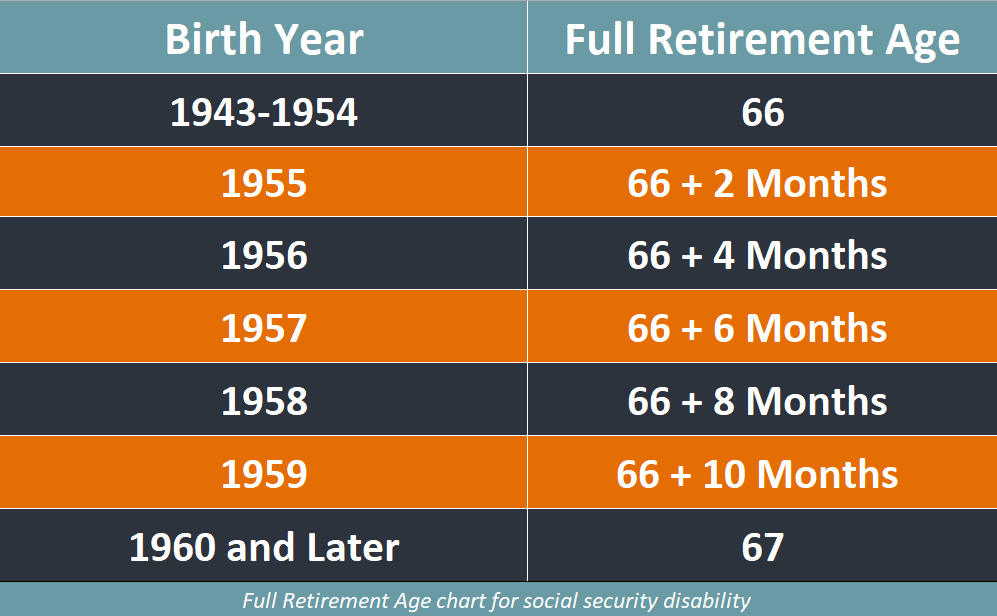
Full Retirement Age (FRA): This is the age at which you are entitled to 100% of your PIA. FRA varies based on your birth year, ranging from 66 for those born between 1943 and 1954, gradually increasing to 67 for those born in 1960 or later.
-
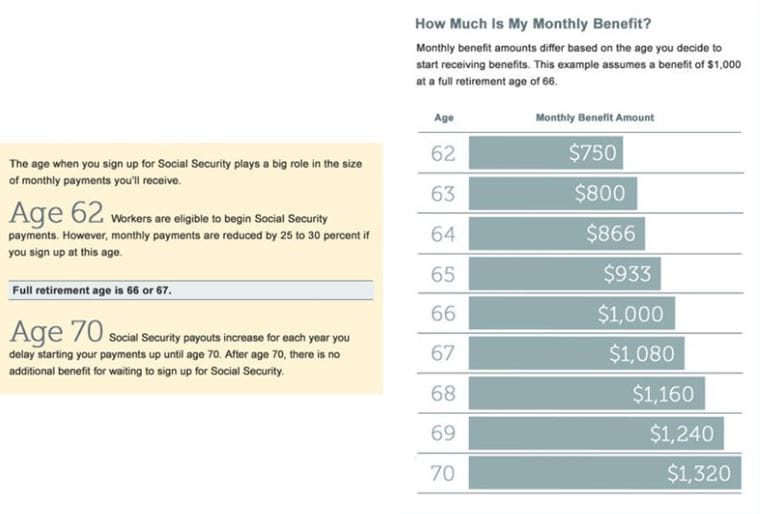
Claiming Early: You can start receiving benefits as early as age 62. However, for each month you claim before your FRA, your benefit is permanently reduced. For example, if your FRA is 67, claiming at 62 could result in a permanent reduction of up to 30%. While this provides income sooner, it comes at the cost of a smaller monthly check for the rest of your life.
-
Delaying Benefits: Conversely, for each month you delay claiming benefits past your FRA, up to age 70, you earn delayed retirement credits. These credits permanently increase your monthly benefit. The increase is generally 8% per year (or two-thirds of 1% per month) for those born in 1943 or later. Delaying until age 70 can result in a benefit that is 24% to 32% higher than your FRA benefit, a powerful incentive for those who can afford to wait. The decision to claim early, at FRA, or to delay should be carefully weighed against your health, financial needs, other retirement resources, and life expectancy.
Cost-of-Living Adjustments (COLAs)
Once you start receiving Social Security benefits, your monthly payment isn’t static. To help beneficiaries maintain their purchasing power in the face of inflation, the SSA provides annual Cost-of-Living Adjustments (COLAs). These adjustments are based on the Consumer Price Index for Urban Wage Earners and Clerical Workers (CPI-W). If the CPI-W increases from the third quarter of one year to the third quarter of the next, benefits are generally increased by the same percentage. COLAs are announced in October each year and take effect in December, impacting checks received in January of the following year. While not always enough to fully offset rising costs, COLAs are a crucial mechanism for protecting the long-term value of your Social Security income.
Taxation of Social Security Benefits
It’s a common misconception that Social Security benefits are entirely tax-free. In reality, a portion of your benefits may be subject to federal income tax, depending on your “provisional income.” Provisional income includes your adjusted gross income (AGI), tax-exempt interest income (like from municipal bonds), and half of your Social Security benefits.
-
If your provisional income is between $25,000 and $34,000 for an individual, or between $32,000 and $44,000 for those filing jointly, up to 50% of your benefits may be taxable.
-
If your provisional income exceeds these upper thresholds ($34,000 for individuals, $44,000 for joint filers), up to 85% of your benefits may be taxable.
A handful of states also tax Social Security benefits. Understanding these thresholds is important for managing your overall tax liability in retirement and for planning distributions from other retirement accounts.
Working While Receiving Benefits
If you decide to claim Social Security benefits before your Full Retirement Age and continue to work, your benefits may be temporarily reduced if your earnings exceed certain limits. This is known as the “earnings test.”
-
If you are under your FRA for the entire year, the SSA will deduct $1 from your benefits for every $2 you earn above the annual limit (e.g., $22,320 in 2024).
-
In the year you reach your FRA, the deduction rate is less severe: $1 for every $3 earned above a higher limit (e.g., $59,520 in 2024), but only for earnings before the month you reach FRA.
-
Once you reach your FRA, there are no limits on your earnings, and your benefits will not be reduced regardless of how much you earn. Importantly, any benefits withheld due to the earnings test are not lost permanently; your future benefits will be recalculated at your FRA to account for the withheld amounts, effectively increasing your monthly payment. This helps recover some of the initial reductions.
Beyond Retirement: Other Social Security Benefits
Social Security isn’t solely about retirement income. It also provides crucial financial protection in other life circumstances, extending its reach beyond just the primary worker.
Spousal and Survivor Benefits
Social Security offers significant benefits for families. If you are married, divorced, or widowed, you may be eligible for benefits based on your spouse’s or former spouse’s earnings record.
-
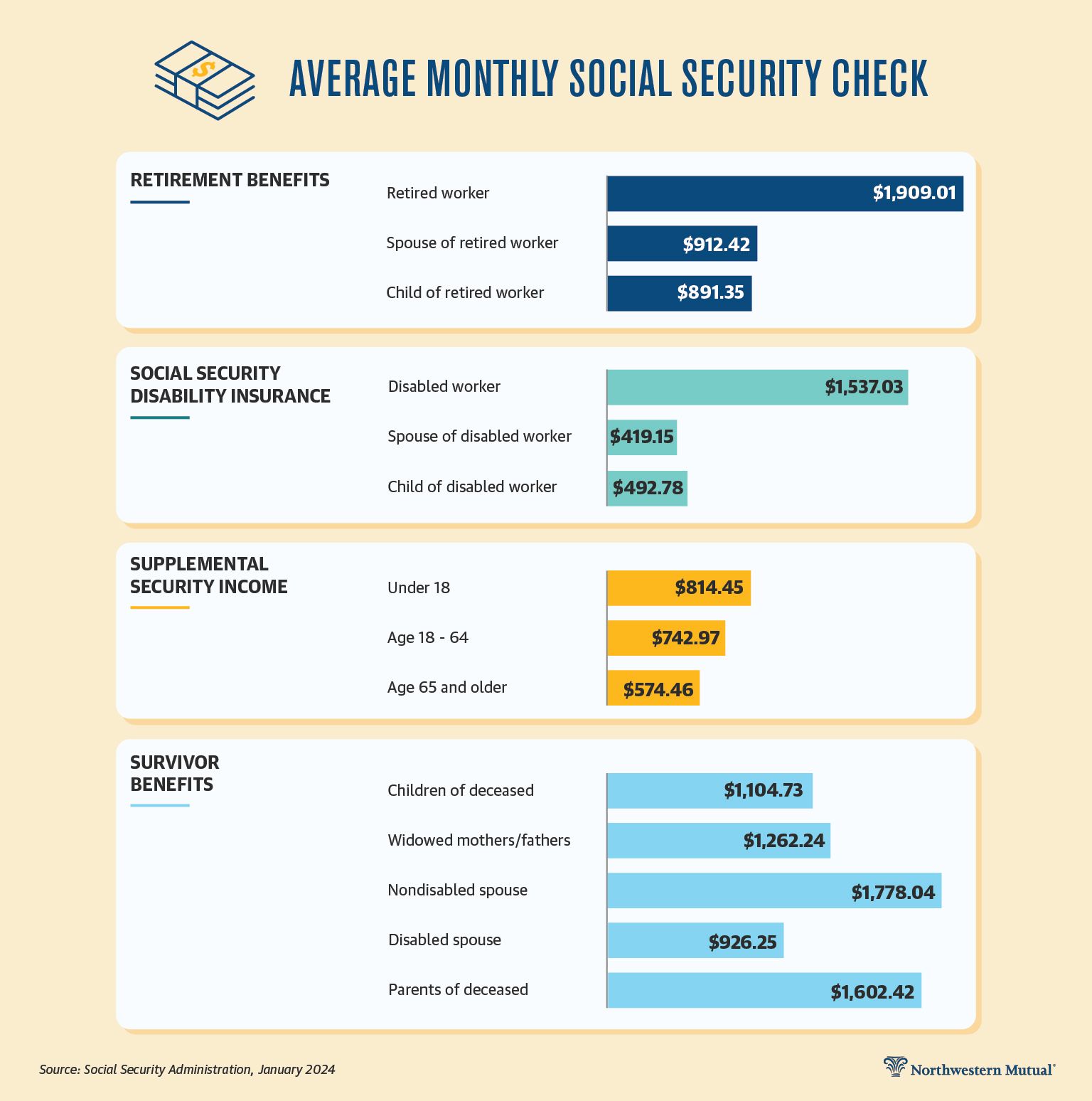
Spousal Benefits: If your spouse claims their retirement benefits, you may be eligible to receive up to 50% of their PIA, provided it’s more than your own benefit based on your work record. This can be particularly beneficial if one spouse has a significantly higher earnings history or if one spouse had limited earnings.
-
Survivor Benefits: After a covered worker dies, their surviving spouse, minor children, or even dependent parents may be eligible for survivor benefits. A surviving spouse can receive up to 100% of the deceased worker’s benefit, depending on their age and whether they are caring for the worker’s child. These benefits are a vital safety net for families facing the loss of a primary wage earner.
Disability Benefits
If you become severely disabled and are unable to work, Social Security Disability Insurance (SSDI) can provide a critical source of income. To qualify, you must have worked long enough and recently enough to be “insured” under Social Security. The SSA has a very strict definition of disability: you must be unable to engage in any substantial gainful activity due to a medical condition that has lasted or is expected to last for at least 12 months or result in death. The application process can be lengthy and complex, often requiring significant medical documentation. Your disability benefit amount is based on your average lifetime earnings, similar to how retirement benefits are calculated, but tailored to your work history up to the point of disability.
Benefits for Children and Dependents
In certain circumstances, a worker’s dependent children can also receive Social Security benefits. This can occur if the worker is receiving retirement or disability benefits, or if the worker passes away. Eligible children typically include unmarried minor children (under 18, or under 19 if still in high school), or children over 18 who were disabled before age 22. These benefits provide additional financial support to families during periods of retirement, disability, or loss, further highlighting Social Security’s comprehensive role as a family protection program.
Strategic Planning for Your Social Security Future
Understanding your Social Security benefits is just the beginning. The real power comes from integrating this knowledge into a broader, proactive financial strategy to maximize your retirement security.
Maximizing Your Benefit Potential
There are several proactive steps you can take to potentially increase your Social Security payout:
-
Work Longer: As discussed, your highest 35 years of earnings are used. If you have fewer than 35 years, or if your later working years are higher earning than some of your earlier ones, working longer can replace those lower- or zero-earning years, increasing your AIME and thus your PIA.
-
Delay Claiming Benefits: This is often the most significant lever you have. For every year you delay past your FRA, up to age 70, your benefit permanently increases by 8%. This growth rate is essentially a guaranteed, risk-free return on your decision to wait, making it a compelling strategy for those who can afford to.
-
Monitor Your Earnings Record: Regularly check your Social Security Statement for accuracy. Errors can lead to lower benefits, and catching them early makes correction much simpler.
-
Coordinate with Your Spouse: Married couples have additional strategies, such as one spouse delaying benefits to maximize survivor benefits for the other, or strategically coordinating claiming ages to optimize combined household income.
Integrating Social Security with Other Retirement Savings
Social Security is designed to replace only a portion of your pre-retirement income, typically around 40% for the average earner. It’s crucial to integrate your estimated Social Security benefits into your overall retirement planning.
-
Assess the Gap: Once you know your estimated Social Security income, compare it to your projected retirement expenses. The difference is the “income gap” that your other savings and investments (401(k)s, IRAs, pensions, personal investments) will need to cover.
-
Adjust Savings Goals: If your estimated Social Security benefits are lower than you anticipated, or if your expenses are higher, you may need to increase your contributions to other retirement accounts or adjust your investment strategy to reach your goals.
-
Consider Tax Implications: Factor in the potential taxation of Social Security benefits when planning withdrawals from taxable versus tax-advantaged accounts in retirement.
Seeking Professional Financial Advice
Navigating the complexities of Social Security, especially when integrating it with other retirement assets and tax planning, can be challenging. A qualified financial advisor can provide invaluable assistance:
-
Personalized Analysis: They can help you create a detailed projection of your income and expenses in retirement, incorporating your specific Social Security benefit estimates.
-
Optimal Claiming Strategy: An advisor can analyze various claiming scenarios for you and your spouse, considering factors like health, longevity expectations, and other income sources, to recommend the optimal claiming strategy.
-
Holistic Plan: They can help you integrate Social Security into a comprehensive financial plan that includes your investments, insurance, estate planning, and tax strategies, ensuring all elements work in harmony towards your retirement goals.
Conclusion
Understanding “how much Social Security do I have” is a fundamental step towards securing your financial future. It’s not a static number, but rather a dynamic estimate influenced by your lifetime earnings, claiming age, and various other factors. By proactively accessing and reviewing your Social Security Statement, understanding the underlying calculation methods, and making informed decisions about when and how you claim your benefits, you can significantly impact your retirement income.
Social Security is a vital component of retirement security for millions, but it’s crucial to view it as part of a larger financial picture. Integrate this knowledge with your personal savings, investments, and professional advice to build a robust and resilient retirement plan. The power to shape your Social Security future lies in your hands – start by getting informed today.
aViewFromTheCave is a participant in the Amazon Services LLC Associates Program, an affiliate advertising program designed to provide a means for sites to earn advertising fees by advertising and linking to Amazon.com. Amazon, the Amazon logo, AmazonSupply, and the AmazonSupply logo are trademarks of Amazon.com, Inc. or its affiliates. As an Amazon Associate we earn affiliate commissions from qualifying purchases.