
Understanding the potential payout from Social Security is a cornerstone of retirement planning for millions. Far from a one-size-fits-all figure, your Social Security benefit is a highly personalized calculation, influenced by decades of your work history, earnings, and the age at which you choose to claim benefits. Navigating the intricacies of this vital program requires a clear understanding of its mechanics, the factors that shape your monthly check, and the strategies available to maximize your entitlement.
Understanding the Foundation: How Social Security Works
At its core, Social Security operates as a pay-as-you-go system, primarily funded by payroll taxes. Current workers and their employers contribute a portion of their earnings to the system, which then pays out benefits to current retirees, survivors, and disabled individuals. While this model can seem complex, the calculation of your individual benefit is surprisingly systematic.

Contribution Requirements: Earning Your Credits
To qualify for retirement benefits, you must accumulate “credits” through your earnings. In 2024, you earn one credit for every $1,730 in wages or self-employment income, up to a maximum of four credits per year. Most individuals need 40 credits, equivalent to 10 years of work, to become eligible for retirement benefits. These credits do not have to be consecutive, allowing for career breaks or part-time work over a lifetime. It’s crucial to ensure your earnings are correctly reported to the Social Security Administration (SSA) throughout your working life, as these form the basis of your future benefits.
The Calculation Basis: Average Indexed Monthly Earnings (AIME)
Your Social Security benefit isn’t based on your total lifetime earnings, but rather on your Average Indexed Monthly Earnings (AIME). The SSA calculates your AIME by taking your 35 highest-earning years, indexing those earnings to account for changes in average wages over time, and then dividing the total by the number of months in those 35 years. If you have fewer than 35 years of earnings, the missing years are counted as zero, which can significantly reduce your AIME and, consequently, your benefit. This indexing process is critical because it adjusts your past earnings to reflect current wage levels, ensuring that benefits keep pace with economic changes over decades.
Full Retirement Age (FRA): Your Key Milestone
A pivotal concept in determining your benefit amount is your Full Retirement Age (FRA). This is the age at which you are entitled to receive 100% of your Primary Insurance Amount (PIA), which is the benefit calculated from your AIME. Your FRA depends on your birth year:
-
Born 1943-1954: FRA is 66
-
Born 1955: FRA is 66 and 2 months
-
Born 1956: FRA is 66 and 4 months
-
Born 1957: FRA is 66 and 6 months
-
Born 1958: FRA is 66 and 8 months
-
Born 1959: FRA is 66 and 10 months
-
Born 1960 or later: FRA is 67
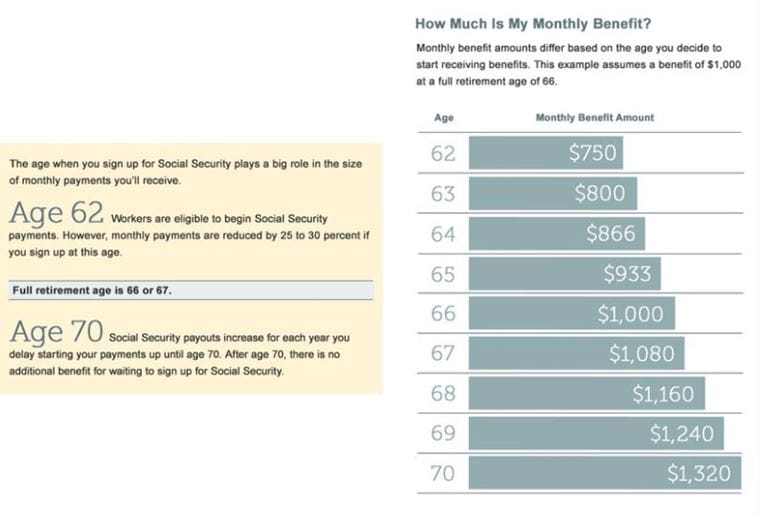
Claiming benefits before your FRA results in a permanent reduction of your monthly payment, while delaying beyond your FRA can lead to a significant increase.
Factors Influencing Your Benefit Amount
Beyond the foundational calculations, several dynamic factors can profoundly impact the size of your Social Security check. Understanding these variables is key to estimating your potential income.
Your Earnings History: The Higher, The Better
As established with AIME, your earnings history is the most direct determinant of your benefit. The higher your indexed earnings during your 35 highest-earning years, the greater your AIME will be. This translates directly into a higher Primary Insurance Amount (PIA) and, thus, a larger monthly benefit. Conversely, periods of low earnings or no earnings during those 35 years can significantly reduce your average and your eventual payout. This highlights the importance of consistent employment and robust earnings throughout your career.
Your Claiming Age: Early vs. Delayed Retirement
The age at which you decide to start receiving benefits is arguably the most impactful decision you’ll make regarding Social Security. You can claim benefits as early as age 62, but doing so results in a permanent reduction. This reduction can be as much as 30% if you claim at 62 and your FRA is 67. Conversely, for each year you delay claiming benefits past your FRA, up to age 70, you accrue delayed retirement credits, increasing your monthly payment by 8% per year. This means someone with an FRA of 67 who delays claiming until 70 could receive 124% of their PIA each month. The difference between claiming at 62 and 70 can be substantial, often representing thousands of dollars annually.
Cost-of-Living Adjustments (COLAs): Keeping Pace with Inflation
Social Security benefits are not stagnant. Each year, the SSA typically announces a Cost-of-Living Adjustment (COLA) based on inflation. These adjustments are designed to help your benefits maintain their purchasing power as the cost of living increases. While not guaranteed to occur every year, COLAs are a crucial feature that helps protect retirees from inflationary erosion, ensuring that the real value of your benefit is preserved over time.
Spousal and Survivor Benefits: Beyond Your Own Record
Social Security also provides benefits to certain family members based on a worker’s earnings record.
-
Spousal Benefits: If you are married, you may be eligible to receive up to 50% of your spouse’s full retirement benefit. This can be particularly beneficial if your own PIA is lower than half of your spouse’s.
-
Survivor Benefits: If your spouse passes away, you may be eligible for survivor benefits, which can be up to 100% of the deceased spouse’s benefit, depending on your age and claiming decisions. There are also provisions for minor children, disabled adult children, and dependent parents.
These auxiliary benefits add another layer of complexity and potential income to the Social Security system, offering a crucial safety net for families.
Estimating Your Social Security Benefits
Knowing the variables is one thing; getting a concrete estimate of your specific benefit is another. Fortunately, the SSA provides several invaluable tools and resources to help you project your future income.
Your Social Security Statement: A Personalized Projection
The most accurate and personalized estimate comes directly from the SSA via your “Social Security Statement.” This statement provides a detailed record of your earnings history as reported to the SSA, estimated benefits at different claiming ages (62, FRA, and 70), and estimates for disability and survivor benefits. You can access your statement by creating a “my Social Security” account online at the SSA website (ssa.gov). Regularly reviewing your statement is critical to ensure your earnings record is accurate and to inform your retirement planning. Any discrepancies should be reported to the SSA promptly.
Online Calculators: Interactive Planning Tools
Beyond your personalized statement, the SSA website offers various online calculators that allow you to model different scenarios. You can input hypothetical future earnings, experiment with different claiming ages, and see how these choices impact your estimated monthly benefit. These interactive tools are excellent for exploring “what-if” scenarios and understanding the financial implications of your claiming decisions. Third-party financial planning websites also offer Social Security calculators, often with more advanced features for integrating benefits into a broader retirement plan.
The “Bend Points” and Progressive Benefit Formula
The calculation of your Primary Insurance Amount (PIA) involves a progressive benefit formula that utilizes “bend points.” This means that lower earners receive a higher percentage of their average indexed monthly earnings back in benefits compared to higher earners. For example, a high percentage (e.g., 90%) of the first “chunk” of your AIME is included, a smaller percentage (e.g., 32%) of the next “chunk” is included, and an even smaller percentage (e.g., 15%) of the highest “chunk” is included. This progressive structure is a core tenet of Social Security, aiming to provide a stronger safety net for lower-income individuals while still rewarding higher lifetime earners. Understanding this progressive nature helps clarify why simply doubling your income doesn’t necessarily double your Social Security benefit.
Strategies to Maximize Your Social Security Payouts
While your past earnings history is set, you still have significant control over how much you ultimately receive from Social Security. Strategic planning can add thousands of dollars to your lifetime benefits.
Working Longer and Earning More
If you are close to retirement and have fewer than 35 years of high earnings, continuing to work can be one of the most effective strategies. Each additional year of work with higher earnings can replace a lower-earning year (or a zero-earning year) in your AIME calculation, thereby increasing your average. Even if you already have 35 high-earning years, continued work at a high salary can still boost your AIME if your current earnings surpass any of the lower-earning years in your top 35. This strategy is particularly powerful for those who took time off for family or experienced periods of lower income early in their careers.
Strategic Claiming Decisions: The Power of Delay
The most impactful decision for most individuals is when to claim benefits. Delaying beyond your Full Retirement Age (FRA) up to age 70 results in a substantial increase due to delayed retirement credits (8% per year). For someone with an FRA of 67, delaying until 70 means a 24% permanent increase in their monthly payment. This boost is often considered one of the best “returns” available on any investment. While it requires foregoing income in the early years of retirement, the long-term benefit, especially for individuals with good health and a long life expectancy, can be immense. Carefully weigh your financial needs, health status, and other retirement income sources before making this critical choice.
Coordinating Benefits with a Spouse
If you are married, coordinating your claiming strategies with your spouse can significantly optimize your combined household Social Security income. For example, one spouse might claim early to provide immediate income while the other delays their claim until age 70 to maximize their benefit, which will also provide a higher survivor benefit if they pass away first. Various claiming strategies exist, such as “file and suspend” (which was largely eliminated for new filers after 2016) or restricted application, but understanding current rules and how they apply to your specific situation is crucial. These strategies require careful planning, often best navigated with professional financial advice.
Understanding Taxation of Benefits
It’s important to remember that a portion of your Social Security benefits may be subject to federal income tax, depending on your “combined income.” Your combined income includes your adjusted gross income, tax-exempt interest, and half of your Social Security benefits.
-
If your combined income is between $25,000 and $34,000 (single) or $32,000 and $44,000 (married filing jointly), up to 50% of your benefits may be taxable.
-
If your combined income exceeds $34,000 (single) or $44,000 (married filing jointly), up to 85% of your benefits may be taxable.
Some states also tax Social Security benefits. Accounting for potential taxes is a critical part of projecting your net retirement income.
Integrating Social Security into Your Retirement Plan
While Social Security is a vital component of retirement security, it is rarely sufficient on its own to maintain your pre-retirement lifestyle.
Social Security as a Pillar, Not the Entire Foundation
For the average worker, Social Security is designed to replace about 40% of pre-retirement earnings. While this is a substantial amount, it means that the majority of your retirement income will likely need to come from other sources. Viewing Social Security as a crucial pillar, rather than the entire foundation, of your retirement plan helps set realistic expectations and encourages proactive saving and investing.
Diversifying Retirement Income Streams
A robust retirement plan typically includes diversified income streams. This might involve a combination of Social Security benefits, employer-sponsored retirement plans (like 401(k)s or 403(b)s), individual retirement accounts (IRAs), personal savings, investments, and potentially part-time work in retirement. Diversification mitigates risk and provides a more stable financial future.

Seeking Professional Financial Advice
The decisions surrounding Social Security can be complex, with long-term financial consequences. Consulting with a qualified financial advisor who specializes in retirement planning can provide invaluable guidance. An advisor can help you understand your specific benefit projections, explore optimal claiming strategies tailored to your unique circumstances and goals, and integrate Social Security into a comprehensive retirement plan that considers all your assets, liabilities, and income needs. This personalized approach can help ensure you make the most informed choices for your financial well-being in retirement.
aViewFromTheCave is a participant in the Amazon Services LLC Associates Program, an affiliate advertising program designed to provide a means for sites to earn advertising fees by advertising and linking to Amazon.com. Amazon, the Amazon logo, AmazonSupply, and the AmazonSupply logo are trademarks of Amazon.com, Inc. or its affiliates. As an Amazon Associate we earn affiliate commissions from qualifying purchases.