
Understanding your potential Social Security retirement benefit is a cornerstone of effective financial planning for your golden years. Far from a simple, fixed sum, the amount you receive from Social Security is a complex calculation influenced by a multitude of factors, primarily your earnings history, the number of years you’ve worked, and critically, the age at which you choose to begin receiving benefits. Demystifying this system is essential for anyone looking to build a robust retirement strategy.
Deconstructing the Social Security Benefit Calculation
At its heart, your Social Security retirement benefit is designed to replace a portion of your pre-retirement income. The Social Security Administration (SSA) uses a specific formula to determine your Primary Insurance Amount (PIA), which is the benefit you’re entitled to if you claim at your Full Retirement Age (FRA). This calculation isn’t arbitrary; it’s a multi-step process that considers your entire working history.
Your Earnings History: The Foundation of Your Benefit
The most significant determinant of your Social Security benefit is your lifetime earnings. The SSA tracks your earnings for every year you’ve worked and paid Social Security taxes. To qualify for benefits, you generally need to have accumulated 40 credits, which typically translates to 10 years of work. For each year, you can earn up to four credits.
When calculating your benefit, the SSA looks at your 35 highest-earning years. If you have fewer than 35 years of earnings, the missing years are counted as zero, which can significantly reduce your average. This emphasizes the importance of a consistent work history and earning good wages throughout your career. High earning years contribute more, but there’s also an annual earnings limit (the “Social Security wage base”) beyond which additional income isn’t taxed for Social Security and doesn’t contribute to higher benefits.
Indexing for Inflation: A Fairer Comparison
To account for wage growth and inflation over decades, the SSA “indexes” your past earnings. This process adjusts your historical earnings to reflect the general increase in wages that has occurred since those years. For instance, an income of $20,000 in 1980 wouldn’t be directly compared to $20,000 in 2020. Indexing brings past earnings to a common, contemporary basis, ensuring that your earliest contributions aren’t undervalued relative to more recent ones. The indexing process applies up to age 60; earnings after that age are counted at their nominal value.
The Average Indexed Monthly Earnings (AIME)
After indexing your highest 35 years of earnings, the SSA sums them up and divides by 420 (the number of months in 35 years) to arrive at your Average Indexed Monthly Earnings (AIME). This AIME is the core figure used to calculate your PIA.
From AIME to Primary Insurance Amount (PIA)
The AIME is then run through a progressive formula to determine your PIA. This formula uses “bend points” that are updated annually. For 2024, for example, the PIA formula is:
-
90% of the first $1,174 of your AIME
-
32% of your AIME over $1,174 up to $7,089
-
15% of your AIME over $7,089
This progressive structure means that lower earners receive a higher percentage of their average indexed earnings back as benefits, reflecting Social Security’s goal of providing a safety net. Higher earners still receive more in absolute terms but a smaller percentage of their pre-retirement income.
The Critical Impact of When You Claim Benefits
While your earnings history sets your PIA, the age at which you choose to begin receiving benefits is arguably the single most impactful decision you make regarding your monthly Social Security check. This choice can lead to significant variations in your final benefit amount.
Full Retirement Age (FRA): Your Baseline
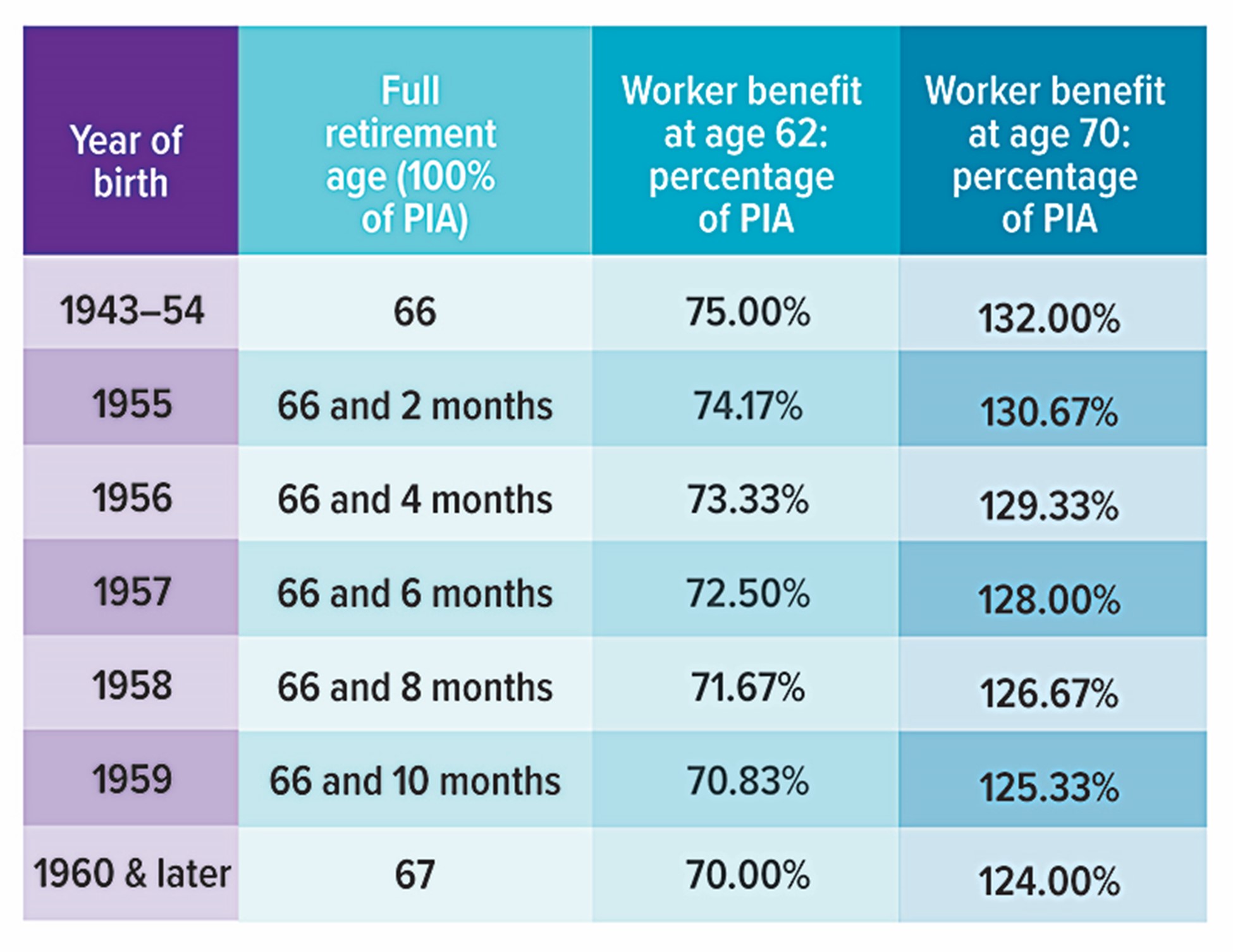
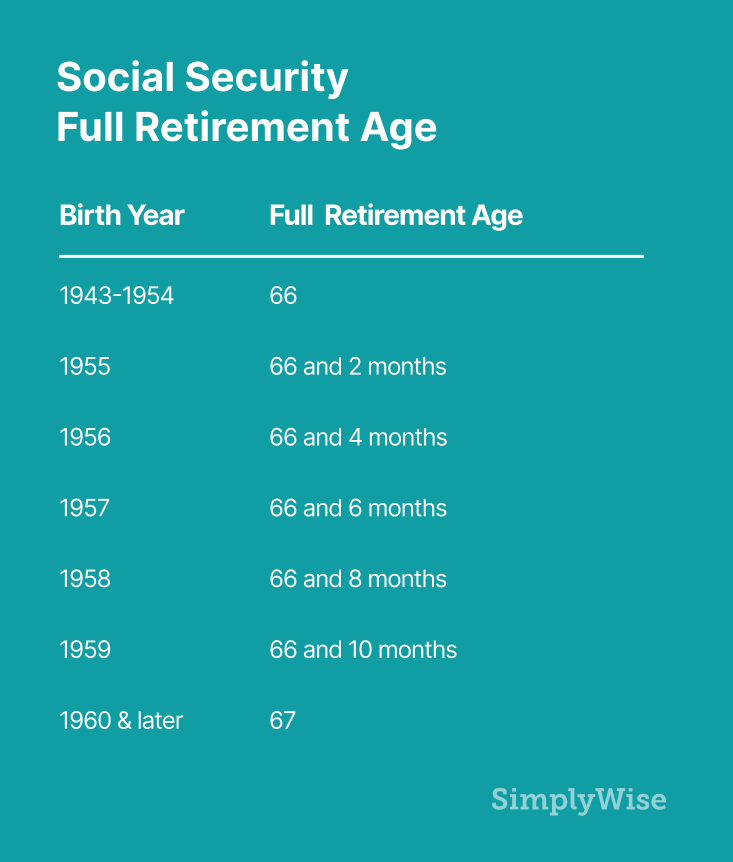
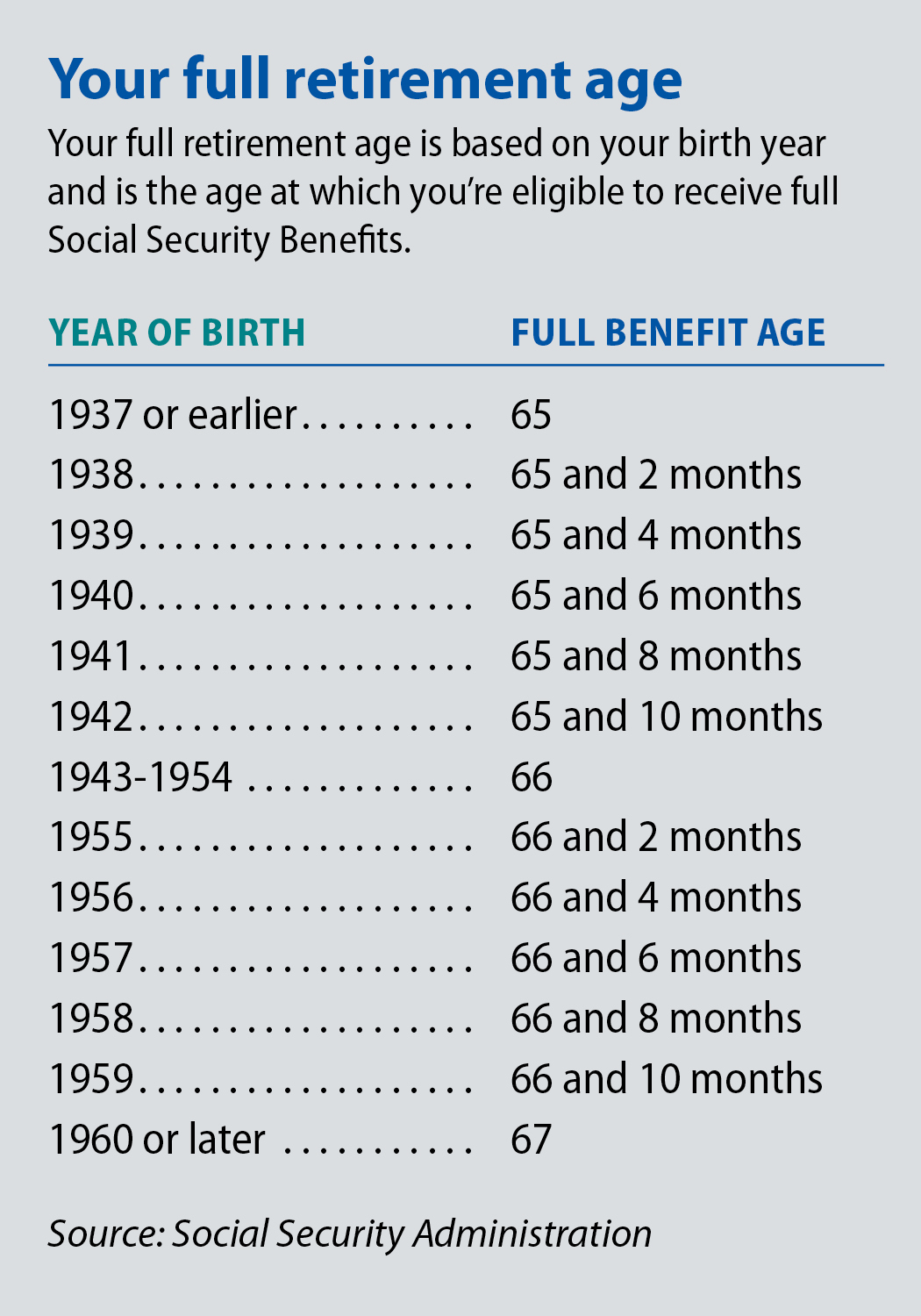
Your Full Retirement Age (FRA) is the age at which you are eligible to receive 100% of your PIA. This age is not static; it depends on your birth year:
-
Born 1943-1954: FRA is 66
-
Born 1955: FRA is 66 and 2 months
-
Born 1956: FRA is 66 and 4 months
-
Born 1957: FRA is 66 and 6 months
-
Born 1958: FRA is 66 and 8 months
-
Born 1959: FRA is 66 and 10 months
-
Born 1960 or later: FRA is 67
Claiming benefits exactly at your FRA ensures you receive your calculated PIA without reduction or increase.
Claiming Early: A Permanent Reduction
You can start receiving Social Security retirement benefits as early as age 62. However, choosing to claim before your FRA results in a permanent reduction of your monthly benefit. The reduction is approximately 5/9 of 1% for each month you claim early, up to 36 months. If you claim more than 36 months early, the reduction is 5/12 of 1% per month for the additional months.
For someone with an FRA of 67, claiming at age 62 would result in a benefit that is approximately 30% lower than their PIA. This reduction is applied for the rest of your life, making it a critical consideration. While you might receive benefits for a longer period, the individual monthly checks will be substantially smaller.
Delaying Benefits: Boosting Your Payout
Conversely, if you delay claiming benefits beyond your FRA, you can significantly increase your monthly payout. For each month you delay past your FRA, up to age 70, your benefit increases by a certain percentage known as Delayed Retirement Credits (DRCs). The annual increase is 8% for those born in 1943 or later.
This means that if your FRA is 67 and you delay claiming until age 70, your monthly benefit will be 24% higher than your PIA (3 years x 8% per year). This is a guaranteed, inflation-adjusted return on your decision to wait, making it a powerful strategy for those who can afford to defer income. After age 70, there are no further increases for delaying benefits, so there’s no financial advantage to waiting beyond that point.
Factors That Can Further Adjust Your Benefit
Beyond your earnings and claiming age, several other factors can influence the final amount of your Social Security retirement benefit.
Cost-of-Living Adjustments (COLAs)
Once you start receiving benefits, your monthly payment will typically increase over time due to annual Cost-of-Living Adjustments (COLAs). These adjustments are designed to help Social Security benefits keep pace with inflation. COLAs are determined by the Consumer Price Index for Urban Wage Earners and Clerical Workers (CPI-W) and are announced in October for the following year. While COLAs help maintain purchasing power, they are not guaranteed to perfectly offset all inflation.
Taxation of Benefits
Depending on your “provisional income” (which includes your adjusted gross income, tax-exempt interest, and half of your Social Security benefits), a portion of your Social Security benefits may be subject to federal income tax. Up to 50% of your benefits may be taxable if your provisional income is between $25,000 and $34,000 for an individual ($32,000 and $44,000 for married couples filing jointly). If your provisional income exceeds these higher thresholds, up to 85% of your benefits may be taxable. Some states also tax Social Security benefits, so it’s important to understand your specific state’s rules.
Spousal and Survivor Benefits
Social Security isn’t just for individual retirees; it also provides benefits for spouses, divorced spouses, and survivors (widows/widowers).
-
Spousal Benefits: A spouse can claim up to 50% of their partner’s PIA, provided they are at least age 62 or caring for a child under age 16 or disabled. If they have their own work record, they will receive whichever benefit is higher – their own or the spousal benefit.
-
Survivor Benefits: A widow or widower can receive up to 100% of their deceased spouse’s benefit if they claim at their own FRA. These benefits are also subject to reductions if claimed early. Understanding how these benefits coordinate can be a vital part of family financial planning.
Windfall Elimination Provision (WEP) and Government Pension Offset (GPO)
If you worked for a government agency (federal, state, or local) and did not pay Social Security taxes on those earnings, but you also have other earnings on which you did pay Social Security taxes, your Social Security benefit may be reduced by the Windfall Elimination Provision (WEP). Similarly, if you receive a pension from work where you did not pay Social Security taxes, your Social Security spousal or survivor benefits may be reduced by the Government Pension Offset (GPO). These provisions are designed to prevent “double-dipping” benefits in situations where individuals receive pensions from non-Social Security-covered work.
Integrating Social Security into Your Retirement Plan
Given the variables, estimating your Social Security benefit is a crucial first step in building a comprehensive retirement plan.
Utilizing SSA Resources
The best way to get a personalized estimate is to create an account at my Social Security on the SSA website (ssa.gov). Here, you can review your earnings record for accuracy and use their benefit calculators to get personalized estimates based on different claiming ages. Regularly checking your earnings record is important to ensure all your contributions are correctly accounted for.
Don’t Rely Solely on Social Security
While Social Security provides a vital foundation, it was never intended to be the sole source of retirement income. It typically replaces about 40% of pre-retirement income for the average worker, but this percentage can be lower for higher earners. Therefore, it’s imperative to supplement Social Security with other savings vehicles, such as 401(k)s, IRAs, and personal investments.
Strategic Claiming for Optimal Income
The decision of when to claim Social Security is a complex one, influenced by your health, financial needs, other retirement assets, and life expectancy. For some, claiming early might be necessary due to health issues or immediate financial needs. For others, delaying benefits can significantly enhance financial security later in life, especially if they have strong personal savings to bridge the gap until age 70. Consulting a financial advisor who specializes in retirement planning can provide invaluable guidance in making this nuanced decision.
In conclusion, “how much is Social Security retirement” is a question with a personalized answer for every individual. It’s a sum shaped by your career choices, your financial discipline, and ultimately, your strategic decisions as you approach retirement. Understanding these mechanics empowers you to maximize this critical component of your financial future.
aViewFromTheCave is a participant in the Amazon Services LLC Associates Program, an affiliate advertising program designed to provide a means for sites to earn advertising fees by advertising and linking to Amazon.com. Amazon, the Amazon logo, AmazonSupply, and the AmazonSupply logo are trademarks of Amazon.com, Inc. or its affiliates. As an Amazon Associate we earn affiliate commissions from qualifying purchases.