
Social Security stands as a cornerstone of financial stability for millions of Americans, providing a vital safety net for retirees, disabled workers, and survivors. Its sheer scale and the intricate mechanisms of its funding and payout systems make it a subject of continuous public interest and financial planning. Understanding “how much Social Security pays out each year” is not merely a statistical inquiry; it’s a deep dive into the nation’s largest social insurance program and its profound impact on personal finance and the broader economy.
The Financial Architecture of Social Security: Contributions and Commitments
At its core, Social Security operates on a pay-as-you-go system, primarily funded through dedicated payroll taxes. Workers and their employers contribute a percentage of earnings into the system, and these contributions are then used to pay out benefits to current retirees and beneficiaries. This intergenerational contract ensures a continuous flow of funds, designed to support those currently eligible for benefits while building future entitlements for today’s workers.

The Trust Funds: OASI and DI
Social Security’s financial structure is anchored by two primary trust funds: the Old-Age and Survivors Insurance (OASI) Trust Fund and the Disability Insurance (DI) Trust Fund. The OASI fund pays retirement and survivors benefits, while the DI fund covers disability benefits. While legally separate, they are often discussed collectively, as both are funded by the same payroll tax mechanism. When collected payroll taxes and other income exceed annual payouts, the surplus is invested in special U.S. Treasury securities, which earn interest for the trust funds. These reserves serve as a buffer, ensuring benefits can be paid even during periods when current income falls short of outgo.
How Contributions Fuel Payouts
The primary source of income for Social Security is the FICA (Federal Insurance Contributions Act) tax, or SECA (Self-Employment Contributions Act) tax for self-employed individuals. Employers and employees each pay 6.2% on earnings up to an annual limit, totaling 12.4%. A portion of these taxes (10.6% for OASI and 1.8% for DI) is allocated to the respective trust funds. Additional income sources include interest earned on trust fund investments and income taxation of Social Security benefits for higher earners. This robust, though complex, funding stream is what enables the program to meet its annual commitments to millions of Americans.
Annual Payouts: A Snapshot of Billions in Benefits
The scale of Social Security’s annual payouts is staggering, reflecting its role as a bedrock financial program. Each year, the Social Security Administration (SSA) disperses hundreds of billions of dollars, directly impacting the livelihoods of a significant portion of the U.S. population. These payments represent a massive redistribution of wealth, providing essential income to those who have contributed throughout their working lives.
Total Benefit Payments Annually
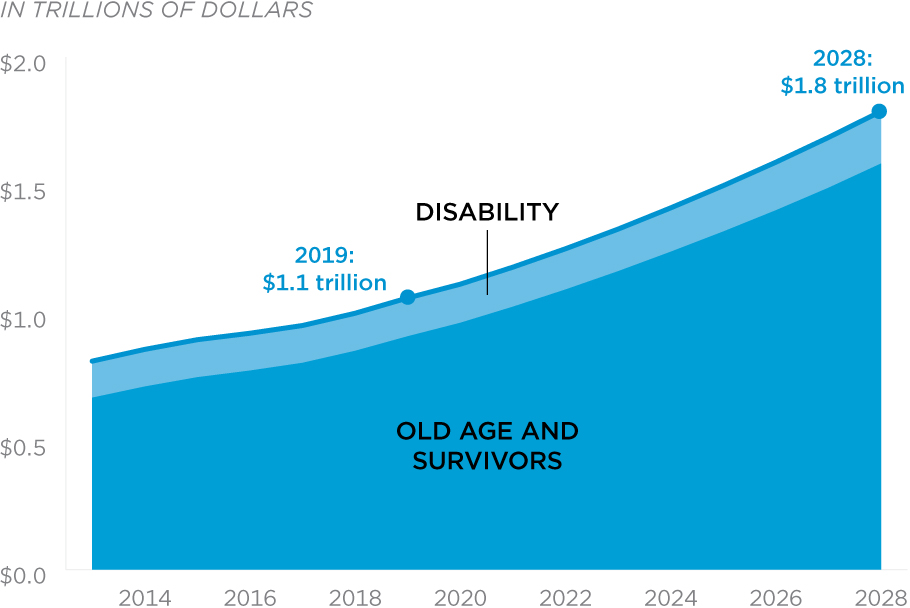
In recent years, the total amount paid out by Social Security has consistently surpassed the trillion-dollar mark annually. For instance, in 2022, the program paid out approximately $1.25 trillion in benefits. This figure encompasses all forms of Social Security payments, including retirement, disability, and survivor benefits. The trend has been one of steady increase, driven by a growing number of beneficiaries and annual cost-of-living adjustments (COLAs). This ever-increasing expenditure underscores the program’s growing importance and the demographic shifts within the United States, particularly the aging of the baby-boomer generation.
The Growing Number of Beneficiaries
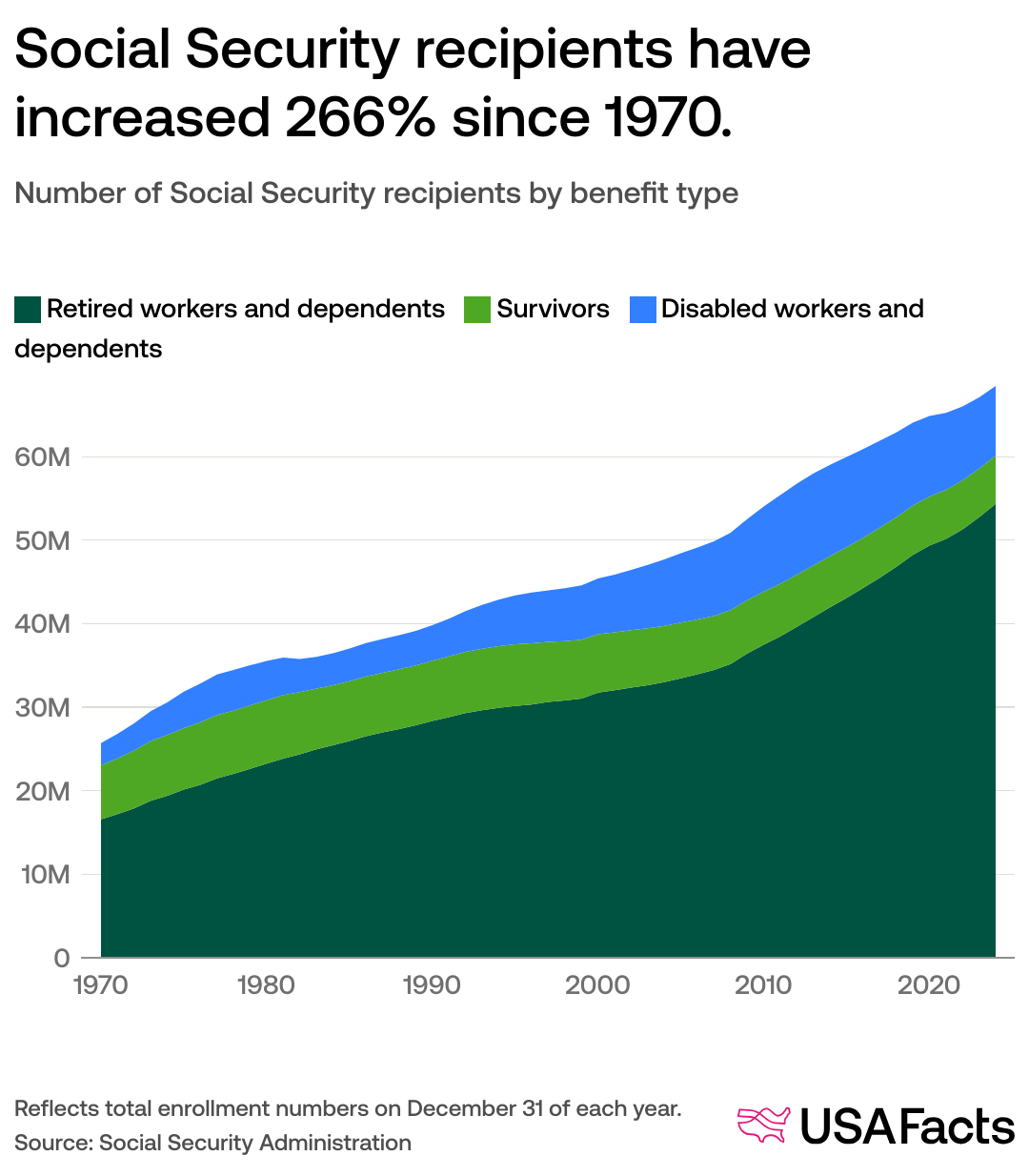
The sheer volume of annual payouts is directly correlated with the number of individuals receiving benefits. As of recent data, well over 60 million Americans receive monthly Social Security benefits. This vast beneficiary population includes:
-
Retirees: The largest group, comprising tens of millions of individuals receiving old-age benefits.
-
Spouses and Children of Retirees: Dependents who may also be eligible for benefits based on the primary worker’s record.
-
Disabled Workers: Millions of individuals receiving Disability Insurance benefits due to an inability to engage in substantial gainful activity.
-
Spouses and Children of Disabled Workers: Dependents of disabled beneficiaries.
-
Survivors: Widows, widowers, and children of deceased workers who receive survivor benefits.
The demographic shift, with more people entering retirement and living longer, means that the ratio of workers paying into the system to beneficiaries receiving benefits is decreasing. This shift places increasing pressure on the system’s financial equilibrium and contributes to the escalating total annual payouts.
Types of Benefits Paid
While “Social Security” is often synonymous with retirement income, the program provides a diverse range of benefits, each contributing to the total annual payout:
-
Old-Age (Retirement) Benefits: The most common type, providing monthly income to eligible workers who have reached retirement age and have sufficient work credits.
-
Disability Benefits: Payments to workers who have a severe physical or mental condition that prevents them from working for a year or more, or that is expected to result in death.
-
Survivors Benefits: Payments to family members (widows, widowers, minor children, dependent parents) of a deceased worker who earned enough Social Security credits.
Each of these benefit categories has its own eligibility requirements and calculation methods, but collectively, they constitute the immense sum that Social Security disburses each year.
Factors Influencing Individual and Aggregate Payouts
While the total annual payout is a macro figure, it’s the aggregate of millions of individual benefit checks. Several key factors determine both how much an individual receives and how these individual amounts collectively contribute to the overall expenditure. Understanding these drivers is crucial for both personal financial planning and appreciating the complexities of Social Security.
Average Monthly Benefit Amounts by Category
The average monthly benefit varies significantly depending on the type of beneficiary:
-
Retired Workers: The largest group, with average monthly benefits typically around $1,800 to $1,900 as of recent estimates. This average can fluctuate based on annual COLAs and the earnings history of new retirees.
-
Disabled Workers: Average monthly benefits are often slightly lower than those for retired workers, typically in the range of $1,500 to $1,600.
-
Survivors: Spouses receiving benefits can see averages ranging from $1,700 to $1,800, while children’s benefits are typically much lower individually, though several children may receive benefits from one deceased worker’s record.
These averages provide a baseline, but individual circumstances can lead to much higher or lower payments. The highest possible monthly benefit for a worker retiring at full retirement age, for example, can be significantly higher than the average, reflecting a lifetime of high earnings and strategic retirement age choices.
The Role of COLA (Cost-of-Living Adjustment)
A significant factor contributing to the increasing annual payouts is the Cost-of-Living Adjustment (COLA). Each year, if inflation (measured by the Consumer Price Index for Urban Wage Earners and Clerical Workers, or CPI-W) rises sufficiently, Social Security benefits are increased to help maintain beneficiaries’ purchasing power. COLA increases can be substantial, as seen in recent years with high inflation. While designed to protect beneficiaries, these adjustments add billions to the total annual payout, as they apply to the entire pool of beneficiaries.
Impact of Earnings History and Retirement Age
For individual beneficiaries, the amount received is primarily determined by two factors:
-
Earnings History: Social Security calculates an individual’s Primary Insurance Amount (PIA) based on their highest 35 years of indexed earnings. Higher average indexed monthly earnings generally result in higher benefits.
-
Retirement Age: While full retirement age (FRA) is currently between 66 and 67, individuals can claim benefits as early as age 62 or delay them up to age 70. Claiming early results in permanently reduced benefits, while delaying past FRA increases benefits by a certain percentage each year. These individual choices about when to claim benefits have a collective impact on the total annual payout, as later claiming ages, while resulting in higher individual benefits, mean fewer years of benefit payments for those individuals.
These factors create a dynamic system where individual decisions and broader economic conditions both play a critical role in shaping the magnitude of Social Security’s annual financial disbursements.
The Sustainability Challenge: Future Projections and Debates
While Social Security consistently pays out trillions of dollars annually, the long-term sustainability of the program remains a subject of considerable debate and concern. Understanding future projections is crucial for policymakers and individuals alike, as it directly impacts financial planning and potential future adjustments to the program.
Solvency Concerns and Projected Shortfalls
The core of the sustainability challenge lies in demographic trends. The declining birth rate and increasing life expectancy mean that the ratio of workers paying into the system to beneficiaries drawing from it is decreasing. For decades, the Social Security Trustees have projected that the combined OASI and DI Trust Funds will be able to pay 100% of promised benefits for a limited period, often until the mid-2030s. After that point, unless changes are made, the program would only be able to pay a portion of scheduled benefits (e.g., around 80%), based on continuing tax income. This projected shortfall does not mean the program will be “bankrupt” or unable to pay any benefits; rather, it indicates an inability to meet 100% of scheduled benefits without intervention.
Policy Debates and Potential Reforms
Addressing the projected shortfall involves a range of proposed reforms, each with its own political and economic implications:
-
Raising the Full Retirement Age: Gradually increasing the age at which individuals can receive unreduced benefits would reduce the total duration of payments for future retirees.
-
Increasing the Payroll Tax Rate: A modest increase in the FICA tax rate would boost income to the trust funds.
-
Increasing the Taxable Earnings Cap: Currently, earnings above a certain annual limit (e.g., around $168,600 in 2024) are not subject to Social Security taxes. Raising or eliminating this cap would increase tax revenue from high earners.
-
Adjusting the COLA Formula: Modifying how the Cost-of-Living Adjustment is calculated, perhaps using a different inflation measure (like the chained CPI), could slow the growth of benefit payments.
-
Means-Testing Benefits: Reducing benefits for higher-income retirees could target resources more effectively, though this changes the universal nature of the program.
These potential reforms are often discussed in combination, aiming for a balanced approach to ensure the program’s long-term financial health while minimizing adverse impacts on beneficiaries.
Personal Financial Planning in Light of Future Uncertainty
For individuals, the ongoing debate about Social Security’s future underscores the importance of proactive personal financial planning. While Social Security is a vital income source, especially in retirement, it is increasingly viewed as one leg of a multi-legged stool for financial security. Diversifying retirement income through personal savings, employer-sponsored retirement plans (like 401(k)s), and other investments is prudent. Assuming Social Security will provide a foundational income, but not necessarily sustain an entire lifestyle, allows individuals to build robust financial strategies that can adapt to potential future changes in benefit structures or payment levels. The annual payouts from Social Security are immense and essential, but understanding their trajectory and the broader financial landscape is key to effective wealth management.
aViewFromTheCave is a participant in the Amazon Services LLC Associates Program, an affiliate advertising program designed to provide a means for sites to earn advertising fees by advertising and linking to Amazon.com. Amazon, the Amazon logo, AmazonSupply, and the AmazonSupply logo are trademarks of Amazon.com, Inc. or its affiliates. As an Amazon Associate we earn affiliate commissions from qualifying purchases.