
Understanding the intricacies of Social Security benefits is a critical component of personal financial planning for millions of Americans. Far from a simple flat rate, the amount an individual receives from Social Security is influenced by a complex interplay of factors, primarily their earning history, the age at which they claim benefits, and various adjustments made over time. For many, Social Security forms a foundational pillar of their retirement income, making it essential to grasp how these benefits are calculated and what they can realistically expect.
Understanding Social Security: A Foundation
Before delving into the specific numbers, it’s crucial to establish a foundational understanding of what Social Security is and who it serves. This federal program, established in 1935, provides financial protection to millions of Americans, including retirees, people with disabilities, and survivors of deceased workers.
What is Social Security?
Social Security operates on a pay-as-you-go system, meaning current workers’ contributions primarily fund the benefits of today’s retirees and other beneficiaries. These contributions come in the form of dedicated payroll taxes (FICA taxes) levied on both employees and employers. While often viewed as a retirement plan, Social Security also encompasses disability insurance and survivor benefits, offering a broad safety net. Its primary goal is to replace a portion of a worker’s pre-retirement income, particularly for those with lower lifetime earnings.
Who is Eligible?
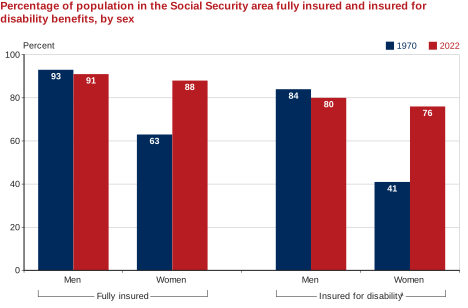
Eligibility for Social Security benefits is determined by an individual’s work history. To qualify for retirement benefits, most people need to have accumulated 40 “credits” over their working lifetime. You can earn up to four credits each year. In 2024, one credit is earned for every $1,730 in earnings, meaning you need to earn $6,920 to get the maximum four credits for the year. Generally, 10 years of work (40 credits) are sufficient to become eligible. Once eligible, the age at which you choose to claim benefits significantly impacts the monthly amount you receive.
Key Factors Influencing Your Benefit Amount
The exact amount you receive from Social Security is not arbitrary; it’s the result of several personal and programmatic factors. Understanding these variables is key to estimating your future benefits accurately.
Your Earnings History
The most significant factor determining your Social Security benefit is your earnings history. The Social Security Administration (SSA) calculates your benefit based on your highest 35 years of indexed earnings. “Indexed earnings” means that your past earnings are adjusted to account for changes in the average wage level in the economy over time. This process ensures that benefits reflect the actual purchasing power of your earnings when they were made, rather than just their nominal value. If you have fewer than 35 years of earnings, the missing years will be counted as zeros, which can substantially reduce your benefit amount. Therefore, a consistent work history with higher earnings generally leads to higher Social Security benefits.
Your Claiming Age
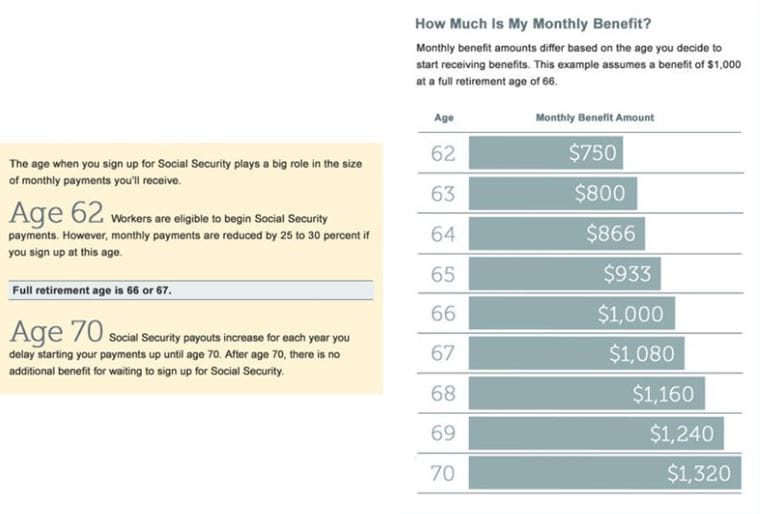
The age at which you decide to start receiving Social Security benefits is perhaps the most controllable and impactful factor. You can claim retirement benefits as early as age 62, but doing so results in a permanent reduction of your monthly payment. Your “Full Retirement Age” (FRA) is the age at which you are entitled to 100% of your primary insurance amount (PIA). FRA varies based on your birth year:
-
Born 1943-1954: FRA is 66
-
Born 1955: FRA is 66 and 2 months
-
Born 1956: FRA is 66 and 4 months
-
Born 1957: FRA is 66 and 6 months
-
Born 1958: FRA is 66 and 8 months
-
Born 1959: FRA is 66 and 10 months
-
Born 1960 or later: FRA is 67
If you claim before your FRA, your benefits are reduced. For example, claiming at age 62 with an FRA of 67 means a permanent reduction of approximately 30%. Conversely, if you delay claiming benefits past your FRA, you can earn “Delayed Retirement Credits” (DRCs) up to age 70. These credits increase your monthly benefit by 8% per year for each year you delay, up to a maximum of 32% increase if you delay from age 66 to 70. This makes delaying claiming a powerful strategy for maximizing your lifetime benefits, especially if you anticipate a long lifespan.
Cost-of-Living Adjustments (COLAs)
Once you begin receiving benefits, your monthly payment is subject to annual Cost-of-Living Adjustments (COLAs). These adjustments are designed to help Social Security benefits retain their purchasing power in the face of inflation. COLAs are determined by the increase in the Consumer Price Index for Urban Wage Earners and Clerical Workers (CPI-W). If the CPI-W rises, your benefits generally increase the following year. While COLAs help maintain value, they are not guaranteed to keep pace with all individual living expenses or provide significant increases beyond inflation.
Spousal and Survivor Benefits
Social Security also provides benefits to spouses and survivors, which can significantly impact a household’s overall financial security.
-
Spousal Benefits: If you are married, you may be eligible to receive benefits based on your spouse’s work record. A spousal benefit can be up to 50% of your spouse’s full retirement amount. To claim spousal benefits, your spouse must have already filed for their own benefits, and you must be at least 62 or caring for a child under age 16 (or disabled).
-
Survivor Benefits: After a qualified worker dies, their surviving spouse, children, or dependent parents may be eligible for benefits. A surviving spouse can receive up to 100% of the deceased worker’s basic benefit amount, depending on the survivor’s age and other factors. These benefits are particularly crucial for families with young children or those who lose their primary earner.
Calculating Your Primary Insurance Amount (PIA)
The core of your Social Security benefit calculation is the Primary Insurance Amount (PIA). This is the monthly benefit you would receive if you claim exactly at your Full Retirement Age. The SSA uses a three-step formula to calculate your PIA, involving your Average Indexed Monthly Earnings (AIME) and “bend points.”
Average Indexed Monthly Earnings (AIME)
First, the SSA calculates your Average Indexed Monthly Earnings (AIME). This involves taking your highest 35 years of indexed earnings (as discussed earlier), summing them up, and then dividing by 420 (the number of months in 35 years). The result is your AIME, which represents your average monthly earnings over your career, adjusted for inflation.
The Bend Points
Once your AIME is determined, it’s run through a progressive formula using “bend points.” These bend points are specific dollar amounts that define the segments of your AIME to which different percentages apply. The formula for those becoming eligible in 2024 is:
-
90% of the first $1,174 of your AIME, plus
-
32% of your AIME between $1,174 and $7,078, plus
-
15% of your AIME over $7,078
This progressive formula means that Social Security benefits are weighted toward lower-income earners. Those with lower lifetime average earnings receive a higher percentage of their earnings back in benefits compared to high-income earners. This redistributive aspect is a fundamental principle of Social Security. The resulting figure is your PIA, the basis for all other benefit calculations.
Average Benefit Amounts and What to Expect
While individual benefits vary widely, understanding the average payments can provide a useful benchmark.
Recent Averages
As of early 2024, the average monthly Social Security benefit for all retired workers is approximately $1,907. However, this average masks significant differences based on various factors. For instance, the average benefit for a retired worker with a spouse receiving benefits is higher, and the average for widows or widowers is also distinct. These averages are often cited to provide a general idea, but they should not be taken as a direct prediction of what any single individual will receive. Your specific AIME and claiming age will be the primary determinants.
Maximum Benefit Amounts
There is also a maximum monthly benefit allowed by Social Security. This maximum is tied to the maximum taxable earnings limit throughout an individual’s career and claiming age. For someone retiring at their Full Retirement Age in 2024, the maximum monthly benefit is $3,822. For those who delay claiming until age 70, the maximum benefit can be substantially higher, reaching $4,873 in 2024. To qualify for the maximum benefit, a worker must have earned at or above the Social Security taxable maximum for at least 35 years of their career.
Taxation of Benefits
It’s important to remember that Social Security benefits may be subject to federal income tax. The amount of benefits taxed depends on your “combined income,” which is your adjusted gross income plus any tax-exempt interest income plus one-half of your Social Security benefits.
-
If your combined income is between $25,000 and $34,000 for an individual ($32,000 and $44,000 for a married couple filing jointly), up to 50% of your benefits may be taxable.
-
If your combined income is above $34,000 for an individual ($44,000 for a married couple filing jointly), up to 85% of your benefits may be taxable.
Some states also tax Social Security benefits, adding another layer of complexity to financial planning.
Strategies for Maximizing Your Social Security
Given the significant role Social Security plays in retirement, strategic planning to maximize your benefits is a wise financial move.
Working Longer
As your benefit is based on your highest 35 years of indexed earnings, working longer can often boost your AIME. If you have fewer than 35 years of earnings, continuing to work can replace “zero” years with actual earnings. Even if you have 35 years of earnings, working an extra year with high income can replace a lower-earning year from your past, thereby increasing your overall AIME and consequently your PIA. This strategy is particularly effective for those who took time out of the workforce or had periods of lower income.
Delaying Claiming
Perhaps the most straightforward and impactful strategy for increasing your monthly benefit is delaying your claim past your Full Retirement Age (FRA), up to age 70. As mentioned, each year you delay, you accrue Delayed Retirement Credits (DRCs) that permanently increase your monthly payment by 8%. If you have sufficient other retirement savings or can continue working, delaying can lead to a substantially larger monthly check for the rest of your life. This strategy acts as a form of longevity insurance, providing a higher guaranteed income stream in your later years.
Coordinating with a Spouse
For married couples, coordinating claiming strategies can yield significant total benefits for the household. Couples should consider whose benefit is higher and how to optimize both individual and spousal claims. For example, the higher-earning spouse might delay claiming until age 70 to maximize their benefit, which will also maximize the survivor benefit for the lower-earning spouse. Meanwhile, the lower-earning spouse might claim their own (lower) benefit earlier or claim a spousal benefit (if eligible and higher than their own) once their partner files. Analyzing these scenarios requires careful planning and often benefits from using the SSA’s online tools or consulting a financial advisor familiar with Social Security optimization.
In conclusion, the amount people get for Social Security is far from a fixed sum. It’s a dynamic figure shaped by individual work history, claiming decisions, and programmatic adjustments. By understanding these factors and employing thoughtful strategies, individuals can significantly impact the financial security that Social Security provides in retirement.
aViewFromTheCave is a participant in the Amazon Services LLC Associates Program, an affiliate advertising program designed to provide a means for sites to earn advertising fees by advertising and linking to Amazon.com. Amazon, the Amazon logo, AmazonSupply, and the AmazonSupply logo are trademarks of Amazon.com, Inc. or its affiliates. As an Amazon Associate we earn affiliate commissions from qualifying purchases.