
Navigating the landscape of retirement income often involves a delicate balance between drawing Social Security benefits and continuing to earn income. Many individuals find themselves pondering the question: how much can you earn while receiving Social Security without impacting your benefits? The answer is nuanced, dependent primarily on your age relative to your Full Retirement Age (FRA) and the specific earnings limits set by the Social Security Administration (SSA). Understanding these rules is crucial for effective financial planning in your later years.
Understanding Social Security’s Earnings Test
The core mechanism dictating how much you can earn is known as the “earnings test.” This test is designed to ensure that Social Security benefits primarily serve as a replacement for earnings lost due to retirement, disability, or death. However, it’s not a universal application; the rules vary significantly based on your age.

What is the Earnings Test?
The earnings test applies to individuals who claim Social Security retirement or survivor benefits before they reach their Full Retirement Age (FRA). If you are receiving benefits and your earnings exceed a certain annual limit, a portion of your benefits will be withheld. This is not a permanent loss of benefits; rather, they are effectively deferred and may be returned to you in the form of higher future monthly payments once you reach your FRA. The purpose of the test is to ensure that those still substantially employed do not claim benefits intended for those who have fully retired.
The “Full Retirement Age” (FRA) Defined
Your Full Retirement Age (FRA) is a critical concept in understanding the earnings test. It’s the age at which you are entitled to receive 100% of your primary Social Security benefit, without any reduction for claiming early or any withholding due to earnings. For most people, FRA is between age 66 and 67, depending on your birth year.
-
Born 1943-1954: FRA is 66
-
Born 1955: FRA is 66 and 2 months
-
Born 1956: FRA is 66 and 4 months
-
Born 1957: FRA is 66 and 6 months
-
Born 1958: FRA is 66 and 8 months
-
Born 1959: FRA is 66 and 10 months
-
Born 1960 or later: FRA is 67
Knowing your specific FRA is the first step in assessing how your earnings might interact with your Social Security benefits.
Different Rules for Different Ages
The earnings test rules are divided into three distinct periods:
-
Before your Full Retirement Age (FRA): This is the period with the strictest earnings limits.
-
The year you reach your Full Retirement Age: A special, more generous set of rules applies during this calendar year.
-
After your Full Retirement Age: In this period, the earnings test no longer applies, and you can earn any amount without your benefits being withheld.
Understanding which period you fall into is paramount for strategic financial planning.
Navigating Earnings Limits Before Your Full Retirement Age
This is the most common scenario where individuals encounter the earnings test. Many people choose to start receiving Social Security benefits as early as age 62, even if they plan to continue working part-time or full-time. However, if you are below your FRA and receiving benefits, your earnings will be subject to a specific annual limit.
The Annual Earnings Limit
Each year, the Social Security Administration (SSA) sets an annual earnings limit. For instance, in 2024, if you are under your FRA for the entire year, the earnings limit is $22,320. This amount is subject to change annually, typically increasing with inflation.
If your earnings exceed this limit, your Social Security benefits will be reduced. The reduction rate is significant: for every $2 you earn over the annual limit, $1 will be withheld from your Social Security benefits.
Let’s illustrate with an example:
Suppose your annual earnings limit is $22,320, and you earn $32,320 in a year while under FRA.
-
Excess earnings: $32,320 – $22,320 = $10,000
-
Benefit reduction: $10,000 / 2 = $5,000
In this scenario, $5,000 would be withheld from your total Social Security benefits for that year. This withholding is usually spread out over your monthly payments, or in some cases, the SSA may stop your payments entirely until the withheld amount is recovered.
How Withholding Works
The SSA doesn’t simply take money from your bank account. Instead, they will reduce or entirely withhold your monthly Social Security payments until the amount equal to the benefit reduction has been recovered. For example, if your monthly benefit is $1,000 and $5,000 is to be withheld, your payments might be stopped for five months. Once the withheld amount is reached, your benefits resume at their normal rate for the remainder of the year (assuming no further excess earnings).
It’s important to remember that these withheld benefits are not lost forever. When you reach your FRA, the SSA recalculates your benefit amount to account for the months benefits were withheld. This recalculation results in a permanent increase in your monthly benefit amount, effectively giving you credit for the payments you didn’t receive due to the earnings test. This is known as the “adjustment to the reduction factor.”
Strategies to Mitigate Impact
For those working before FRA, strategic planning can minimize the impact of the earnings test.
-
Delaying Benefits: If your earnings are consistently above the limit, it might be financially advantageous to delay claiming your Social Security benefits until you reach your FRA. This avoids the earnings test entirely and allows your benefits to grow by accruing delayed retirement credits (an increase of 8% per year for each year you delay past your FRA, up to age 70).
-
Timing Income: If possible, consider structuring your income so that a significant portion falls into the calendar year you reach your FRA, or even after. This might involve deferring bonuses, commissions, or consulting fees.
-
Understand What Counts as Earnings: The earnings test applies to wages from an employer and net earnings from self-employment. It does not apply to income from investments, pensions, annuities, or government benefits. This distinction is vital for those with diverse income streams.
The Year You Reach Full Retirement Age: A Special Rule
The calendar year in which you attain your Full Retirement Age (FRA) is treated differently by the Social Security Administration. This year has a more lenient earnings test, providing a transition period before the earnings test is completely removed.
Higher Earnings Limit
For the year you reach your FRA, the annual earnings limit is substantially higher than for years prior. In 2024, this limit is $59,520. This higher threshold allows individuals to earn considerably more without facing benefit reductions.
Different Withholding Rate
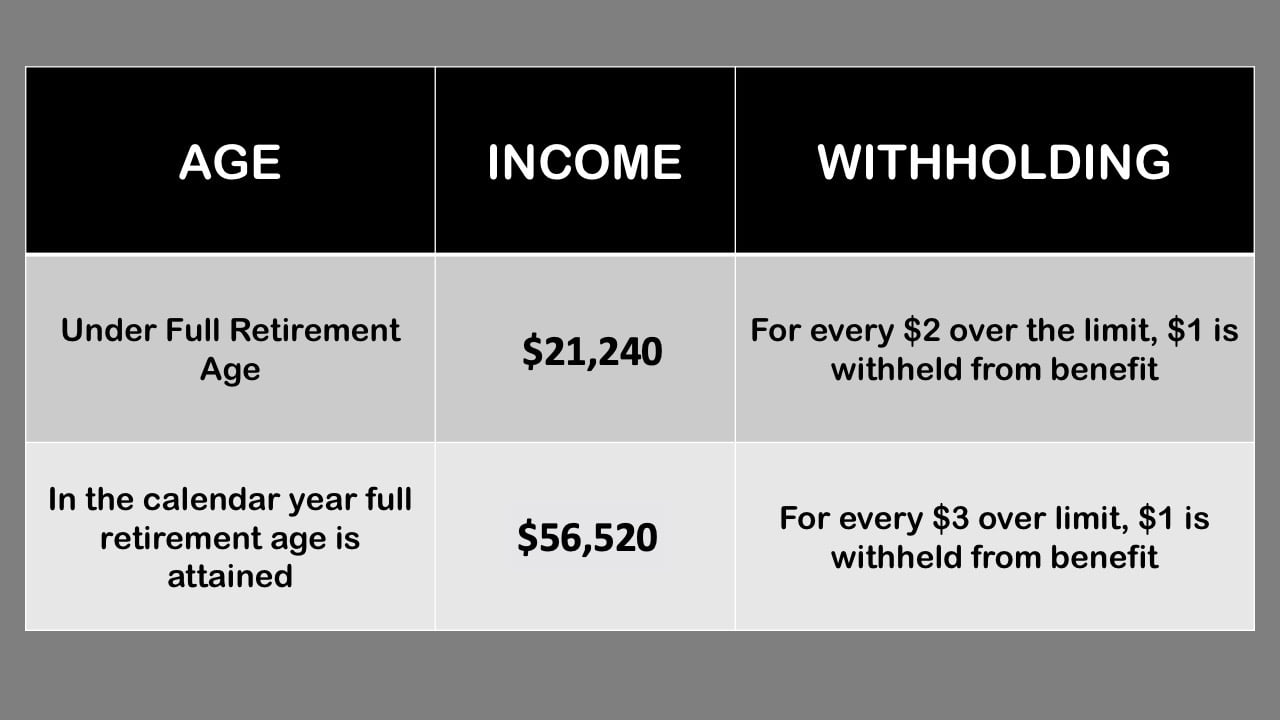
Not only is the earnings limit higher, but the withholding rate is also more favorable. For every $3 you earn over this higher annual limit in the year you reach FRA, $1 will be withheld from your Social Security benefits. This is a reduction from the $1 for every $2 rate applied before FRA.
Using the 2024 limit: if you earn $65,520 in the year you reach FRA:
-
Excess earnings: $65,520 – $59,520 = $6,000
-
Benefit reduction: $6,000 / 3 = $2,000
In this specific year, $2,000 would be withheld from your benefits.
Important Cut-off
Crucially, the earnings test in the year you reach FRA only applies to earnings before the month you actually attain your FRA. Once you reach your FRA month, the earnings test completely ceases, and you can earn any amount without your Social Security benefits being affected. For example, if your FRA is August 2024, only earnings from January through July 2024 would be counted towards the $59,520 limit. Earnings from August onwards would not count towards the earnings test whatsoever.
This nuance is important for individuals who plan to work through their FRA. It allows them to earn freely once they hit that specific birthday month, without fear of impacting their Social Security payments.
Earning After Full Retirement Age: No Limits
This is arguably the simplest and most liberating period concerning Social Security and earnings. Once you have reached your Full Retirement Age (FRA), the earnings test no longer applies.
The “No Earnings Test” Zone
Once you hit your FRA, you can earn as much as you like from employment or self-employment, and your Social Security retirement or survivor benefits will not be reduced. This means if you decide to continue working full-time, part-time, or start a new business venture, your monthly Social Security check will remain intact, assuming no other factors (like taxation) come into play.
This rule provides significant flexibility for financial planning. Many individuals choose to work past their FRA not just for financial reasons but also for personal fulfillment, social engagement, or to maintain a sense of purpose. Knowing that their Social Security benefits are secure regardless of their earned income can greatly influence these decisions.
The Benefit of Delayed Credits
Any benefits that were withheld from you before your FRA due to exceeding the earnings limit are not lost. When you reach your FRA, the SSA automatically recalculates your benefit amount. They essentially credit you back for the months you didn’t receive benefits, increasing your future monthly payments. This adjustment is permanent and is usually reflected in your checks starting the year after you reach FRA. This mechanism serves as a safety net, ensuring that the earnings test is not a punitive measure but rather a deferral of benefits.
Considerations for Taxation
While your earnings won’t reduce your Social Security benefits after FRA, your overall income, including Social Security benefits, may become subject to federal income tax. If your “combined income” (which includes adjusted gross income + non-taxable interest + half of your Social Security benefits) exceeds certain thresholds, a portion of your Social Security benefits may be taxable.
-
Individual Filers: If your combined income is between $25,000 and $34,000, up to 50% of your benefits may be taxable. Above $34,000, up to 85% of your benefits may be taxable.
-
Married Filing Jointly: If your combined income is between $32,000 and $44,000, up to 50% of your benefits may be taxable. Above $44,000, up to 85% of your benefits may be taxable.
These taxation rules apply regardless of whether you are subject to the earnings test. Therefore, even after FRA, higher earnings can lead to a larger portion of your Social Security benefits being taxed, effectively reducing the net benefit you receive.
Maximizing Your Income While Protecting Benefits
Effective financial planning requires a holistic view of your income streams, including Social Security, retirement savings, and any earned income. Understanding the interplay between these elements can help you maximize your overall financial well-being in retirement.
Retirement Planning and Timing
The decision of when to claim Social Security benefits is one of the most significant financial choices you will make.
-
Claiming Early (before FRA): While it provides income sooner, it also means a permanently reduced monthly benefit and potential exposure to the earnings test. This strategy might suit those in poor health, those who need the income immediately, or those who do not plan to work.
-
Claiming at FRA: This ensures you receive 100% of your primary benefit amount, with no earnings test impact if you continue working from that point forward.
-
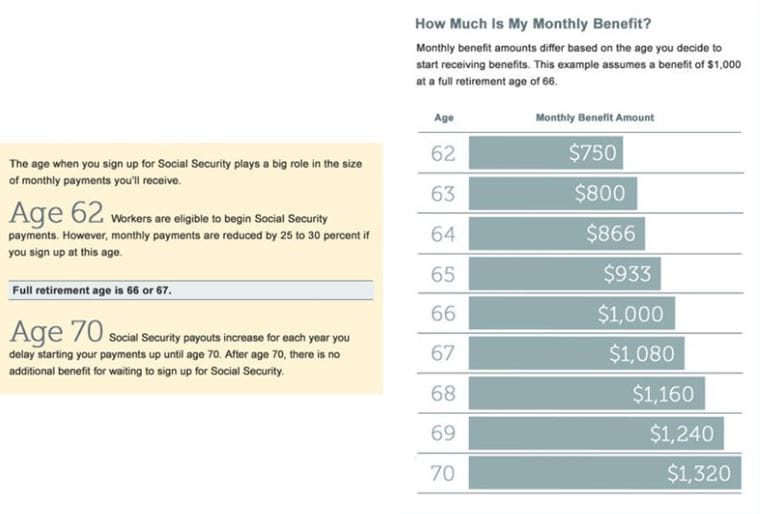
Delaying Past FRA (up to age 70): This strategy allows your benefits to grow by 8% per year (delayed retirement credits) for each year you delay, up to age 70. This can result in significantly higher monthly payments for life, making it an attractive option for those who can afford to wait and may have a longer life expectancy.
Your expected work income plays a crucial role in this timing decision. If you anticipate high earnings before FRA, delaying benefits might be the more financially savvy choice to avoid benefit reductions.
Diverse Income Streams
To mitigate reliance on earned income that could trigger the Social Security earnings test (before FRA) or increase your taxable income, consider diversifying your income streams.
-
Passive Income: Income from investments (dividends, interest, capital gains), rental properties, or royalties generally does not count towards the Social Security earnings test.
-
Consulting or Part-time Work: If working before FRA, focus on keeping earnings below the annual limit or structure contracts to pay out after your FRA.
-
Retirement Account Withdrawals: Income from 401(k)s, IRAs, and other retirement accounts is not subject to the earnings test. However, these withdrawals do contribute to your “combined income” for federal taxation purposes.
A diversified approach can provide financial security and flexibility, allowing you to control when and how your income impacts your Social Security benefits.
Consulting a Financial Advisor
The rules surrounding Social Security and earnings can be complex, and personal circumstances vary greatly. Factors like your marital status, spousal benefits, taxation, and overall financial goals all influence the optimal strategy. A qualified financial advisor specializing in retirement planning can provide personalized guidance, helping you:
-
Estimate your future Social Security benefits.
-
Project the impact of earnings on those benefits.
-
Develop strategies for claiming benefits at the most advantageous time.
-
Plan for potential tax liabilities.
-
Integrate Social Security into your broader retirement income strategy.
Their expertise can be invaluable in ensuring you make informed decisions that align with your long-term financial objectives.
Impact on Medicare Premiums
It’s also worth noting that higher earnings and overall income in retirement can impact your Medicare premiums. If your modified adjusted gross income (MAGI) exceeds certain thresholds, you may be subject to the Income-Related Monthly Adjustment Amount (IRMAA), meaning you’ll pay a higher premium for Medicare Part B and Part D. This is another consideration for those who plan to have significant income from work or investments during retirement.
Ultimately, how much you can earn while receiving Social Security benefits hinges on your age relative to your Full Retirement Age. By understanding the earnings test, its limits, and the timing of your benefits, you can make informed decisions that optimize your financial well-being throughout your retirement years.
aViewFromTheCave is a participant in the Amazon Services LLC Associates Program, an affiliate advertising program designed to provide a means for sites to earn advertising fees by advertising and linking to Amazon.com. Amazon, the Amazon logo, AmazonSupply, and the AmazonSupply logo are trademarks of Amazon.com, Inc. or its affiliates. As an Amazon Associate we earn affiliate commissions from qualifying purchases.